


| By ENENews Reuters, Aug 29, 2017 (emphasis added): [W]atchdog groups called for the [South Texas Project nuclear] facility to shut due to Tropical Storm Harvey… The groups expressed concern about workers at the plant and the safety of the general public if Harvey caused an accident at the reactors… When asked if the plant would shut if flooding worsened, [spokesman Buddy Eller] said “We are going to do what’s right from a safety standpoint.”… Eller said 250 “storm crew” workers were running the plant… Personnel from the U.S. Nuclear Regulatory Commission (NRC) are also at the plant, assessing storm conditions.
teleSUR, Aug 29, 2017: Groups Warn of Nuclear Accident… In the midst of Tropical Storm Harvey’s drenching onslaught, energy watchdogs are sounding the alarm over the continued operation of two nuclear reactors in East Texas that are running at full capacity despite what they claim is the clear potential for a major disaster… [The nuclear plant] risks being flooded as water pours across the region, threatening the embankment wall shielding the power plant… Beyond Nuclear is one of three groups calling for an immediate shutdown of the twin reactors in case the embankment wall surrounding the plant is breached, which could lead to electrical fires and “cascading events” could result in an accident that threatens major core damage… Some fear the threat of a new Fukushima-style disaster. Common Dreams, Aug 29, 2017: The South Texas Project nuclear power facility in Bay City, Texas could be under extreme threat from historic flood waters, groups warned… energy watchdogs groups are warning of “a credible threat of a severe accident” at two nuclear reactors… [They] are calling for the immediate shutdown of the South Texas Project (STP) which sits behind an embankment they say could be overwhelmed by the raging flood waters and torrential rains… Both the U.S. Nuclear Regulatory Commission and the STP operator have previously recognized a credible threat of a severe accident initiated by a breach of the embankment wall that surrounds the 7,000-acre reactor cooling water reservoir,” said [Beyond Nuclear’s] Paul Gunter… [Harvey] was declared the most intense rain event in U.S. history… [B]reach of the embankment wall surrounding the twin reactors would create “an external flood potentially impacting the electrical supply from the switchyard to the reactor safety systems.” In turn, the water has the potential to “cause high-energy electrical fires and other cascading events initiating a severe accident leading to core damage.” Even worse, they added, “any significant loss of cooling water inventory in the Main Cooling Reservoir would reduce cooling capacity to the still operating reactors that could result in a meltdown.” With the nearby Colorado River already cresting at extremely high levels and flowing at 70 times the normal rate, Karen Hadden, director of SEED Coalition, warned that the continue rainfall might create flooding that could reach the reactors… “Our 911 system is down, no emergency services are available, and yet the nuclear reactors are still running… This is an outrageous and irresponsible decision,” declared [Susan Dancer of the South Texas Association for Responsible Energy]. “This storm and flood is absolutely without precedent even before adding the possibility of a nuclear accident that could further imperil millions of people who are already battling for their lives.” As Harvey hovers over the coastal region, heavy rains are expected to persist for days… Beyond Nuclear, Aug 29, 2017: The NRC and South Texas have refused to provide any public information on the status of the water level within in the reservoir… |
Major Environmental Groups Aim for 100 Percent Renewable Energy; Nature Study Shows Solar Alone is on Track Toward 50 Percent
Here we explore how models have consistently underestimated PV deployment and identify the reasons for underlying bias in models… We propose that with coordinated advances in multiple components of the energy system, PV could supply 30–50% of electricity in competitive markets. — Nature
It’s the call for the rapid conversion of energy systems around the country to 100% renewable power — a call for running the United States (and the world) on sun, wind and water. What Medicare for All is to the healthcare debate, or Fight for $15 is to the battle against inequality, 100% Renewable is to the struggle for the planet’s future. — Bill McKibben
*****
Let’s be very clear. The big first step in saving cities like Houston and regions like South Asia from this global warming nightmare we’re creating is to replace the chief cause of the problem with something else. And when the central driver…
View original post 747 more words
September 1 Energy News
Opinion:
¶ “It’s not just Harvey: August marked by deadly floods around world” • Severe floods around the world are washing through cities and villages, sweeping away homes and leaving a deadly toll. Extensive flooding in Sierra Leone, Pakistan, India, Nepal, and Bangladesh, in addition to Texas, raising questions about what role climate change is playing. [CNN]
 Flooding in Mumbai
¶ “The Week the Earth Stood Still” • When normally sober scientists start draining the barrel of awful superlatives to describe a summer day off the Gulf Coast, it’s time to pay attention. And today, the smartest military men count the global insecurity and chaos of climate change as an existential threat on a par with nuclear disaster. [New York Times]
World:
¶ Siem Offshore Contractors installation support vessel Siem Moxie has started work at Statoil’s 30-MW Hywind floating wind farm off Scotland. The vessel arrived…
View original post 759 more words
Hurricane Harvey: Houston Area Flooding Exacerbated By Man-Made Subsidence
While Hurricane Harvey brought record rainfall, the Houston area is more prone to flooding due to subsidence largely induced by humans. Land shifting, in conjunction with record rain, could make the earthen reservoir next to the South Texas Nuclear site more prone to failure and can also make drainage more difficult.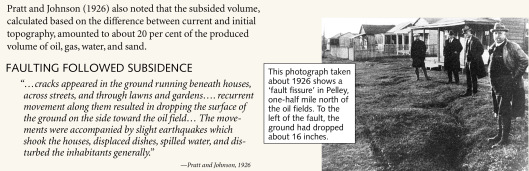
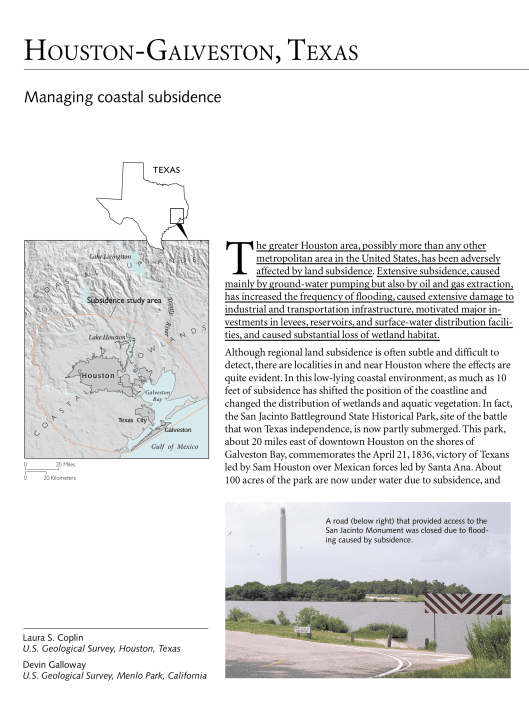
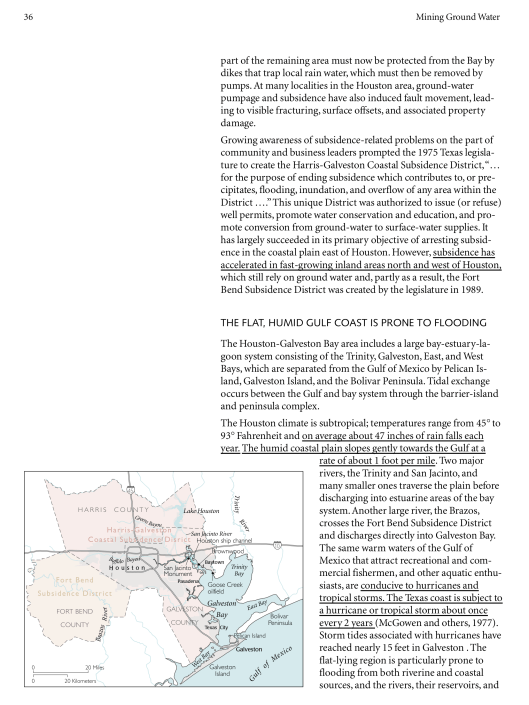


usgs circ1182 07 “Houston Galveston Managing coastal subsidence“, Original here: https://pubs.usgs.gov/circ/circ1182/pdf/07Houston.pdf Emphasis our own.
Houston, “Free Enterprise City” by Joe Feagin, summary: http://www.sjsu.edu/people/saul.cohn/courses/city/s1/Free%20Enterprise%20City.ppt
Houston area preliminary rain totals – https://nwschat.weather.gov/p.php?pid=201708290105-KHGX-NOUS44-PNSHGX
“The surface elevation of the site ranges from about El. 32 to 34 ft mean sea level (MSL), which is equivalent to National Geodetic Vertical Datum of 1929 (NGVD 29), at the north boundary to between El. 15 ft to 20 ft MSL at the south boundary… A major feature of the site is the Main Cooling Reservoir (MCR), which is formed by…
View original post 195 more words
Most Americans would be fine with dropping a nuclear weapon on an Iranian city!
Americans Are a Little Too Relaxed About Nukes, A majority say they’d be fine with dropping a nuclear weapon on an Iranian city. What? Bloomberg ,By Faye Flam, August 31, 2017, North Korea’s advancing nuclear weapons program isn’t the only news to unnerve arms-control experts this summer. A new survey has revealed that Americans are surprisingly willing to make a first nuclear strike — and kill millions of civilians abroad.

The survey casts doubt on the power of what experts call the “nuclear taboo,” said Stanford University historian David Holloway, author of “Stalin and the Bomb.” The idea, or hope, behind the concept is that it’s not just luck that humans haven’t dropped any nuclear weapons for 70 years — that there’s a stigma that makes the use of nuclear weapons unthinkable.
But many Americans say it’s quite thinkable. The taboo may be eroding, or it may never have been the protective barrier people thought it was.
The survey’s designers sketched out a hypothetical conflict with Iran — a country without nuclear weapons. Around 60 percent of those polled said that if Iran provoked the U.S. with some non-nuclear aggression, they’d approve of blowing up 2 million Iranian civilians using nuclear weapons rather than sacrificing 20,000 American lives in a ground attack.
“That just means they haven’t thought about it,” said Brian Toon, a professor of atmospheric science at the University of Colorado. They think nuclear weapons are just big bombs that blow up lots of people, he said, without considering the way a nuclear conflict -– even a “small” one involving some 10 percent of the U.S. arsenal — might poison millions of men, women and children. and change the climate enough to starve hundreds of millions.
Today, it’s not Iran but North Korea that’s the focus of concern — with its continued testing of nuclear missiles despite Trump’s threat of “fire and fury.” Serious people are starting to consider the possibility of nuclear conflict. While the North is unlikely to be capable of sending nuclear missiles all the way to the U.S., at least for now, there are plenty of ways casualties could escalate. “There are nuclear reactors all over North Korea,” Toon said. So you might have Fukushima-type contamination all over the country.
Perhaps if people more clearly understood the destruction of human life that would result, the taboo would regain its power. In the early years of the Cold War, the power of nuclear weapons apparently surprised Daniel Ellsberg, a RAND Corporation analyst on loan to the Pentagon for the purpose of nuclear war planning.
“One day in the spring of 1961, soon after my 30th birthday, I was shown how our world would end,” he wrote in 2009. Ellsberg, who is famous for leaking the Pentagon Papers in 1971, has spent recent decades examining the potential for nuclear catastrophe. His latest book, “The Doomsday Machine: Confessions of a Nuclear War Planner,” will be released in December.
The end of the world was described in a highly classified document, Ellsberg recalled. While it didn’t necessarily spell extinction of the human race, it estimated a nuclear war would kill at least 600 million people — or as Ellsberg put it, “a hundred Holocausts.”……https://www.bloomberg.com/view/articles/2017-08-30/americans-are-a-little-too-relaxed-about-nukes
Death of Sumiteru Taniguchi, Nagasaki Survivor and Nuclear Arms Foe
 he gave a speech at the United Nations in New York during a meeting to consider a nonproliferation treaty.
A month before he died, the United Nations adopted the Treaty on the Prohibition of Nuclear Weapons.
“He played a tremendous role,” said Terumi Tanaka, secretary general of the Japan Confederation of A- and H-Bomb Sufferers Organizations. “But unless all countries sign the treaty, there is no guarantee that nuclear weapons will disappear.”
Sumiteru Taniguchi, Nagasaki Survivor and Nuclear Arms Foe, Dies at 88 Hisako Ueno, Makiko Inoue and Kaho Futagami contributed research.AUG. 31, 2017 TOKYO — Sumiteru Taniguchi, who survived the atomic bombing of Nagasaki as a teenager and went on to become a leading advocate for nuclear disarmament, died on Wednesday in Nagasaki. Overcoming a lifetime of debilitating pain and radiation-related illnesses, he lived to 88.
A WW2 unexploded bomb found near to Hinkley nuclear station – for the 3rd time!
 Third WWII bomb found in Bristol Channel near Hinkley Point, Guardian 30th Aug 2017 Matthew Weaver Half-mile exclusion zone set up near nuclear plants after third unexploded device discovered in as many weeks

A half-mile (1km) exclusion zone has been set up in the Bristol Channel near the Hinkley Point nuclear power stations after a third unexploded second world war bomb was discovered in as many weeks.
Bomb disposal experts will carry out a controlled explosion on the 250lb (113kg) ordnance on Wednesday, two miles north-west of the power plants. HM Coastguard has set up an exclusion zone around the unexploded device and warned ships to avoid the area.
The bomb was reported in the early hours of Wednesday by a diving team from the Hinkley Point plant. They were clearing the seabed for intake and outtake pipes for cooling water for the reactors on the Hinkley Point C plant.
It is the third suspected second world war bomb to be found in the Bristol Channel in the past three weeks. An EDF source conceded that divers could find more unexploded ordnance before the exercise to clear the area was completed, as the channel was used as a former army training range. The project to clear the seabed is expected to take several more weeks. https://www.theguardian.com/world/2017/aug/30/third-wwii-bomb-bristol-channel-near-hinkley-point-nuclear
America;s new fuze nuclear weapons system threatens world stability
America’s Risky Nuclear Buildup https://www.nytimes.com/2017/08/31/opinion/america-nuclear-buildup.html, AUG. 31, 2017 “…….Pyongyang’s displays of its nuclear and missile technology are terrifying. But Washington’s development of new nuclear-weapon and missile technologies is also contributing to global instability. American nuclear advances threaten to start a new arms race and change the logic of mutually assured destruction, which has undergirded nuclear stability since the 1950s.
In recent years, the Pentagon has increased the overall offensive power of its nuclear arsenal. Those changes, along with further upgrading, will amount to more destructive power from all three legs of the American nuclear triad: sea, land and air-launched nuclear weapons.
From the sea, a nuclear missile “super fuze” timing element improves the accuracy of submarine-based warheads by allowing for detonation closer to targets. The United States began incorporating this new fuze system into the ballistic-missile submarine fleet in 2009, and some analysts believe the entire submarine force has already been equipped with the technology.

And last week, the Pentagon announced that it had awarded contracts for updated versions of both the ground-based nuclear intercontinental ballistic missile arsenal and the air-launched nuclear-tipped stealth cruise missile, designed to penetrate enemy territory undetected.
According to some nuclear weapons experts, enhancements like the super fuze have increased by up to threefold the destructive capacity of America’s nuclear arsenal. And Andrew C. Weber, a former assistant defense secretary, recently described the upgraded stealth cruise missiles as “a destabilizing system designed for nuclear war fighting,” rather than a necessary addition to the system of nuclear deterrence.
When initially planned during the Obama administration, the upgrades were paired with commitments to nuclear-arms reduction and a policy that narrowed the conditions under which the United States would use its nuclear weapons. The upgrades will continue under President Trump, but there is no sign that they will be accompanied by the kind of limitations on their use advocated by his predecessor.
Washington’s defensive capacity is centered on the deployment of batteries of missile interceptors — most notably the Terminal High Altitude Area Defense and the Aegis systems — and space-based technology to track incoming missiles in real time.
This missile shield is still in the early stages of development and has a mixed record of defending against missile attacks. It is incapable of stopping a full-scale missile barrage and is a long way off from attaining that ability.
But America’s commitment to missile defense, even to systems that have yet to work well, coupled with an aggressive improvement of offensive capacity, is worrisome to other nuclear-armed states, particularly Russia and China.
Both countries have already been working on building more modern nuclear weapons systems. Moscow is playing catch-up with the far superior United States forces, modernizing all three arms of its own nuclear triad. Beijing is upgrading and expanding its own ICBM-equipped nuclear submarine fleet, and seeking to ensure its access to strategic waters.
But we can count on Russia and China to accelerate their nuclear programs in the face of America’s strategy. Former Defense Secretary William J. Perry has argued that the enhanced stealth cruise missile will pressure Russia and China to bolster their systems. And President Vladimir Putin of Russia has cited America’s development of a missile shield as reason to build up his nation’s nuclear strike power.
We should indeed worry about the Kim regime’s nuclear weapons program and its cavalier references to nuclear war. But we should also be concerned by Washington’s expansion of a nuclear war machine under a commander in chief who has publicly questioned longstanding American nuclear policy.
One difference between Mr. Kim and Mr. Trump is that when the United States president threatens to unleash “fire and fury like the world has never seen,” he is actually able to do so. Stuart Rollo is a writer and researcher at the Sydney Democracy Network at the University of Sydney.
Nobel Prize winners proclaim the gravest threats to humanity as ‘Donald Trump, nuclear war and climate change’
Donald Trump, nuclear war and climate change among gravest threats to humanity, say Nobel Prize winners Acclaimed chemist Peter Agre describes US President as ‘extraordinarily uninformed and bad-natured’ and likens him to ‘a villain in a Batman movie – everything he does is wicked or selfish’ The Independent, Sally Wardle 31 Aug 17, Nobel Prize winners consider nuclear war and US President Donald Trump as among the gravest threats to humanity, a survey has found.
More than a third (34%) said environmental issues including over-population and climate change posed the greatest risk to mankind, according to the poll by Times Higher Education and Lindau Nobel Laureate Meetings.
But amid rising tensions between the US and North Korea, almost a quarter (23%) said nuclear war was the most serious threat.
Of the 50 living Nobel Prize winners canvassed, 6% said the ignorance of political leaders was their greatest concern – with two naming Mr Trump as a particular problem.
Peter Agre, who won the Nobel Prize for chemistry in 2003, described the US President as “extraordinarily uninformed and bad-natured”.
He told Times Higher Education: “Trump could play a villain in a Batman movie – everything he does is wicked or selfish.”
Laureates for chemistry, physics, physiology, medicine and economics took part in the survey, with some highlighting more than one threat. Peace Prize and Literature Prize recipients were not canvassed……http://www.independent.co.uk/news/world/americas/donald-trump-grave-threat-humanity-nobel-prize-winners-nuclear-war-north-korea-climate-change-a7921676.html
Iran Complies With Nuclear Deal says UN monitor, contradicting Trump

 Contradicting Trump, U.N. Monitor Says Iran Complies With Nuclear Deal, NYT, AUG. 31, 2017 Iran is adhering to the limits placed on its nuclear activities under the 2015 agreement with six world powers, the United Nations monitor said Thursday in a quarterly report that could further complicate President Trump’s vow to find the Iranians in violation of the accord.
The quarterly report by the monitor, the Vienna-based International Atomic Energy Agency, found that Iran’s stockpile and the purity of its uranium fuel were well within the allowed maximums. Iran’s supply of heavy water, used in reactors that can produce plutonium, another nuclear-weapons fuel, also was within the limits, the report stated.
The findings, initially reported by news agencies in Vienna, were not necessarily unexpected. But they could make it more difficult politically for Mr. Trump to justify scrapping the agreement, which was negotiated under the Obama administration. Mr. Trump has repeatedly called the agreement one of the worst deals ever and a giveaway to Iran.
The agreement, known as the Joint Comprehensive Plan of Action or J.C.P.O.A., relaxed many economic sanctions on Iran in return for its verifiable pledge to engage in only peaceful nuclear activities, which included limits on fuel that could be used in atomic bombs.
Britain, China, France, Germany and Russia, which also are parties to the agreement, have all expressed strong support for it and have warned that if Mr. Trump withdraws, the United States would be isolated on the issue…….https://www.nytimes.com/2017/08/31/world/middleeast/un-nuclear-iran-trump.html

U.N. nuclear watchdog sees no need to check Iran military sites
U.S. pressure or not, U.N. nuclear watchdog sees no need to check Iran military sites, http://www.reuters.com/article/us-iran-nuclear-inspections-idUSKCN1BB1JC , Francois Murphy, VIENNA , 31 Aug 17, – The United States is pushing U.N. nuclear inspectors to check military sites in Iran to verify it is not breaching its nuclear deal with world powers. But for this to happen, inspectors must believe such checks are necessary and so far they do not, officials say.
Last week, U.S. Ambassador to the United Nations Nikki Haley visited the International Atomic Energy Agency (IAEA), which is scrutinizing compliance with the 2015 agreement, as part of a review of the pact by the administration of President Donald Trump. He has called it “the worst deal ever negotiated”.
After her talks with officials of the U.N. nuclear watchdog, Haley said: “There are… numerous undeclared sites that have not been inspected. That is a problem.” Iran dismissed her demands as “merely a dream”.
The IAEA has the authority to request access to facilities in Iran, including military ones, if there are new and credible indications of banned nuclear activities there, according to officials from the agency and signatories to the deal.
But they said Washington has not provided such indications to back up its pressure on the IAEA to make such a request.
“We’re not going to visit a military site like Parchin just to send a political signal,” an IAEA official said, mentioning a military site often cited by opponents of the deal including Iran’s arch-adversary Israel and many U.S. Republicans. The deal was struck under Trump’s Democratic predecessor Barack Obama.
IAEA Director-General Yukiya Amano frequently describes his Vienna-based agency as a technical rather than a political one, underscoring the need for its work to be based on facts alone.
The accord restricts Iran’s atomic activities with a view to keeping the Islamic Republic a year’s work away from having enough enriched uranium or plutonium for a nuclear bomb, should it pull out of the accord and sprint towards making a weapon.
Potential for nuclear disaster at South Texas’ nuclear reactors
 WARNING: “Credible threat of severe accident at two nuclear reactors” due to
  Hurricane Harvey — “Clear potential for major disaster” — Plant “could be overwhelmed by raging flood waters” — Officials refuse to provide public with information http://enenews.com/warning-credible-threat-of-severe-accident-at-two-nuclear-reactors-due-to-hurricane-harvey-clear-potential-for-major-disaster-plant-could-be-overwhelmed-by-raging-flood-waters-of
Duke Energy Florida is just the latest utility to walk away from nuclear, – and towards solar
 Power company kills nuclear plant, plans $6 billion in solar, battery investment
 Duke Energy Florida is just the latest utility to walk away from nuclear. Ars Technica MEGAN GEUSS – 8/31/2017, On Tuesday, power provider Duke Energy Florida announced a settlement with the state’s public service commission (PSC) to cease plans to build a nuclear plant in western Florida. The utility INSTEAD INTENDS TO INVEST $6 BILLION
 |
Click here to Reply or Forward
|
USA government to abolish climate change envoy
US state department to abolish climate change envoy Climate Home 29/08/2017, Critics say Rex Tillerson’s restructuring will further diminish US’ standing in international affairs, By Karl Mathiesen
Secretary of state Rex Tillerson has informed Congress that the US will no longer have a special envoy for climate change, the official that has led delegations to UN climate talks since 2009.
In a letter (below) addressed to Bob Corker (R-Tenn), the chairman of the Senate committee on foreign relations, Tillerson outlined a plan to abolish 36 out of 66 special envoy positions.
Some of the positions would be entirely scrapped, said Tillerson, or “if an issue no longer requires a special envoy or representative, then an appropriate bureau will manage any legacy responsibilities”. This was the case with climate change, which will now be managed under the Bureau of Oceans and International and Scientific Affairs (OES)……..
Under president Donald Trump, the US administration has announced plans to withdraw from the Paris climate agreement, although it remains a party to the accord until it can formally withdraw in 2020……..
In May, in response to budget proposals to cut 32% from his budget, Tillerson agreed to slim down the department. Other state department cuts under Trump include abolishing the Global Climate Change Initiative, which funds the UN climate process. http://www.climatechangenews.com/2017/08/29/us-state-department-abolish-climate-change-envoy/
Growing risk of a nuclear war caused by just one small slip-up
He also said Australia would be wise to make ourselves less of a target to an angry North Korea.
Speaking privately to the Associated Press, officials in Washington echo the warning that Mr Trump’s now former chief strategist Steve Bannon made in his last media interview before losing his job earlier this month: it is too late for a pre-emptive strike.
There’s no military solution, forget it,” Mr Bannon told the American Prospect in an August 16 interview.
“Until somebody solves the part of the equation that shows me ten million people in Seoul don’t die in the first 30 minutes from conventional weapons, I don’t know what you’re talking about, there’s no military solution here, they got us.”
North Korea nuclear war: Why chances of conflict are higher than ever A FORMER ambassador to South Korea reveals how war could start in North Korea. And all it will take is one tiny slip up. up. news.com.au 31 Aug 17 Debra Killalea @DebKillalea THE risk of conflict breaking out on the Korean Peninsula has never been greater as the margin for error shrinks.
That’s the damning assessment by a former Australian ambassador to South Korea who warned the world was running out of options for dealing with Kim Jong-un.
Speaking to news.com.au, former senior Australian diplomat Mack Williams said the Peninsula has faced crisis points before, including in the 1990s.
He warned this time was different, citing North Korea’s weapons stockpile and an unpredictable US leader as reasons the game has changed.
The ambassador to South Korea from 1994-1998 said the difference between now and then was that the North had upped the ante.
“North Korea has developed missiles and its nuclear technology is capable of causing damage.
“Its arsenal is also more difficult to take out.”
Mr Williams, who has a long career in Asian diplomacy, said while no one wanted war, the world had to accept it could happen, and all it would take was one simple error.
“What ante is left in this game?” he said.
“What can (US President Donald) Trump do? He could try and take out North Korea’s rockets but imagine if one hits China or even Russia.”………
“One wrong mistake would be apocalyptic for Japan,” he said.
“Now there are some who believe antimissile capabilities offer some protection.
“But there’s not enough defence against his (Kim’s) missiles.”
He said Tokyo appeared to have played the right card by not attempting to fire at the North Korean missile.
Mr Williams said if Japan shot it down, Kim could retaliate and if it missed then the country would be humiliated.
“On this occasion I believe they did the right thing by not doing anything.”
Writing in IT news, reviews, and analysis site, Ars Technica, writer Sean Gallagher writes the US and Japan took the best course of action.
Missing could have far-reaching political implications and potentially suggest that anti-ballistic missile systems are incapable of protection, he writes.
…… RISK GROWS
Mr Williams said regardless of how conflict broke out, whether it was a misfire or a deliberate act, Seoul would suffer first.
“Hundreds of thousands would be killed in just minutes,” he said.
“No matter how it starts and whether it’s Guam or Japan that’s the target, Seoul will be the first casualty.
“North Korea has a greater array of rockets across the border and America would need hundreds of smart bombs and boots on the ground.
“There would be no way to stop the military bombardment on Seoul.”
Mr Williams said while South Koreans were generally stoic many were becoming increasingly concerned given the DPRK’s missile build up.
“This isn’t South Korea of the 1950s, it’s a modern developed country and the moral obligation to protect them is huge.
“Otherwise all the sacrifices of the Korean War would be for nothing.”
Mr Williams said while the US would ultimately win any conflict and North Korea would be annihilated, the human cost would be huge.
Beijing doesn’t want to see North Korea collapse or a nuclear fight or fallout on its border.
“All hell would break loose,” he said.
He also said Australia would be wise to make ourselves less of a target to an angry North Korea.
‘THEY GOT US’
The US president’s language suggests he’s rethinking any military options that might allow him to knock out North Korea’s small but growing nuclear arsenal and ballistic missile range.
Speaking privately to the Associated Press, officials in Washington echo the warning that Mr Trump’s now former chief strategist Steve Bannon made in his last media interview before losing his job earlier this month: it is too late for a pre-emptive strike.
There’s no military solution, forget it,” Mr Bannon told the American Prospect in an August 16 interview.
“Until somebody solves the part of the equation that shows me ten million people in Seoul don’t die in the first 30 minutes from conventional weapons, I don’t know what you’re talking about, there’s no military solution here, they got us.”
Donald Trump’s unwise attitude to Iran and the nuclear agreement
 Donald Trump’s nuclear obsession with Iran is misplaced, The US president would be better advised to try defusing tensions with North Korea, Ft.com Roula Khalaf, 30 Aug 17,
Donald Trump had two nuclear tantrums this summer, though you may know about only one of them. He warned North Korea it would face “fire and fury like the world has never seen” if it made further threats to the US, and set much of the world fretting about nuclear war as a consequence. The former director of national intelligence James Clapper noted that there is nothing to stop Mr Trump from carrying out a first strike, which, as he rightly puts it, is “pretty damn scary”. Also scary is Mr Trump’s determination to reopen another nuclear dispute that was parked in 2015, thanks to deft diplomacy by his predecessor. He doesn’t rage as much about Iran as North Korea but Mr Trump hates the Iran nuclear deal, which rolled back Tehran’s enrichment programme in exchange for a lifting of international sanctions. Every time the state department confirms Iran is in compliance with it (Congress mandates this every 90 days), the president has a fit.
This summer, according to US media, during one such episode, Mr Trump ordered his lieutenants to come up with a reason why Iran is flouting the agreement next time they report back to him. For foreign policy watchers, this brought back memories of George W Bush’s obsession with Saddam Hussein and the resulting politicisation of intelligence on weapons of mass destruction to justify the invasion of Iraq. The consequences of that misguided adventure are still spilling Iraqi and American blood……
With the crisis intensifying in North Korea — which, unlike Iran, does have nuclear weapons — ensuring an Iranian nuclear programme stays inactive for a decade is rather reassuring. Though the circumstances and the nature of the regimes of North Korea and Iran are different, the same painstaking multilateral diplomacy that produced the deal with Tehran will be needed to resolve the stand-off with Pyongyang peacefully….
while it would have been preferable to force Iran into a total surrender, it was not possible. If there had been a better deal to be had, the six world powers involved in the talks would have negotiated it. Mr Trump fancies himself as a master negotiator, but he would meet his match if he sat down with the Iranians. The US administration is under the impression that undermining the nuclear agreement would force Iran into submission to its Sunni Arab neighbours. More likely, quite the opposite would happen. Mr Trump is obsessing about Iran for the wrong reasons. More useful would be to study the nuclear agreement for the lessons it might offer about dealing with North Korea. roula.khalaf@ft.com https://www.ft.com/content/3534bbf6-8c96-11e7-9084-d0c17942ba93
1 This Month


Tell the Ukrainian Government to Drop Prosecution of Peace Activist Yurii Sheliazhenko

Petition to revoke the licensing of the Near Surface Nuclear Disposal Facility (NSDF) at Chalk River. https://www.ourcommons.ca/petitions/en/Petition/Details?Petition=e-7247


of the week – STOP SMALL MODULAR REACTORS IN CANADA
To see nuclear-related stories in greater depth and intensity – go to https://nuclearinformation.wordpress.com
-
Archives
- March 2026 (204)
- February 2026 (268)
- January 2026 (308)
- December 2025 (358)
- November 2025 (359)
- October 2025 (376)
- September 2025 (258)
- August 2025 (319)
- July 2025 (230)
- June 2025 (348)
- May 2025 (261)
- April 2025 (305)
-
Categories
- 1
- 1 NUCLEAR ISSUES
- business and costs
- climate change
- culture and arts
- ENERGY
- environment
- health
- history
- indigenous issues
- Legal
- marketing of nuclear
- media
- opposition to nuclear
- PERSONAL STORIES
- politics
- politics international
- Religion and ethics
- safety
- secrets,lies and civil liberties
- spinbuster
- technology
- Uranium
- wastes
- weapons and war
- Women
- 2 WORLD
- ACTION
- AFRICA
- Atrocities
- AUSTRALIA
- Christina's notes
- Christina's themes
- culture and arts
- Events
- Fuk 2022
- Fuk 2023
- Fukushima 2017
- Fukushima 2018
- fukushima 2019
- Fukushima 2020
- Fukushima 2021
- general
- global warming
- Humour (God we need it)
- Nuclear
- RARE EARTHS
- Reference
- resources – print
- Resources -audiovicual
- Weekly Newsletter
- World
- World Nuclear
- YouTube
-
RSS
Entries RSS
Comments RSS
 nuclear-news