Argentinia’s Catholic Bishops announce opposition to construction of nuclear power station
 Catholic Culture 11th Aug 2017, The bishops of Patagonia, the southernmost region of Argentina, have
announced their opposition to the construction of a Beijing-financed
nuclear power plant at an unannounced location in Rio Negro Province. A
nuclear power plant “produces dangerous refuse which remains radioactive
for a long period of time and implicates a very high cost,” the bishops
stated. http://www.catholicculture.org/news/headlines/index.cfm?storyid=32338
EDF offers British homeowners a solar system – installed free, but with conditions
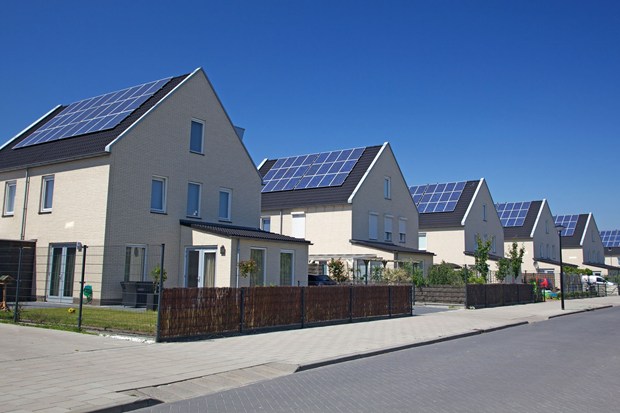 Guardian 12th Aug 2017, If you want solar photovoltaic panels on your home but don’t have the money for them, EDF Energy is offering to install a free system – complete with
storage batteries – if you agree to buy the subsidised power it generates
for 20 years.
The French-owned energy giant is looking for 100 homes to
trial its Sunplug scheme, which is being offered in conjunction with
established solar supplier Lightsource. To sign up you need to have a
large, unshaded south-facing roof at a pitch of about 45 degrees. If you
are accepted, the company will install the largest solar panel system the
roof can take – a 16-panel setup will generate 4kW – plus an LG storage
battery that lets you use the power that’s generated during the day in the
evening.
In return, EDF gets to keep the feed-in tariff paid by the
government, which is worth about £150 a year. It also keeps the export
tariff – around £50 a year. The householder is contractually bound to
pay Sunplug 9.9p per kilowatt hour for each unit of electricity they use
from the panels and battery.
This is a little cheaper than what you would pay if you bought green electricity from the grid. For example, green
supplier Good Energy charges 15.5p, with a standing charge averaging 26p a
day. The advantage could come in future years as the price demanded by
Sunplug can only rise by the retail prices index or 2.5% – whichever is
lower.
If the price of grid electricity rises substantially over the next
20 years, users will make considerable savings. However, if they don’t,
some users will be left wondering why they bothered, not least because they
have to have the system inspected each year, which will cost about £80. So
this scheme is likely to appeal to anyone who wants green electricity at
fixed prices over the next two decades.
The other significant benefit comes at the end of the 20-year term, when the householder is given ownership of
the system, which should continue to generate substantial free power. So
what’s the Money verdict? Solar PV systems are still a good investment if
you have the money upfront, the right roof and location, and if you plan to
stay in the house for a long time. The case for the free Sunplug deal is
less clear. To us, it looks too heavily weighted in favour of the company.
If it offered some free electricity each day or other incentives, that
would make the scheme more attractive.
https://www.theguardian.com/money/2017/aug/12/edf-free-solar-panels-buy-power-generated-20-years
Big savings for UK homes that install solar and storage technologies
 Solar Power Portal 10th Aug 2017, Installing solar and storage technologies into homes could save them as
much as £600 each year on their fuel bills, a new study has found.
The report, released by Swansea University’s Specific Innovation and
Knowledge Centre, claims that an integrated system comprising solar PV roof
installations, battery storage and solar heat collection technology on
south-facing walls could cut energy consumption by more than 60%.
The findings are backed up by a working demonstration project completed on a
school in Swansea. The ‘Active Classroom’, as it has been dubbed, has
generated more energy than it has consumed since receiving the complete
system six months ago. https://www.solarpowerportal.co.uk/news/solar_and_storage_could_save_homes_600_each_year_new_report_finds
Very few veterans of Gulf War approved for health claims
Report: VA office denies 90 percent of Gulf War claims, Santa Fe New Mexican, The Associated Press, 13 Aug 17, ALBUQUERQUE — A Veterans Affairs office in New Mexico during the 2015 fiscal year denied more than 90 percent of benefit claims related to Gulf War illnesses, marking the ninth-lowest approval rating among VA sites nationwide, according to a federal report.
The U.S. Department of Veterans Affairs’ Albuquerque office denied 592 of 640 Gulf War illness claims in 2015, which is the latest yearly data available, The Albuquerque Journal reported earlier this week.
The report released in June from the Government Accountability Office found approval rates for Gulf War illness claims are one-third as high as for other disabling conditions. The Gulf War illness claims also took an average of four months longer to process…….http://www.santafenewmexican.com/news/local_news/report-va-office-denies-percent-of-gulf-war-claims/article_d2865b60-6a15-5877-a134-7b47ce5266d0.html
In the effort to deal with nuclear waste, pyroprocessing created even more problems
Since the project began 17 years ago, 15% of the waste has been processed, an average of one-fourth of a metric ton per year. That’s 20 times slower than originally expected, a pace that would stretch the work into the next century — long past the 2035 deadline.
Lyman said he was determined to explore the Idaho program in light of increasing interest in the scientific and regulatory communities in advanced nuclear reactors — including breeder reactors — and what he believed was misleading information by advocates.
 The Idaho National Lab created a ‘wonder fuel.’ Now, it’s radioactive waste that won’t go away, http://www.latimes.com/local/california/la-na-idaho-nuclear-waste-2017-story.html, Ralph VartabedianContact Reporter, 13 Aug 17 In the early days of atomic energy, the federal government powered up an experimental reactor in Idaho with an ambitious goal: create a “wonder fuel” for the nation.
The reactor was one of the nation’s first “breeder” reactors — designed to make its own new plutonium fuel while it generated electricity, solving what scientists at the time thought was a looming shortage of uranium for power plants and nuclear weapons.
It went into operation in 1964 and kept the lights burning at the sprawling national laboratory for three decades.
But enthusiasm eventually waned for the breeder reactor program owing to safety concerns, high costs and an adequate supply of uranium. Today, its only legacy is 26 metric tons of highly radioactive waste. What to do with that spent fuel is causing the federal government deepening political, technical, legal and financial headaches.
The reactor was shut down in 1994. Under a legal settlement with Idaho regulators the next year, the Department of Energy pledged to have the waste treated and ready to transport out of the state by 2035.
The chances of that happening now appear slim. A special treatment plant is having so many problems and delays that it could take many decades past the deadline to finish the job.
“The process doesn’t work,” said Edwin Lyman, a physicist at the Union of Concerned Scientists, who has documented the problems in a new report. “It turned out to be harder to execute and less reliable than they promised.”
Many of the cleanup efforts, like the one in Idaho, are years or even decades behind schedule, reflecting practices that were far too optimistic when it came to technology, costs and management know-how.
Jim Owendoff, the acting chief of the Energy Department’s environmental management program, recently ordered a 45-day review of the entire $6-billion-a-year radiation cleanup effort. “What I am looking at is how we can be more timely in our decision-making,” he said in a department newsletter.
The Idaho reactor, located at the 890-square-mile Idaho National Laboratory, was designed to produce electricity while it “breeds” new fuel by allowing fast-moving neutrons to convert non-fissionable uranium into fissionable plutonium.
But the complexity of breeder reactors led to safety problems.
Only one breeder reactor ever went into commercial operation in the U.S. — the Enrico Fermi I near Detroit, which suffered a partial core meltdown in 1966. Construction of a breeder reactor on the Clinch River in Tennessee was stopped in 1983.
A reactor using similar technology above the San Fernando Valley experienced fuel core damage in 1959 that is believed to have released radioactive iodine into the air.
Ultimately, the nation never faced a shortage of uranium fuel, and now the Energy Department is spending billions of dollars to manage its surplus plutonium. Unlike uranium, the “wonder fuel,” as the lab called it, was bonded to sodium to improve heat transfer inside the reactor.
The sodium has presented an unusual waste problem.
Sodium is a highly reactive element that can become explosive when it comes in contact with water and is potentially too unstable to put in any future underground dump — such as the one proposed at Yucca Mountain in Nevada.
To remove the bonded sodium, the government used a complex process, known as pyroprocessing, which was developed to also separate plutonium from the spent fuel. The spent fuel parts from the reactor are placed in a chemical bath and subjected to an electrical current, which draws off the sodium onto another material. The process is similar to electroplating a kitchen faucet.
Back in 2000, the project managers estimated in an environmental report that they could treat 5 metric tons annually and complete the job in six years.
But privately, the department estimated that it would take more than twice that long, according to internal documents that Lyman obtained under the Freedom of Information Act. Even that was unrealistic, because it assumed that the treatment plant could work around the clock every day of the year, without down time for maintenance or allowance for breakdowns. Lyman found that during one year — 2012 — no waste at all was processed.
Since the project began 17 years ago, 15% of the waste has been processed, an average of one-fourth of a metric ton per year. That’s 20 times slower than originally expected, a pace that would stretch the work into the next century — long past the 2035 deadline.
The problem with the breeder reactor waste is just one of many environmental issues at the lab, located on a high desert plateau near Idaho Falls. The federal government gifted the Idaho lab with additional radioactive waste for decades.
After the highly contaminated Rocky Flats nuclear weapons plant near Denver was shut down in 1993, the waste was shipped to Idaho. The Navy has been sending in its spent fuel from nuclear-powered ships.
The lab is dealing with tons of waste containing artificial elements, so-called transuranic waste. The Energy Department promised to move an average of 2,000 cubic meters to a special dump in New Mexico, but it has missed that goal for several years, because of an underground explosion at the dump. The Energy Department declined to answer specific questions about the breeder waste cleanup, citing the sensitivity of nuclear technology. It blamed the slow pace of cleanup on inadequate funding but said it was still trying to meet the deadline.
“When the implementation plan for the treatment of the [spent fuel] was developed in 2000, there was very limited nuclear energy research and development being performed in the United States,” a department spokesperson said in a statement.
“The funding for this program has been limited in favor of other research and development activities. The Department remains strongly committed to the treatment of this fuel in time to meet its commitments to the State of Idaho.”
Susan Burke, who monitors the cleanup at the laboratory for the state’s Department of Environmental Quality, said the state will continue to demand that the waste be ready for shipment out of Idaho by 2035.
“The Energy Department is doing the best it can, but our expectation is that they will have to meet the settlement agreement,” she said.
Idaho watchdogs are skeptical.
“There is some bad faith here on the part of the Energy Department,” said Beatrice Brailsford, nuclear program director at the Snake River Alliance, a group that monitors the lab. “The department is misleading the public. Not much information has been given out, but enough to be skeptical that the technology works well enough to meet the settlement.”
Lab officials declined to comment.
Lyman said he was determined to explore the Idaho program in light of increasing interest in the scientific and regulatory communities in advanced nuclear reactors — including breeder reactors — and what he believed was misleading information by advocates.
He presented a technical paper about pyroprocessing at a conference held in July by the International Atomic Energy Agency.
Lyman said he believes the Energy Department has little chance of success in the program.
“They are just blowing smoke,” he said. “It is a failure and they can’t admit it, because they don’t have a backup plan that would satisfy the state.”
Never again – new Hibakusha victims – no nuclear weapons – Sueichi Kido
 New head of A-bomb sufferers’ group strives for a world with no new hibakusha https://mainichi.jp/english/articles/20170812/p2a/00m/0na/025000c, August 13, 2017 (Mainichi Japan) “The dropping of an atomic bomb is an act decided by humans. Likewise, if humans decide to work together, we can eliminate nuclear weapons.” These were the words uttered by 77-year-old Sueichi Kido, who took over from Terumi Tanaka, 85, in June, as secretary-general of the Japan Confederation of A- and H-Bomb Sufferers Organizations after Tanaka had served in the role for 20 years.
Kido, himself an atomic bomb survivor (hibakusha), was just 5 years old when the atomic bomb was dropped on the city of Nagasaki. He was about 2 kilometers away from the hypocenter, and suffered burns to his face and upper body as a result.
The existence of hibakusha such as Kido became widely known once the press code that was in place during the Allied Occupation after World War II was lifted. He soon began to realize that he himself was a hibakusha. However, fearing discrimination, he decided not to tell people around him.
Twenty-five years after the atomic bomb was dropped on Nagasaki, Kido’s father died after bleeding from his eyes, nose and gums. Before Kido got married, he told his wife that he was a hibakusha. His wife’s older brother opposed the marriage and refused to attend the wedding.
In 1990, he attended a meeting in Gifu Prefecture aimed toward providing consultations for hibakusha, and the following year, he decided to set up a hibakusha group in the same prefecture. He came to feel that it was his duty as a hibakusha “to put his life on the line and strive toward making sure there are no more hibakusha in the future.”
In July this year, a historic treaty banning nuclear weapons was adopted — something hibakusha had wanted to see for many years. Nuclear nations and Japan are critical of the treaty, but Kido says, “There is no justice in the theory of nuclear deterrence. Nuclear nations and Japan are obviously being driven into a corner.”
To date, the Japan Confederation of A- and H-Bomb Sufferers Organizations has demanded that a clause on government compensation to people who have suffered from atomic bombs be inserted in the Atomic Bomb Survivors’ Assistance Act. As the new secretary-general of the confederation, Kido is striving toward achieving this goal.
“This clause isn’t just about atonement for the past. It is necessary in order to ensure that there are no more wars or damage involving nuclear weapons in the future,” Kido says.
Call for unilateral disarmament of UK’s nuclear arsenal

 Herald 13th Aug 2017, THE only sensible response to the escalating nuclear stand-off between
Donald Trump and Kim Jong-un is to rid the UK of its atomic arsenal,
according to a Nobel Peace Prize-nominated SNP MSP.
Bill Kidd, who was put forward for the honour by Parliamentarians for Nuclear Non-proliferation
and Disarmament (PNND) in 2016, said the UK should take a fresh look at
unilateral disarmament in the face of rising tensions between the US and
North Korea – a position that has been backed by the Scottish Greens.
http://www.heraldscotland.com/news/15470103.SNP__UK_must_ditch_Trident_in_response_to_nuclear_stand_off_between_North_Korea_and_US/
Hundreds of workers laid off, thousands of contractors lost jobs: lawsuit against Westinghouse over VC Summer nuclear failure
Pittsburgh Gazette 11th Aug 2017, Following the filing of a lawsuit alleging that Westinghouse Electric Co. violated labor laws by laying off hundreds of workers without proper notice, the bankrupt nuclear company confirmed Friday that it has furloughed 870 employees across the company.
The number represents all full-time Westinghouse employees who had been working on the VC Summer
nuclear power plant in South Carolina and includes 125 workers at
Westinghouse’s Cranberry headquarters. The majority of the furloughs took
place at the site of the VC Summer nuclear power plant construction
project.
The project was canceled last week by two South Carolina utilities. Years behind schedule and billions of dollars over budget, theproject was expected to cost another $8 billion to complete.
In addition to the Westinghouse layoffs, thousands of contractors working on the South Carolina site also lost their jobs.
The lawsuit, filed in bankruptcy court on Thursday by Andrew Fleetwood, a field engineering manager at VC Summer,
claims Westinghouse employees like him were furloughed “without being given any indication that his employment or that of his co-workers would ever recommence.” http://powersource.post-gazette.com/powersource/companies/2017/08/11/Westinghouse-furloughed-870-employees-in-fallout-from-the-cancelled-South-Carolina-nuclear-project/stories/201708110130
Multiple violations found at Washington State’s nuclear power plant
Multiple violations found at state’s nuclear power plant, The Washington State Department of Health (DOH) last month suspended indefinitely the shipment of radioactive waste from the state’s sole nuclear power plant.
Internal documents obtained by the KING 5 Investigators reveal that the Columbia Generating Station, operated by the publicly owned Energy Northwest, made repeated errors in its shipping of radioactive waste, in violation of state and federal regulations, dating back to 2014.
“There have been multiple deficiencies with the shipments of radioactive waste which has resulted in noncompliance with Federal, US Ecology, and State of Washington requirements,” wrote Robby Peek, Energy Northwest Quality Services supervisor in a July 26 interoffice memo.
Peek characterized the problems as “significant” and wrote the pattern of errors has led to a “loss of regulatory confidence.”
“Additionally, incorrect details within the shipping manifest can increase risk to the health and safety of the public,” wrote Peek.
The most recent event caused the DOH to revoke the plant’s shipping rights for the third time in the last three years.
A July 26 letter from the DOH to Energy Northwest outlines what led to the temporary ban. Inspectors at the state’s low level radioactive waste dump found a July 20 shipment of waste was far more radioactive than what was listed on the shipping manifest.
“Inspections of your shipment revealed (violations) of the US Ecology Radioactive Materials license…and the Washington Administrative Code,” wrote Kristen Schwab, DOH Office of Radiation Protection waste management supervisor. “Because of the nature of the violations found in this shipment, authorization to use the commercial low-level radioactive waste disposal site by Energy Northwest has been suspended indefinitely.”……. http://www.king5.com/news/local/multiple-violations-found-at-states-nuclear-power-plant/463541510
Could Hiroshima suffer a SECOND nuclear holocaust? Japan moving missile defences in
FEARS have been raised that Hiroshima could become the first city in history to be hit with a nuclear bomb TWICE, as North Korea prepares to launch missiles into the waters of the US territory of Guam.
1 This Month
To see nuclear-related stories in greater depth and intensity – go to https://nuclearinformation.wordpress.com/
12 February – Webinar The Big Push: New Nuclear Projects in Canada
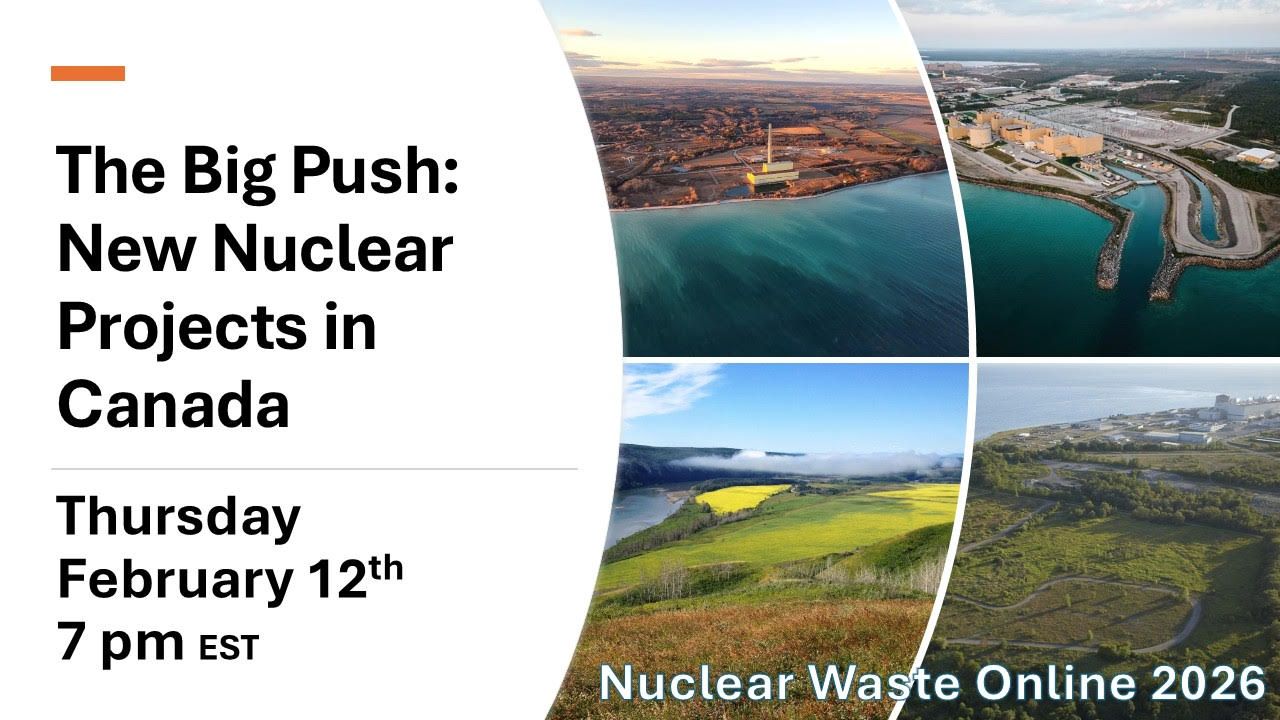
Thursday, February 12, 7 pm Eastern | 2nd of 4 sessions in the 2026 Nuclear Waste Online webinar series
Join a webinar on the push for new nuclear generation in Canada. Go to Northwatch.org to register or use the registration link https://us02web.zoom.us/webinar/register/WN_ZfWOf1GITqSRIZX8CB-A9w
-
Archives
- February 2026 (127)
- January 2026 (308)
- December 2025 (358)
- November 2025 (359)
- October 2025 (376)
- September 2025 (258)
- August 2025 (319)
- July 2025 (230)
- June 2025 (348)
- May 2025 (261)
- April 2025 (305)
- March 2025 (319)
-
Categories
- 1
- 1 NUCLEAR ISSUES
- business and costs
- climate change
- culture and arts
- ENERGY
- environment
- health
- history
- indigenous issues
- Legal
- marketing of nuclear
- media
- opposition to nuclear
- PERSONAL STORIES
- politics
- politics international
- Religion and ethics
- safety
- secrets,lies and civil liberties
- spinbuster
- technology
- Uranium
- wastes
- weapons and war
- Women
- 2 WORLD
- ACTION
- AFRICA
- Atrocities
- AUSTRALIA
- Christina's notes
- Christina's themes
- culture and arts
- Events
- Fuk 2022
- Fuk 2023
- Fukushima 2017
- Fukushima 2018
- fukushima 2019
- Fukushima 2020
- Fukushima 2021
- general
- global warming
- Humour (God we need it)
- Nuclear
- RARE EARTHS
- Reference
- resources – print
- Resources -audiovicual
- Weekly Newsletter
- World
- World Nuclear
- YouTube
-
RSS
Entries RSS
Comments RSS
 nuclear-news