Donald Trump’s policies mean serious damage to climate science research
‘Frightening’: Senior climate scientist warns of potential Donald Trump damage http://www.smh.com.au/environment/climate-change/frightening-senior-climate-scientist-warns-of-potential-donald-trump-damage-20170719-gxe3xm.html, Peter Hannam, 20 July 17 Budget cuts to key US climate programs proposed by President Donald Trump are “frightening” for the global science community, threatening to set back recent advances, a leading international researcher says.
Valerie Masson-Delmotte, co-chair of the Intergovernmental Panel on Climate Change working group, said the planned cuts were “a major worry” given America’s outsized contribution to the global research.
“I cannot hide the huge anxieties about the strength of research capacities in the US in the coming years,” Dr Masson-Delmotte said.
Geosciences, including climate research, face cuts of as much as 40 per cent, including the scrapping for four climate-related satellites. “It’s a major worry given the weight of the US scientific communities” in this field, she said.
US work includes as much as 30 per cent of ocean climate research, and running core data centres used by international researchers. Such cuts, if applied, would be difficult for US universities – or other nations – to fill.
Cuts proposed by Australia’s CSIRO in monitoring of the Southern Ocean stirred similar concerns last year before a public outcry prompted the Turnbull government to step in to create a special climate centre with longer-term funding guaranteed.
China has significantly increased its ocean monitoring and climate modelling work “but it is not sufficient to cover what would happen if such a big player as the US would reduce their effort”, said Dr Masson-Delmotte, who is also a senior scientist at France’s Laboratoire des Sciences du Climat et de l’Environnement at the Institut Pierre Simon Laplace.
While researchers continue to expand knowledge of how the rise in greenhouse gases is causing a build-up in planetary heat, important gaps remain.
Research priorities include increasing observations in remote regions, such as Antarctica, where melting ice could trigger global sea-level rises of metres over centuries if the giant sheets collapse.
More understanding is also needed about feedback processes, which could amplify climate change and trigger abrupt shifts such as in ocean circulation patterns.
A third priority is the development of models that can correctly project the changes, particularly on a regional scale.
The sixth IPCC assessment report is due to be completed in 2021, with special reports on the impacts of a 1.5-degree warming, the cryosphere, and climate change effects on land set for release in the next two years.
No comments yet.
1 This Month
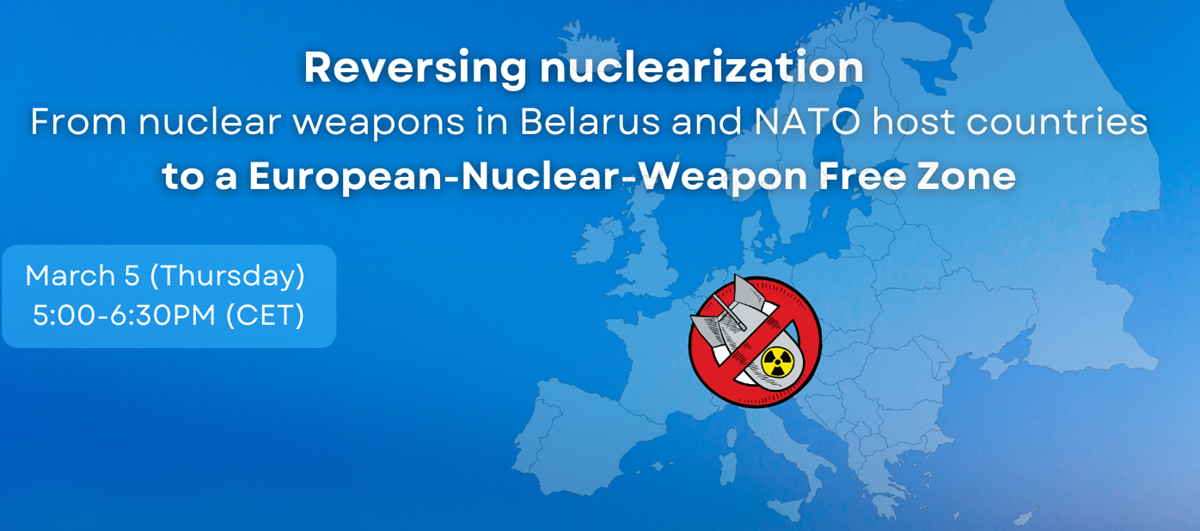
5 March -Online – Reversing nuclearization:
From nuclear weapons in Belarus and NATO host countries to a European-Nuclear-Weapon Free Zone
11am-12:30pm Eastern Time USA / 5pm-6:30pm CET

of the week – Advocating for a
nuclear free beach – https://www.samuellawrencefoundation.org/
The Samuel Lawrence Foundation advocates for a Nuclear Waste Free Beach at San Onofre, join us and take action!

10 March A LIVE WEBINAR THE REAL EFFECTS OF NUCLEAR POWER
What the Industry Isn’t Telling Us
1:00 PM Mountain, 2 pm Central, 3 pm Eastern. Live on the Keepers of the Water Facebook page

18 March Webinar @ 1 PM EST: An Assessment of SMR Projects: The Case of Canada
register for the zoom:
https://us02web.zoom.us/webinar/register/WN_o8BIIOUvQ2ONJR1nta65DQ#/registration

of the week – STOP SMALL MODULAR REACTORS IN CANADA
To see nuclear-related stories in greater depth and intensity – go to https://nuclearinformation.wordpress.com
-
Archives
- March 2026 (38)
- February 2026 (268)
- January 2026 (308)
- December 2025 (358)
- November 2025 (359)
- October 2025 (376)
- September 2025 (258)
- August 2025 (319)
- July 2025 (230)
- June 2025 (348)
- May 2025 (261)
- April 2025 (305)
-
Categories
- 1
- 1 NUCLEAR ISSUES
- business and costs
- climate change
- culture and arts
- ENERGY
- environment
- health
- history
- indigenous issues
- Legal
- marketing of nuclear
- media
- opposition to nuclear
- PERSONAL STORIES
- politics
- politics international
- Religion and ethics
- safety
- secrets,lies and civil liberties
- spinbuster
- technology
- Uranium
- wastes
- weapons and war
- Women
- 2 WORLD
- ACTION
- AFRICA
- Atrocities
- AUSTRALIA
- Christina's notes
- Christina's themes
- culture and arts
- Events
- Fuk 2022
- Fuk 2023
- Fukushima 2017
- Fukushima 2018
- fukushima 2019
- Fukushima 2020
- Fukushima 2021
- general
- global warming
- Humour (God we need it)
- Nuclear
- RARE EARTHS
- Reference
- resources – print
- Resources -audiovicual
- Weekly Newsletter
- World
- World Nuclear
- YouTube
-
RSS
Entries RSS
Comments RSS
 nuclear-news
Leave a comment