Nuclear catastrophe narrowly avoided at Los Alamos National Laboratory
A near-disaster at a federal nuclear weapons laboratory takes a hidden toll on America’s arsenal , Science Repeated safety lapses hobble Los Alamos National Laboratory’s work on the cores of U.S. nuclear warheads By The Center for Public Integrity, Patrick Malone Jun. 29, 2017 Technicians at the government’s Los Alamos National Laboratory settled on what seemed like a surefire way to win praise from their bosses in August 2011: In a hi-tech testing and manufacturing building pivotal to sustaining America’s nuclear arsenal, they gathered eight rods painstakingly crafted out of plutonium, and positioned them side-by-side on a table to photograph how nice they looked.
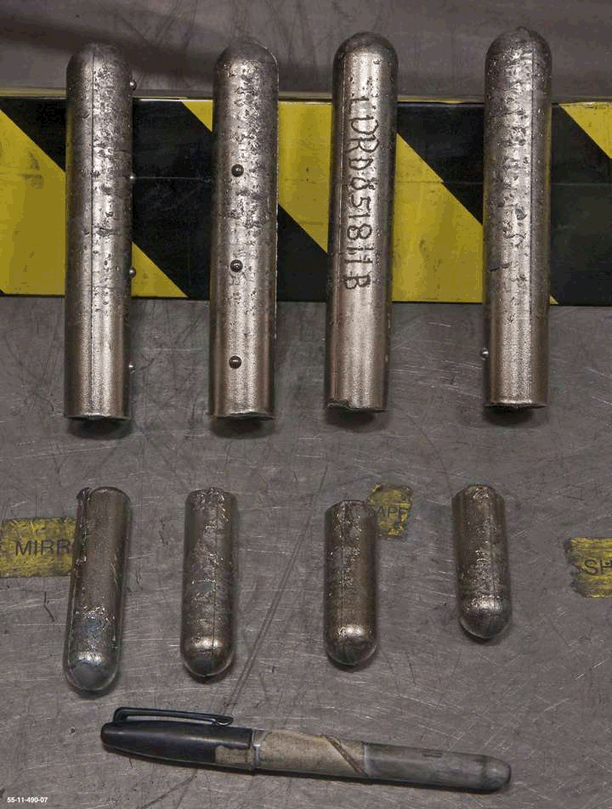
The resulting blue glow — known as Cherenkov radiation — has accidentally and abruptly flashed at least 60 times since the dawn of the nuclear age, signaling an instantaneous nuclear charge and causing a total of 21 agonizing deaths. So keeping bits of plutonium far apart is one of the bedrock rules that those working on the nuclear arsenal are supposed to follow to prevent workplace accidents. It’s Physics 101 for nuclear scientists, but has sometimes been ignored at Los Alamos.
As luck had it that August day, a supervisor returned from her lunch break, noticed the dangerous configuration, and ordered a technician to move the rods apart. But in so doing, she violated safety rules calling for a swift evacuation of all personnel in “criticality” events, because bodies — and even hands — can reflect and slow the neutrons emitted by plutonium, increasing the likelihood of a nuclear chain reaction. A more senior lab official instead improperly decided that others in the room should keep working, according to a witness and an Energy Department report describing the incident.
Catastrophe was avoided and no announcement was made at the time about the near-miss — but officials internally described what happened as the most dangerous nuclear-related incident at that facility in years. It then set in motion a calamity of a different sort: Virtually all of the Los Alamos engineers tasked with keeping workers safe from criticality incidents decided to quit, having become frustrated by the sloppy work demonstrated by the 2011 event and what they considered the lab management’s callousness about nuclear risks and its desire to put its own profits above safety.
When this exodus was in turn noticed in Washington, officials there concluded the privately-run lab was not adequately protecting its workers from a radiation disaster. In 2013, they worked with the lab director to shut down its plutonium handling operations so the workforce could be retrained to meet modern safety standards.
Those efforts never fully succeeded, however, and so what was anticipated as a brief work stoppage has turned into a nearly four-year shutdown of portions of the huge laboratory building where the plutonium work is located, known as PF-4.
Officials privately say that the closure in turn undermined the nation’s ability to fabricate the cores of new nuclear weapons and obstructed key scientific examinations of existing weapons to ensure they still work. The exact cost to taxpayers of idling the facility is unclear, but an internal Los Alamos report estimated in 2013 that shutting down the lab where such work is conducted costs the government as much as $1.36 million a day in lost productivity.
And most remarkably, Los Alamos’s managers still have not figured out a way to fully meet the most elemental nuclear safety standards. ……
these safety challenges aren’t confined to Los Alamos. The Center’s probe revealed a frightening series of glaring worker safety risks, previously unpublicized accidents, and dangerously lax management practices. The investigation further revealed that the penalties imposed by the government on the private firms that make America’s nuclear weapons were typically just pinpricks, and that instead the firms annually were awarded large profits in the same years that major safety lapses occurred. Some were awarded new contracts despite repeated, avoidable accidents, including some that exposed workers to radiation…….
George Anastas, a past president of the Health Physics Society who analyzed dozens of internal government reports about criticality problems at Los Alamos for the Center, said he wonders if “the work at Los Alamos [can] be done somewhere else? Because it appears the safety culture, the safety leadership, has gone to hell in a handbasket.”
Anastas said the reports, spanning more than a decade, describe “a series of accidents waiting to happen.” The lab, he said, is “dodging so many bullets that it’s scary as hell.”http://www.sciencemag.org/news/2017/06/near-disaster-federal-nuclear-weapons-laboratory-takes-hidden-toll-america-s-arsenal
No comments yet.
1 This Month
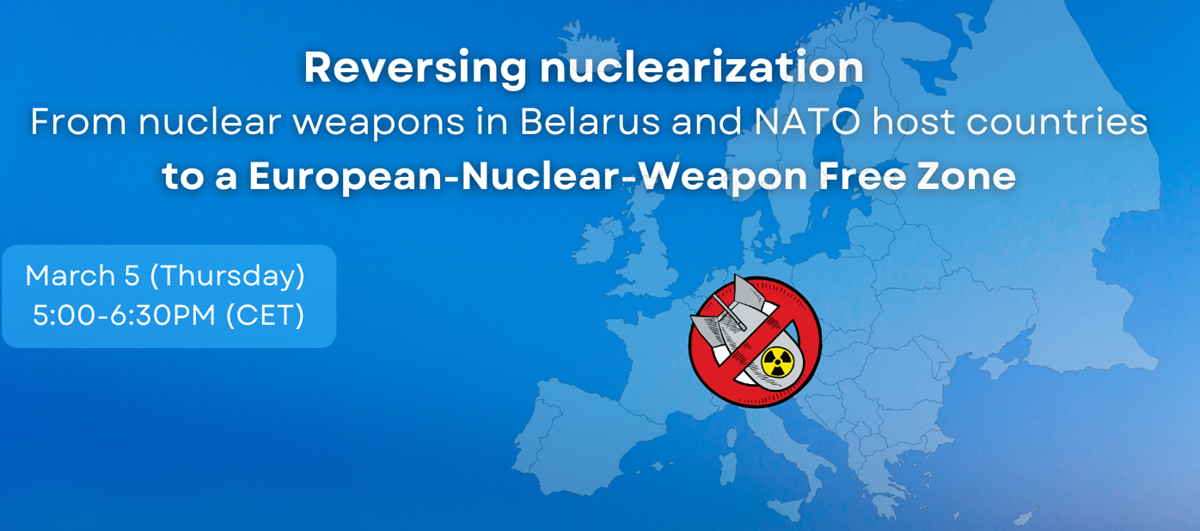
5 March -Online – Reversing nuclearization:
From nuclear weapons in Belarus and NATO host countries to a European-Nuclear-Weapon Free Zone
11am-12:30pm Eastern Time USA / 5pm-6:30pm CET

of the week – Advocating for a
nuclear free beach – https://www.samuellawrencefoundation.org/
The Samuel Lawrence Foundation advocates for a Nuclear Waste Free Beach at San Onofre, join us and take action!

10 March A LIVE WEBINAR THE REAL EFFECTS OF NUCLEAR POWER
What the Industry Isn’t Telling Us
1:00 PM Mountain, 2 pm Central, 3 pm Eastern. Live on the Keepers of the Water Facebook page

18 March Webinar @ 1 PM EST: An Assessment of SMR Projects: The Case of Canada
register for the zoom:
https://us02web.zoom.us/webinar/register/WN_o8BIIOUvQ2ONJR1nta65DQ#/registration

of the week – STOP SMALL MODULAR REACTORS IN CANADA
To see nuclear-related stories in greater depth and intensity – go to https://nuclearinformation.wordpress.com
-
Archives
- March 2026 (38)
- February 2026 (268)
- January 2026 (308)
- December 2025 (358)
- November 2025 (359)
- October 2025 (376)
- September 2025 (258)
- August 2025 (319)
- July 2025 (230)
- June 2025 (348)
- May 2025 (261)
- April 2025 (305)
-
Categories
- 1
- 1 NUCLEAR ISSUES
- business and costs
- climate change
- culture and arts
- ENERGY
- environment
- health
- history
- indigenous issues
- Legal
- marketing of nuclear
- media
- opposition to nuclear
- PERSONAL STORIES
- politics
- politics international
- Religion and ethics
- safety
- secrets,lies and civil liberties
- spinbuster
- technology
- Uranium
- wastes
- weapons and war
- Women
- 2 WORLD
- ACTION
- AFRICA
- Atrocities
- AUSTRALIA
- Christina's notes
- Christina's themes
- culture and arts
- Events
- Fuk 2022
- Fuk 2023
- Fukushima 2017
- Fukushima 2018
- fukushima 2019
- Fukushima 2020
- Fukushima 2021
- general
- global warming
- Humour (God we need it)
- Nuclear
- RARE EARTHS
- Reference
- resources – print
- Resources -audiovicual
- Weekly Newsletter
- World
- World Nuclear
- YouTube
-
RSS
Entries RSS
Comments RSS
 nuclear-news
Leave a comment