
Christina Macpherson’s websites & blogs
I think that we’re all going to have to join American youth, in relying on comedy TV shows like Last Week Tonight with John Oliver, Late show with Stephen Colbert, to get our English language news, especially about America. The actual news is more like comedy. While Donald Trump struts about the world, for example, talking about peace to the Pope, the Trump budget sets out cuts to the UN peace-keeping operations.
Danger of nuclear terrorism is not talked about much. But Britain has suddenly replaced police at Sizewell nuclear site with armed soldiers. Singapore has recently passed legislation for mandatory death penalty for nuclear terrorism.
Draft treaty on banning possession and use of nuclear weapons released by UN panel.
Cold War nuclear weapons warped Earth’s magnetosphere – what will a nuclear war do?
Nuclear lobby in a bit of a panic – urging for ‘aggressive’ propaganda spin.
Survey of 8000 people in 8 countries: 8 in 10 now see climate change as a ‘catastrophic risk‘.
Almost 10 million jobs already, in renewable energy.
SWITZERLAND. Switzerland’ binding referendum – voted to ban nuclear plants, shift to renewable energy.
JAPAN.
Fukushima.
NORTH KOREA. Breakthrough for North Korea’s missile test – re-entry to Earth’s atmosphere. North Korea’s vast military capabilities, even without nuclear weapons.
IRAN. Election of Rouhani is good result for Tehran’s compliance with nuclear deal.
USA.
SAUDI ARABIA. Trump and retinue in Saudi Arabia – the main event $110 billion arms package.
ARCTIC. In Greenland, abandoned nuclear base could be unearthed by global warming.
UK.
SOUTH AFRICA. South Africa’s nuclear build plans – ripe for corruption.
FRANCE. EDF secretly planning to extend the life of its 58 reactors in France. European Commission scheduled to decide on EDF to gain controlling stake in AREVA nuclear corporation.
GERMANY. German Anti-Nuclear Activist Jailed for Blocking Train Carrying Radioactive Waste Through Densely Populated Areas
INDIA. India’s fast growth in renewable energy.
CHINA. Chinese fighter jets buzz US ‘nuclear sniffer’ plane over East China Sea. China cancelling many coal mines, going all out for solar power.
RENEWABLES IN BRIEF : Solar power -China, Tesla news, India’s push for renewables – Ever cheaper renewable energy.
SWEDEN. Sweden cancels arrest warrant for Julian Assange, closes investigation.
May 27, 2017
Posted by Christina Macpherson |
Christina's notes |
Leave a comment

 STV 24th May 2017 British armed forces are guarding 12 sites in Scotland following the increased terrorism threat, the First Minister has announced. The deployment comes as part of the first phase of Operation Temperer, which is
being rolled out across the country by the UK Government.
The operation was called after the independent Joint Terrorism Analysis Centre raised the nation’s threat level to “critical”, meaning a terror attack can be expected imminently. Soldiers have replaced armed officers from the
Ministry of Defence’s (MOD) police force and the Civil Nuclear Constabulary across the UK. The three civil nuclear sites now under guard from members of the armed forces are Dounreay, Hunterston and Torness.
https://stv.tv/news/politics/1389463-army-guarding-scottish-sites-after-manchester-bombing/
May 27, 2017
Posted by Christina Macpherson |
safety, UK |
Leave a comment
Blair’s statement echo’s Secretary of Defence Jim Mattis’ recent admission that a fight with the North would be “”tragic on an unbelievable scale.”
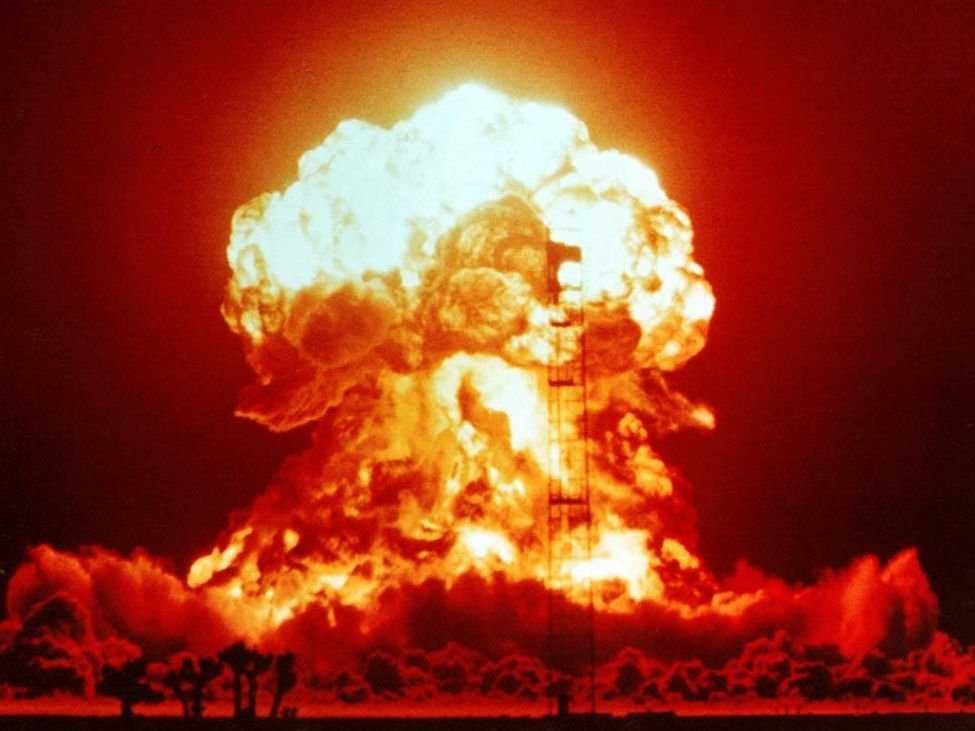
 Here’s why the US would have to be absolutely insane to attack North Korea https://www.businessinsider.com.au/us-attack-north-korea-insane-2017-5?r=US&IR=T ALEX LOCKIE, MAY 26, 2017, Despite reports of US and Chinese military buildups, North Korea’s increased pace of provocations, and President Donald Trump’s administration’s repeated claims that “all options are on the table,” — the US would have to be absolutely insane to attack North Korea.
To the untrained eye, the preparations for war are all there.
The US has deployed the world’s most advanced missile defence system to South Korea to protect against ballistic missiles.
The world’s most advanced jets, the F-35, has been sent to Japan.
And the US has sent a carrier strike group, the most powerful unit of naval power in existence, near North Korea’s shores.
The US has permanently stationed 25,000 members of the world’s best organised fighting force right of the North’s borders — and they just finished a massive military exercise.
But even the best systems in the world can’t stop a determined foe with a handful of nukes.
Adm. Dennis Blair, former Director of National Intelligence under Obama, recently told a crowd at the Harvard Club that there’s just no way to safely knock out all of North Korea’s nuclear capabilities in one go. “If I were to run the national intelligence again and the president comes to me and says, ‘Here is General [Jim] Mattis’ strike plan and can you ensure me that this will take out of all the North Korea nuclear capabilities?’ — it won’t be easy to say yes,” said Blair, according to the South China Morning Post.
Blair conceded that before he’d advocate an attack on North Korea, he’d accept it as a nuclear-armed state.
Blair’s statement echo’s Secretary of Defence Jim Mattis’ recent admission that a fight with the North would be “”tragic on an unbelievable scale.”
The US has 2,300 nuclear weapons, any one of which could hit North Korea in a moment’s notice. North Korea may have a dozen or so nuclear weapons, and only the ability to hit a few, close targets within an hour or so of planning.
But it only takes a single nuclear detonation to make conflict unthinkable. Unlike the surgical and virtually unpunished April 7 US strike on a Syrian airfield, North Korean missiles would likely return fire thick and fast.
Experts believe North Korea would probably respond with artillery fire that would light up Seoul and its 10 million residents. Decoy missiles would streak across the sky to overwhelm missile defences. And ground forces would pour in through hidden tunnels.
The US and South Korea would undoubtedly smash North Korean forces in time, but not before a missile touched down, or another catastrophic act of war befell thousands, if not hundreds of thousands, of innocent South Koreans.
According to Bonnie Glaser, director of the China Power Project at the Center for Strategic International Studies, there’s only one military option that even begins to make sense for North Korea.
“If North Korea has a ballistic missile on a launchpad that we think is armed with a nuclear warhead,” then the US would seek to eliminate that, one, single missile,” said Glaser. “But even a strike on a missile on a launchpad could result in retaliation.” After all, how should the North Koreans know that incoming missiles from the US had a limited objective? The risk remains that they’d misinterpret a limited strike for a full-on attack.
And the idea of eliminating a single, consolidated threat from North Korea is simply a dream. North Korea may well be beyond using launch pads, as their recent missile tests have all taken off from mobile launchers, many of which have tank-like treads to allow them to fire from hidden, wilderness locations.
All three options for dealing with North Korea — ineffective sanctions, conceding to nuclear blackmail, and military action — all are terrible. But the most terrible and unlikely is direct military action.
May 27, 2017
Posted by Christina Macpherson |
North Korea, politics international, USA, weapons and war |
Leave a comment
 Decommissioning continues as normal at Dounreay under heightened response rate, John O’Groat Journal, 26 May 17, DOUNREAY said decommissioning work is continuing as normal as the UK terror threat level has been raised to critical.
Prime Minister Theresa May announced on Tuesday night the threat level was raised from severe to critical, the highest possible level after the Manchester Arena bombing on Monday night.
Critical level means an attack is expected imminently in the UK.
A spokeswoman at Dounreay has announced the site is operating at a heightened response rate but work continues as normal.
She said: “Security at Dounreay and other sites owned by the Nuclear Decommissioning Authority is kept under continuous review.
“The site is continuing to operate at a “heightened” response state and decommissioning work is continuing as normal….http://www.johnogroat-journal.co.uk/News/Decommissioning-continues-as-normal-at-Dounreay-under-heightened-response-rate-24052017.htm
May 27, 2017
Posted by Christina Macpherson |
decommission reactor, safety, UK |
Leave a comment

 Forget North Korea’s Nuclear Arsenal. Its Chemical and Cyber Weapons Are Already a Threat. Pyongyang’s VX attack and cyber hijinks suggests a regime bent on acquiring multiple weapons of mass disruption and destruction. Patrick M. Cronin National Interest May 25, 2017 “….To be clear, nuclear weapons are a real and gathering danger, and frequent test launches by the Korean People’s Army suggest steady progress toward deploying long-range nuclear missiles. Yet there is considerable experience and success in deterring nuclear arsenals. The same cannot be said for biochemical and cyber weapons…….
North Korea expanding cybercrime and cyberwar capabilities.
No one can be sure yet who was responsible for the recent wave of ransomware attacks, but certainly North Korea has both the means and the motive for undertaking such action. Some suspect that North Korean sleeper cells of digital soldiers may have carried out the worldwide assault to strike back at outside powers, including China, while also seeking to finance expensive weapons programs. Authentication will take time, but there seems to be a connection between the so-called Lazarus hacking group and the remarkably successful 2016 cyber heist of the central bank in Bangladesh and the 2014 assault on Sony Corporation. North Korea’s special Unit 180 may be linked to these information warfare activities……
Pyongyang likes to rattle the nuclear saber but remains ready to use biochemical and cyber weapons. Nuclear weapons are useful insurance policies against intervention, but their use would be suicidal. The more surreptitious use of biochemical and cyber weapons, however, risks creating a grave new world by seeking to strike below the threshold of nuclear deterrence and catalyzing war.
The hopeful news is that leading officials in Seoul and Washington understand the stakes and the need to work together to preserve deterrence in the face of emerging threats. Secretary of Defense James Mattis recently stated that using force to settle the North Korea problem by would be “tragic on an unbelievable scale.” And President Moon Jae-in’s new national security advisor, Chung Eui-yong, has emphasized that “there is ample room for the U.S. and South Korea to calibrate and plan their joint engagement with the North.”……Dr. Patrick M. Cronin directs the Asia-Pacific Security Program at the Center for a New American Security (CNAS) in Washington, DC; his Twitter handle is @PMCroninCNAS. http://nationalinterest.org/feature/forget-north-koreas-nuclear-arsenal-its-chemical-cyber-20846
May 27, 2017
Posted by Christina Macpherson |
North Korea, weapons and war |
Leave a comment
 North Korea nuclear missile strike on US mainland is ‘inevitable’, says Defence intelligence chief
Donald Trump recently called North Korean leader Kim Jong-un a ‘madman’, The Independent, Mythili Sampathkumar New York @MythiliSk 26 May 17, The Defence Intelligence Agency chief has said it is “inevitable” that a nuclear weapon launched from North Korea would hit the US mainland.
Lieutenant General Vincent Stewart told the Senate Armed Services Committee that the possibility of an attack was very real after a recent nuclear missile test conducted by Pyongyang.
He warned that if the isolated country and its leader Kim Jong-un are left on the “current trajectory the regime will ultimately succeed.” However Mr Stewart said it was “nearly impossible to predict when” that would be.
He and Director of National Intelligence Dan Coates were pressed for a timeline repeatedly but refused to give a concrete answer out of fear that it may reveal what intelligence the US has been able to gather on Pyonyang.
“We do not have constant, consistent [intelligence and surveillance] capabilities and so there are gaps, and the North Koreans know about these,” Mr Coates said.
Mr Coates also testified in the hearing that what makes North Korea a particularly “grave national security threat” is Mr Kim’s “aggressive” leadership. He seems determined to develop a nuclear missile capable of reach the west coast of the US, called an intercontinental ballistic missile (ICBM).
May 27, 2017
Posted by Christina Macpherson |
North Korea, weapons and war |
Leave a comment
 https://www.aol.com/article/news/2017/05/26/us-first-icbm-intercept-test-north-korea-threat-nuclear-weapons/22111626/ THOMSON REUTERS May 26th 2017 WASHINGTON, May 26 The United States will test an existing missile defense system to try to intercept an intercontinental ballistic missile (ICBM) next week, U.S. officials said on Friday, at a time when North Korea is trying to develop one.
The test, scheduled for Tuesday, is the first time the United States will try to intercept an ICBM.
The United States has used the Ground-Based Midcourse Defense (GMD) system, managed by Boeing Co. and in place to counter attacks from rogue states such as North Korea, to intercept other types of missiles but never an ICBM.
While U.S. officials believe Pyongyang is some years away from mastering re-entry expertise for perfecting an ICBM, it is making advances. This week the head of the U.S. Defense Intelligence Agency said that if left unchecked, North Korea is on an “inevitable” path to obtaining a nuclear-armed missile capable of striking the United States.
The remarks are the latest indication of mounting U.S. concern about Pyongyang’s advancing missile and nuclear weapons programs, which the North says are needed for self-defense.
U.S. officials said that the test had been planned well in advance and was not in reaction to any specific event.
The Missile Defense Agency said an interceptor based out of Vandenberg Air Force Base in California, one of 36 in California and Alaska, will be used in the test to shoot down a target similar to an ICBM over the Pacific Ocean.
The system has carried out successful intercepts in nine out of 17 attempts dating back to 1999. The most recent test was in 2014. Last year a science advocacy group said the system has no proven capability to protect the United States. (Reporting by Idrees Ali; Editing by James Dalgleish)
May 27, 2017
Posted by Christina Macpherson |
USA, weapons and war |
Leave a comment
 Solar power reaches a record high as it surges past nuclear and coal http://www.telegraph.co.uk/business/2017/05/26/solar-power-reaches-record-high-surges-past-nuclear-coal/ Jillian Ambrose 26 MAY 2017 The bank holiday heatwave has started with a new record for solar power generation which blazed to a quarter of the electricity mix on Friday afternoon.
The nation’s solar panels scorched the previous record set last month by generating 8.7GW of power, more than nuclear and coal power combined.
Solar power was the second most used generating technology behind gas-fired power and made up around 25pc of the UK’s electricity, its highest ever share of the market on a working week day.The UK now has just over 12GW of solar power in place, the same production capacity as eight new-generation nuclear reactors.
Paul Barwell, the chief executive of the solar trade association, said: “This is a colossal achievement in just 5 years, and sends a very positive message to the UK that solar has a strong place in the decarbonisation of the UK energy sector.”
The boom in solar panels in recent years, fuelled by subsidies, has far exceeded expectations. The panels feed the power they produce directly into homes or the local electricity grid, cutting demand on the national system to what is expected to be a record low this year.
National Grid said the renewable generation boom poses
a challenge to its role balancing supply and demand on the national transmission network second by second.
Duncan Burt, who is responsible for National Grid’s control room said the ability to forecast weather patterns is becoming more significant.“We have an expert team of forecasters who monitor a range of data, to forecast just how much electricity will be needed over a set period,” he said.
“We have planned for these changes to the energy landscape and have the tools available to ensure we can balance supply and demand. It really is the beginning of a new era, which we are prepared for and excited to play our part,” he said.The Government closed off funding for solar projects through its Renewables Obligation scheme in April 2015, allowing a modest grace period for some developers to roll out new sites until April last year. This helped the boom to continue ahead of last summer, but new projects are expected to hit a lull for the next year or two.
Jamie Stewart, a senior power expert at market data provider Icis, said the ebb will give way to a renewed surge in new solar projects because plummeting costs mean it will no longer need Government handouts.
“When this grid parity is reached, the UK can expect to see a lot more solar power put in place up and down the country,” he said.
Abid Kazim, managing director of NextEnergy Capital, said on Thursday at an industry event that he plans to invest in subsidy free solar because the cost of the technology is “collapsing”.
“In energy price terms, solar is low-cost and mostly produces cheap electricity during peak demand hours from 07:00-19:00. This means at peak times it keeps down wholesale power prices, which make up around 45pc of a household bill,” Mr Stewart said.
May 27, 2017
Posted by Christina Macpherson |
renewable, UK |
Leave a comment
Nuclear industry prices itself out of power market, demands taxpayers keep it afloat, Think Progress, Joe RommFollow, Dr. Joe Romm is Founding Editor of Climate Progress, “the indispensable blog,” as NY Times columnist Tom Friedman describes it, 25 May 17
Nuclear power is so expensive even some conservatives are turning on it The nuclear industry is so uncompetitive that half of U.S. nuclear power plants are no longer profitable. And if existing nukes are uneconomic, it’s no surprise that new nuclear plants are wildly unaffordable.
New York and Illinois have already agreed to more than $700 million a year in subsidies, and if all northeast and mid-Atlantic nukes got similar subsidies, it would cost U.S. consumers $3.9 billion a year. Things are so bad for the nuclear industry that, recently, even conservatives have started to publicly oppose the subsidies the industry needs to survive.
“Ever since the completion of the first wave of nuclear reactors in 1970, and continuing with the ongoing construction of new reactors in Europe, nuclear power seems to be doomed with the curse of cost escalation,” explained one 2015 journal article, “Revisiting the Cost Escalation Curse of Nuclear Power.”
At the same time, nuclear’s main competition — natural gas, energy efficiency, and renewables — have gotten much cheaper.
The nuclear industry has essentially priced itself out of the market for new power plants, at least in market-based economies. Even the nuclear-friendly French — who get more than three fourths their power from nukes — can’t build an affordable, on-schedule next generation nuclear plant in their own country.
Last week, the Atlanta Journal-Constitution reported on the umpteenth cost overruns in Georgia Power’s effort to built two new reactors, with the headline, “Plant Vogtle: Georgia’s nuclear ‘renaissance’ now a financial quagmire.” The Westinghouse plants, originally priced at a whopping $14 billion are “currently $3.6 billion over budget and almost four years behind the original schedule.” Westinghouse filed for bankruptcy in March.
The Georgia debacle should not shock anyone. Bloomberg explained two years ago that “even as sympathetic an observer as John Rowe [former chair of the U.S.’s largest nuclear utility] warns that the new units at Vogtle will be uneconomical when — or if — they’re completed.”
As a result, the industry has started demanding new subsidies to keep their plants open — beyond the staggering $100 billion and more in subsidies the nuclear industry has received over the decades.
Yet, Bloomberg reported on Wednesday that “Even the promise of state subsidies wasn’t enough to help a struggling nuclear power plant in the biggest electricity market emerge a victor in a closely watched auction” in Illinois. Exelon, however, claimed it hadn’t taken the subsidies — which have not been officially awarded — into account.
And here’s the last straw: You know the industry is in trouble when even conservatives start penning pieces dissing it. This week saw two such pieces:
- “Nuclear Subsidies: A Case of Pure Waste”
- “Why nuclear power subsidies must end”
-
The first is by Bill O’Keefe, former CEO of the conservative (and climate-science-denying) George C. Marshall Institute. He argues, “Favoring nuclear power with heavy subsidies distorts the energy market, increases costs to electricity users, and discourages the development of new energy technologies.”
The second is by William F. Shughart II, research director at the libertarian (and climate-science-denying) Independent Institute. Shughart argues, the subsidies “reward poor management and bad judgment and would cost homeowners and businesses billions.” So nuclear power is on its last legs. ….
-
The fact is that the rapid advances in renewables, batteries and other storage, demand response, efficiency, and electric vehicles mean that integrating low-cost renewables into the grid will almost certainly be far easier and cheaper and faster than people realize.
The bottom line is that existing nuclear plants can make a plausible case for a modest short-term subsidy. But whether or not you agree with those subsidies, the future belongs to renewables and efficiency. https://thinkprogress.org/nuclear-demands-subsidies-b8bfa9bdd8fa
May 27, 2017
Posted by Christina Macpherson |
politics, USA |
Leave a comment
Scottish Energy News 26th May 2017, A former Tory energy minister in the Lords is to join the Renewable Energy Association – the UK’s biggest such body. Baroness Verma joins the REA as an independent non-executive board member. Her new job includes looking at the strategic role of renewables and clean tech in the UK and trade opportunities for British services and manufacturing in emerging markets.
As Energy Minister during the coalition Government, Verma took the EnergyAct 2013 through the Lords, before becoming Minister at the Department for International Development in 2015, with responsibility, amongst others, for
climate and environment. She said: “With storage and smart technologies already a reality, the opportunities for the UK to lead the world in these areas is one we cannot afford to waste and I look forward to working with REA members in this.”
http://www.scottishenergynews.com/
May 27, 2017
Posted by Christina Macpherson |
general |
Leave a comment
The French experiment – and the shift from nuclear to renewables, REneweconomy, By Craig Morris on 26 May 2017 Energy Transition
France’s new President Emmanuel Macron has appointed his cabinet – to great acclaim. The direction of the country’s energy transition remains unclear, however. ……..
The appointment that has drawn the most attention seems to be the new Minister of Ecology and Solidarity – the new name for the old Ministry of Energy and the Environment headed by Ségolène Royal. The new focus indicates that social issues will be a priority when decisions about the energy transition are made.
The man who will direct the new ministry is Nicolas Hulot, who made a name for himself decades ago with a TV series on the environment …….
It will be interesting to see what “solidarity” means in the energy transition. For instance, concerning the closing of Fessenheim, France’s oldest nuclear plant, Hulot is quoted: “We cannot impose a transition by force. The transition has to be done in an acceptable manner.” This approach is similar to the way Germany is handling its coal phaseout: slowly in order not to detrimentally impact coal communities…..
It thus seems likely that an approach will be taken to pursue an energy transition towards renewables and away from nuclear, but possibly not at the speed that Hollande’s law specified. The slowdown would then be justified with solidarity. If so, this approach seems logical. As I have been saying for years, France has put most of its eggs in the nuclear basket and can hardly afford to shut very many reactors.
It’s not just communities with reactors that will be affected by a nuclear phaseout. Rather, last November EDF – the utility than runs all French reactors – bought up the effectively bankrupt Areva, the firm that built them. Both companies are largely state-owned. In January, the EU approved France’s plans to inject a whopping 4.5 billion euros in Areva to keep it afloat.
Whatever compromises he is forced to make, Hulot will easily bring more expertise to the table than the French have become accustomed to….. http://reneweconomy.com.au/french-experiment-shift-nuclear-renewables-75521/
May 27, 2017
Posted by Christina Macpherson |
France, politics |
Leave a comment
 Nuclear is rightly vanishing as an answer to our energy needs UK consumers face cost of Hinkley Point plant just as the logic for nuclear fades, Inside London , Ft.com 25 May, by: Neil Collin
“……Nobody outside the industry now thinks the future of electricity generation is nuclear fission. The cost of building the plants to comply with safety and antiterrorism standards is rising all the time, fears of a runaway price for oil and gas now look silly, while advances in wind and solar technology are destroying those projections of ever-dearer energy.
… FT reported the appointment of nuclear critic Nicolas Hulot as France’s new energy minister, sending the shares in EDF down by 7 per cent. EDF, of course, is the contractor for that white elephant in the nuclear room, Hinkley Point. If this unproven design ever gets built and produces electricity, the UK consumer will be obliged to pay over twice the current market price for the output.
Hinkley Point was conceived when “peak oil” meant peak supply, and conventional wisdom said that we would start to run out. The term now means the opposite; hydrocarbons are more abundant than we ever dreamt, and peak demand for oil may be less than a decade away. At the same time, the electricity supply market is changing. The assumption that the grid must be capable of supplying whatever is wanted looks increasingly wasteful.
Rather than manage supply, technology allows management of demand. A smart meter would help run the dishwasher or charge your electric car when it detected that the cost of juice was low. Unfortunately today’s so-called smart meters, now being rolled out at a hidden cost to consumers of £11bn, are too stupid to do this, and may be vulnerable to hacking. The UK’s energy market is in an unholy mess, with attention distracted by the vacuous debate about switching electricity suppliers. The real costs lie with the “green initiatives” at the other end of the wires.
May 27, 2017
Posted by Christina Macpherson |
general |
Leave a comment
Sobotka and Fico: Czechs and Slovaks committed to nuclear energy, By Adéla Denková | EURACTIV.cz, May 26, 2017, The Czech Republic and Slovakia see nuclear power as key to their future energy mix. But new reactors needed in both states, however, face financing problems due to the low price of electricity.
Slovakia will always strive for the further development of nuclear energy, Slovak Prime Minister Robert Fico said in Prague at the plenary meeting of European Nuclear Energy Forum (ENEF) on Tuesday (23 May).
“Our government will never abandon this policy and will always fight for the right to choose the way for the production of energy in the future,” he stressed.
His Czech counterpart, Bohuslav Sobotka, also said nuclear energy is the right option for the energy mix of his country and that “there is no other way”………
One new nuclear reactor is planned for the power plant in Dukovany, where the current reactors will be shut down by 2037. Sobotka said that documentation for an environmental impact assessment is being prepared, and the final statement could be published next year.
The current reactors powering both Czech nuclear plants – the aforementioned Dukovany and Temelín – are examples of Russian VVER technology, but the premier said that all available technologies are being compared when it comes to the planned construction.
In Slovakia, 55% of the electricity is produced by nuclear plants, which means that globally it is one of the countries with the highest share of nuclear in its energy mix.
Two new reactors are being finalised at the plant in Mochovce, and one new reactor is planned for construction in Jaslovské Bohunice.
According to Slovak Minister of Energy Peter Žiga, the project is technically prepared, but current economic conditions are not favourable. “We are waiting for better times, when the prices of electricity at the wholesale market will be a bit higher,” he said.
Nuclear energy struggles with the economy all over Europe, Martin Sedlák, the director of Czech Alliance for energy self-sufficiency said in a debate organized by EURACTIV Czech Republic and its media partner, Aktuálně.cz.
“The assumption of nuclear renaissance connected with the reactors of III+ generation has not materialized. Nuclear companies promised that the investment costs of nuclear reactors will fall rapidly. But if we look to Finland, France or the US, we can see that the construction becomes complicated. This has also consequences for new projects like Hinkley Point C in the United Kingdom which requires high subsidies,” Sedlák said.
The model for financing the new reactor in Dukovany, worth around €4 billion, is still unclear, and Prime Minister Sobotka has said in the past that there is no will to offer any kind of price guarantees……https://www.euractiv.com/section/energy-environment/news/sobotka-and-fico-czechs-and-slovaks-committed-to-nuclear-energy/
May 27, 2017
Posted by Christina Macpherson |
EUROPE, politics |
Leave a comment
 Philippines, Russia forge nuclear cooperation deal, ABS-CBN News, May 26 2017 MANILA – The Philippines and Russia have agreed to develop cooperation on nuclear energy under an agreement signed in Moscow, Russia’s state nuclear agency said Friday.
Under the memorandum of cooperation, the two nations will pursue the “development of the nuclear infrastructure” in the Philippines, including personnel training and securing public acceptance of nuclear power, Rosatom State Atomic Energy Corp said in a statement……Duterte has approved a study on the feasibility of nuclear power to augment the country’s electricity supply.
The Philippines has a nuclear power plant in Bataan, which has never been used.http://news.abs-cbn.com/business/05/26/17/philippines-russia-forge-nuclear-cooperation-deal
May 27, 2017
Posted by Christina Macpherson |
marketing, Philippines, Russia |
Leave a comment
Russia, Philippines forge Defense Cooperation Agreement, UPDATE PH, May 26, 2017 Caleb Velasquez The defense cooperation will expand exchanges in terms of training, seminars and best practices between the two countries, with the end to develop relations in the field of military education, including military medicine, military history, sports, and culture as well as experiences in consultation, observer participation in military training exercises, and military port calls…..
Memorandum of Agreement between the Department of Science and Technology of the Philippines and the State Atomic Energy Corporation, otherwise known as ROSATOM on Cooperation on the Use of Nuclear Energy for Peaceful Purposes was also forged. https://www.update.ph/2017/05/russia-philippines-forge-defense-cooperation-agreement/17735
May 27, 2017
Posted by Christina Macpherson |
marketing, Philippines, Russia |
Leave a comment













 nuclear-news