Florida Power and Light to build more solar plants
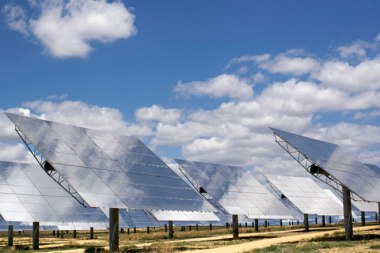 FPL to build more solar plants, one new gas plant, Palm Beach Post Susan Salisbury April 3, 2017 More solar power plants are on the way, and an older power plant in Dania Beach will be replaced with a newnatural gas-fired facility, Florida Power & Light officials said Monday.
Nuclear bomb drill in New Jersey

 What is the Gotham Shield? Nuclear bomb drill in NJ this week, New jersey 101.5 April 24, 2017 NEW YORK — An emergency response drill that has caught the attention of conspiracy theorists begins in New Jersey on Monday night.
“Gotham Shield” is the name given to a multi-agency, real-time drill that starts Monday night and runs all week, involving a number of law enforcement and rescue agencies from New Jersey and the Northeast, according to NJ.com.
The “notional” drill will be based on the explosion of a nuclear device in West New York. A response center will be set up at MetLife Stadium on Tuesday, according to the report, in which rescue teams and equipment will be set up to respond to respond to casualties, but will not involve actual “actors” playing victims.
FEMA spokeswoman Lauren Lefebvre told NJ.com on Sunday the purpose of the exercise is “to expand the ability at local and national levels to coordinate in effect a large-scale response and recovery to an event like this.”
According to the website snopes.com, which researches internet rumors, the drill first became known to the public last week with on a number of websites which believed the plan was in response to heightened tensions with North Korea, and could actually lead to a real disaster………http://nj1015.com/what-is-the-gotham-shield-its-only-a-test/
Emergency exercises in Ottawa and Nova Scoria: testing how to respond to a nuclear threat
 This is a test – nuclear threat focus of exercise in Ottawa and Nova Scotia http://ottawacitizen.com/news/national/defence-watch/this-is-a-test-nuclear-threat-focus-of-exercise-in-ottawa-and-nova-scotia DAVID PUGLIESE, OTTAWA CITIZEN, 25 Apr 17, Canada and the U.S. are in the midst of conducting an exercise that tests the ability of both countries to respond to a nuclear threat.
Guilty plea: man made bomb threats against nuclear plant in Florida
Man guilty of bomb threats against nuclear plant in Florida | 19 April 2017 | A north Florida man has pleaded guilty to sending bomb threats to a nuclear power plant, a school and other government and private facilities. Acting U.S. Attorney W. Stephen Muldrow said in a news release that 25-year-old David Wayne Willmott Jr. pleaded guilty on Tuesday in federal court to three counts of making threats to use an explosive device. Federal prosecutors say Willmott emailed bomb threats in 2014 and 2015 to the nuclear plant as well as two courthouses, two airports and a sheriff’s office.
9 year old boy persisting in suing Donald Trump over his climate policies
 Donald Trump being sued by nine-year-old Levi Draheim over his climate policies http://www.abc.net.au/news/2017-04-24/the-nine-year-old-suing-president-trump-over-his-climate-policy/8466946 By North America correspondent Conor Duffy, 24 Apr 17, US President Donald Trump is eight times his age and a much more experienced litigator, but nine-year-old Levi Draheim is looking forward to seeing the leader in court.
Levi lives near Melbourne Beach in central Florida and is part of a group of 21 young people suing the president over his climate policies.
“The reason that I care so much is that I basically grew up on the beach. It’s like another mother, sort of, to me,” Levi said.
His local beach faces the Atlantic Ocean and the flat coastal terrain is one of the areas in the United States most vulnerable to a rise in sea level.
Levi and his family believe they are already seeing the effects of climate change in the local sand dunes, which are nesting territory for sea turtles.
“It makes me really sad seeing how much dune we’ve lost,” Levi said.
“When I went out on the beach after the hurricane, I was just crying because there was so much dune lost.” The young people suing Mr Trump began their legal action under former president Barack Obama, and last November they had a win with a judge dismissing a move from the administration to throw out their court action.
“Exercising my ‘reasoned judgement’ I have no doubt that the right to a climate system capable of sustaining human life is fundamental to a free and ordered society,” Federal Judge Ann Aiken wrote.
Last month the Trump administration announced plans to appeal, but Levi is not backing down.
“I was just totally shocked that he doesn’t believe climate change is real,” Levi said.
“It was a little bit scary. It was just a little bit disturbing he didn’t believe that climate change was real.”
The case has seen Levi and his fellow young climate activists face some rather adult language on social media, but his mother Leanne Draheim said she was not worried.
“Some people are saying like, ‘Why are you letting your kid get involved? What does he know? He doesn’t know enough to get involved’,” Ms Draheim said.
“But really he knows that he cares about the environment, he cares about being outside, and we’ve talked about how that’s not going to happen in the future for his kids if things keep going the way things are going.”
Climate change spending slashed
President Trump has not yet said whether he will stick by his pledge to “cancel” the Paris Climate Accord, but he has moved swiftly to curtail government spending on climate.
The Environmental Protection Agency (EPA) stands to lose almost a third of its funding under Mr Trump’s draft budget, and climate programs in other agencies will not be funded.
“Regarding the question as to climate change, I think the president was fairly straightforward: ‘We’re not spending money on that anymore,'” Mr Trump’s budget director Mick Mulvaney said.
As solar energy costs fall, the industry charges on
 Solar juggernaut marches on as costs continue to fall http://reneweconomy.com.au/solar-juggernaut-marches-costs-continue-fall-47153/ [good graphs] By Sophie Vorrath on 24 April 2017 The global solar market looks set to continue on its trajectory of extraordinary growth, driven by further reductions in the costs of the technology, and a possible post-Trump “gold rush” that is brewing in the US.
The onward march of the solar juggernaut has been predicted by global investment group Deutsche Bank, whose latest report bumped up its 2017 estimate for total demand to 82GW, from a previous forecast of 74GW.
This has certainly been the pattern of recent decades, with dramatic growth rates of PV consistently beating – and sometimes smashing – analyst predictions. And while Deutsche Bank and other analysts continue to flag a slow-down in the market’s near future, it is not expected to happen this year, mainly due to stronger growth forecast for China.
“We are raising our 2017 global demand estimate from 74GW to 82GW, mainly due to expectations of stronger growth in China (from 17GW to 25GW),” the Deutsche Bank report says.
A similar adjustment was made earlier this month by US-based GTM Research, which replaced a projected -7 per cent global PV market contraction with a forecast of 9.4 per cent growth in its latest quarterly report, the Global Solar Demand Monitor.
GTM Research now projects that the annual global solar market’s size will reach 85 GW in 2017, slightly higher than Deutsche’s forecast – and more than double the installed capacity in 2014.
As Deutsche notes in its quarterly report, published on Friday, a good deal of this market momentum is being fuelled by falling PV technology costs, with some developers asking for less than 30c/W for solar modules in India in 2H17 and mid 20c/W in 2018.
Deutsche says this puts solar “at grid parity”, and while such low prices are not yet being offered by tier 1 Chinese suppliers, it believes a near 20 per cent reduction in poly-silicon prices will act as a catalyst for further price cuts for modules.
“Poly prices (down 17 per cent in the past seven weeks) have been declining faster than module prices as the supply chain in China has been focused on working down excess inventory,” the report says.
“We expect poly prices to approach $10-12/kg and module prices to decline to low 30c/W in 2H timeframe.”
Even in Australia, which gets no special mention in Deutsche Bank’s report, the cost of building large scale solar farms is falling to a fraction of the cost of new coal or gas plants. Indeed, according to the former head of Victoria’s Hazelwood brown coal generator, Tony Cancannon – who now heads up Reach Energy – the cost of large scale solar and storage is already competitive with gas-fired generation, and within a few years will be well below $100/MWh.
All the same, Deutsche still expects global solar demand to be “flattish” in 2018, but notes this could be countered by a final “gold rush” in the US – also driven by falling costs, from $60c/W to low $30c/W between Q3’16 and Q4’17.
“Our analysis suggests that project returns in the US could likely exceed the returns solar developers achieved in other markets during prior cycle peaks and these returns are unlikely to improve as incentives gradually decline or net metering phases out.
“As such, we expect the final “gold rush” in the US market to drive strong growth in US demand from 2018,” it says.
And as the table below illustrates [on original] , this view is supported by the strong pipeline of North American utility-scale solar projects, with roughly 8GW under development in Texas alone, and 31GW in the entire US.
But Deutsche also warns of possible speed-humps looming for global solar, such as a slow-down of growth in markets like India.
“Although declining solar module and system costs are driving significant improvement in downstream project economics in India, the pace of new solar project auctions has slowed down significantly,” the Deutsche report says.
According to the Bank’s data, project allocations in India have declined by 67 per cent to 2.9GW in FY17, while the SECI (Solar Energy Corporation of India) has also recently reduced a rooftop solar
tender from 1GW to 0.5GW.
The report puts the slow-down to difficulty securing PPAs in India, limited interest from developers, and tax increases.
“Beyond 2017, we expect overall growth in China to slow down and expect other emerging markets as well as the US to be the primary growth drivers,” the report says. “Our current estimates call for flattish demand in 2018.”
Climate change predicted to increase Nile flow variability
Climate change could lead to overall increase in river flow, but more droughts and floods, study shows, Science Daily
- Date:
- April 24, 2017
- Source:
- Massachusetts Institute of Technology
- Summary:
- The unpredictable annual flow of the Nile River is legendary, as evidenced by the story of Joseph and the Pharaoh, whose dream foretold seven years of abundance followed by seven years of famine in a land whose agriculture was, and still is, utterly dependent on that flow. Now, researchers have found that climate change may drastically increase the variability in Nile’s annual output……..https://www.sciencedaily.com/releases/2017/04/170424141236.htm
Investment: global index reveals 60% of asset owners are now taking some action
Most global investors recognise financial risk of climate change, report finds, Guardian, Paul Karp, 26 Apr 17, Global index reveals 60% of asset owners are now taking some action, but warns there is still ‘enormous resistance’ to managing climate risk For the first time a majority of global investor heavyweights recognise the financial risks of climate change, according to the results of a major global index rating how investors manage such risks.
But despite the advances, the Asset Owner Disclosure Project chairman, John Hewson, has warned there is still an “enormous resistance” to managing climate risk.
The AODP releases its fifth global index on Wednesday, ranking the world’s largest 500 asset owners and, for the first time, the 50 largest asset managers on their performance managing financial risks associated with climate change.
Asset owners and managers were scored on governance and strategy, portfolio carbon risk management and metrics and targets, and graded as leaders (A-AAA) rating), challengers (B-BBB), learners (C-CCC), bystanders (D-DDD) and laggards (X).
The index found that 40% of asset owners and just 6% of asset managers were classed as laggards, meaning they had a scored zero on the measures for managing and disclosing climate risks.
The report concluded that “the scales have tipped”, as 60% of asset owners are now taking some action.
Of the 500 asset owners, there are now 34 leaders, 34 challengers, 44 learners and 187 bystanders, an increase in all categories since the last year compared with laggards, which fell from 246 to 201 in number.
Australia and New Zealand were among the 10 best-performing countries, which were all in Oceania and Europe…..https://www.theguardian.com/environment/2017/apr/26/most-global-investors-recognise-financial-risk-of-climate-change-report-finds
API Ohio: Reject nuclear subsidies and stop misleading Ohioans
Renewable energy development could be crippled by funds going to save the failing nuclear industry
America’s Old Nuclear Plants Could Be Dragging Down Clean Energy Development
Money spent nursing nukes may be better spent on wind, solar, … Technology Review April 25, 2017
The nuclear industry is currently reeling in the wake of the meltdown of Toshiba’s reactor business. As we’ve previously reported, the Japanese technology conglomerate was building the only new reactors currently in construction within the U.S. So its failure to succeed in capitalizing on a new generation of smaller reactors looks set to put a huge damper on the construction of new plants in the coming years.
In reality, though, the industry has been nothing but sluggish for decades. Tightening regulations, soaring construction costs, and a nightmarish PR problem have all served to undermine many plans to build new nuclear facilities….
As Bloomberg notes, New York and Illinois are investing billions of dollars to keep old facilities in action, and Connecticut, New Jersey, and Ohio are among states contemplating the same idea. It’s an expensive process….
But according to Bloomberg’s report, that investment could be damaging the renewables sector. In a painful one-two, clean energy funds are being diverted away from solar and wind projects to keep the nukes running, while sometimes overly high baseload supplies maintained by continued use of old nuclear keeps energy prices low, making investment in renewables less attractive……
The Ongoing Saga 80: News, Updates & More

Last news update Tuesday 25 April 2017
Most recent updates are on top, after image-intro commentary, so that routine readers will not have to scroll-down far. Time is UTC-GMT. Updates as frequently as possible (recently around once per week; in the past daily; the future is unwritten). This is a continuation of: https://miningawareness.wordpress.com/2017/03/20/the-ongoing-saga-79-news-updates-tidbits-trivia
Recent post titles for the Mining Awareness blog should appear listed either to the side or at the bottom, depending on your device.
Parking of high level nuclear fuel in Texas, as proposed by WCS, to the US NRC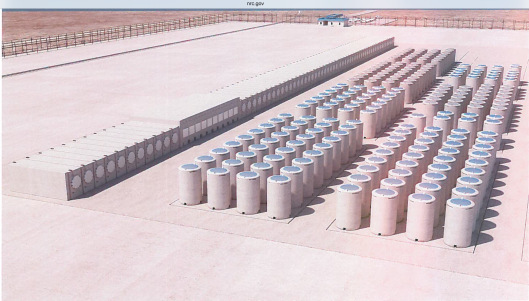
Spent nuclear fuel conceptual drawing for WCS as presented to the US NRC
WCS wants to park high level nuclear waste casks from around the country, uncovered, in west Texas. The comment deadline is on April 28th, in less than a week: Comment Deadline April 28th, 11.59 pm Eastern: https://www.regulations.gov/docket?D=NRC-2016-0231. Comment is easy and can be anonymous. See…
View original post 3,555 more words
Fossil Fueled Earthquakes at the UKs Two Key Nuclear Sites?

 This map is from the Nuclear Industry Association, (its an old map, Sellafield nuclear waste dump described as a fuel plant). Additions by Radiation Free Lakeland showing the close proximity of proposed fossil fuel extraction to Sellafield and Springfields.
FOSSIL FUELED EARTHQUAKES NEAR NUCLEAR INSTALLATIONS?
Nuclear and Fracking Campaigners across the UK have joined forces to oppose fossil fuel extraction within the vicinity of the UK’s key nuclear installations, Sellafield in Cumbria and Springfields in Lancashire.
Radiation Free Lakeland has sent a letter to the Health and Safety Executive urging a moratorium. The letter says: “Given the vast uncertainty regarding the classification of nuclear materials at both Sellafield and Springfields at the very least there should be a moratorium on fossil fuel extraction within the vicinity of nuclear installations. We call for a comprehensive inquiry, which includes the worst-case scenarios that could result from induced seismic activity near nuclear…
View original post 1,944 more words
April 25 Energy News

Opinion:
¶ “Tory windfarm policy endangers cheap energy in UK, commission finds” • A Shell-sponsored group says wind is “increasingly the cheapest form of electricity.” Conservative opposition to windfarms risks the UK missing out on one of the cheapest sources of electricity, according to the head of the Shell-funded industry group. [The Guardian]
 By 2040, wind and solar would account for 45% of
the global power mix. (Photo: Alamy Stock Photo)
¶ “The train has left the station on renewable energy” • Obscured by debate and hype about the merits of renewable energy, an important change has quietly taken place: Unsubsidized renewable energy is economically viable in many regions. Powerful economic and technological forces have permanently altered the energy landscape. [GreenBiz]
¶ “Exelon-style nuke bailouts threaten wind, solar” • The push to save US nuclear plants for the sake of fighting climate change is threatening support…
View original post 767 more words
April 24 Energy News
Science and Technology:
¶ For the first time, scientists have created a global map measuring the cooling effect forests have by regulating the exchange of water and energy between the Earth’s surface and the atmosphere. According to a new paper, in many locations, this cooling effect works in concert with forests’ absorption of carbon dioxide. [Science Daily]
 Working atop a 120-foot tower (Credit: Rob Alexander)
¶ Remember when the world was hoping we would never reach 400 ppm of CO2? Well, now we can wave 400 ppm goodbye, because it has come and been passed. Mauna Loa Observatory recorded its first CO2 reading greater than 410 ppm. To be precise, it was 410.28 ppm. Yes, this is bad and yes, it will have even worse consequences. [ZME Science]
World:
¶ Ocean Power Technologies has deployed its PB3 wave energy device off the Japanese coast as part…
View original post 662 more words
Hauntingly Freakish Siberian Wildfires Now Flicker to Life in April

This past winter has been ridiculously warm for large sections of Siberia. From the Yamal Peninsula to Lake Baikal to the thinning ice of the Arctic Ocean and back down to the Sea of Okhotsk, temperatures have ranged from 4 to nearly 7 degrees Celsius above normal throughout the entire first quarter of 2017.

(4th Consecutive year of extreme Siberian cold season warmth brings with it the heightened risk of early wildfires. Image source: NASA GISS.)
Climate reanalysis shows these far above average temperatures extending well into April. And, as a result, the Arctic chill that typically settles over this often-frozen region has been greatly reduced throughout winter and on into early spring.
2017 marks the 4th consecutive year of excessive winter warmth for this section of our world. A human-emissions-driven rise of abnormal heat that brings with it consistently earlier thaws, disruptive permafrost melt, and…
View original post 535 more words
1 This Month


Tell the Ukrainian Government to Drop Prosecution of Peace Activist Yurii Sheliazhenko

Petition to revoke the licensing of the Near Surface Nuclear Disposal Facility (NSDF) at Chalk River. https://www.ourcommons.ca/petitions/en/Petition/Details?Petition=e-7247


of the week – STOP SMALL MODULAR REACTORS IN CANADA
To see nuclear-related stories in greater depth and intensity – go to https://nuclearinformation.wordpress.com
-
Archives
- March 2026 (204)
- February 2026 (268)
- January 2026 (308)
- December 2025 (358)
- November 2025 (359)
- October 2025 (376)
- September 2025 (258)
- August 2025 (319)
- July 2025 (230)
- June 2025 (348)
- May 2025 (261)
- April 2025 (305)
-
Categories
- 1
- 1 NUCLEAR ISSUES
- business and costs
- climate change
- culture and arts
- ENERGY
- environment
- health
- history
- indigenous issues
- Legal
- marketing of nuclear
- media
- opposition to nuclear
- PERSONAL STORIES
- politics
- politics international
- Religion and ethics
- safety
- secrets,lies and civil liberties
- spinbuster
- technology
- Uranium
- wastes
- weapons and war
- Women
- 2 WORLD
- ACTION
- AFRICA
- Atrocities
- AUSTRALIA
- Christina's notes
- Christina's themes
- culture and arts
- Events
- Fuk 2022
- Fuk 2023
- Fukushima 2017
- Fukushima 2018
- fukushima 2019
- Fukushima 2020
- Fukushima 2021
- general
- global warming
- Humour (God we need it)
- Nuclear
- RARE EARTHS
- Reference
- resources – print
- Resources -audiovicual
- Weekly Newsletter
- World
- World Nuclear
- YouTube
-
RSS
Entries RSS
Comments RSS
 nuclear-news
