North Korea says America is preparing for war: highlights 1250 US marines to Darwin, Australia
 North Korea highlights 1250 US marines in Darwin to claim America is preparing for nuclear war, SMH, Kirsty Needham and James Massola, 25 Apr 17, North Korea’s state newspaper has singled out the United States’ deployment of 1250 marines to Darwin to claim America is preparing for nuclear war.
And as regional tensions escalate and a US carrier strike group approaches the Korean peninsula, Australian Foreign Minister Julie Bishop said the secretive regime “must be stopped” as it represented a threat to the region and, potentially, globally.
In a phone call with US president Donald Trump, Chinese president Xi Jinping said China opposed any actions that went against UN security council resolutions, as Japan confirmed it was joining drills with the strike group led by the USS Carl Vinson that is headed to Korean waters.
Pusan National University associate professor Robert Kelly told Fairfax Media North Korea’s missiles might have the range to reach northern Australia, but played down the threat as “the question is guidance, not range”.
Rodong Sinmun, the official paper of the Worker’s Party of North Korea, highlighted the US marines’ arrival in northern Australia on April 18. The marines will be joined by 12 military helicopters including five Cobra helicopters and four Osprey carriers.
“This is the largest scale US military presence in Australia after World War 2,” the newspaper reported on Monday. “America is fanatically, crazily trying to optimise its nuclear war readiness,” it claimed.
The story, on page six of the North Korean newspaper, was headlined: America prepares for nuclear war in different overseas military deployments. Darwin was the only city named…….
Australia-based defence experts believe it is unlikely North Korea has the capacity to strike Australia yet, though they may do within the next three years. The nation’s most recent missile test, earlier this month, failed just seconds after launch…….
The deployment of 1250 marines is the largest to Darwin since the former prime minister Julia Gillard and former president Barack Obama struck a deal back in 2011 to undertake the yearly rotation of troops.
with Sanghee Liu, AAP http://www.smh.com.au/federal-politics/political-news/north-korea-highlights-1250-us-marines-in-darwin-to-claim-america-is-preparing-for-nuclear-war-20170424-gvrbzl.html
Australia’s prime targets for a nuclear attack
Pine Gap is more than a giant electronic vacuum cleaner. The facility is also involved in tactical warfare, through programs like “The Red Dot Express”.
More controversial is Pine Gap’s role in drone strikes.
Instead of trying to pump up hysteria over a non-existent North Korean missile strike, The Turnbull Government should take a hard look at the very real threat that Pine Gap and Northwest Cape pose to Australia.
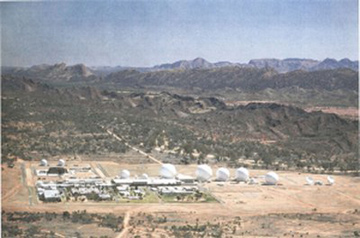 Pine Gap is still there — bigger and badder than ever, Independent Australia Norm Sanders 25 April 2017 With Donald Trump putting a blowtorch to the Cold War, it is time to take another look at all the U.S. bases in Australia, including Pine Gap, writes Dr Norm Sanders.
PINE GAP, Northwest Cape and Nurrungar were the focus of the Australian Peace Movement in the 1980’s. Then the Bulletin of Atomic Scientists Doomsday Clock crept slowly away from midnight and the removal of the bases didn’t seem so urgent. The clamour to close the bases died down………
I actually knew quite a bit about what Pine Gap was up to at the time, but it was child’s play compared to what they are doing at present. A simple place to start is Pine Gap’s assumption of the function of Nurrungar in 1999. Nurrungar was located at Island Lagoon, Woomera and was crucial to America’s defenses during the Cold War. Nurrungar furnished “Launch on Warning” surveillance of ICBM or other rocket launches anywhere on the globe. Analysts regarded it as one of the USSR’s top ten targets.
Now, Pine Gap has probably surpassed Nurrungar in the rankings. It is one of the largest satellite ground stations in the world, with over 33 satellite antennas. Pine Gap houses a number of U.S. Government agencies, such as the National Reconnaissance Office (spy satellites,) the National Security Agency, the CIA, and the Geospatial-intelligence Agency. In addition, all branches of the U.S. Military are represented.
Pine Gap is a major element of ECHELON, a signals intelligence collection and analysis network. Echelon can eavesdrop on faxes, computers and telephones, and can even scan bank accounts. It can actually pick up enemy combat forces talking to each other in the field. The U.S. Government says Echelon doesn’t exist and never did. In fact, it may have now merged with XKeyscore, another system at Pine Gap. It is run by the National Security Agency and shares data with the Australian Signals Directorate.
XKeyscore was exposed by Edward Snowden in 2013.
In an interview with a German TV station in 2014, Snowden answered the question of what he could do with XKeyscore by saying:
You could read anyone’s email in the world, anybody you’ve got an email address for. Any website: You can watch traffic to and from it. Any computer that an individual sits at: You can watch it. Any laptop that you’re tracking: you can follow it as it moves from place to place throughout the world. It’s a one-stop-shop for access to the NSA’s information.
…You can tag individuals… Let’s say you work at a major German corporation and I want access to that network, I can track your username on a website on a form somewhere, I can track your real name, I can track associations with your friends and I can build what’s called a fingerprint, which is network activity unique to you, which means anywhere you go in the world, anywhere you try to sort of hide your online presence, your identity.
No wonder Snowden has to stay in Russia!
But Pine Gap is more than a giant electronic vacuum cleaner. The facility is also involved in tactical warfare, through programs like “The Red Dot Express”.
Red Dot uses a plethora of imaging techniques, signal intercepts and other sources to identify IED’s (Improvised Explosive Devices) by their electronic emissions. All this data passes through Pine Gap, gets analysed and, ultimately, is displayed as a red dot on a Humvee computer as a warning that there is a possible IED just ahead on an Afghan road.
More controversial is Pine Gap’s role in drone strikes. This prompted the late Des Ball, a leading ANU intelligence expert, to criticise the Pine Gap facility which he formerly supported.
On the 7:30 Report, broadcast 13/08/2014, he said:
“I’ve reached the point now where I can no longer stand up and provide the verbal, conceptual justification for the facility that I was able to do in the past. We’re now linked in to this global network where intelligence and operations have become essentially fused and Pine Gap is a key node in that whole network, that war machine, if you want to use that term, which is doing things which are very, very difficult, I think, as an Australian, to justify.”………
Pine Gap is still there.
So is Northwest Cape. The facility is officially known as “Naval Communication Station Harold E. Holt”. There is a certain irony in the name because rumours circulated at the time of Holt’s death that he was assassinated by the CIA as he was intending to pull Australia out of the Vietnam War.
The base is six kilometres north of the town of Exmouth, Western Australia. Exmouth itself was built to support the base and be a home to dependent families of the U.S. Navy personnel.
The station is a key link in the communication capability with U.S. Navy and Australian ships in a vast area of the Western Pacific and Eastern Indian Ocean. It transmits on VLF (very low frequency,) at 19.8 kHz with a power of 1 million watts, which makes it the most powerful transmitter in the Southern Hemisphere. For comparison, commercial TV transmitters have about 1⁄10 the power.
The powerful transmitter has been linked to two incidents in which Qantas airliners had equipment failures while flying in the area. Qantas Flight 72 had to make an emergency landing at Learmouth, near Exmouth, after uncontrolled pitch-downs which caused fractures, lacerations and spinal injuries to passengers and crew.
In order to transmit this massive power, Northwest Cape has a huge spiderweb array of antennas supported by 13 towers, each almost 400 meters high. Buried underneath the antenna is 386 kilometres of bare copper mat as a ground plane.
The combination of the very low fequency and immense power means that Northwest Cape can communicate with nuclear armed submarines while they are submerged to at least 20 meters to avoid detection. The orders to launch nuclear missiles in time of war in the region would be sent through the base. It is this function which makes Northwest Cape an obvious prime nuclear target.
Instead of trying to pump up hysteria over a non-existent North Korean missile strike, The Turnbull Government should take a hard look at the very real threat that Pine Gap and Northwest Cape pose to Australia. https://independentaustralia.net/article-display/pine-gap-is-still-there–bigger-and-badder-than-ever,10231#.WP92gQsXvE0.twitter
Japan’s very big problem of nuclear wastes from its failed Tokai Reprocessing Plant
The three-tier disposal scheme for the waste generated by the Tokai Reprocessing Plant is based on radiation level.
Waste with the highest radiation level, which will fill some 30,000 drums, will be buried more than 300 meters underground.
Mid-level waste, which will fill about 24,000 containers, is expected to be buried several dozens of meters underground.
Low-level waste, involving another 81,000 drums, will be buried close to the surface, the JAEA said. In the meantime, the plant’s tainted equipment and facilities will need to be decontaminated and scrapped before being filled with cement and mortar and put in drums for transport to a final disposal site.
The big problem is, there has been little progress in deciding where to bury the drums because they can’t find anyone willing to accept them.
 Closure of Tokai Reprocessing Plant to cost an estimated ¥800 billion: JAEA source http://www.japantimes.co.jp/news/2017/04/23/national/closure-tokai-reprocessing-plant-cost-estimated-%C2%A5800-billion-jaea-source/#.WP_gPUWGPGg The Japan Atomic Energy Agency has revealed that the scrapping of the Tokai Reprocessing Plant, the nation’s first facility for reusing spent nuclear fuel, will cost an estimated ¥800 billion, an official said.
The state-backed JAEA did not reveal the cost to taxpayers in 2014, when it made the decision to shut down the plant in the village of Tokai, Ibaraki Prefecture, over a 70-year period.
The facility started operation in 1977 as part of Japan’s desire to establish a nuclear fuel cycle, in which all spent fuel is reprocessed to extract its plutonium and uranium to make more fuel. The policy is designed to ensure resource-dependent Japan uses its nuclear fuel as efficiently as possible.
The JAEA decided to scrap the sprawling plant after it became too costly to run under the more stringent safety rules introduced following the 2011 Fukushima nuclear crisis. The facility comprises around 30 buildings and has large areas rife with contamination caused by its task of disassembling spent nuclear fuel.
According to the official, the startling decommissioning estimate is based on an estimate the agency made in 2003. The JAEA is finalizing the assessment and on course to submit it for approval by the Nuclear Regulation Authority as early as June.
The three-tier disposal scheme for the waste generated by the Tokai Reprocessing Plant is based on radiation level.
Waste with the highest radiation level, which will fill some 30,000 drums, will be buried more than 300 meters underground.
Mid-level waste, which will fill about 24,000 containers, is expected to be buried several dozens of meters underground.
Low-level waste, involving another 81,000 drums, will be buried close to the surface, the JAEA said. In the meantime, the plant’s tainted equipment and facilities will need to be decontaminated and scrapped before being filled with cement and mortar and put in drums for transport to a final disposal site.
The big problem is, there has been little progress in deciding where to bury the drums because they can’t find anyone willing to accept them.
Despite the Fukushima nuclear disaster, the government is trying to resume nuclear power generation and continue its pursuit of a nuclear fuel cycle.
This policy, however, has experienced setbacks from the recent decision to decommission the Monju fast-breeder reactor, an experimental facility in Fukui Prefecture that was considered key to the nuclear fuel cycle plan.
And the completion of a new fuel reprocessing plant in the village of Rokkasho, Aomori Prefecture, has also been largely behind schedule for years.
In the meantime, public concerns about the safety of atomic power remain strong at a time when the government is aiming to make it account for 20 to 22 percent of Japan’s electricity supply by 2030.
The new estimate for decommissioning the Tokai Reprocessing Plant includes ¥330 billion for storing waste underground, ¥166 billion for decontaminating and dismantling the facility, and ¥87 billion for transportation costs.
The JAEA facility is not to be confused with the private uranium-processing facility in Tokai where a fatal criticality accident occurred in 1999.
America looking to arrest Julian Assange, preparing charges

US prepares charges to seek arrest of WikiLeaks’ Julian Assange – sources | 20 April 2017 | US authorities have prepared charges to seek the arrest of WikiLeaks founder Julian Assange, US officials familiar with the matter tell CNN. The Justice Department investigation of Assange and WikiLeaks dates to at least 2010, when the site first gained wide attention for posting thousands of files stolen by the former US Army intelligence analyst now known as Chelsea Manning.
Millions funnelled to North Korea’s nuclear weapons programme through house in suburban London
KIM’S N-UK-E HQ Millions funnelled to North Korea’s nuclear weapons programme through this house in suburban London street https://www.thesun.co.uk/news/3393185/millions-funnelled-to-north-koreas-nuclear-weapons-programme-through-this-house-in-suburban-london-street/
The Korea National Insurance Corporation’s (KNIC) assets have ‘now been frozen. By Jon Lockett 23rd April 2017,
Push to examine Turkey Point nuclear wastewater plan

 Turkey Point nuclear wastewater plan needs further study, groups say, Susan Salisbury, Palm Beach Post Staff WriterIf Florida Power & Light’s proposed Turkey Point units 6 and 7 nuclear reactors are ever built, will it be safe to inject wastewater used to cool to the reactors into deep wells in the Boulder Zone?
Nuclear energy utilities NextEra, FPL lose lawsuit over $97.5 million in nuclear-related tax refunds
 NextEra, FPL lose lawsuit over $97.5 million in nuclear-related tax refunds http://protectingyourpocket.blog.palmbeachpost.com/2017/03/30/nextera-fpl-lose-lawsuit-over-97-5-million-in-nuclear-related-tax-refunds/Susan Salisbury March 30, 2017 Juno Beach-based NextEra Energy Inc. and Florida Power & Light Co. have lost a lawsuit they filed against the federal government that sought more than $97.5 million in tax refunds.
Florida Power and Light to build more solar plants
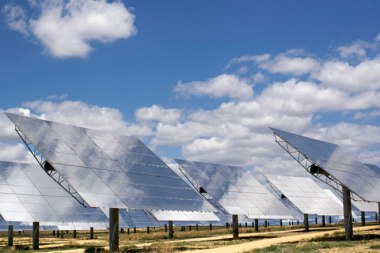 FPL to build more solar plants, one new gas plant, Palm Beach Post Susan Salisbury April 3, 2017 More solar power plants are on the way, and an older power plant in Dania Beach will be replaced with a newnatural gas-fired facility, Florida Power & Light officials said Monday.
Nuclear bomb drill in New Jersey
 What is the Gotham Shield? Nuclear bomb drill in NJ this week, New jersey 101.5 April 24, 2017 NEW YORK — An emergency response drill that has caught the attention of conspiracy theorists begins in New Jersey on Monday night.
“Gotham Shield” is the name given to a multi-agency, real-time drill that starts Monday night and runs all week, involving a number of law enforcement and rescue agencies from New Jersey and the Northeast, according to NJ.com.
The “notional” drill will be based on the explosion of a nuclear device in West New York. A response center will be set up at MetLife Stadium on Tuesday, according to the report, in which rescue teams and equipment will be set up to respond to respond to casualties, but will not involve actual “actors” playing victims.
FEMA spokeswoman Lauren Lefebvre told NJ.com on Sunday the purpose of the exercise is “to expand the ability at local and national levels to coordinate in effect a large-scale response and recovery to an event like this.”
According to the website snopes.com, which researches internet rumors, the drill first became known to the public last week with on a number of websites which believed the plan was in response to heightened tensions with North Korea, and could actually lead to a real disaster………http://nj1015.com/what-is-the-gotham-shield-its-only-a-test/
Emergency exercises in Ottawa and Nova Scoria: testing how to respond to a nuclear threat
 This is a test – nuclear threat focus of exercise in Ottawa and Nova Scotia http://ottawacitizen.com/news/national/defence-watch/this-is-a-test-nuclear-threat-focus-of-exercise-in-ottawa-and-nova-scotia DAVID PUGLIESE, OTTAWA CITIZEN, 25 Apr 17, Canada and the U.S. are in the midst of conducting an exercise that tests the ability of both countries to respond to a nuclear threat.
Guilty plea: man made bomb threats against nuclear plant in Florida
Man guilty of bomb threats against nuclear plant in Florida | 19 April 2017 | A north Florida man has pleaded guilty to sending bomb threats to a nuclear power plant, a school and other government and private facilities. Acting U.S. Attorney W. Stephen Muldrow said in a news release that 25-year-old David Wayne Willmott Jr. pleaded guilty on Tuesday in federal court to three counts of making threats to use an explosive device. Federal prosecutors say Willmott emailed bomb threats in 2014 and 2015 to the nuclear plant as well as two courthouses, two airports and a sheriff’s office.
9 year old boy persisting in suing Donald Trump over his climate policies
 Donald Trump being sued by nine-year-old Levi Draheim over his climate policies http://www.abc.net.au/news/2017-04-24/the-nine-year-old-suing-president-trump-over-his-climate-policy/8466946 By North America correspondent Conor Duffy, 24 Apr 17, US President Donald Trump is eight times his age and a much more experienced litigator, but nine-year-old Levi Draheim is looking forward to seeing the leader in court.
Levi lives near Melbourne Beach in central Florida and is part of a group of 21 young people suing the president over his climate policies.
“The reason that I care so much is that I basically grew up on the beach. It’s like another mother, sort of, to me,” Levi said.
His local beach faces the Atlantic Ocean and the flat coastal terrain is one of the areas in the United States most vulnerable to a rise in sea level.
Levi and his family believe they are already seeing the effects of climate change in the local sand dunes, which are nesting territory for sea turtles.
“It makes me really sad seeing how much dune we’ve lost,” Levi said.
“When I went out on the beach after the hurricane, I was just crying because there was so much dune lost.” The young people suing Mr Trump began their legal action under former president Barack Obama, and last November they had a win with a judge dismissing a move from the administration to throw out their court action.
“Exercising my ‘reasoned judgement’ I have no doubt that the right to a climate system capable of sustaining human life is fundamental to a free and ordered society,” Federal Judge Ann Aiken wrote.
Last month the Trump administration announced plans to appeal, but Levi is not backing down.
“I was just totally shocked that he doesn’t believe climate change is real,” Levi said.
“It was a little bit scary. It was just a little bit disturbing he didn’t believe that climate change was real.”
The case has seen Levi and his fellow young climate activists face some rather adult language on social media, but his mother Leanne Draheim said she was not worried.
“Some people are saying like, ‘Why are you letting your kid get involved? What does he know? He doesn’t know enough to get involved’,” Ms Draheim said.
“But really he knows that he cares about the environment, he cares about being outside, and we’ve talked about how that’s not going to happen in the future for his kids if things keep going the way things are going.”
Climate change spending slashed
President Trump has not yet said whether he will stick by his pledge to “cancel” the Paris Climate Accord, but he has moved swiftly to curtail government spending on climate.
The Environmental Protection Agency (EPA) stands to lose almost a third of its funding under Mr Trump’s draft budget, and climate programs in other agencies will not be funded.
“Regarding the question as to climate change, I think the president was fairly straightforward: ‘We’re not spending money on that anymore,'” Mr Trump’s budget director Mick Mulvaney said.
As solar energy costs fall, the industry charges on
 Solar juggernaut marches on as costs continue to fall http://reneweconomy.com.au/solar-juggernaut-marches-costs-continue-fall-47153/ [good graphs] By Sophie Vorrath on 24 April 2017 The global solar market looks set to continue on its trajectory of extraordinary growth, driven by further reductions in the costs of the technology, and a possible post-Trump “gold rush” that is brewing in the US.
The onward march of the solar juggernaut has been predicted by global investment group Deutsche Bank, whose latest report bumped up its 2017 estimate for total demand to 82GW, from a previous forecast of 74GW.
This has certainly been the pattern of recent decades, with dramatic growth rates of PV consistently beating – and sometimes smashing – analyst predictions. And while Deutsche Bank and other analysts continue to flag a slow-down in the market’s near future, it is not expected to happen this year, mainly due to stronger growth forecast for China.
“We are raising our 2017 global demand estimate from 74GW to 82GW, mainly due to expectations of stronger growth in China (from 17GW to 25GW),” the Deutsche Bank report says.
A similar adjustment was made earlier this month by US-based GTM Research, which replaced a projected -7 per cent global PV market contraction with a forecast of 9.4 per cent growth in its latest quarterly report, the Global Solar Demand Monitor.
GTM Research now projects that the annual global solar market’s size will reach 85 GW in 2017, slightly higher than Deutsche’s forecast – and more than double the installed capacity in 2014.
As Deutsche notes in its quarterly report, published on Friday, a good deal of this market momentum is being fuelled by falling PV technology costs, with some developers asking for less than 30c/W for solar modules in India in 2H17 and mid 20c/W in 2018.
Deutsche says this puts solar “at grid parity”, and while such low prices are not yet being offered by tier 1 Chinese suppliers, it believes a near 20 per cent reduction in poly-silicon prices will act as a catalyst for further price cuts for modules.
“Poly prices (down 17 per cent in the past seven weeks) have been declining faster than module prices as the supply chain in China has been focused on working down excess inventory,” the report says.
“We expect poly prices to approach $10-12/kg and module prices to decline to low 30c/W in 2H timeframe.”
Even in Australia, which gets no special mention in Deutsche Bank’s report, the cost of building large scale solar farms is falling to a fraction of the cost of new coal or gas plants. Indeed, according to the former head of Victoria’s Hazelwood brown coal generator, Tony Cancannon – who now heads up Reach Energy – the cost of large scale solar and storage is already competitive with gas-fired generation, and within a few years will be well below $100/MWh.
All the same, Deutsche still expects global solar demand to be “flattish” in 2018, but notes this could be countered by a final “gold rush” in the US – also driven by falling costs, from $60c/W to low $30c/W between Q3’16 and Q4’17.
“Our analysis suggests that project returns in the US could likely exceed the returns solar developers achieved in other markets during prior cycle peaks and these returns are unlikely to improve as incentives gradually decline or net metering phases out.
“As such, we expect the final “gold rush” in the US market to drive strong growth in US demand from 2018,” it says.
And as the table below illustrates [on original] , this view is supported by the strong pipeline of North American utility-scale solar projects, with roughly 8GW under development in Texas alone, and 31GW in the entire US.
But Deutsche also warns of possible speed-humps looming for global solar, such as a slow-down of growth in markets like India.
“Although declining solar module and system costs are driving significant improvement in downstream project economics in India, the pace of new solar project auctions has slowed down significantly,” the Deutsche report says.
According to the Bank’s data, project allocations in India have declined by 67 per cent to 2.9GW in FY17, while the SECI (Solar Energy Corporation of India) has also recently reduced a rooftop solar
tender from 1GW to 0.5GW.
The report puts the slow-down to difficulty securing PPAs in India, limited interest from developers, and tax increases.
“Beyond 2017, we expect overall growth in China to slow down and expect other emerging markets as well as the US to be the primary growth drivers,” the report says. “Our current estimates call for flattish demand in 2018.”
Climate change predicted to increase Nile flow variability
Climate change could lead to overall increase in river flow, but more droughts and floods, study shows, Science Daily
- Date:
- April 24, 2017
- Source:
- Massachusetts Institute of Technology
- Summary:
- The unpredictable annual flow of the Nile River is legendary, as evidenced by the story of Joseph and the Pharaoh, whose dream foretold seven years of abundance followed by seven years of famine in a land whose agriculture was, and still is, utterly dependent on that flow. Now, researchers have found that climate change may drastically increase the variability in Nile’s annual output……..https://www.sciencedaily.com/releases/2017/04/170424141236.htm
Investment: global index reveals 60% of asset owners are now taking some action
Most global investors recognise financial risk of climate change, report finds, Guardian, Paul Karp, 26 Apr 17, Global index reveals 60% of asset owners are now taking some action, but warns there is still ‘enormous resistance’ to managing climate risk For the first time a majority of global investor heavyweights recognise the financial risks of climate change, according to the results of a major global index rating how investors manage such risks.
But despite the advances, the Asset Owner Disclosure Project chairman, John Hewson, has warned there is still an “enormous resistance” to managing climate risk.
The AODP releases its fifth global index on Wednesday, ranking the world’s largest 500 asset owners and, for the first time, the 50 largest asset managers on their performance managing financial risks associated with climate change.
Asset owners and managers were scored on governance and strategy, portfolio carbon risk management and metrics and targets, and graded as leaders (A-AAA) rating), challengers (B-BBB), learners (C-CCC), bystanders (D-DDD) and laggards (X).
The index found that 40% of asset owners and just 6% of asset managers were classed as laggards, meaning they had a scored zero on the measures for managing and disclosing climate risks.
The report concluded that “the scales have tipped”, as 60% of asset owners are now taking some action.
Of the 500 asset owners, there are now 34 leaders, 34 challengers, 44 learners and 187 bystanders, an increase in all categories since the last year compared with laggards, which fell from 246 to 201 in number.
Australia and New Zealand were among the 10 best-performing countries, which were all in Oceania and Europe…..https://www.theguardian.com/environment/2017/apr/26/most-global-investors-recognise-financial-risk-of-climate-change-report-finds
1 This Month

of the week – Shut Down Drone Warfare!


Tell the Ukrainian Government to Drop Prosecution of Peace Activist Yurii Sheliazhenko

Petition to revoke the licensing of the Near Surface Nuclear Disposal Facility (NSDF) at Chalk River. https://www.ourcommons.ca/petitions/en/Petition/Details?Petition=e-7247
To see nuclear-related stories in greater depth and intensity – go to https://nuclearinformation.wordpress.com
-
Archives
- March 2026 (251)
- February 2026 (268)
- January 2026 (308)
- December 2025 (358)
- November 2025 (359)
- October 2025 (376)
- September 2025 (257)
- August 2025 (319)
- July 2025 (230)
- June 2025 (348)
- May 2025 (261)
- April 2025 (305)
-
Categories
- 1
- 1 NUCLEAR ISSUES
- business and costs
- climate change
- culture and arts
- ENERGY
- environment
- health
- history
- indigenous issues
- Legal
- marketing of nuclear
- media
- opposition to nuclear
- PERSONAL STORIES
- politics
- politics international
- Religion and ethics
- safety
- secrets,lies and civil liberties
- spinbuster
- technology
- Uranium
- wastes
- weapons and war
- Women
- 2 WORLD
- ACTION
- AFRICA
- Atrocities
- AUSTRALIA
- Christina's notes
- Christina's themes
- culture and arts
- Events
- Fuk 2022
- Fuk 2023
- Fukushima 2017
- Fukushima 2018
- fukushima 2019
- Fukushima 2020
- Fukushima 2021
- general
- global warming
- Humour (God we need it)
- Nuclear
- RARE EARTHS
- Reference
- resources – print
- Resources -audiovicual
- Weekly Newsletter
- World
- World Nuclear
- YouTube
-
RSS
Entries RSS
Comments RSS
 nuclear-news