
 Trust banks preparing to sue Toshiba – report http://www.channelnomics.com/channelnomics-us/news/3003570/trust-banks-preparing-to-sue-toshiba-report Vendor also preparing to sell part of its memory business, Scharon Harding, 30 Jan 17, Toshiba may be hit with lawsuits from Japanese trust banks that could total over 1 billion yen ($8.8 million) over the accounting scandal it endured in 2015, Reuters reports.
According to the report, Mitsubishi UFJ Trust and Banking Corp. said today it is getting ready to sue the Japanese vendor in the name of its clients’ pension funds after revelations the vendor had been exaggerating profits caused share prices to drop.
Reuters added that Sumitomo Mitsui Trust Bank Ltd and Mizuho Trust & Banking Co. are organizing “similar” lawsuits, according to anonymous sources.
News of the potential lawsuits comes three days after Toshiba announced plans to sell parts of its memory business, including its SSD business, by 31 Marcch. The move is an attempt to minimize damage from an upcoming writedown for its U.S. nuclear business that could reach billions, according to CNBC.
Toshiba is already facing a pile of cases in relation to findings that the company’s bookkeeping practices led to the overstating of profits by over 170 billion yen (about $1.4 billion) by 45 institutional investors for 16.7 billion yen ($146 million) and 15 Japanese entities totaling 15.3 billion yen ($134 million), Reuters said.
February 1, 2017
Posted by Christina Macpherson |
business and costs, Japan, Legal |
Leave a comment
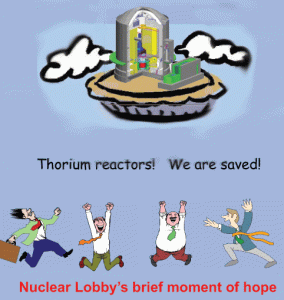 Thorium Reactors: Fact and Fiction, Skeptoid These next-generation reactors have attracted a nearly cultish following. Is it justified? by Brian Dunning Skeptoid Podcast #555 January 24, 2017
Podcast transcript “………True or False? Thorium reactors were never commercially developed because they can’t produce bomb material.
This is mostly false, although it’s become one of the most common myths about thorium reactors. There are other very good reasons why uranium-fueled reactors were developed commercially instead of thorium-fueled reactors. If something smells like a conspiracy theory, you’re always wise to take a second, closer look.
When we make weapons-grade Pu239 for nuclear weapons, we use special production reactors designed to burn natural uranium, and only for about three months, to avoid contaminating it with Pu240. Only a very few reactors were ever built that can both do that and generate electricity. The rest of the reactors out there that generate electricity could have been any design that was wanted. So why weren’t thorium reactors designed instead? We did have some test thorium-fueled reactors built and running in the 1960s. The real reason has more to do with the additional complexity, design challenges, and expense of these MSBR (molten salt breeder) reactors.
In 1972, the US Atomic Energy Commission published a report on the state of MSBR reactors. Here’s a snippet of what was found:
A number of factors can be identified which tend to limit further industrial involvement at this time, namely:
- The existing major industrial and utility commitments to the LWR, HTGR, and LMFBR.
- The lack of incentive for industrial investment in supplying fuel cycle services, such as those required for solid fuel reactors.
- The overwhelming manufacturing and operating experience with solid fuel reactors in contrast with the very limited involvement with fluid fueled reactors.
- The less advanced state of MSBR technology and the lack of demonstrated solutions to the major technical problems associated with the MSBR concept.
In short, the technology was just too complicated, and it never became mature enough.
It is, however, mostly true that, if we’re going to use a commercial reactor to get plutonium for a bomb, recycling spent fuel from a uranium reactor is easier, and you can get proper weapons-grade plutonium this way. It is possible to get reactor-grade plutonium from a thorium reactor that can be made into a bomb — one was successfully tested in 1962 — but it’s a much lower yield bomb and it’s much harder to get the plutonium.
The short answer is that reduced weapons proliferation is not the strongest argument for switching from uranium fuel to thorium fuel for power generation. Neither reactor type is what’s typically designed and used for bomb production. Those already exist, and will continue to provide all the plutonium that governments are ever likely to need for that purpose.
There’s every reason to take fossil fuels completely out of our system; we have such absurdly better options. If you’re like me and want to see this approach be a multi-pronged one, one that major energy companies, smaller community providers, and individual homeowners can all embrace, then advocate for nukes. You don’t need to specify thorium or liquid fuel or breeders; they’re already the wave of the future — a future which, I hope, will be clean, bright, and bountiful. https://skeptoid.com/episodes/4555
February 1, 2017
Posted by Christina Macpherson |
2 WORLD, Reference, thorium |
1 Comment
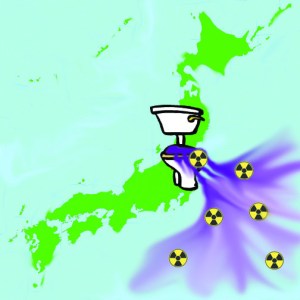 Japan’s ‘Unresolved’ Disaster Sways Former Advocate of Nuclear Power, Bloomberg by Stephen Stapczynski and Emi Urabe, January 30, 2017,
The man blocking the world’s largest nuclear plant says he grew opposed to atomic energy the same way some people fall in love.
Previously an advocate for nuclear power in Japan, Ryuichi Yoneyama campaigned against the restart of the facility as part of his successful gubernatorial race last year in Niigata. He attributes his political U-turn to the “unresolved” 2011 Fukushima Dai-Ichi disaster and the lack of preparedness at the larger facility in his own prefecture, both owned by Tokyo Electric Power Co. Holdings Inc.
“Changing my opinion wasn’t an instant realization,” Yoneyama said in an interview. “It was gradual. As people say, you don’t know the exact moment you’ve fallen in love.”
Yoneyama won’t support the restart of the Kashiwazaki-Kariwa plant in Niigata until an investigation is complete into the chain of events that resulted in the triple meltdown at Fukushima, which he plans to visit Wednesday. While utilities don’t need approval of local authorities to restart plants, Japanese power companies are tradition-bound not to move ahead until they get their consent……
In last year’s gubernatorial race for the southern prefecture of Kagoshima, where Kyushu Electric Power Co. operates the Sendai nuclear plant, a three-term incumbent was defeated by an opponent campaigning to temporarily close the reactors. A district court last year barred Kansai Electric Power Co. from running two reactors at its Takahama station in western Japan only weeks after they’d been turned back on……….
Tokyo Electric and Abe’s government see restarting KK as one way for Japan’s biggest utility to boost profits and help manage its nearly 16 trillion yen ($139 billion) share of the Fukushima cleanup. Resuming reactors No. 6 and No. 7 will boost annual profits by as much as 240 billion, the utility has said.
The economic argument, however, is beginning to hold less sway, with Yoneyama saying the benefits to the local economy are ‘overstated.’ While the prefecture risks missing out on 1.1 billion yen a year in government support without the restart, that represents a small slice of the prefecture’s budget, which tops 1 trillion yen, according to Yoneyama……..
“Once I realized that the Fukushima disaster couldn’t be easily resolved, of course my opinion changed,” Yoneyama said. “If another accident occurs, overseas tourism will become a distant dream. Even Japanese may flee the country.” https://www.bloomberg.com/news/articles/2017-01-29/japan-s-unresolved-disaster-sways-symbol-of-nuclear-opposition
February 1, 2017
Posted by Christina Macpherson |
Japan, politics |
1 Comment

Would any judge question a medical expert’s evidence in the way that this judge doubts the evidence of the world’s climate scientists? Then again – they do say that “the law is an ass”
Judge in environmental activist’s trial says climate change is matter of debate
Controversial statements angered environmentalists who insist courts have an obligation to recognize the science about manmade climate change, Guardian, Sam Levin 31 Jan 17, A Washington state judge has sparked outrage for remarks questioning the existence of climate change and the role of humans in global warming.
During the high-profile trial of Ken Ward, a climate activist facing 30 years in prison for shutting down an oil pipeline, Judge Michael E Rickert said: “I don’t know what everybody’s beliefs are on [climate change], but I know that there’s tremendous controversy over the fact whether it even exists. And even if people believe that it does or it doesn’t, the extent of what we’re doing to ourselves and our climate and our planet, there’s great controversy over that.”
The Skagit County judge made the comments on 24 January while addressing Ward’s request to present a “necessity defense” in court, meaning he would argue that the grave threat of climate change justified civil disobedience.
Rickert’s controversial statements, along with his decision to block Ward from arguing that his pipeline protest was necessary to prevent harm to the planet, angered environmentalists who insist that American courts have an obligation to recognize the science and consensus among researchers about man-made climate change.
“I thought it was shocking and deeply worrisome for my case,” said Ward, 60, of Corbett, Oregon, who temporarily shut off the safety valve of the TransMountain pipeline in Skagit County. “We are in the late stages of global collapse, and to have someone who is presumably as knowledgeable and aware as a judge should be blithely dismissing the biggest problem facing the world is chilling.”
Ward, whose trial began on Monday, is part of a group of activists that targeted oil sands pipelines in Washington, Oregon, North Dakota, Montana and Minnesota on 11 October 2016. The coordinated #ShutItDown actions – which have led to a dozen criminal cases and threats of hefty prison sentences against activists and journalists – was aimed at stopping 15% of US crude oil imports for a day.
He later added that with climate change, there’s “great controversy” with “over half of our political leaders”. (Critics have slammed the GOP as the “only major party in the advanced world” to deny climate change)……. https://www.theguardian.com/environment/2017/jan/31/environmental-activist-trial-judge-questions-climate-change-ken-ward
February 1, 2017
Posted by Christina Macpherson |
climate change, Legal, USA |
Leave a comment
 What is the Relationship of Nuclear Energy Plants and Nuclear Weapons? Finding the Missing Link January 28, 2017 Scott Jones, Ph.D.
Setting aside the classical tenderness of the phrase, they are Mother and Child. Within the science community and the business of commercial nuclear energy this reality is a given. However, the “Atoms for Peace” commercial slogan may have introduced some ambiguity about this reality. This is quickly cleared up for the lay person by a January 1983 article published in The Bulletin of the Atomic Scientists:
“An even more specific confirmation of the economic advantage
of the commercial-power route to bombs is available in a most
distressing form: the admission by the U.S. government, in late 1981,
 that it is considering turning to commercial-reactor fuel as the
 source of plutonium for a new round of nuclear warheads. Would
the United States even consider paying the political costs of such a
move unless the economic attractiveness were compelling?”
The family relationship is the basic and fundamental link between nuclear energy production and nuclear weapons. However, it leads to other important relationships.
Nuclear weapons are the result of willful national security political decisions. After the development and use of nuclear weapons by the Unites States, every country that followed in the club of nuclear weapon owners made that decision because of an assessment that it gave them security that they otherwise would not have. It was claimed to be a defensive move to deter all potential enemies from use of nuclear weapons against them……
What we can say with certainty is that a nuclear power plant nominates itself as a potential target. What cannot easily be predicted is who or what may be the aggressor. While progress is being made in predicting threats from nature, it will always remain to a significant degree a capricious force.
In the human realm, current and traditional enemies most certainly will be on target and threat lists. But the threat may be from a terrorist group that selects one of the world’s existing 450 operating nuclear power plants in 31 countries, or later, one the 60 new plants under construction in 16 countries. Which plant to attack may be decided because it is assessed to be the most vulnerable target for their capability to attack.
There is no shortage of targets now and the number is increasing. Success will not be measured by the amount of radiation released. That will almost be immaterial.
The global nuclear power plant network shares a nervous system that is highly tuned to every nuclear event. Deserved or not an accident or an attack will be perceived by much of the world through a memory lens of Hiroshima, Nagasaki, Chernobyl, and Fukushima. http://akiomatsumura.com/2017/01/what-is-the-relationship-of-nuclear-energy-plants-and-nuclear-weapons.html
February 1, 2017
Posted by Christina Macpherson |
USA, weapons and war |
1 Comment
U.S. will change course on climate policy, says former EPA transition head Reuters, By Nina Chestney |30 JAN 17 LONDON The United States will switch course on climate change and pull out of a global pact to cut emissions, said Myron Ebell, who headed U.S. President Donald Trump’s Environmental Protection Agency (EPA) transition team until his inauguration.
Ebell is the director of global warming and international environmental policy at the Competitive Enterprise Institute, a U.S. conservative think tank, and helped to guide the EPA’s transition after Trump was elected in November until he was sworn in on Jan. 20.
Trump, a climate skeptic, campaigned on a pledge to boost the U.S. oil and gas drilling and coal mining industries by reducing regulation.
He alarmed nations that backed the 2015 Paris agreement to cut greenhouse gases by pledging to pull the United States out of the global deal agreed by nearly 200 countries. However, Trump told the New York Times in November that he had an “open mind” on the agreement.
Trump’s administration has asked the EPA to halt all contracts, grants and interagency agreements pending a review, sources said.
“The U.S. will clearly change its course on climate policy. Trump has made it clear he will withdraw from the Paris Agreement. He could do it by executive order tomorrow or he could do it as part of a larger package,” Ebell told reporters in London on Monday.
The top energy official for the European Union, meanwhile, said he hoped that Trump would stick to the Paris deal……..http://www.reuters.com/article/us-usa-trump-epa-idUSKBN15E1MM
February 1, 2017
Posted by Christina Macpherson |
climate change, USA |
Leave a comment
Fire contained at building in France’s Cattenom nuclear plant -EDF http://news.trust.org/item/20170201005204-two1z/ 1 February 2017 PARIS, French state-controlled utility EDF said on Tuesday that a fire in a building at its Cattenom nuclear plant in the northeast of the country has had no impact on the industrial section of the installation and has been contained.
EDF said the fire broke out around 2100 GMT in a temporary administrative building and fire services promptly intervened.
“The fire had no impact on the safety of the personnel of the plant or to the safety of the installations,” EDF said in the statement.
“This structure is located away from the industrial and the nuclear part of the installations,” EDF said.
The Cattenom plant has four nuclear reactors with a capacity of 1,300 megawatts each.
EDF said it had informed officials in France and neighbouring countries. Cattenom is near the border with Belgium, Luxembourg and Germany. (Reporting by Bate Felix; Editing by Toni Reinhold)
February 1, 2017
Posted by Christina Macpherson |
Uncategorized |
Leave a comment
http://apo.org.au/node/72441 NOAA Technical Report NOS CO -OPS 083
27 January 2017
Executive summary
The Sea Level Rise and Coastal Flood Hazard Scenarios and Tools Interagency Task Force, jointly convened by the U.S. Global Change Research Program (USGCRP) and the National Ocean Council (NOC), began its work in August 2015. The Task Force has focused its efforts on three primary tasks: updating scenarios of global mean sea level (GMSL) rise, 2) integrating the global scenarios with regional factors contributing to sea level change for the entire U.S. coastline, and 3) incorporating these regionally appropriate scenarios within coastal risk management tools and capabilities deployed by individual agencies in support of the needs of specific stakeholder groups and user communities. This technical report focuses on the first two of these tasks and reports on the production of gridded relative sea level (RSL, which includes both ocean-level change and vertical land motion) projections for the United States associated with an updated set of GMSL scenarios. In addition to supporting the longer-term Task Force effort, this new product will be an important input into the USGCRP Sustained Assessment process and upcoming Fourth National Climate Assessment (NCA4) due in 2018. This report also serves as a key technical input into the in-progress USGCRP Climate Science Special Report (CSSR).
Publication Details
Peer reviewed (if applicable):
License type (if applicable):
February 1, 2017
Posted by Christina Macpherson |
general |
Leave a comment









 nuclear-news