7,000 Railways Stations In India To Go Solar https://cleantechnica.com/2017/02/21/7000-railways-stations-india-go-solar/ February 21st, 2017 by Saurabh Mahapatra Almost every railway station in India will soon be fed with solar power if the plans announced in India’s latest union budget are implemented.

The Indian Finance Minister Arun Jaitley announced that the 7,000 railway stations across the country will be fed with solar power as per the Indian Railways mission to implement 1,000 megawatts of solar power capacity. The minister made the announcement during the union budget speech on 1 February 2017.
The minister stated that work to set up rooftop solar power systems at 300 stations has already started, and soon this number will increase to 2,000 stations. According to data released by the Minister of Railways, India had 7,137 railway stations at the end of March 2015.
These rooftop solar power systems are expected to be implemented through developer mode, wherein the project developer will sign long-term power purchase agreement with Indian Railways.
In addition to rooftop solar power systems, the Indian Railways is expected to set up large-scale projects as well. Last year, it announced plans to launch a tender for 150 megawatts (MW) of rooftop systems. Late last year, it announced a partnership with the United Nations Development Programme (UNDP) to set up 5 gigawatts of solar power capacity.
The Indian Railways has managed to identify the solar power resource in two states so far — Gujarat and Rajasthan — where 25 MW of rooftop and 50 MW of ground-mounted capacity is to be commissioned in the first phase of the program. In the second phase, 60 MW of rooftop and 660 MW of ground-mounted capacity will be installed in nine other states. During the third phase, 400 MW of rooftop and 3,800 MW of ground-mounted capacity will be installed in the rest of the country.
February 25, 2017
Posted by Christina Macpherson |
decentralised, India |
Leave a comment
Tories back plans for new nuclear power plants in Scotland, The Scotsman, SCOTT MACNAB 23 February 2017 The creation of two new nuclear power plants in Scotland has been backed by the Scottish Conservatives. They would be housed on the site of the current plants at Torness in East Lothian and Hunterston in Ayrshire which are coming to the end of their lifespans. Both have already had their operational lives extended – with the backing of the anti-nuclear SNP government – because they are seen as essential to keeping the country’s energy mix. Tory leader Ruth Davidson is also backing a target to ensure 50 per cent of Scotland’s energy comes from renewables by 2030 and a drive towards greater use of electric cars in proposals set out in a major new policy paper on the environment yesterday. The plans came under fire from opposition parties who dismissed the Tories’ “green” credentials.
….The Tory government at Westminster has already unveiled plans to rebuild the Hinkley Point nuclear power station in Somerset, which will be led by French operator EDF, with new nuclear projects in the pipeline…..the plans were dismissed by Greens environment spokesman Mark Ruskell. He said: “The Tories have no environmental credentials. Actions always speak louder than words, and the actions of their UK government have set back the creation of jobs in Scotland’s renewables industry. As they flap about, trying to shed their nasty image, people will recognise greenwash when they see it.” Liberal Democrat Liam McArthur accused the Tories at Westminster of “sweeping cuts” in renewables. “The Tories are about as eco-friendly as a dustbin fire,” Mr McArthur said… http://www.scotsman.com/news/politics/tories-back-plans-for-new-nuclear-power-plants-in-scotland-1-4374207
February 25, 2017
Posted by Christina Macpherson |
politics, UK |
Leave a comment
This non-toxic battery lasts a decade, could be renewable energy’s missing piece Anthropocene, by Prachi Patel | Feb 23, 2017 “……Researchers at Harvard University have developed a new kind of low-cost battery that can run for more than 10 years with no maintenance. It is also non-toxic and inexpensive, to boot. The technology could make grid-scale renewable energy storage a reality, the researchers say in a paper published in the journal ACS Energy Letters…….
The new battery should be cheaper to produce than today’s devices. “And since the medium is noncorrosive, you can use cheaper materials to build the components of the batteries, like the tanks and pumps,” Gordon said in a
press release.
February 25, 2017
Posted by Christina Macpherson |
energy storage, USA |
Leave a comment
 The U.S. Nuclear Energy Dream Is Dying, Oil Price.com By Michael McDonald – Feb 23, 2017, The United States was once a projected leader in the nuclear energy race. In the 20th century, the world dreamed of finding a way to provide safe, cheap, and renewable energy, and nuclear power seemed to be the manifestation of those dreams. All of this, however, seems to be coming to an end.
This past week, Toshiba decided to sell its American nuclear power subsidiary at a $6 billion loss. Westinghouse Electric Company, an American company that Toshiba acquired 10 years ago, is in the business of building and constructing nuclear power facilities. This isn’t the first time that Toshiba attempted to offload controlling interest in Westinghouse – all previous efforts, however, have failed.
Many reasons have been cited for this sell-off. Firstly, demand for electricity has been slowing down as of late. Secondly, natural-gas prices have been declining, making it harder to justify the measures necessary to make nuclear power work – one of the primary motivators for these projects was the increasingly high cost of natural-gas. Finally, integration of renewable energy sources (such as wind and solar) have been becoming more prevalent. Again, this makes it harder to justify nuclear energy projects.
However, the biggest barrier to entry for nuclear energy providers is the trade-off between safety and cost. The production of this type of energy can be fast and cheap, but not if companies comply fully with the U.S. nuclear regulatory body. Nuclear energy in America is simply becoming an uneconomic option…….
This slowdown from the U.S. may be advantageous for state-owned nuclear facilities. Without America as an example, Russia, parts of Asia, and the Middle East become the example to follow – their lack of standards and regulation would be to the benefit of nuclear facilities owned by governments…….http://oilprice.com/Energy/Energy-General/The-US-Nuclear-Energy-Dream-Is-Dying.html
February 25, 2017
Posted by Christina Macpherson |
general |
Leave a comment
 DID HITLER HAVE A NUKE? Declassified US documents suggest Adolf Hitler successfully tested nuclear bomb during World War Two https://www.thesun.co.uk/news/2938529/declassified-us-documents-suggest-adolf-hitler-successfully-tested-nuclear-bomb-during-world-war-two/ Two pilots claim they witnesses a mushroom cloud while flying over Nazi Germany in 1944 BY ALLAN HALL 23rd February 2017
DOCUMENTS unearthed in an archive suggest that Adolf Hitler may have tested an operational nuclear bomb before the end of WW2. A recently declassified file from the National Archives in Washington is a detailed survey of how far Nazi scientists got in the development of an atomic bomb. In the file, obtained by the German newspaper Bild, the task of the academics who prepared the paper between 1944 and 1947 was the “investigations, research, developments and practical use of the German atomic bomb.”
The report was prepared by countless American and British intelligence officers and also includes the testimony of four German experts – two chemical physicists, a chemist and a missile expert. It concludes that Hitler’s boffins failed in the quest to achieve a breakthrough in nuclear technology – BUT that a documented test may have taken place of a rudimentary warhead in 1944.
The statement of the German test pilot Hans Zinsser in the file is considered evidence – the missile expert says he observed in 1944 a mushroom cloud in the sky during a test flight near Ludwigslust. His log submitted to the Allied investigators reads; “In early October 1944 I flew away 12-15 km from a nuclear test station near Ludwigslust. “A cloud shaped like a mushroom with turbulent, billowing sections (at about 7000 metres) stood, without any seeming connections over the spot where the explosion took place. “Strong electrical disturbances and the impossibility to continue radio communication as by lighting turned up.”
He estimated the cloud stretched for nine kilometres and described further “strange colourings” followed by a blast wave which translated into a “strong pull on the stick” – meaning his cockpit controls.
An hour later a pilot in a different machine took off from Ludwigslust and observed the same phenomenon.
According to other archival documents, the Italian correspondent Luigi Romersa observed on the ground the same explosion. He had been sent by dictator Benito Mussolini to watch the test of a “new weapon” of the Germans.He was ordered to report his impressions back to Mussolini.
It is known that Hitler pursued the goal of nuclear technology and wanted his V-2 rockets to be able to carry them to destroy the UK.
The testimony of the four German scientists in the declassified American report mentions a top secret meeting held in Berlin in 1943. Nazi weapons minister Albert Speer was present for the discussion called a “nuclear summit.”
In the end the report states that the Allies believe the Germans fell short of triggering the nuclear chain reaction necessary to trigger a nuclear blast.
But none could come up with an explanation for what occurred in the skies over Ludwigslust in 1944.
February 25, 2017
Posted by Christina Macpherson |
Germany, history, weapons and war |
Leave a comment
Climate scientists face harassment, threats and fears of ‘McCarthyist attacks’
Researchers will have to deal with attacks from a range of powerful foes in the coming years – and for many, it has already started “…….The Texas Tech University professor Katharine Hayhoe, who has gathered a healthy following for her Facebook posts that mix climate science with evangelism, has opened her inbox to missives including “Nazi Bitch Whore Climatebecile” and a request that she “stop using Jesus to justify your wacko ideas about global warming”.
Threats and badgering of climate scientists peaked after the theft and release of the “Climategate” emails – a 2009 scandal that was painfully thin on scandal. But the organized effort to pry open cracks in the overwhelming edifice of proof that humans are slowly baking the planet never went away. Scientists are now concerned that the election of Donald Trump has revitalized those who believe climate researchers are cosseted fraudsters.
Mann said climate scientists “fear an era of McCarthyist attacks on our work and our integrity”. The odd unfulfilled threat may be perturbing but a more morale-sapping fear is that the White House and Congress will dig up and parade seemingly unflattering emails, sideline or scrap research and attempt to hush the scientific community…..https://www.theguardian.com/environment/2017/feb/22/climate-change-science-attacks-threats-trump
February 25, 2017
Posted by Christina Macpherson |
civil liberties, climate change, USA |
Leave a comment
Air pollution may have masked mid-20th Century sea ice loss https://www.sciencedaily.com/releases/2017/02/170223124327.htm February 23, 2017
- Source:
- American Geophysical Union
- Summary:
 Humans may have been altering Arctic sea ice longer than previously thought, according to researchers studying the effects of air pollution on sea ice growth in the mid-20th Century.
-
Humans may have been altering Arctic sea ice longer than previously thought, according to researchers studying the effects of air pollution on sea ice growth in the mid-20th Century. The new results challenge the perception that Arctic sea ice extent was unperturbed by human-caused climate change until the 1970s.
Scientists have observed Arctic sea ice loss since the mid-1970s and some climate model simulations have shown the region was losing sea ice as far back as 1950. In a new study, recently recovered Russian observations show an increase in sea ice from 1950 to 1975 as large as the subsequent decrease in sea ice observed from 1975 to 2005. The new observations of mid-century sea ice expansion led researchers behind the new study to the search for the cause.
The new study supports the idea that air pollution is to blame for the observed Arctic sea ice expansion. Particles of air pollution that come primarily from the burning of fossil fuels may have temporarily hidden the effects of global warming in the third quarter of the 20th Century in the eastern Arctic, the researchers say.
These particles, called sulfate aerosols, reflect sunlight back into space and cool the surface. This cooling effect may have disguised the influence of global warming on Arctic sea ice and may have resulted in sea ice growth recorded by Russian aerial surveys in the region from 1950 through 1975, according to the new research.
- “The cooling impact from increasing aerosols more than masked the warming impact from increasing greenhouse gases,” said John Fyfe, a senior scientist at Environment and Climate Change Canada in Victoria and a co-author of the new study accepted for publication in Geophysical Research Letters, a journal of the American Geophysical Union.
To test the aerosol idea, researchers used computer modeling to simulate sulfate aerosols in the Arctic from 1950 through 1975. Concentrations of sulfate aerosols were especially high during these years before regulations like the Clean Air Act limited sulfur dioxide emissions that produce sulfate aerosols.
The study’s authors then matched the sulfate aerosol simulations to Russian observational data that suggested a substantial amount of sea ice growth during those years in the eastern Arctic. The resulting simulations show the cooling contribution of aerosols offset the ongoing warming effect of increasing greenhouse gases over the mid-twentieth century in that part of the Arctic. This would explain the expansion of the Arctic sea ice cover in those years, according to the new study.
Aerosols spend only days or weeks in the atmosphere so their effects are short-lived. The weak aerosol cooling effect diminished after 1980, following the enactment of clean air regulations. In the absence of this cooling effect, the warming effect of long-lived greenhouse gases like carbon dioxide has prevailed, leading to Arctic sea ice loss, according to the study’s authors.
The new study helps sort out the swings in Arctic sea ice cover that have been observed over the last 75 years, which is important for a better understanding of sea ice behavior and for predicting its behavior in the future, according to Fyfe.
-
The new study’s use of both observations and modeling is a good way to attribute the Arctic sea ice growth to sulfate aerosols, said Cecilia Bitz, a sea ice researcher at the University of Washington in Seattle who has also looked into the effects of aerosols on Arctic ice. The sea ice record prior to satellite images is “very sparse,” added Bitz, who was not involved in the new study.
Bitz also points out that some aerosols may have encouraged sea ice to retreat. Black carbon, for instance, is a pollutant from forest fires and other wood and fossil fuel burning that can darken ice and cause it to melt faster when the sun is up — the opposite effect of sulfates. Also, black carbon emissions in some parts of the Arctic are still quite common, she said.
February 25, 2017
Posted by Christina Macpherson |
ARCTIC, climate change, oceans, Reference |
Leave a comment

 Antinuclear lobby groups say government’s secrecy is embarrassing
Two groups are asking the high court to declare the alleged nuclear deal with Russia‚ signed by Energy Minister Tina Joemat-Pettersson‚ unlawful, Business Live 22 FEBRUARY 2017 PETRU SAAL The court battle between lobby groups and the government over the alleged R1-trillion proposed nuclear deal with Russia — ostensibly the biggest procurement by the government to date — resumed in Cape Town on Wednesday.
Earthlife Africa Johannesburg and the Southern African Faith Communities’ Environment Institute (Safcei) have taken the Department of Energy to court for procuring this arrangement under a veil of secrecy.
They have asked the court to declare the deal‚ signed by Energy Minister Tina Joemat-Pettersson‚ unlawful and unconstitutional.
Spokesperson for Earthlife Makoma Lekalakala said it was “embarrassing” that they had to turn to the courts because the government refused to divulge details of the deal, which was of great public interest.
“We wondered why the government wanted to build nuclear plants especially after what happened in Hiroshima. Nuclear is also very costly so this deal is on the brink of bankrupting the country‚” Lekalakala said…… Finance Minister Pravin Gordhan made no mention of the deal in his budget speech.https://www.businesslive.co.za/bd/national/2017-02-22-antinuclear-lobby-groups-say-governments-secrecy-is-embarrassing/
February 25, 2017
Posted by Christina Macpherson |
Legal, South Africa |
Leave a comment
 FirstEnergy Corp. to sell or close its nuclear power plants By John Funk, The Plain Dealer February 22, 2017 AKRON, Ohio — FirstEnergy made it clear Wednesday that it is leaving the competitive power plant business, closing or selling all of its plants, including its nuclear plants, by the middle of next year.
The sale of the nuclear plants to another company would have little immediate impact on customer bills.
Closing the plants, which would probably take several years, would also have little impact on customer bills or power supplies….
The company’s acknowledgement Wednesday during a teleconference with financial analysts that it plans to sell or close its three nuclear plants came 24 hours after an Ohio lawmaker revealed that the FirstEnergy is seeking what amounts to additional and unprecedented rate increases.
The money from these first-of-a-kind charges would be earmarked for Davis-Besse, located east of Toledo, Perry, located east of Cleveland, and Beaver Valley, northwest of Pittsburgh.
FirstEnergy is proposing that the state create a program awarding “Zero Emission Credits” to the three plants ……
If lawmakers approve the plan, consumers would see an estimated 5 percent increase in their monthly bills. Commercial and industrial customers would see bills increase by 5-to-9 percent to reflect the value of the millions of megawatts the nuclear plants generate.
The Zec program would give the company’s nuclear fleet an increase of about $300 million a year, maybe enough to offset the losses competitors running gas turbine power plants have inflicted. …….
Even if the state creates a Zec program to subsidize FirstEnergy’s nuclear plants, the company acknowledges that it intends to try to sell them because it no longer wants to operate in competitive markets……
The company’s background materials accompanying Wednesday’s financial report show that FirstEnergy Solutions has a total value of $1.6 billion But the subsidiary carries a long-term debt of $3 billion.
The nuclear power plants are now valued at $900 million — with a debt of about $1.3 billion, the documents show. …..
The new charges would be “non-bypassable,” meaning a customer could not avoid the ZEC charges by purchasing power from another supplier.
The Ohio Zecs would be similar to a program Illinois created last fall to assist nuclear plant owners there. Opponents immediately sued in federal court, claiming an unconstitutional subsidy because the state is deregulated and power prices are set on competitive markets.
A piecemeal state-by-state Zec program to bail out nuclear plants could pose a problem for PJM, said PJM’s top executive in an interview earlier this week. …….http://www.cleveland.com/business/index.ssf/2017/02/firstenergy_corp_to_sell_or_cl.html
February 25, 2017
Posted by Christina Macpherson |
business and costs, USA |
Leave a comment
 Connecticut girds for nuclear power debate as critics line up against Millstone support bill Independent generators say allowing the Dominion plant to bid into renewable energy solicitations would undermine competition. Utility Dive, 23 Feb 17 The bill to provide support for Connecticut’s sole nuclear power plant has yet to be drafted, but the opposition is already lining up.
Connecticut legislators are picking up where they left off last year and drafting a bill that would essentially make nuclear power a Class Irenewable resource, making it eligible to participate in state solicitations for renewable energy resources.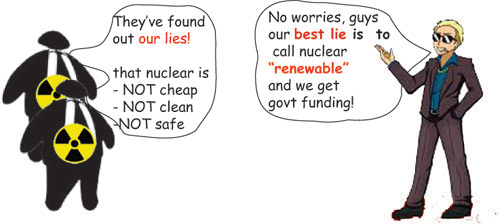
The nuclear plant is not named – indeed, the legislation is not even drafted – but there is only one nuclear plant in Connecticut, Dominion Energy’s 2,110 MW Millstone plant in Waterford.
Dominion has not been as vocal as other nuclear operators such as Exelon, which has for years said that it would have to close at least two of its nuclear plants in Illinois if it did not get some form of financial relief……
Nuclear subsidies and their discontents
As some have analysts have predicted, Illinois and New York’s success with ZECs has emboldened other states to follow suit.
In 2016, the Connecticut Senate passed SB 344, which would have allowed nuclear plants to bid into state RFPs as a renewable resource, but the bill did not make it through the state’s House of Representatives.
Legislators in the state are now drafting a bill, SB 106, that would take up those same issues again.
In its Feb. 7 testimony filed with Connecticut’s General Assembly, the Electric Power Supply Association, a trade group for independent generators, used SB 344 as the basis of its comments on the assumption that the bill will provide the “framework” for the new SB 106.
SB 344 would have expanded the definition of “renewable” so that nuclear power could bid into the state’s clean energy solicitation and be eligible to be awarded a 10-year power purchase agreement……..http://www.utilitydive.com/news/connecticut-girds-for-nuclear-power-debate-as-critics-line-up-against-mills/436685/
February 25, 2017
Posted by Christina Macpherson |
business and costs, politics, USA |
Leave a comment
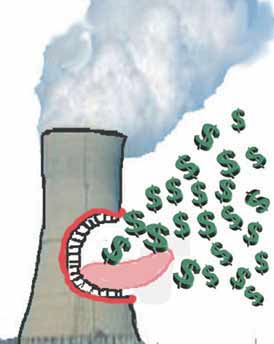
 Skyrocketing costs bury Southern Co. Kristi E. Swartz, E&E News reporter Energywire: Thursday, February 23, 2017 The financial fallout of Toshiba Corp.’s nuclear construction business has now hit Southern Co.’s nuclear expansion project in Georgia.
Meanwhile, the Atlanta-based energy giant said its next-generation coal project in Mississippi still needs a couple of weeks before it is fully operational.
Those were just two of the major announcements from Southern as it reported its 2016 earnings yesterday. The company also filed a 900-plus-page annual report with the Securities and Exchange Commission, and its Mississippi Power subsidiary submitted an economic viability analysis on the Kemper County energy facility………
There is much discussion over Vogtle’s [nuclear plant’s] cost and schedule after Toshiba said last week it would book a $6.3 billion write-down from its nuclear construction business, which is tied to Vogtle and a project in South Carolina.
Scana Corp.’s South Carolina Electric & Gas Co. announced its units at V.C. Summer were roughly eight months behind.
Executives also said they were reviewing all options on how to finish the reactors if Westinghouse cannot. Toshiba and Westinghouse have told Scana and Southern that they intend to see the projects through……http://www.eenews.net/stories/1060050444
February 25, 2017
Posted by Christina Macpherson |
business and costs, USA |
Leave a comment
GOP lawmaker calls for Trump’s border wall, warns nuclear weapons may be hidden in marijuana Arizona Republican Rep. Trent Franks told CNN he worries about terrorists using bales of marijuana to smuggle nukes, salon.com SOPHIA TESFAY , FRIDAY, FEB 24, 2017 Arizona Republican Rep. Trent Franks defended President Donald Trump’s proposed border wall by claiming it could prevent a nuclear weapon from being smuggled into the United States concealed in a bale of marijuana……..
Franks also failed to explain why presumed nuke-smugglers would choose to try to hide their weapon in something the U.S. Border Patrol is already looking for, although The Washington Post
reported Wednesday that Franks’s suggestion is one that has been floated by at least one nuclear weapons expert and Democratic congressman in the past…….
David Kay of the International Atomic Energy Agency told “
Frontline” in 1996 that concealing a nuclear weapon in a bale of weed would be his “preferred method” of nuke smuggling.
February 25, 2017
Posted by Christina Macpherson |
politics, USA |
Leave a comment
Don’t Invest in Nuclear Power. It’s a Sucker’s Bet. It was a Scam! Energy and Capital by Jeff Siegel February 21, 2017 Donald Trump is considered to be one of the greatest salesmen of all time.
But not even Trump would be able unload this steaming pile.
Last week, after Toshiba (OTCBB: TOSYY) projected a $6.3 billion write-down for its nuclear unit, management announced it was looking to sell its majority stake in Westinghouse, for which it paid $5.4 billion in 2006.
More than 10 years ago, the suits at Toshiba were overly optimistic about their ability to roll out a new generation of nuclear power plants that would be smaller, cheaper, and safer.
Today, they have four under construction in the United States and all have run into technical hiccups and cost overruns.
All in all, it was a big bet on a nuclear renaissance that, as I’ve warned dozens of times before, will never materialize in the U.S. The economics didn’t make sense 60 years ago, and they don’t make sense today….any hope of a nuclear power renaissance is based on nothing more than false hope and the illusion that’s often paraded around by lawmakers who have skin in the game.
A Very Risky Bet
In all fairness to Toshiba, the company did the Westinghouse deal right after the U.S. government ponied up a bunch of loan guarantees, tax credit packages, and cost-overrun backstops for nuclear power development.
With Washington bullish on nuclear, management likely figured it could rely on the government to help hedge some of the risk that comes along with building massive industrial projects such as nuclear power plants.
But it wasn’t enough…….https://www.energyandcapital.com/articles/dont-invest-in-nuclear-power-its-a-suckers-bet/5760
February 25, 2017
Posted by Christina Macpherson |
general |
1 Comment









 nuclear-news