Monju closure marks the end of the failed “nuclear fuel cycle” dream
 Japan pulls plug on Monju, ending US$8.5 billion nuclear self-sufficiency push, South China Morning Post, 21 December, 2016
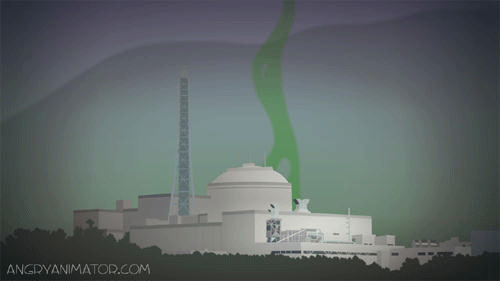
Japan on Wednesday formally pulled the plug on an US$8.5 billion nuclear power project designed to realise a long-term aim for energy self-sufficiency after decades of development that yielded little electricity but plenty of controversy.
The move to shut the Monju prototype fast breeder reactor in Fukui prefecture west of Tokyo adds to a list of failed attempts around the world to make the technology commercially viable and potentially cut stockpiles of dangerous nuclear waste……
The plant was built to burn plutonium derived from the waste of reactors at Japan’s conventional nuclear plants and create more fuel than it used, closing the so-called nuclear fuel cycle and giving a country that relies on overseas supplies for most of its energy needs a home-grown electricity source.
With Monju’s shutdown, Japan’s taxpayers are now left with an estimated bill of at least 375 billion yen (US$3.2 billion) to decommission its reactor, on top of the 1 trillion yen (US$8.5 billion) spent on the project.
Japan is still committed to trying to make the technology work and will build a new experimental research reactor at Monju, the government said.
But critics within the ruling Liberal Democratic Party (LDP) think it will be another futile attempt.
“We need to terminate the impossible dream of the nuclear fuel cycle. The fast breeder reactor is not going to be commercially viable. We know it. We all know it,” senior LDP lawmaker Taro Kono said recently at an event in Tokyo. http://www.scmp.com/news/asia/east-asia/article/2056403/japan-pulls-plug-monju-ending-us85-billion-nuclear-self?utm_source=edm&utm_medium=edm&utm_content=20161222&utm_campaign=scmp_today

No comments yet.
1 This Month

of the week – Shut Down Drone Warfare!


Tell the Ukrainian Government to Drop Prosecution of Peace Activist Yurii Sheliazhenko

Petition to revoke the licensing of the Near Surface Nuclear Disposal Facility (NSDF) at Chalk River. https://www.ourcommons.ca/petitions/en/Petition/Details?Petition=e-7247
To see nuclear-related stories in greater depth and intensity – go to https://nuclearinformation.wordpress.com
-
Archives
- March 2026 (237)
- February 2026 (268)
- January 2026 (308)
- December 2025 (358)
- November 2025 (359)
- October 2025 (376)
- September 2025 (257)
- August 2025 (319)
- July 2025 (230)
- June 2025 (348)
- May 2025 (261)
- April 2025 (305)
-
Categories
- 1
- 1 NUCLEAR ISSUES
- business and costs
- climate change
- culture and arts
- ENERGY
- environment
- health
- history
- indigenous issues
- Legal
- marketing of nuclear
- media
- opposition to nuclear
- PERSONAL STORIES
- politics
- politics international
- Religion and ethics
- safety
- secrets,lies and civil liberties
- spinbuster
- technology
- Uranium
- wastes
- weapons and war
- Women
- 2 WORLD
- ACTION
- AFRICA
- Atrocities
- AUSTRALIA
- Christina's notes
- Christina's themes
- culture and arts
- Events
- Fuk 2022
- Fuk 2023
- Fukushima 2017
- Fukushima 2018
- fukushima 2019
- Fukushima 2020
- Fukushima 2021
- general
- global warming
- Humour (God we need it)
- Nuclear
- RARE EARTHS
- Reference
- resources – print
- Resources -audiovicual
- Weekly Newsletter
- World
- World Nuclear
- YouTube
-
RSS
Entries RSS
Comments RSS
 nuclear-news
Leave a comment