The huge danger to the world of plutonium space operations
 The problem — a huge one and not mentioned whatsoever by World Nuclear News — involves
 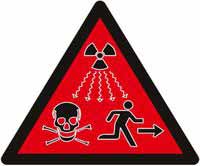 accidents with space nuclear power systems releasing radioactivity impacting on people and other life on Earth. That has already happened. With more space nuclear operations, more atomic mishaps would be ahead.
are subject to falling back to Earth and raining deadly radioactivity on human beings and other life on this planet.
 The Push for More Spaceborne Nuclear Russian Roulette HUFFINGTON POST, Karl Grossman, Investigative reporter 07/31/2012 World Nuclear News, the information arm of the World Nuclear Association that seeks to boost the use of atomic energy, last week heralded a NASA Mars rover slated to land on Mars on Monday, the first Mars rover fueled with plutonium.
“A new era of space exploration is dawning through the application of nuclear energy for rovers on Mars and the Moon, power generation at future bases on the surfaces of both and soon for rockets that enable interplanetary travel,” began a dispatch from World Nuclear News. It was headed: “Nuclear ‘a stepping stone’ to space exploration.”
In fact, in space as on Earth there are safe, clean alternatives to nuclear power. Indeed, right now a NASA space probe energized by solar energy is on its way to Jupiter, a mission which for years NASA claimed could not be accomplished without nuclear power providing onboard electricity. Solar propulsion of spacecraft has begun. And scientists, including those at NASA, have been working on using solar energy and other safe power sources for human colonies on Mars and the moon.
The World Nuclear Association describes itself as “representing the people and organizations of the global nuclear profession.”….. The problem — a huge one and not mentioned whatsoever by World Nuclear News — involves accidents with space nuclear power systems releasing radioactivity impacting on people and other life on Earth. That has already happened. With more space nuclear operations, more atomic mishaps would be ahead. NASA, before last November’s launch of Curiosity, acknowledged that if the rocket lofting it exploded at launch in Florida, plutonium could be released affecting an area as far as 62 miles away — which includes Orlando. Further, if the rocket didn’t break out of the Earth’s gravitational field, it and the rover would fall back into the atmosphere and break up, potentially releasing plutonium over a massive area. In its Final Environmental Impact Statement for the mission, NASA said in this situation plutonium could impact on “Earth surfaces between approximately 28-degrees north latitude and 28-degrees south latitude.” That includes Central America and much of South America, Asia, Africa and Australia.
The EIS said the costs of decontamination of plutonium in areas would be $267 million for each square mile of farmland and $1.5 billion for each square mile of “mixed-use urban areas.” The Curiosity mission itself, because of $900 million in cost overruns, now has a price of $2.5 billion.
NASA set the odds very low for a plutonium release for Curiosity. The EIS said “overall” on the mission, the likelihood of plutonium being released was 1 in 220. Bruce Gagnon, coordinator of the Global Network Against Weapons & Nuclear Power in Space , which has for more than 20 years been the leading opposition group to space nuclear missions, declared that “NASA sadly appears committed to maintaining its dangerous alliance with the nuclear industry. Both entities view space as a new market for the deadly plutonium fuel. … Have we not learned anything from Chernobyl and Fukushima?”
Plutonium has long been described as the most lethal radioactive substance. And the plutonium isotope used in the space nuclear program, and on the Curiosity rover, is significantly more radioactive than the type of plutonium used as fuel in nuclear weapons or built up as a waste product in nuclear power plants. It is Plutonium-238 as distinct from Plutonium-239. Plutonium-238 has a far shorter half-life — 87.7 years compared to Plutonium-239 with a half-life of 24,110 years. An isotope’s half-life is the period in which half of its radioactivity is expended.
Dr. Arjun Makhijani, a nuclear physicist and president of the Institute for Energy and Environmental Research, explains that Plutonium-238 “is about 270 times more radioactive than Plutonium-239 per unit of weight.”….
The worst accident of several involving a Soviet or Russian nuclear space systems was the fall from orbit in 1978 of the Cosmos 954 satellite powered by a nuclear reactor. It also broke up in the atmosphere as it fell, spreading radioactive debris over 77,000 square miles of the Northwest Territories of Canada…..
the pressure by promoters of nuclear energy on NASA and space agencies around the world to use atomic energy in space is intense — as is the drive of nuclear promoters on governments and the public for atomic energy on Earth.
Critically, nuclear power systems for space use must be fabricated on Earth — with all the dangers that involves, and launched from Earth — with all the dangers that involves (one out of 100 rockets destruct on launch), and are subject to falling back to Earth and raining deadly radioactivity on human beings and other life on this planet. http://www.huffingtonpost.com/karl-grossman/the-push-for-more-spacebo_b_1717531.html
No comments yet.
1 This Month

of the week – Shut Down Drone Warfare!


Tell the Ukrainian Government to Drop Prosecution of Peace Activist Yurii Sheliazhenko

Petition to revoke the licensing of the Near Surface Nuclear Disposal Facility (NSDF) at Chalk River. https://www.ourcommons.ca/petitions/en/Petition/Details?Petition=e-7247
To see nuclear-related stories in greater depth and intensity – go to https://nuclearinformation.wordpress.com
-
Archives
- March 2026 (251)
- February 2026 (268)
- January 2026 (308)
- December 2025 (358)
- November 2025 (359)
- October 2025 (376)
- September 2025 (257)
- August 2025 (319)
- July 2025 (230)
- June 2025 (348)
- May 2025 (261)
- April 2025 (305)
-
Categories
- 1
- 1 NUCLEAR ISSUES
- business and costs
- climate change
- culture and arts
- ENERGY
- environment
- health
- history
- indigenous issues
- Legal
- marketing of nuclear
- media
- opposition to nuclear
- PERSONAL STORIES
- politics
- politics international
- Religion and ethics
- safety
- secrets,lies and civil liberties
- spinbuster
- technology
- Uranium
- wastes
- weapons and war
- Women
- 2 WORLD
- ACTION
- AFRICA
- Atrocities
- AUSTRALIA
- Christina's notes
- Christina's themes
- culture and arts
- Events
- Fuk 2022
- Fuk 2023
- Fukushima 2017
- Fukushima 2018
- fukushima 2019
- Fukushima 2020
- Fukushima 2021
- general
- global warming
- Humour (God we need it)
- Nuclear
- RARE EARTHS
- Reference
- resources – print
- Resources -audiovicual
- Weekly Newsletter
- World
- World Nuclear
- YouTube
-
RSS
Entries RSS
Comments RSS
 nuclear-news
Leave a comment