Difficult questions for humanity, in the nuclear epoch of the Anthropocene
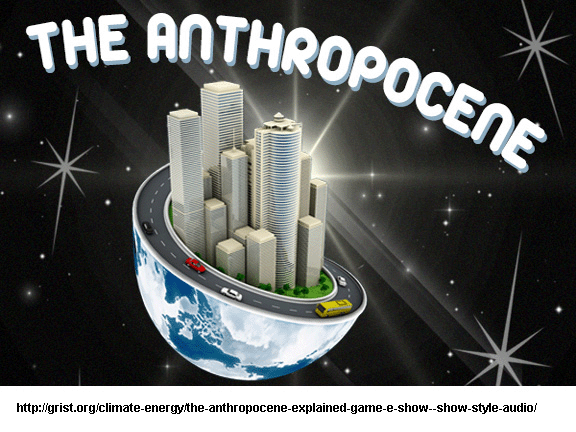 The Anthropocene is a nuclear epoch – so how can we survive it? The Conversation, December 9, 2016, The era in which we live is now officially described as an atomic Anthropocene or the “age of humans”, an epoch defined by humans’ impact on the planet – and one of its most distinctive features is radiation. The fallout (both literal and figurative) from international nuclear weapons testing, nuclear energy and nuclear disasters are embedded in our environment, but also in our society. And this year, they’ve all suddenly become rather more noticeable, confronting us with some alarming questions we never thought we’d have to answer.
In retrospect, 2016 was always going to bring these questions to the fore, marking as it did significant anniversaries of two of the world’s worst nuclear disasters: Fukushima (five years ago) and Chernobyl (30 years ago). While the health consequences of both incidents are still debated, their psychosocial effects and economic impact are beyond doubt.
Five years after the Fukushima accident, Japan is still working to decontaminate the affected area. It’s cost five trillion yen (about £35 billion) so far and demanded the labour of 26,000 clean-up workers – many of them vulnerable to exploitation and social exclusion.
Forced and so-called “voluntary” evacuees from Fukushima are still adjusting to life away from home. There are 100,000 of these “nuclear refugees” still displaced; two thirds have reportedly given up hope of ever returning. With the Tokyo 2020 Olympics looming, and compensation costs spiralling, the Japanese government recently declared more areas as officially safe – despite evacuees being reluctant to return. Their fears were stoked in November when an aftershock from the original Fukushima earthquake hit Japan. Thankfully, there wasn’t a second catastrophe.
We also saw the 30th anniversary of the Chernobyl disaster, which continues to effect a wide swathe of Ukraine and Belarus. Dealing with the consequences of the disaster consumes around 6% of Ukraine’s national budget, and 2.15m Ukrainians still live on territory that’s officially considered contaminated………
Economic and environmental change
It’s also been a bad year for uranium. The uranium mining and production sector has been faltering ever since Fukushima, and this year’s international overproduction further depressed prices. Global production and extraction activity stalled, earning it the dubious distinction of 2016’s “worst-performing raw material”.
As the industry waits for the market to recover, debates rage over the future of the only current operational uranium mill in the US and proposed developments at sacred and ecologically fragile zones – the Grand Canyon, the Aboriginal Kakadu National Park in Australia, and the Karoo in South Africa. Meanwhile, precarious states such as the Ukraine and Kazakhstan have agreed to jointly produce uranium, also betting the industry will recover.
But nuclear energy’s byproducts still have major environmental impacts, and we still have no solution for managing nuclear waste in the long term. In the US, a potential revival of the repository project in Yucca Mountain has been posited by Trump’s advisors. Meanwhile, Australia is unwilling to provide long term storage, and the long term outcomes remain to be seen……… https://theconversation.com/the-anthropocene-is-a-nuclear-epoch-so-how-can-we-survive-it-69393
No comments yet.
1 This Month

of the week – Shut Down Drone Warfare!


Tell the Ukrainian Government to Drop Prosecution of Peace Activist Yurii Sheliazhenko

Petition to revoke the licensing of the Near Surface Nuclear Disposal Facility (NSDF) at Chalk River. https://www.ourcommons.ca/petitions/en/Petition/Details?Petition=e-7247
To see nuclear-related stories in greater depth and intensity – go to https://nuclearinformation.wordpress.com
-
Archives
- March 2026 (237)
- February 2026 (268)
- January 2026 (308)
- December 2025 (358)
- November 2025 (359)
- October 2025 (376)
- September 2025 (257)
- August 2025 (319)
- July 2025 (230)
- June 2025 (348)
- May 2025 (261)
- April 2025 (305)
-
Categories
- 1
- 1 NUCLEAR ISSUES
- business and costs
- climate change
- culture and arts
- ENERGY
- environment
- health
- history
- indigenous issues
- Legal
- marketing of nuclear
- media
- opposition to nuclear
- PERSONAL STORIES
- politics
- politics international
- Religion and ethics
- safety
- secrets,lies and civil liberties
- spinbuster
- technology
- Uranium
- wastes
- weapons and war
- Women
- 2 WORLD
- ACTION
- AFRICA
- Atrocities
- AUSTRALIA
- Christina's notes
- Christina's themes
- culture and arts
- Events
- Fuk 2022
- Fuk 2023
- Fukushima 2017
- Fukushima 2018
- fukushima 2019
- Fukushima 2020
- Fukushima 2021
- general
- global warming
- Humour (God we need it)
- Nuclear
- RARE EARTHS
- Reference
- resources – print
- Resources -audiovicual
- Weekly Newsletter
- World
- World Nuclear
- YouTube
-
RSS
Entries RSS
Comments RSS
 nuclear-news
Leave a comment