WILL CLIMATE CHANGE SINK THE MEKONG DELTA?, Mongabay News, 3 October 2016 / David Brown
No delta region in the world is more threatened by climate change. Will Vietnam act in time to save it?
- Scientists say the 1-meter sea level rise expected by century’s end will displace 3.5-5 million Mekong Delta residents. A 2-meter sea level rise could force three times that to higher ground.
- Shifting rainfall and flooding patterns are also threatening one of the most highly productive agricultural environments in the world.
- The onus is now on Vietnam’s government in Hanoi to approve a comprehensive adaptation and mitigation plan.
- This is the first article of an in-depth, four-part series exploring threats facing the Mekong Delta and how they might be addressed. Read the second installment here.
IIt’s a sad fact that several decades of talk about climate change have hardly anywhere yet led to serious efforts to adapt to phenomena that are virtually unavoidable. Neuroscientists say that’s because we’re humans. We aren’t wired to respond to large, complex, slow-moving threats. Our instinctive response is apathy, not action.
That paradox was much on my mind during a recent visit back to Vietnam’s fabulously fertile Mekong Delta, a soggy plain the size of Switzerland. Here the livelihood of 20 percent of Vietnam’s 92 million people is gravely threatened by climate change and by a manmade catastrophe, the seemingly unstoppable damming of the upper reaches of the Mekong River.
Samuel Johnson famously said that “nothing concentrates the mind so well as the prospect of imminent hanging.” It’s been nine years since a World Bank study singled out the Mekong Delta as one of the places on our planet that is most gravely threatened by sea level rise. There if anywhere, I imagined, I’d find a sense of urgency. I’d find adaptive measures well advanced.
I was wrong. Vietnamese government ministries, provincial administrations, experts from Vietnamese universities and thinktanks, experts deployed by the World Bank, the Asian Development Bank and foreign governments: all have been pushing plans and policies. The problem has been to sort out the best ideas, make appropriate decisions and find the resources needed to implement them in a timely, coherent way.
Things may be coming together at last, I concluded after talking with dozens of local officials, professors, journalists and farmers in mid-June. None denied the reality of the problem. Many connected the question of what to do about climate change to older arguments over the best ways to grow more and better crops………
- No delta area, not the mouths of the Ganges, the Nile or the Mississippi, is more vulnerable than the Mekong estuary to the predictable impacts of climate change. The 1-meter sea level rise expected by the end of the 21st century, all else being equal, will displace 3.5-5 million people. If the sea instead rose by 2 meters, lacking effective countermeasures, some 75 percent of the Delta’s 18 million inhabitants would be forced to move to higher ground.
Already, said Professor Ni, there’s been a significant decrease in rainfall in the first part of the annual rainy season, and more rain toward the end. The Mekong’s annual flood peak has fallen by a third since 2000. The waters from upstream carry less silt to replenish the Delta floodplain. Also, the volume of fresh water is falling while the sea level rises. This allows salt-laden tidal water to penetrate further and further into Delta estuaries and swampy coastal areas during the dry season.
Modeling of current trends suggest that average temperatures in the Mekong Delta will rise by more than 3 degrees Celsius toward the end of the century. Annual rainfall will decrease during the first half of the century, and then rise well above the 20th century average. The area that’s flooded each autumn won’t change substantially, but the floods won’t last as long.
- All things being equal, rice yields will plummet as temperatures rise. Lighter rains in the early months of the wet season will challenge farmers’ ingenuity. Rising seas and reduced river flows will severely test the system of sea dikes. Riverbanks and the Delta coast are already crumbling; this will accelerate. Farmers who are unable to cope will head north to seek industrial and construction jobs.
That’s not all. At slide 70 (of 86) of the DRAGON presentation, attention shifts to upstream dam construction on Delta water regimes.For China, Laos and Thailand, the hydroelectric potential of the upper Mekong is a seemingly irresistable development opportunity. It may be that not all the dams they plan will be built across the Mekong mainstream. Whether a few or many, their impact on agriculture in Vietnam and Cambodia will be profoundly negative, Professor Ni, his colleagues at Can Tho University, and experts at other institutes in southern Vietnam have pounded the alarm gongs for years. The dam cascade is a nearer and more present danger, and apparently just as unstoppable as climate change.
DRAGON Institute’s slideshow concludes with a call to action. The future is bleak but not hopelessly so if appropriate adaptation and mitigation strategies are launched. What the Delta needs is revealed: sustainable development based on a triply effective foundation of water source security, food security and social security. https://news.mongabay.com/2016/10/will-climate-change-sink-the-mekong-delta/
October 10, 2016
Posted by Christina Macpherson |
climate change, Vietnam |
Leave a comment
We Have Money to Fight Climate Change. It’s Just That We’re Spending It on Defense, Reader Supported News , By Kenneth Pennington, Guardian UK,08 October 16
Stopping one fighter plane program would save enough to build wind farms to power 320,000 homes. We need to drastically reassess our priorities
One year ago this week, I was sitting in a cramped hotel room with 15 other staffers in Las Vegas for Bernie Sanders’ first debate for the presidential nomination. The question came from CNN: “What is the greatest national security threat?” Pundits criticized and mocked him for weeks after he answered “climate change”. But he was right.
And it’s not just Sanders pointing out the imminent threat posed by climate change to global and national security. CIA analysts and our nation’s military strategists are rightfully naming it as a contributor to refugee flows, the spread of disease, and conflicts over basic resources like food and water.
In 2014, 17.5 million people were displaced by climate-related disasters. Those numbers will continue to rise dramatically in the coming decades, according to climate displacement program manager Alice Thomas of Refugees International.
Our nation’s defense officials know global warming’s destructive forces could undermine fragile governments in unstable regions of the world where extremist ideologies can take root. Yet mainstream Republican avoidance of reality on the science of climate change impedes the necessary reassignment of resources to meet the challenges posed.
Now a new report from the Institute of Policy Studies provides the most accurate calculation of government spending on climate security to date. The picture isn’t pretty. We’re spending 28 times as much on military security than climate security. A public sector investment of $55bn per year is required to meet the challenge, according to the study. With $21bn in the 2017 budget, a shortfall of $34bn is left.
That may seem like an insurmountable hill to climb. It’s not! As the IPS report points out, plenty of money lies untouched in the nation’s bloated military budget……….
Republicans should take heed of former GOP President Dwight Eisenhower’s words of wisdom:
Every gun that is made, every warship launched, every rocket fired signifies, in the final sense, a theft from those who hunger and are not fed, those who are cold and are not clothed. This world in arms is not spending money alone. It is spending the sweat of its laborers, the genius of its scientists, the hopes of its children.
Let’s steward our resources wisely. Let’s choose climate over combat. http://readersupportednews.org/news-section2/318-66/39569-we-have-money-to-fight-climate-change-its-just-that-were-spending-it-on-defense
October 10, 2016
Posted by Christina Macpherson |
climate change, USA |
Leave a comment
Reykjavík: the geothermal city that aims to go carbon neutral
Icelandic capital plans to reduce its greenhouse gas emissions to zero by 2040 by reversing urban sprawl and promoting walking, cycling and public transport, Guardian, Senay Boztas, 3 Oct 16, Reykjavík used to be marketed as a place of “pure energy”, run on geothermal power – and now Iceland’s capital is trying to become the world’s first carbon neutral city.
Last month, Iceland became one of the first countries to ratify the Paris climate deal with a unilateral parliamentary vote, shortly after Reykjavik announced its aim to be carbon neutral by 2040.
It wants to reduce its greenhouse gas emissions from 2.8 tonnes per person in 2013 to zero – largely by changing the shape of the city to reverse urban sprawl and encouraging Icelanders out of their beloved cars to walk, cycle or use public transport.
The city already has a head-start thanks to its reliance on geothermal energy. The US, for example, has a greenhouse gas footprint of 16.5 tonnes per person………https://www.theguardian.com/sustainable-business/2016/oct/03/reykjavik-geothermal-city-carbon-neutral-climate
October 10, 2016
Posted by Christina Macpherson |
ARCTIC, climate change |
Leave a comment
Nuclear-armed drones? They may be closer than you think, Asia Times, By RICHARD A. BITZINGER and Christine M. Leah. OCTOBER 9, 2016 The US military increasingly relies on drones to carry out a multitude of tasks, usually those deemed too “dull, dirty, or dangerous” for manned missions. Most unmanned aerial vehicles (UAVs) carry out routine reconnaissance. They also act as decoys, serve as communication relays, and even deliver light cargoes. But a growing number of drones are armed, such as the US Predator and MQ-9 Reaper, which are used mostly in tactical situations, such as targeting terrorists or insurgents.
Now military strategists are considering acquiring longer-range drones, especially those capable of carrying out nuclear missions. In 2015 there were reports that Russia was attempting to build nuclear-armed drone submarines………..When the US decided to go ahead with a next-generation strategic bomber, the Long-Range Strike Bomber (LRS-B), the program included both manned and unmanned systems. The LRS-B, which replaces both B-52 and B-1 bombers, is intended to carry out a broad range of missions: nuclear attack, strategic and tactical conventional strike, surveillance, intelligence, and reconnaissance (ISR), and electronic attack. Initially, the US military plans to acquire 80 to 100 LRS-Bs, but the number could eventually rise to 200 bombers…….
..Conventional strike missions with precision-guided air-to-ground munitions is also something that could be considered for an unmanned system, as it would provide the US with the means for long-range, large-payload ground attacks. These types of missions can presently be carried out only by B-52 and B-1 bombers, which are becoming increasingly obsolete; shorter-range systems such as the F-35 Joint Strike Fighter, area very limited in their capacities for ground attack…….
Nevertheless, nuclear-armed drones still raise considerable hackles. What if such a drone could be hacked and forced to crash or be redirected to another target? How does the drone’s remote operator ensure near-total control of such a lethal weapons platform?
And nuclear drones could come in smaller packages, too. Thus far there have been limitations on the transportability by air of nuclear bombs with relatively high yields……..
Longer-range drones make a lot of sense for the US military, when it comes to projecting power into the far Western Pacific……..http://www.atimes.com/nuclear-armed-drones-not-just-yet-but-the-outlook-is-scary/
October 10, 2016
Posted by Christina Macpherson |
2 WORLD, weapons and war |
Leave a comment
Nuclear energy: Government to push for JVs in light water reactor projects, Economic Times By PTI | Oct 09, 2016, NEW DELHI: To meet the high cost of Light Water Reactors, the government has decided to bring in such projects, which currently involve foreign collaborators, as joint ventures (JVs)with public sector undertakings (PSUs).
October 10, 2016
Posted by Christina Macpherson |
business and costs, India, politics |
Leave a comment
Mount Aso erupts in a fiery plume rising 11,000 meters THE ASAHI SHIMBUN October 8, 2016 Mount Aso erupted in a towering plume of smoke and ash of around 11,000 meters on Oct. 8, sparking fears that big rocks could land more than 1 kilometer from the crater in Kumamoto Prefecture, the Japan Meteorological Agency said.
“It is extremely rare for an eruption column to exceed 10,000 meters,” said Makoto Saito, director of the agency’s Volcanology Division.
As a precaution, the agency immediately raised its alert level from 2, which means entry to areas around the crater is restricted, to 3, meaning access to the entire 1,592-meter-high mountain is restricted.
It was the first time since Sept. 14, 2015, that the precaution level was raised to 3…….http://www.asahi.com/ajw/articles/AJ201610080025.html
October 10, 2016
Posted by Christina Macpherson |
general |
Leave a comment
 Mining Awareness +
Japan’s Mount Aso volcano erupted explosively on Saturday, 8 Oct., 2016, and volcanic “ash was falling as far as 320 km (200 miles) away, … Kyushu Electric Power Co said the eruption had no impact on its Sendai nuclear plant, which is about 160 km (100 miles) south of Mount Aso“(Reuters, 8 Oct. 2016). Sendai nuclear power station has two reactors online. The other nuclear power station online is Ikata, with one reactor operating. https://en.wikipedia.org/wiki/Nuclear_power_in_Japan
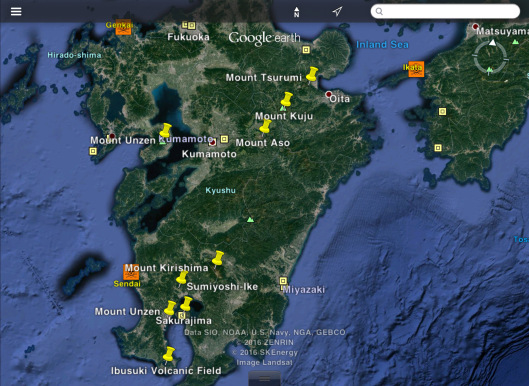
Volcano locations exported from: https://en.wikipedia.org/wiki/List_of_volcanoes_in_Japan
With a change in wind direction ashfall from Mount Aso and/or Sakurajima could endanger Japan’s operating reactors. As can be seen on the map, Ikata Nuclear Power Station is closer to Mount Aso, and Sakurajima to Sendai Nuclear Power Station. Ash plume forecasts for both appear at the bottom of this post.
Disruptions due to a major volcanic eruption, as well as ashfall could lead to nuclear meltdown:…
View original post 181 more words
October 9, 2016
Posted by Christina Macpherson |
Uncategorized |
Leave a comment
 Nuclear Australia

As the South Australian Government’s second nuclear “citizens’ jury” gets underway this weekend, it’s essential that participants aren’t denied important facts about global nuclear waste, says Mark Parnell MLC, Parliamentary Leader of the SA Greens.
Here are eight inconvenient truths that the citizens’ jury needs to hear:
1. The much-heralded Finnish underground nuclear waste facility (visited by the Premier recently) does NOT yet have a licence to accept nuclear waste, will not open for at least six years and has been three decades in planning. It is also 20 times SMALLER than the facility proposed for SA by the Royal Commission.
2. The nuclear industry is without peer in terms of cost blow-outs and time over-runs. This is likely to eliminate any anticipated profit for South Australia – which is the sole rationale for the proposed SA dump.
3. According to the Royal Commission’s own consultants, it could cost South…
View original post 237 more words
October 9, 2016
Posted by Christina Macpherson |
Uncategorized |
Leave a comment
Mining Awareness +
The German government wants to send 30 shipments of spent nuclear fuel from its Ahaus storage facility as well as lesser amounts from Juelich over the course of 3.5 years (42 months), i.e. approximately every month and a half, to Charleston, South Carolina. Unlike airplanes which hug the coastlines, shipping routes appear to go through the English Channel, straight across the Atlantic to North Carolina and then slide down the coast to Charleston, South Carolina. Charleston was just evacuated for Hurricane Matthew.
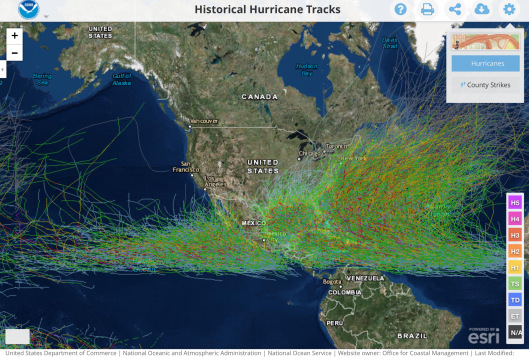
Shipments of radioactive waste from other countries may also be continuing as per the Obama administration policy of spending almost $2 billion per year of US taxpayer money to dump foreign nuclear waste on America – in short fleecing the US taxpayer to better kill them and/or their descendants. Under Hillary this will most likely continue. And, it sounds like Trump will be too busy looking at women…
View original post 1,640 more words
October 9, 2016
Posted by Christina Macpherson |
Uncategorized |
Leave a comment
 geoharvey
Opinion:
¶ “How will we power the planet in 2050?” • A report from the World Energy Council found that renewable sources of power now represent around 30% of the world’s total capacity and 23% of electricity production. In the last 10 years, wind and solar power had seen rapid growth. CNBC spoke to the experts about what 2050 will look like. [CNBC]
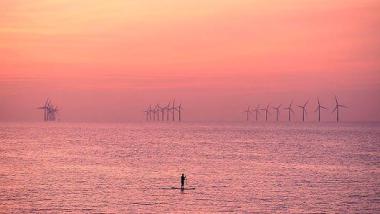 A paddleboarder in the Irish (SeaPaul Ellis | AFP | Getty Images)
Science and Technology:
¶ According to the team from the Solar Energy Institute of the Universidad Politécnica de Madrid, up to 1 MWh of energy can be stored in just one cubic meter of molten silicon. Silicon is the most abundant element in the Earth’s crust. The technology holds a promise for dealing with the intermittency of renewable power generation. [E&T magazine]
World:
¶ German developer BayWa has secured power purchase…
View original post 658 more words
October 9, 2016
Posted by Christina Macpherson |
Uncategorized |
Leave a comment
 jpratt27
Investing in sustainable infrastructure is key to tackling three simultaneous challenges: reigniting global growth, delivering on the Sustainable Development Goals (SDGs), and reducing climate risk. Following the milestone achievements of 2015 – including the ambitious global goals set for sustainable development and its financing in Addis Ababa and New York, and through a landmark international agreement on climate action in Paris – the challenge is to now to shift urgently from rhetoric into action.
Infrastructure underpins core economic activity and is an essential foundation for achieving inclusive sustainable growth. It is indispensable for development and poverty elimination, as it enhances access to basic services, education and work opportunities, and can boost human capital and quality of life. It has a profound impact on climate goals, with the existing stock and use of infrastructure associated with more than 60% of the world’s greenhouse gas (GHG) emissions. Climatesmart, resilient infrastructure will be…
View original post 489 more words
October 9, 2016
Posted by Christina Macpherson |
Uncategorized |
1 Comment
 The Legacy of Nuclear Power,This fascinating short article on four nuclear communities tellingly demonstrates why radioactive waste is a moral issue and explains what the priorities for its management should be. Routledge, By Andy Blowers. 7 Oct 16
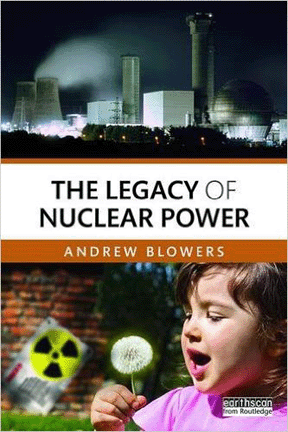
1. Hanford, USA
Scattered across a vast site in Washington state in America’s North West is Hanford, one of the most contaminated places in the world. During the war Hanford was the scene of frenzied activity as the chosen location for the manufacture of the plutonium for the ‘Fat Man’ nuclear weapon that devastated Nagasaki on 9 August, 1945. In the subsequent Cold War, Hanford’s nuclear activities expanded comprising eight nuclear reactors along the banks of the Columbia River, the sinister looking reprocessing ‘canyons’ in the middle of the reservation and a variety of production and experimental facilities scattered around its fringes. Production at Hanford has ceased but a vast nuclear legacy remains especially in the tank farms containing high-level liquid waste and sludge, some leaking towards the Columbia, in the abandoned reactors and decommissioned reprocessing works and in waste management facilities and clean-up projects. Cleaning up the legacy is a long-term, costly ($2billion federal funding a year), intractable and complex task but it is an inescapable one.
2. Sellafield, UK
Sellafield, the heart of the UK’s plutonium economy, is in a stage of transition from production to clean-up. Like Hanford, Sellafield’s nuclear legacy stretches back to the early days of the military nuclear programme when little attention was paid to the wastes. Unlike Hanford, the Sellafield site is very compact, a mere 2 sq. km., but crammed on to it is around two-thirds of all the radioactivity from the UK’s nuclear programme. The legacy comprises all the country’s high level wastes, most of the spent fuel, a stockpile of around 140 tonnes of plutonium and complex streams of wastes. Hemmed in within a complex of buildings, many of them redundant, are large grey anonymous structures containing often unrecorded mixtures of fuel, skips and other highly radioactive debris tipped into the notorious ponds and silos which pose what has been called an ‘intolerable risk’ to the public and the environment. Cleaning up this legacy is a task that stretches decades ahead absorbing around £1.7 billion from the government a year.
3. La Hague, France
In France, where three-quarters of the country’s electricity is produced by its 58 reactors, the nuclear industry is mainly focused around the reprocessing facilities at La Hague at the tip of the Cotentin peninsula in Normandy. At this remote location spent fuel is reprocessed for recycling in the form of mixed oxide fuel (MOX) or vitrified and stored pending disposal. After much searching, an underground laboratory has been developed in eastern France at Bure, a nuclear no-man’s land, stealthily and steadily becoming established as the country’s nuclear disposal site, but still a long way off. Meanwhile, the French nuclear legacy continues to accumulate at power stations soon to be decommissioned, at La Hague and other sites of reprocessing and experimental reactors.
4. Gorleben, Germany
In Germany there has been fierce resistance for more than three decades to the prospect of shipping casks of highly radioactive wastes across the country to Gorleben in the middle of the country. The casks are sent to an interim store for possible burial in a neighbouring excavated salt mine. Gorleben has played both a symbolic and political role in bringing down the German nuclear industry. The symbols of protest festoon the countryside. There are the ubiquitous wooden yellow crosses on farms and villages, the bright orange sun on a green background displayed on posters and flags proclaiming the ‘Free Republic of Wendland’ and the slogan ‘Stop CASTOR’ (the soubriquet for the flasks) daubed on walls and electricity sub-stations. These gave identity to this fiercely independent land of forest, heath and waterlands close by the River Elbe. Drawing on this real and invented cultural legacy, the Gorleben movement became an inspiration for the wider German anti-nuclear protest.
Places on the Periphery
These four places, Hanford, Sellafield, La Hague/Bure and Gorleben with their different histories exemplify and explain the physical imprint and social conditions that are the continuing legacy of nuclear power. They constitute what may be defined as peripheral communities, places where hazardous activities are located and which are, as it were, physically and socially set apart from the mainstream. They tend to be geographically remote. They may be located at the edge whether of a country, as at La Hague, in relatively inaccessible sub-regions as at Sellafield or in areas of sparse population as Hanford was before the war and as Bure is today. They may be areas with a distinctive (real or invented) cultural identity or isolation like Gorleben, in the self-declared Wendland once on the border with Eastern Germany. Peripheral communities tend also to be economically marginal, monocultural and dependent on government investment and subsidy or state owned companies………..https://www.routledge.com/posts/10360?utm_source=adestra&utm_medium=email&utm_campaign=160701303
October 8, 2016
Posted by Christina Macpherson |
2 WORLD, Reference, wastes |
Leave a comment

 What About the Planet?,NYT Paul Krugman OCT. 7, 2016 Our two major political parties are at odds on many issues, but nowhere is the gap bigger or more consequential than on climate.
October 8, 2016
Posted by Christina Macpherson |
general |
Leave a comment
Preparing the country for nuclear terrorism http://thebulletin.org/preparing-country-nuclear-terrorism9985 JEROME M. HAUER Jerome M. Hauer has served in cabinet-level positions at the local and state level and as an acting assistant secretary for the Office of Public Health Emergency Preparedness at the US Department…
The candidates for president of the United States continue to discuss preventing nuclear proliferation and the threat of nuclear terrorism, yet we hear little about how well prepared the nation is to manage the aftermath of terrorist use of an improvised nuclear device. Some may think the notion of such an attack is apocryphal. So allow me to explain just how likely such a possibility is, how devastating the result of such a detonation would be, and—in particular—just how poorly prepared the United States is to respond.
In 2005, Kofi Annan, former secretary general of the United Nations, said, “Nuclear terrorism is still often treated as science fiction. I wish it were. But unfortunately we live in a world of excess hazardous materials and abundant technological know-how, in which some terrorists clearly state their intention to inflict catastrophic casualties. Were such an attack to occur, it would not only cause widespread death and destruction, but would stagger the world economy … [creating] a second death toll throughout the developing world.
In 2007, US Sen. John McCain was quoted as saying, “My greatest fear is the Iranians acquire a nuclear weapon or North Korea and pass enough highly enriched uranium (HEU) to a terrorist organization. And there is a real threat of them doing that. Just 55 kilograms, roughly 122 pounds of HEU, can be used to make a 10 kiloton IND, similar to the bomb dropped over Hiroshima.”
In 2005, Graham Allison, director of Harvard University’s Belfer Center for Science and International Affairs at Harvard University’s John F. Kennedy School of Government, asked, “Is nuclear mega-terrorism inevitable? Harvard professors are not known for being subtle or ambiguous, but I’ll try to the clear. Is the worst yet to come? My answer: Bet on it. Yes.
Matthew Bunn, also at the Belfer Center, argued in 2007, “Theft of the essential ingredients of nuclear weapons is not just a hypothetical worry, it is an ongoing reality.”
Nuclear physicist Frank Barnaby has been quoted as saying “The really frightening thing about HEU is that it is so easy to make an atom bomb out of it. You only need a couple of PhD students and a small amount of material. I think we should be very frightened about the possibility of nuclear terrorism; I’m surprised it hasn’t happened yet.”
The aftermath of a detonation of a relatively small improvised nuclear device—one that is roughly the yield of the bomb dropped on Hiroshima—in a US city would be almost unimaginably gruesome. In New York City, for example, most buildings within one quarter of a mile would be destroyed. Some 300,000 to 400,000 people would be killed instantly, with several hundred thousand more requiring various levels of medical care. Electrical and communications systems would be severely damaged, at best. And medical and other responders would face radiation dangers and a host of other problems.
In a search of both media and scholarly literature, however, I was able to find only one mention of US preparedness for nuclear terror. “The United States is unprepared to mitigate the consequences of a nuclear attack,” Pentagon analyst John Brinkerhoff wrote in a July 2005 confidential memo to the Joint Chiefs of Staff. “We were unable to find any group or office with a coherent approach to this very important aspect of homeland security.”
Several federal agencies have been aggressively working to address this deficit. The Department of Health and Human Services’ Office of the Assistant Secretary for Preparedness and Response has made significant strides in medical and public health preparedness. But much more work needs to be done across the federal behemoth.
After spending untold millions of dollars since its establishment, the Department of Homeland Security—the umbrella agency in which the Federal Emergency Management Agency resides—still does not have adequate radiation detection technology for use in the aftermath of a nuclear detonation and confuses local responders with inconsistent units of measure for radiation emitted by various nuclear isotopes. In Homeland Security advisories to first responders, the terms REM, rad, Sieverts and Gray are thrown about as if interchangeable. They’re not, and knowing the difference is important if responders are to feel and be safe in the aftermath of a nuclear blast.
Because there is such a clear history of concern about the threat of nuclear terrorism, the presidential candidates must cross the bridge from merely accepting the possibility of an attack with an improvised nuclear device, to planning an effective response that reduces the mass morbidity and mortality such an attack inevitably will cause—and then leads beyond the attack, toward recovery.
The road to preparedness. The detonation of a Hiroshima-yield improvised nuclear device in New York would level or significantly damage a significant portion of the city and instantaneously kill and maim hundreds of thousands of people. Trauma, burns, and radiation damage to organ systems are just some of the injuries that would place extraordinary demands on health care systems. In most multi-casualty incidents, there are one or two triage points where victims are taken for assessment and routing to treatment. Following a nuclear detonation in a major city, there could be need of 25 to 75 such triage points—or more—because of the vast geographical footprint of the detonation and the number of victims involved. Coordination will be difficult; much of the communication infrastructure will be demolished or rendered unusable. Moving patients to definitive care will be a monumental task and deciding which patients are triaged for medical care and which are triaged to receive end-of-life services will vary by triage point.
C. Norman Coleman and colleagues at the Department of Health and Human Services have developed criteria for establishing a triage network in the event of a nuclear explosion, but training for emergency physicians and pre-hospital care providers has not been integrated into the fabric of primary or continuing education for those responders.
Finally, studies—including research I conducted in 2012— have shown that between 30 and 50 percent of critical personnel will not be present at or be unable to travel to work in the aftermath of a nuclear detonation. Many of those non-responding responders will want to be with their families; others will fear the personal health threat of radiation.
This dismal picture of US preparation for an incident of nuclear terrorism could be improved with strong leadership at the White House, particularly from the homeland security advisor to the president. The following areas need support, both in terms of funding and in developing uniform plans for managing a nuclear incident in a major city:
- Threat-based funding is important. We no longer have the luxury of giving money to buy toys—aka equipment that is unlikely to be used—to smaller cities and rural counties. Walla Walla, Washington is a lot less likely to be attacked with an improvised nuclear device than Washington, DC. But hundreds of millions of dollars have been wasted on inappropriate terrorism-response “toys” for small governments that will likely never use them. A robust, mobile medical infrastructure needs to be created—one that is capable of handling tens of thousands of patients at once. The Department of Defense will be central to any response plan developed by Health and Human Services; the White House should make certain they are cooperating on that plan—starting yesterday.
- The president should request and Congress should approve additional funding for communication systems that don’t rely on the local infrastructure likely to be destroyed or heavily damaged in a nuclear terror attack. Satellite-based operability would meet the need, making a seamless transition to undamaged communication channels available in high-threat cities. Competition as to which cities are included in such a system needs to be transparent, and political gamesmanship must be discouraged. The communications issue is too central to any effective response to delay it through influence peddling.
- HHS funding should be increased to accelerate research on medical countermeasures for acute radiation sickness. Such research is being conducted, but at an insufficient scale, given to potential for mass death that an improvised nuclear device poses. This research program should be the new Manhattan Project.
- A commission that includes the best minds in radiation, emergency medicine, emergency medical services, the fire service, law enforcement, the Defense Department, HHS, radiation medicine, and high target states and cities should be formed to address the gaps in response plans for a nuclear detonation. That commission should finalize a report to the new president in 180 days. There is no room for delay.The report should suggest the funding required to close each gap.
- A federal government structure for responding to an improvised nuclear device detonation in a major city should be completed within one year in the new administration.
I realize that the program I’ve suggested is daunting. But it’s absolutely not an insurmountable goal. Millions of lives depend on it. What is more important to an incoming administration than saving millions of lives?
October 8, 2016
Posted by Christina Macpherson |
safety, USA |
Leave a comment
Oxfam called on countries to target 35% of funding by 2020, and 50% by 2025. “The share is not only too low, it is also declining. It was 21% in 2013. No share or specific amount has been agreed for vulnerable countries in the Paris agreement,” the spokeswoman said
Poor countries urge fast action on Paris deal to stop catastrophic warming As the climate agreement is ratified, developing nations warn that money pledged is still nowhere near enough to adapt to expected sea level rises, Guardian, John Vidal, 7 Oct 16, UN back-slapping for the record speed at which the Paris agreement on climate change has been ratified this week has been tempered by the reality that the new treaty will not stop catastrophic warming as it stands, and that the money so far pledged by rich countries is nowhere near enough to allow developing countries to adapt to expected sea level rises and more extreme weather.

The agreement, which will come into force on 4 November, is hoped to hold temperatures to a maximum 2C rise, and for the first time commits both rich and poor countries to reduce greenhouse gas emissions.
But, say scientists, the historic measures pledged in Paris last year by the big greenhouse gas emitters like Europe, the US and China set the world on track to a temperature rise of about 3C over the next 50 years – enough to render many of the world’s poorest countries uninhabitable.
The world’s 48 least developed countries (LDCs), which unanimously pressed for a global commitment to a 1.5C warmer world in Paris, said this week that they welcomed the ratification of the agreement, but warned that the rich must act urgently.
“Now we need to now turn our words into action. Without action, the Paris agreement will just be a piece of paper,” said Hilda Heine, president of the Marshall Islands. “We need to see finance quickly flow to those who need it most so we can all implement our own ambitious plans to reduce emissions. Without [that] there is no way we will be able to stay within 1.5 degrees.”
Abdallah Wafy, Niger’s ambassador to the UN, added: “Despite Africa’s insignificant contribution to the causes of climate change, it is suffering from drought, flooding, climate-induced displacement and other climate-related challenges. The international community should accelerate efforts to curb those negative effects.”……..
October 8, 2016
Posted by Christina Macpherson |
2 WORLD, climate change |
Leave a comment




 nuclear-news