America has nuclear offensive strategies, but not defensive ones
The Hidden Defect In U.S. Nuclear Strategy That Could Spell America’s Doom, The National Interest, 18 Oct 16
“………aside from a very minimal collection of radars and interceptors on the West Coast designed to deal with North Korea, America has no strategic defenses.
What it has is offenses — about 1,500 nuclear warheads distributed in hardened silos, stealthy submarines and long-range bombers. These forces are known as the nuclear “triad;” along with flying command centers, secure communications satellites and aerial-refueling tankers, the triad is designed to make any act of nuclear aggression potentially suicidal for the perpetrator. The plan is to respond proportionately to any level of nuclear aggression, and make that plan abundantly clear to any nation that might contemplate an attack.
The assumption is that no sane leader would deliberately launch an attack knowing the retribution that would follow. That seems logical enough, but think about the other ways a nuclear exchange might occur. What if we find ourselves facing an irrational adversary with nuclear weapons? What if the other side is rational, but suffers a mechanical failure in its command system? What if it misreads U.S. intentions in a crisis such as war in Eastern Europe? What if parts of its nuclear arsenal are seized by elements intent on fomenting war?
These are not just science-fiction scenarios. The Russian early-warning network of satellites and ground-based radars is so fragile that it could easily fail, or result in mis-interpretation of threat data. If Moscow seriously thought it was under attack, it would be strongly incentivized to launch quickly before its weapons were destroyed on the ground. That might well signal the end of American civilization,…….
If Washington had spent as much money over the last 15 years on protecting our homeland as it has spent on trying to fix Afghanistan, America would be well on its way to having defenses against nuclear attacks — no matter how or where they originated. Instead, the United States remains vulnerable to the one threat that could destroy our civilization before sunset. This may be the greatest strategic mis-calculation in history, and the next president needs to focus on correcting it.
Loren B. Thompson is Chief Operating Officer of the non-profit Lexington Institute and Chief Executive Officer of Source Associates, a for-profit consultancy. Prior to holding his present positions, he was Deputy Director of the Security Studies Program at Georgetown University and taught graduate-level courses in strategy, technology and media affairs at Georgetown. He has also taught at Harvard University’s Kennedy School of Government. http://nationalinterest.org/blog/the-buzz/the-hidden-defect-us-nuclear-strategy-could-spell-americas-18083?page=2
The consequences of a nuclear plant meltdown – as they would apply to NewYork’s nuclear plants

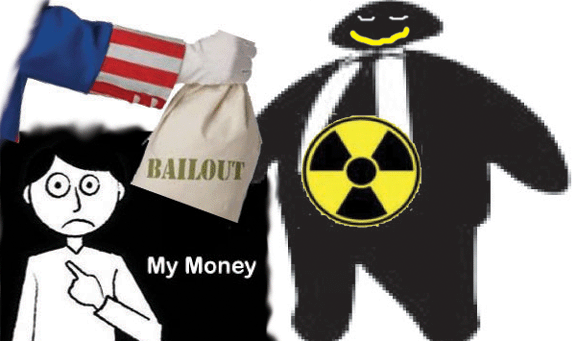 Bailing out aging nuclear power plants can impact development of renewable energy technologies, Enformable, 17 Oct 2016 “…………Beyond Dollars—It’s About Life
And this, most importantly, is beyond dollars—it’s about life.
The most comprehensive study of the consequences of a nuclear plant meltdown with loss of containment was done for the U.S. Nuclear Regulation Commission, which succeeded the Atomic Energy Commission, by Sandia National Laboratories in 1982. It’s title: Calculation of Reactor Accident Consequences or CRAC2.
The study projected “peak early fatalities,” “peak early injuries,” peak cancer deaths” and “scaled costs” in the billions of dollars for such a meltdown at every nuclear plant in the United States. In “scaled costs” the study itemizes “lost wages, relocation expenses, decontamination costs, lost property” but it is noted that “the cost of providing health care for the affected population” is not included. The nuclear industry and nuclear promoters in government were so upset with the release of this analysis that I doubt there will ever be anything like it again. I’ve distributed a breakdown of the CRAC2 numbers done by the House Subcommittee on Oversight & Investigations for your review.
The figures—and we’re speaking here of lives not mere numbers—for the four nuclear plants that would be bailed out under the Cuomo plan are:
Ginna — 2,000 fatalities, 28,000 injuries, 14,000 cancer deaths and $63 billion in costs—based on the value of the 1980 dollar. It would be three times that now.
FitzPatrick – 1,000 fatalities, 16,000 injuries, 17,000 cancer deaths and $103 billion in costs.
Nine Mile Point which consists of two nuclear power plants.
Unit 1 — 700 fatalities, 11,000 injuries, 14,000 cancer deaths, $66 billion in costs.
And Nine Mile Point 2 – 1,400 fatalities, 2,600 injuries, 20 000 cancer deaths, $134 billion in costs.
Also, as we have seen from Three Mile Island, Chernobyl and Fukishima, nuclear accidents are not rare events, like the BNL scientists told me, and not minor. With a little more than 400 nuclear power plants in the world, 100 in the U.S., disaster has occurred nearly every decade.
And if the next nuclear disaster is to strike anywhere, it could easily happen at these four old nuclear plants. Nuclear plants were only seen as operating for 40 years. After that, the metals would become embrittled from radioactivity creating unsafe conditions. So they were given 40-year operating licenses. But the Nuclear Regulatory Commission has gone ahead in recent times and given 20-year license extensions to now more than 80 of the nuclear plants in the U.S.—including the four upstate plants. This would allow them to run for 60 years. And the NRC is considering having an additional license extension program to allow nuclear plants to run for 80 years. It’s just asking for disaster. Considering taking a 60-year car on to the LIE or an Interstate and driving it at full speed—and that’s also part of the NRC program, allowing the nuclear plants given extensions to “uprate”—run hotter and harder to produce more electricity.
In terms of age, Nine Mile Point Unit 1 went online in 1969 and is one of the two oldest nuclear plants in the U.S., tied with Oyster Creek in New Jersey. Ginna started operating in 1970. FitzPatrick in 1975. These are from-the-past machines prone to mishap.
Excelon: 800 Pound Nuclear Gorilla
But there’s an 800 pound nuclear gorilla heavily involved in the bail-out plan—a company called Excelon. It’s the major owner of three of the plants—Ginna and the two Nine Mile Point plants—and Excelon has made a $110 million deal to buy FitzPatrick from Entergy with the bail-out deal in mind……….http://enformable.com/
UK suppresses freedom of speech, blocks RT bank accounts

 UK’s Attack on RT’s Accounts is a ‘Basic Crackdown on Freedom of Speech‘ https://sputniknews.com/world/201610171046421488-russia-britain-rt-bank-accounts/ The blocking of RT’s bank accounts is nothing but a crackdown on freedom of speech, Steve Topple, independent journalist and commentator, told Sputnik. n an interview with Sputnik, Steve Topple, independent journalist and commentator, lashed out at the blocking of the accounts of the RT broadcaster in the United Kingdom which he slammed as a crackdown on freedom of speech.
“This is a basic crackdown on freedom of speech. If RT UK incited terrorism or cultural violence, the blocking of its bank accounts could have been understandable,” he said. In this vein, he pointed to the UK’s current bad record of press freedom, saying that among such countries as Latvia, Ghana and Uruguay in terms of backsliding on human rights.
“It looks like another stage in a propaganda war between the two sides,” he pointed out. Meanwhile, Russian Foreign Ministry spokeswoman Maria Zakharova commented on the issue by saying that London has seemingly abandoned all of its freedom of speech obligations. According to RT UK, National Westminster Bank said its parent organization Royal Bank of Scotland Group would refuse to service the broadcaster and was “not prepared to enter into any discussion.” Earlier, a member of the Russian Lower House’s International Affairs Committee told Sputnik that Russian lawmakers will demand an explanation from UK authorities over the actions. “We will also demand that international organizations, including the United Nations and the Council of Europe, clarify their stance on the issue,” Sergey Zheleznyak said.
Following Simonyan’s statement on Twitter earlier in the day, RT UK said it had been informed by National Westminster Bank that it “will no longer provide” banking arrangements for the broadcaster. RT operates a number of cable and satellite television channels in a multiple languages and is directed at a foreign audience. The channels provide 24-hour news coverage, as well as airing documentaries, talk shows and debates.
French nuclear company EDF lobbies Scottish party SNP. Environmental groups strongly oppose it

 Charities reject case for nuclear extensions as EDF begins lobbying of SNP, Common Space, Nathanael Williams @RobertJSomynne 18 Oct 16 As the SNP ends its autumn conference, green groups resist attempts to extend nuclear power in Scotland
ENVIRONMENTAL groups have come out in opposition to attempts by the energy company EDF to persuade the SNP to extend the lives of Scotland’s two nuclear power stations.
The World Wildlife Fund (WWF) Scotland has also dismissed claims by the energy giant that the only way for Scotland to meet its energy demands was to invest more in nuclear power.
Instead, campaigners have emphasised the importance of renewables as the main source of economic growth, jobs and sustainability.
“Independent analysis has shown that our electricity system could be powered almost entirely by renewables within two decades without the need for any gas, coal or nuclear power in Scotland.” Lang Banks
Speaking to CommonSpace, Lang Banks, the director of WWF Scotland said: “Despite EDF’s claims, there’s simply no need for the two remaining nuclear power stations in Scotland to have their lives further extended.
“Independent analysis has shown that our electricity system could be powered almost entirely by renewables within two decades without the need for any gas, coal or nuclear power in Scotland. The analysis also shows that Scotland would maintain security of supply and its position as an electricity-exporting nation.
“From opinion polling, we know that the majority of the Scottish public support the view that all of our nation’s electricity should be generated from pollution-free renewables.
The Scottish Government’s forthcoming energy strategy provides the perfect opportunity to set out a bold vision of becoming the EU’s first fully renewable electricity nation by 2030.
“Embracing such a vision would ensure that we secure the maximum economic and social benefits that would come from a transition toward a zero-carbon society.”
“Despite EDF’s claims, there’s simply no need for the two remaining nuclear power stations in Scotland to have their lives further extended.” Lang Banks
WWF was responding to the French energy company, which owns two Scottish nuclear power stations, announcing at an SNP fringe event that it will re-started its lobbying the Scottish Government for an extension of the lives of both power stations.
Paris-based EDF took over the plants at Torness and Hunterston when previous operator British Energy plc went into administration over mounting costs of storing the highly radioactive residue created………
“The Scottish Government’s forthcoming energy strategy provides the perfect opportunity to set out a bold vision of becoming the EU’s first fully renewable electricity nation by 2030.” Lang Banks
Last month, WWF Scotland was among a number of charities including Friends of the Earth Scotland (FoES) which protested the decision to give a go-ahead to the new nuclear plant at Hinkley in Sussex. The main reason for campaigners objections to the Hinkley plant were the vast costs of construction and the better deals for customers if solar and hydro were invested in.
They additionally argue that Scotland’s progress in renewables capacity warrants further development of wind, hydro, solar and tidal and a rejection of nuclear. WWF Scotland’s research showed that this year, renewables generated 57 per cent of Scotland’s electricity consumption. The Scottish government in turn has set a target that by 2020 the equivalent of 100 per cent of gross annual electricity consumption will be renewables derived.
From a legal perspective, the building of any new nuclear power station in Scotland would require consent from Scottish Government Ministers under the Electricity Act of 1989.
The Scottish Government at the moment has stated it will not seek new nuclear facilities but has not been explicit in its rejection of extensions to existing ones. However, they were not avalible to comment when contacted by CommonSpace. https://www.commonspace.scot/articles/9670/charities-reject-case-nuclear-extensions-edf-begins-lobbying-snp
China helps Pakistan build nuclear reactors, despite radical Islamist groups operating in the country

 Terror-Plagued Pakistan Just Turned On Another Nuclear Reactor, Daily Caller ANDREW FOLLETT, Energy and Science Reporter , 18 Oct 16
“Cover Up: What You Are Not Supposed to Know About Nuclear Power” – latest edition
 Bailing out aging nuclear power plants can impact development of renewable energy technologies, Enformable, 17 Oct 2016 “……. “Cover Up: What You Are Not Supposed to Know About Nuclear Power”. The latest edition, issued after the Fukushima nuclear catastrophe began, is available for free, courtesy of the publisher, on my website, www.karlgrossman.com
Cover Up was the first of several books I’ve written on nuclear technology. I’ve written thousands of articles, too, and hosted and written many TV programs on nuclear power broadcast on the nationally-aired TV program I’ve hosted for 27 years, Enviro Close-Up.
Since Cover Up’s publication in 1980, I’ve also been on the lecture circuit—including being paired by my lecture agency with a leading advocate of nuclear power, John Sununu, the former New Hampshire governor. I’ve spoken at colleges and universities across the U.S. and also overseas, including making presentations in six trips to Russia in the 1990s and early 2000s as Russia sought to create a new energy program—before Vladimir Putin’s iron fist came down. My last presentation in Russia, a keynote address at a conference in Siberia on nuclear power, in Tomsk, a so-called “atomic city,” a center of Russian nuclear activity, was supported by the U.S. State Department.
I start Cover Up declaring: “You have not been informed about nuclear power. You have not been told. And that has been done on purpose. Keeping the public in the dark was deemed necessary by the promoters of nuclear power if it was to succeed. Those in government, science and private industry who have been pushing nuclear power realized that if people were give the facts, if they knew the consequences of nuclear power, they would not stand for it.”
“Equal to that of the State of Pennsylvania”
For example, although those Brookhaven Lab scientists downplayed the dangers of nuclear power, studies I obtained from BNL itself projected huge and dire consequences of an accident. For example, over and over again in BNL’s report, WASH-740 Update, is the line that “the possible size of the area of such a disaster might be equal to that of the State of Pennyslvania.” This was written a decade before the Three Mile Island accident almost turned that BNL projection into fact.
I reprint in Cover Up this line and many other passages from government documents on the dangers of nuclear power as facsimiles—reprinting the actual documents themselves—so nuclear promoter could not deny them.
Covering up, deception, continue today.
The push for nuclear power has been—and is—a huge con job, one of the biggest the world has ever seen. From the claim of Atomic Energy Commission Chairman Lewis Strauss that nuclear power would be “too cheap to meter,” to the insistence of nuclear promoters through the years that nuclear plants are safe, to what the some nuclear scientists have advanced as the “hormesis” theory—that radioactivity is good for you; it exercises the immune system—the falsehoods run deep. It almost makes the tobacco industry look like pikers.
$7.6 Billion Bail-out Plan
And now we have in New York State a $7.6 billion plan advanced by Governor Andrew Cuomo and supported by the state’s Public Service Commission, the members of which the governor appoints, to bail out four aged upstate nuclear power plants.
The bail-out would be part of a program that includes a “Clean Energy Standard” under which 50 percent of electricity used in New York by 2030 would come from “clean and renewable energy sources”
To subsidize the upstate nuclear plants, there would be a surcharge for 12 years on electric bills paid by the state’s residential and industrial customers. Business owners, because of their larger use of electricity, would be particularly hard hit.
Nuclear power is dirty, dangerous and expensive—very expensive. And these days, nuclear power cannot compete economically.
As Jessica Azulay, program director of the state’s Alliance for a Green Economy, explains about the bailout: “Without these subsidies, nuclear plants cannot compete with renewable energy and will close. But under the guise of ‘clean energy,’ the nuclear industry is about to get its hands on our money in order to save its own profits, at the expense of public health and safety.”
What are the arguments made by the bail-out plan’s promoters?
The four nuclear plants are needed to offset climate change. A nuclear plant doesn’t emit carbon or greenhouse gasses, they say, a key nuclear industry argument in a time of great concern over climate change for nuclear plants nationally and worldwide. What is never mentioned by these nuclear promoters, however, is that the “nuclear cycle” or “nuclear chain”—the full nuclear system—is a major contributor of carbon emissions and greenhouse gasses.
“Nuclear is NOT emission-free!”
As Manna Jo Greene, environmental director of the Hudson River Sloop Clearwater, wrote to the state Public Service Commission on this: “Nuclear is NOT emission-free! The claim of nuclear power having ‘zero-emission attributes’ ignores emissions generated in mining, milling, enriching, transporting and storing nuclear fuel.”……… http://enformable.com/
The R Street Institute’s “sober assessment” of nuclear power costs
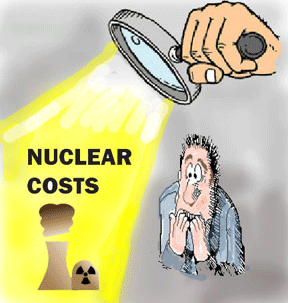 Nordea Bank taps BNY Mellon as US debt, equity portfolios custodian, SNL, October 12, 2016
|
USA’s Nuclear Regulatory Commission’s Safety Directives

 Nuclear (Information) Power, UCS, DAVE LOCHBAUM, DIRECTOR, NUCLEAR SAFETY PROJECT | OCTOBER 18, 2016 DISASTER BY DESIGN/SAFETY BY INTENT #54
Safety by Intent
Robin Morgan wrote that “Knowledge is power. Information is power.”
Among many lessons learned from the March 1979 core meltdown at Three Mile Island was the need to collect, assess, and disseminate relevant operating experience in a timely manner. In other words, nuclear information has the power to promote nuclear safety, but only when that information is shared so as to replicate good practices and eradicate bad ones. Both the Nuclear Regulatory Commission (NRC) and the nuclear industry undertook parallel efforts after Three Mile Island to improve operating experience efforts.
NRC’s Information Sharing
The centerpiece of the NRC’s operating experience efforts is its generic communications program. The NRC instituted this program before the Three Mile Island accident, but took steps following the accident to expand the program and to shorten the time between events and advisories. The NRC also lowered the threshold used to screen the information to share more operating experience with plant owners.
The NRC has issued thousands of generic communications since the Three Mile Island accident.Bulletins and Generic Letters typically alert owners to a potential problem and require them to either confirm their facilities are not vulnerable or implement measures to reduce vulnerabilities.Regulatory Issue Summaries and Information Notices typically apprise owners about operating experience but do not require that the owners take specific actions in response.
Examples illustrating these various generic communications are:
- Bulletin 2003-01, “Potential Impact of Debris Blockage on Emergency Sump Recirculation at Pressurized Water Reactors,” warned owners that a rupture inside containment of a pipe filled with steam or water could generate large amounts of debris as the high pressure fluid jetting from the broken pipe ends scoured coatings off equipment, insulation off piping, and even paint off walls…….
- Generic Letter 2007-01, “Inaccessible or Underground Power Cable Failures that Disable Accident Mitigation Systems or Cause Plant Transients,” warned owners about a rash of unexpected failures of electrical cables. Many of the electrical cables had been qualified for 40 years of service, but failed before the end of their qualified lifetimes due to submergence in water. Several of the failed cables had been routed through underground metal conduits and buried concrete trenches. Groundwater or rainwater leaked into the conduits and trenches, subjecting the cable insulation to more rapid deterioration than anticipated………
- Information Notice 2011-13, “Control Rod Blade Cracking Resulting in Reduced Design Lifetime,” warned owners of boiling water reactors about experience at a foreign nuclear plant. Workers discovered severe degradation of the control rods caused by irradiation-assisted stress-corrosion cracking. …….
- Regulatory Issue Summary 2015-11, “Protective Action Recommendations for Members of the Public on Bodies of Water,” reminded owners of their obligations under Appendix E, “Emergency Planning and Preparedness for Production and Utilization Facilities,” to 10 CFR Part 50. Specifically, the regulatory issue summary reinforced the NRC’s expectation that owners’ emergency plan measures account for all affected members of the public whether on land or on water.
- Regulatory Issue Summary 2014-12, “Decommissioning Fund Status Report Calculations—Update to Low-Level Waste Burial Charge Information,” informed owners that they could use data in Revision15 of NUREG-1307, “Report on Waste Burial Charges: Changes in Decommissioning Waste Disposal Costs at Low-Level Waste Burial Facilities,” in preparing periodic funding status reports required by 10 CFR 50.75(f). Owners are required to estimate the cost of decommissioning their facilities based on (1) labor rates, (2) energy costs, and (3) low-level waste disposal costs. The U.S. Department of Labor periodically publishes data on labor and energy costs that owners can use. The regulatory information summary identified a source of low-level waste disposal cost data acceptable to the NRC.
Nuclear Industry’s Information Sharing
The nuclear industry formed the Institute for Nuclear Power Operations (INPO) in December 1979 as part of its responses to the Three Mile Island accident. Information sharing is one of several functions performed by INPO to support the nuclear industry……..
UCS’s Disaster by Design/ Safety by Intent series of blog posts is intended to help readers understand how a seemingly unrelated assortment of minor problems can coalesce to cause disaster and how effective defense-in-depth can lessen both the number of pre-existing problems and the chances they team up.
http://allthingsnuclear.org/dlochbaum/nuclear-information-power
Nuclear power plant maintenance stoppages cause France’s electricity prices to rise
French winter forward power prices rally on fresh nuclear concerns Reuters By Vera Eckert and Bate Felix FRANKFURT/PARIS, Oct 18 French forward power prices hit fresh highs on Tuesday on persistent worries over further nuclear power reactor downtime in coming months at five plants, which could tighten European electricity supplies in winter.
Nuclear watchdog ASN has told state utility EDF to conduct tests on the five nuclear reactors before their scheduled maintenance period, potentially adding further pressure to the country’s already tight supply situation.
ASN said in a statement that the five reactors to be tested were: the 1,500 MW Civaux 1 (no maintenance date set); 900 MW Fessenheim 1, scheduled to go offline on Oct. 22; 900 MW Gravelines 4, scheduled for planned outage in April 2017; 900 MW Tricastin 4, scheduled for statutory outage on Oct. 22, and the 900 MW Tricastin 2 scheduled for outage in April 2017……..
Traders questioned France’s seemingly patchy outage reporting standards compared with their northwest European peers, who update the market of any slight changes in production outlook, especially since French power markets are exerting such a big pull over the broader European energy complex.
“Why is the market mover of all European commodities not saying a word about its own nuclear problems?,” a trader said.
French energy market regulator CRE said separately that it was paying attention to the reasons for the sharp rise in French forward power prices, and was paying particular attention to transparency obligations under European Union REMIT regulations. ($1 = 0.9098 euros) (Additional reporting by Oleg Vukmanovic and Geert De Clercq; Editing by Mark Potter and Adrian Croft) http://www.reuters.com/article/power-france-idUSL8N1CO4UV?feedType=RSS&feedName=utilitiesSector
Sellafield Ltd and EDF Energy help set up UK’s new Nuclear College
 Work starts on new national nuclear college , News and Star UK New National College for Nuclear Northern Hub breaking ground at Lakes College. 18 October 2016
Work on the new £15 million National College for Nuclear, at Lillyhall, started this week.
Set to open next September, the hi-tech facility will become one of two centres. The second will be built at Bridgewater in Somerset.
The Northern Hub, built at the Lakes College site, will feature virtual reality suites allowing learners to experience nuclear installations in a virtual environment, science and radiation laboratories and specialised design and modelling suites.
To mark the occasion, the first sod for the nuclear college was cut at a ground breaking ceremony at the site on Monday.
The region’s industry chiefs turned up to witness the event along with students who will use the college.
The National College for Nuclear will train the next generation of nuclear workers in a range of specialised careers, and aims to train over 7,000 learners across both facilities by 2020………
“For the region’s students, it means training for local jobs at a facility on their doorstep. But it also means being part of opportunities at a national level.”
Led by Sellafield Ltd and EDF Energy, in partnership with Lakes College and the University of Cumbria, the training facilities will include a realtor simulator and engineering workshops……http://www.newsandstar.co.uk/news/Work-starts-on-new-national-nuclear-college-e9b0551b-1a35-4f8e-bb00-fd3b6a7a4745-ds
Arctic Sea Ice Falls into Record Low Ranges — Again

Extreme Arctic warmth this fall has again pushed sea ice levels into record low ranges.
Across the Arctic, temperatures for the months of September and October have ranged between 3 and 5 degrees Celsius above normal for the entire region above the 66 degree north latitude line. Such extremely high temperatures have served to slow the rate of sea ice accumulation. The result is that the line in the sea ice graphs appears to be moving more sideways than following the traditional upward trend for this time of year.
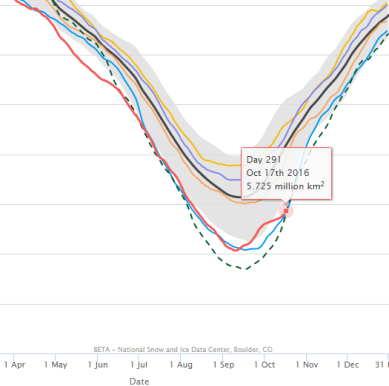
(2016 enters near record low extent ranges on October 17 of 2016. Green dashed line represents 2012 sea ice extent, blue line represents 2007, black line the 1981 to 2010 average, orange line 2003, blue line 1994, and yellow line 1980. The gray border represents the 2 standard deviation from trend boundary. Image source: NSIDC.)
Trend lines for 2016…
View original post 454 more words
Record Hot 2016 Marks the Start of Bad Climate Consequences, Provides “Fierce Urgency” to Halt Worse Harms to Come
“…there is now strong evidence linking specific [extreme] events or an increase in their numbers to the human influence on climate.” — Coumou and Rahmstorf 2012.
“We have come to this hallowed spot to remind America of the fierce urgency of now.” — Martin Luther King
****
2016 is on track to be a record hot year for the history books. Accumulations of heat-trapping gasses in the range of 402 ppm CO2 and 490 ppm CO2e have pushed the global temperature trend into an inexorable upward rise. Meanwhile, increasingly severe climate change related events ranging from mass coral bleaching, to glacial and sea ice melt, to tree death, to ocean health decline, to the expanding ranges of tropical infectious diseases, to worsening extreme weather events have occurred the world over. This global temperature spike and related ramp-up of extreme events continued throughout a year that is currently…
View original post 1,326 more words
October 18 Energy News

Opinion:
¶ “Back candidates to promote renewable energy, repeal anti-environment law” • North Carolina, which was a renewable energy leader, has passed anti-renewable legislation. Voters should back candidates willing to protect the environment, increase energy efficiency, create jobs, and save us all some money. [WRAL.com]
 Sun and wind
¶ “How Cuomo’s $7.6 Billion Nuclear Bailout Can Impede Wind and Solar” • Nuclear power is dirty, dangerous, and altogether too expensive. Nuclear power cannot compete economically. To combat climate change what’s needed is really green energy led by solar and wind, which create more jobs, and cost far less. [CounterPunch]
World:
¶ The Yealands Wine Group has put up New Zealand’s largest solar panel installation, reinforcing its claim to be the most sustainable winery in the world. Yealands is now capable of generating 411.12 kW of solar power, which is equivalent to powering 86 New Zealand homes…
View original post 639 more words
$14 Billion Capital Cost est. for 2 Westinghouse (Toshiba) AP 1000 Nuclear Reactors at VC Summer-Nuclear Blank Check

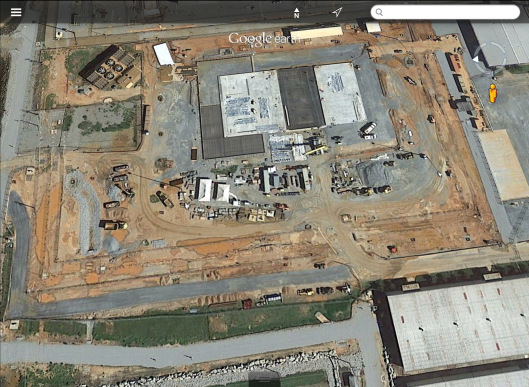
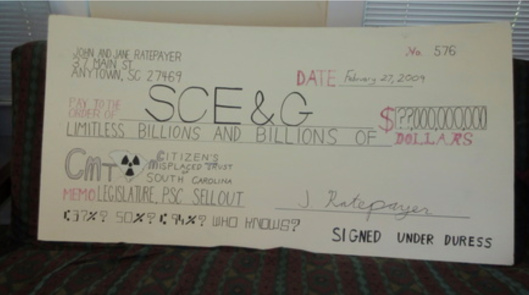
SRS Watch Photo of Nuclear Blank Check
From:
“Savannah River Site Watch For Immediate Release June 2, 2016
SCE&G Requests $852 Million Increase in Cost of VC Summer Nuclear Construction Project;
Whopping Cost Increase, Filed with S.C. Public Service Commission on May 2016, to Go on Top of 2015 Cost Increase; SCE&G to File Soon for Annual Nuclear Rate Hike
Columbia, SC – The current cost for the construction of two new nuclear reactors by South Carolina Electric & Gas (SCE&G) has jumped a stunning $852 million, according to a request filed with the South Carolina Public Service Commission (SC PSC) on May 26, 2016, (See filing linked in “notes” below.)
The filing made by SCE&G states that “the capital cost estimate for which the Company seeks Commission approval in this proceeding is $6.8 billion in 2007 dollars and $7.7 billion with escalation.”
As SCE&G is now a…
View original post 1,608 more words
Climate change could drive 122m more people into extreme poverty by 2030 #Auspol

A UN report warns that without measures to halt and reverse climate change, food production could become impossible in large areas of the world.
Up to 122 million more people worldwide could be living in extreme poverty by 2030 as a result of climate change and its impacts on small-scale farmers’ incomes, a major UN report warned on Monday.
Climate change is “a major and growing threat to global food security”, said the report, warning that it could increase the global population living in extreme poverty by between 35 and 122 million by 2030, with farming communities in sub-Saharan Africa among the hardest hit.
The 2016 State of Food and Agriculture report, published by the Rome-based Food and Agriculture Organisation (FAO), calls for “deep transformations in agriculture and food systems” and for the world’s half-billion small-scale farms to receive particular support.
The report warns that without “widespread adoption of sustainable…
View original post 362 more words
1 This Month

of the week – Shut Down Drone Warfare!


Tell the Ukrainian Government to Drop Prosecution of Peace Activist Yurii Sheliazhenko

Petition to revoke the licensing of the Near Surface Nuclear Disposal Facility (NSDF) at Chalk River. https://www.ourcommons.ca/petitions/en/Petition/Details?Petition=e-7247
To see nuclear-related stories in greater depth and intensity – go to https://nuclearinformation.wordpress.com
-
Archives
- April 2026 (114)
- March 2026 (251)
- February 2026 (268)
- January 2026 (308)
- December 2025 (358)
- November 2025 (359)
- October 2025 (376)
- September 2025 (257)
- August 2025 (319)
- July 2025 (230)
- June 2025 (348)
- May 2025 (261)
-
Categories
- 1
- 1 NUCLEAR ISSUES
- business and costs
- climate change
- culture and arts
- ENERGY
- environment
- health
- history
- indigenous issues
- Legal
- marketing of nuclear
- media
- opposition to nuclear
- PERSONAL STORIES
- politics
- politics international
- Religion and ethics
- safety
- secrets,lies and civil liberties
- spinbuster
- technology
- Uranium
- wastes
- weapons and war
- Women
- 2 WORLD
- ACTION
- AFRICA
- Atrocities
- AUSTRALIA
- Christina's notes
- Christina's themes
- culture and arts
- Events
- Fuk 2022
- Fuk 2023
- Fukushima 2017
- Fukushima 2018
- fukushima 2019
- Fukushima 2020
- Fukushima 2021
- general
- global warming
- Humour (God we need it)
- Nuclear
- RARE EARTHS
- Reference
- resources – print
- Resources -audiovicual
- Weekly Newsletter
- World
- World Nuclear
- YouTube
-
RSS
Entries RSS
Comments RSS
 nuclear-news