Lord Stern – Indigenous land rights fundamental to climate safety
Indigenous land rights fundamental to climate safety – Lord Stern Climate Home 10/10/2016,
Forests and grasslands would store more carbon if communities’ rights were protected, according to research from the leading climate economist By Karl Mathiesen
Honouring the land rights of indigenous peoples would lead to a safer climate for everybody, according to leading economist Lord Nicholas Stern.
The world must become “zero net carbon” by 2070-80 if it wants to stay within the 2C limit set by the Paris climate agreement, said Stern, or “much earlier for 1.5C”. But some industries – including aviation – are expected to continue emitting carbon late into the century.
“If there are going to be some that are [carbon] positive,” Stern told an audience at a World Resources Institute (WRI) event in Washington, DC, “there have got to be some that are negative and it’s the forests and the grasslands that are the big potential source there.”
Stern was speaking on Friday at the launch of a WRI study that found that securing indigenous land tenure in Colombia, Brazil and Bolivia could avoid the release of an estimated 42.8–59.7 Mt CO2 per year through avoided deforestation. This is equivalent to taking between 9 and 12.6m cars off the road………. The argument went beyond the economy and the environment, Stern added. Indigenous peoples in the Amazon and across the world are being dispossessed by development. In some cases, their rights are being considered. A massive dam project in the Brazilian Amazon was suspended in April over concerns about the impact on local tribes.
“We are talking about justice here, we ought to be very clear about that… If you haven’t got those rights, you’re much more vulnerable to outsiders… If you’re vulnerable to outsiders it’s theft. Its solid rights that protect you against that.”http://www.climatechangenews.com/2016/10/10/indigenous-land-rights-fundamental-to-climate-safety-lord-stern/
China going allout to market nuclear reactors to Asia, Europe, Africa and Middle East
 China’s nuclear plant makers seek new markets along the ancient Silk Road into Asia, Europe, Africa and Middle East SCMP, 04 April, 2016
‘One belt, one road’ policy for financing and support for infrastructure projects is helping nuclear plant constructors expand into overseas markets………The policy was first proposed in 2013 to promote infrastructure construction deals overseas along with goods and services trade along the ancient Silk Road from China to Europe and along the ancient maritime trade route linking China to southeast Asia, the Middle East and Africa. The state is offering financing at a time when China’s economy grew at the slowest rate in 25 years and its industry faces severe overcapacity problems.
Beijing has encouraged local firms to become involved in infrastructure projects in southeast Asia, Europe and Africa. Chinese nuclear reactor builders are a growing force in the global nuclear industry.
“The export of nuclear reactors will become one of the key pillars for executing China’s one belt, one road strategy,” Zheshang Securities analyst Zheng Dandan said………
Three Chinese state-backed firms are actively pursuing opportunities to export their reactor construction expertise, especially in developing nations that do not have their own construction capabilities.
Beijing-based projects developer China National Nuclear Corp (CNNC) chairman Sun Qin was quoted by state media China News Service last month as saying that 80 per cent of the up to 300 new reactors projected to be built by 2030 globally could be in ‘one belt, one road’ nations.
CNNC wants to build 30 reactors in such nations, and will use Argentina as a base to develop the South American market, Algeria for reaching out to the greater African market and Pakistan where it is building a project to develop the Asian market, Sun was reported as saying.
State Power Investment, formed via the merger of one of the nation’s “big five” power generators China Power Investment and general contractor State Nuclear Power Technology last year, is also pursuing overseas projects.
It has partnered with the US nuclear technology powerhouse Westinghouse to negotiate a potential deal to build a nuclear power project in Turkey. It has also pursued opportunities in South Africa.
Shenzhen-based projects developer China General Nuclear Power is working towards winning potential projects in Britain, Kenya and southeast Asia. It won one bid to build a plant in Romania.
The mainland leadership has made the globalisation of Chinese firms a key part of its economic reform plans, looking to establish the nation as a major provider of value-added and high-end goods and services. In a series of articles this week, the South China Morning Post examines the key industries targeting overseas expansion, beginning with the nuclear power industry.
Humans now exceeding Earth’s resources
Running out of Earth to live on, Korea Herald, [good pics and diagrams], 11 Oct 16
Ecological balance sheet reveals unsustainable lifestyle For more than 40 years, humanity’s demands have exceeded what our planet can regenerate. This year, people are using natural resources equivalent to 1.6 times that found on Earth. And for Koreans, the amount is 3.3 times that found on the planet.
This is according to the ecological balance sheet, known as the Global Ecological Footprint Report, released by the World Wild Fund for Nature, Korea (WWF-Korea) and the Global Footprint Network.
By Aug. 8, the world had used up all the natural resources that can be replenished in the year. It marked a day which environmental advocacy groups call “Earth Overshoot Day.”
For nearly half a century, humanity has been in such an ecological “overshoot,” and the amount of natural resources that can be replenished in a year are being used up quicker every year.
In dealing with this over-taxation of the Earth’s resources, humankind is borrowing from future capacity that cannot be regenerated, liquidating stocks of ecological resources and accumulating waste, primarily carbon dioxide, in the atmosphere. ……http://www.koreaherald.com/view.php?ud=20161010000777
Oil and gas exploration in the Arctic – how it impacts the Inuit
On Melting Ice: Inuit Struggle Against Oil and Gas in the Arctic Tuesday, 11 October 2016 By Chris Williams, Truthout | News Analysis The Inuit in the Canadian Arctic are engaged in a centuries-old fight to retain their culture and reestablish self-determination and genuine sovereignty. In particular, Inuit in the autonomous territory of Nunavut are resisting what American Indian studies scholar Daniel R. Wildcat has described as a “fourth removal attempt” of Indigenous people, coming on the heels of failed efforts at spatial, social and psycho-cultural deletion.
The common discourse on climate change focuses on the physical world: inexorably rising atmospheric concentrations of carbon dioxide and the impact on sea-ice extent; melting glaciers; and roiling, unpredictable perturbations in weather patterns. But these are but the physical manifestations of political decisions made in the social world. The questions behind them include: Who produced all that extra CO2? For what purposes? And which sets of people are paying the most immediate price?
In both realms, the Arctic, one of the regions least responsible for causing climate change, is bearing the most immediate brunt; though as Inuit activist, Nobel Prize nominee and author Sheila Watt-Cloutier warns in her book, The Right to Be Cold, “whatever happens in the poles will eventually happen everywhere else.”
To frame climate change in the Arctic as simply a story of liquefying dihydrogen monoxide is deceptive. The ice-filled north is first and foremost a human story, a story about home and the struggle to preserve it against outside forces. It is about a culture that quite literally rests on knowledge of ice, ocean and the animals that live on top and underneath it.
James Qillaq, mayor of Clyde River in Nunavut, explained, “That connection to the land, that’s our life … that’s the reason why we stand: our connection to the land and water, of something that is ours, that’s it. That’s it and nothing else. That’s our everything — our connection to the land.”…….
Climate Change and Arctic Amplification The most recent displacement attempt against Inuit is related to the fact that the Arctic is warming at twice the rate of lower latitudes. Over the last five decades, sea ice has vanished from an area twice the size of Alaska. The remaining ice is 50 percent thinner. The last nine years have all had the lowest sea-ice extents measured, with February 2015 showing the lowest in 37 years of satellite data. Over 50 percent of the gigantic ice sheet that blankets Greenland was melting during the summer of 2015, contributing to the 36th consecutive year of global glacier loss.
Going further back in time, recent research based on a compendium of historical data shows, “there is no point in the past 150 years where sea ice extent is as small as it has been in recent years,” ……… http://www.truth-out.org/news/item/37921-on-melting-ice-inuit-struggle-against-oil-and-gas-in-the-arctic
1 This Month
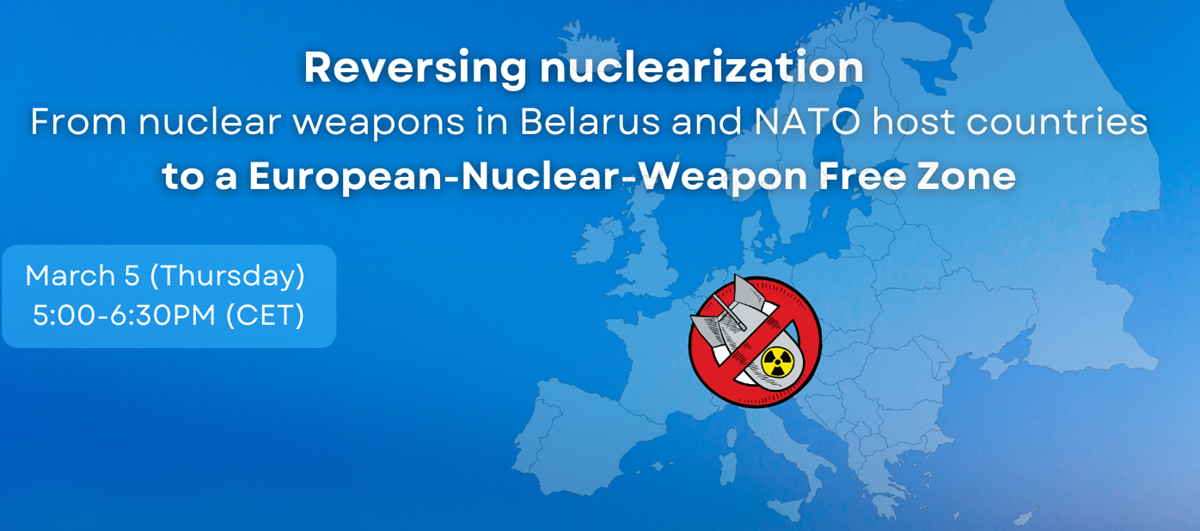
5 March -Online – Reversing nuclearization:
From nuclear weapons in Belarus and NATO host countries to a European-Nuclear-Weapon Free Zone
11am-12:30pm Eastern Time USA / 5pm-6:30pm CET

of the week – Advocating for a
nuclear free beach – https://www.samuellawrencefoundation.org/
The Samuel Lawrence Foundation advocates for a Nuclear Waste Free Beach at San Onofre, join us and take action!

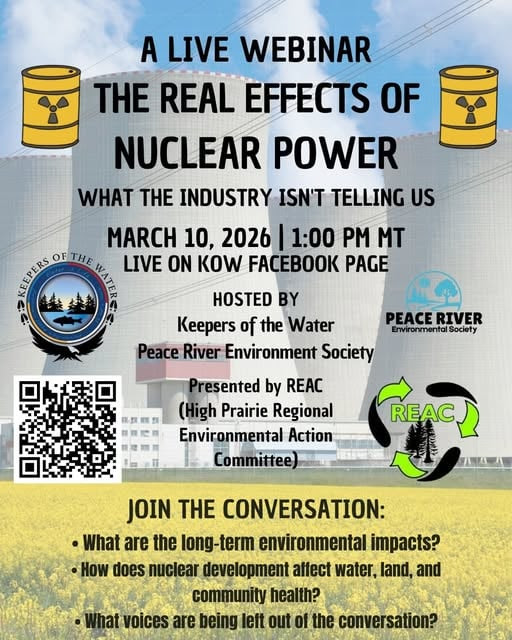
10 March A LIVE WEBINAR THE REAL EFFECTS OF NUCLEAR POWER
What the Industry Isn’t Telling Us
1:00 PM Mountain, 2 pm Central, 3 pm Eastern. Live on the Keepers of the Water Facebook page
18 March Webinar @ 1 PM EST: An Assessment of SMR Projects: The Case of Canada
register for the zoom:
https://us02web.zoom.us/webinar/register/WN_o8BIIOUvQ2ONJR1nta65DQ#/registration

of the week – STOP SMALL MODULAR REACTORS IN CANADA
To see nuclear-related stories in greater depth and intensity – go to https://nuclearinformation.wordpress.com
-
Archives
- March 2026 (37)
- February 2026 (268)
- January 2026 (308)
- December 2025 (358)
- November 2025 (359)
- October 2025 (376)
- September 2025 (258)
- August 2025 (319)
- July 2025 (230)
- June 2025 (348)
- May 2025 (261)
- April 2025 (305)
-
Categories
- 1
- 1 NUCLEAR ISSUES
- business and costs
- climate change
- culture and arts
- ENERGY
- environment
- health
- history
- indigenous issues
- Legal
- marketing of nuclear
- media
- opposition to nuclear
- PERSONAL STORIES
- politics
- politics international
- Religion and ethics
- safety
- secrets,lies and civil liberties
- spinbuster
- technology
- Uranium
- wastes
- weapons and war
- Women
- 2 WORLD
- ACTION
- AFRICA
- Atrocities
- AUSTRALIA
- Christina's notes
- Christina's themes
- culture and arts
- Events
- Fuk 2022
- Fuk 2023
- Fukushima 2017
- Fukushima 2018
- fukushima 2019
- Fukushima 2020
- Fukushima 2021
- general
- global warming
- Humour (God we need it)
- Nuclear
- RARE EARTHS
- Reference
- resources – print
- Resources -audiovicual
- Weekly Newsletter
- World
- World Nuclear
- YouTube
-
RSS
Entries RSS
Comments RSS
 nuclear-news