Radioactive waste from oil and gas fracking found in landfill
Radioactive Waste Found at Oil Field Landfill in North Dakota, Oil Price By Irina Slav – Sep 01, 2016, North Dakota has had a problem with the inappropriate disposal of this radioactive waste for years. This time, the State Health Department of North Dakota is probing an oilfield waste landfill operated by IHD Solids Management after the detection of a significant amount of illegal radioactive matter.
The radioactive material was detected twice in two separate inspections that took place in May and June. Now the HD has ordered a third-party inspection of the landfill and instructed the operator to remove 950 tons of waste and take it out of the state, after radioactivity checks of all 12 oilfield waste landfills in the state revealed levels of between 5 and 80 picocuries, the latter standing 30 picocuries above the new maximum allowed for oilfield waste…….
The company will not be fined for the transgression because it dealt with the problem by removing the suspicious waste, as did two other landfill operators in North Dakota, Secure Energy and Gibson Energy. They too had to remove over-radioactive material from their landfills and ship it to special nuclear waste facilities.
Prudently, if not a tad belatedly, North Dakota will soon start requiring oilfield waste landfill operators to verify the radioactivity level of every load that arrives, rather than taking the word of the company generating the waste for it.
The waste from oil and gas wells include uranium, thorium, radium, a radioactive isotope of potassium, as well as isotopes of lead and polonium. These are naturally occurring elements that are brought to the surface through fracking. http://oilprice.com/Latest-Energy-News/World-News/Radioactive-Waste-Found-at-Oil-Field-Landfill-in-North-Dakota.html
China, USA, Russia, Japan all vying to sell nuclear reactors to Turkey
 Sealing the Deal: Turkey, China Launch Nuclear Cooperation Partnership,http://sputniknews.com/middleeast/20160901/1044832084/turkey-china-nuclear.html , 1 Sep 16 The news follows last week’s ratification by the Turkish parliament of the Sino-Turkish Agreement for Cooperation in Peaceful Uses of Nuclear Energy.
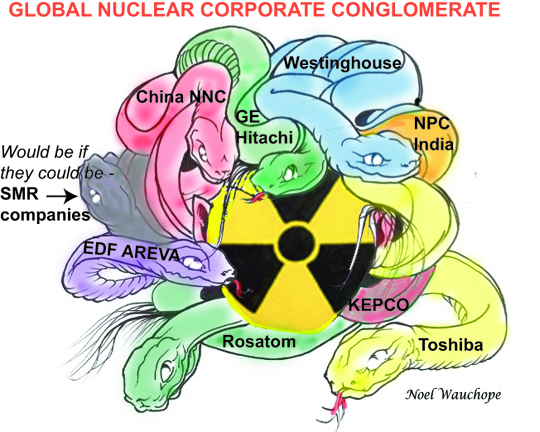
Niigata prefecture governor Hirohiko Izumida not seeking re-election: new hope for restarting Fukushima nuclear plant
 New Hope For The Fukushima Nuclear Power Plant, Oil Price, By Zainab Calcuttawala – Aug 31, 2016 Tokyo Electric Power Co. Holdings Inc.’s (TEPCO) plan to restart the defunct Fukushima nuclear power plant has an increased chance of being implemented after the prefecture governor, who has campaigned against its reopening, decided against running for re-election, according to a new report by Bloomberg.
TEPCO shares rose as much as 12 percent Wednesday morning – the largest price jump since May 2015, presumably in reaction to the announcement.
Niigata prefecture governor Hirohiko Izumida said he would not pursue a bid for a fourth term for the October 16th elections, according to a personal statement posted on his fan page.
The governor has long opposed plans to return the Kashiwazaki-Kariwa nuclear power plant – the largest of its kind in the world – to production. Japanese laws do not require that utility companies obtain the approval of local leaders before commencing operations, but it is the expected practice.
Izumida has previously demanded that TEPCO conduct further investigations into the causes of the triple meltdown at the Fukushima Dai-Ichi plant in 2011 before proposing plans to restart any of the firm’s reactors.
“The next Niigata governor will likely not make as many relentless demands as Izumida,” Japanese analyst Hidetoshi Shioda said…….
The New York Times reported on Monday that Japanese government has funded the construction of a $320 million block of man-made permafrost that would continue 100 feet underneath the Dai-Ichi plant to solve “an unrelenting flood of groundwater” that had been headed into the damaged reactors.
The project will stop the leak of radioactive water into the Pacific Ocean, which may be continuing at low levels to this day, The Times said.
TEPCO has applied to return reactors No. 6 and 7 to production at Kashiwazaki-Kariwa. The company expects to boost profits by $97 million a month for each reactor it restarts, TEPCO spokesperson Tatsuhiro Yamagishi said earlier this week. http://oilprice.com/Latest-Energy-News/World-News/New-Hope-For-The-Fukushima-Nuclear-Power-Plant.html
Watts Bar nuclear reactors shut down indefinitely, following transformer fire
Transformer fire forces TVA to shut down Unit 2 reactor indefinitely TVA probes cause of switchyard fire at Watts Bar Tuesday night. Times Free Press August 31st, 2016 by Dave Flessner
The blaze in one of the main bank transformers connected to the new Unit 2 reactor triggered notice of “an unusual event” — the lowest of four emergency classifications for problems at a nuclear power plant. Although the fire did not affect any nuclear or generation equipment in either the reactor or turbine buildings at Watts Bar, it did damage a transformer and required TVA to shut down its Unit 2 reactor indefinitely, TVA spokesman Jim Hopson said today. ….
When the fire erupted, the reactor had to be shut down and the unit will remain idle until a new transformer is installed and the cause of the fire is determined. http://www.timesfreepress.com/news/local/story/2016/aug/31/transformer-fire-nuclear-plant-triggers-emergency-notice/384326/
Catholic churches and other religions taking action against climate change, switching to green energy
 Churches put their faith in green energy, Ft.com , Pilita Clark, Environment Correspondent, 1 Sept 16 Wind and solar farms have always had faithful adherents in the environmental movement but now more than 3,500 churches have turned their back on fossil fuels to embrace renewable energy.
Churches from a range of denominations have either made such a switch or registered their interest in doing so, but Roman Catholics have proved especially keen, according to figures from religious charities released on Thursday.
Nearly 2,000 Roman Catholic parishes have forsaken conventional energy in favour of green electricity in 16 dioceses, the charities said. Some made the decision after Pope Francis issued an encyclical last year urging the world to cut its dependence on fossil fuels.
“Pope Francis challenges us all to ‘care for our common home’, and by adopting renewable energy we will directly help people threatened, and already most severely affected, by climate change,” said John Arnold, Bishop of Salford, one of the 16 dioceses to have switched.
“There are many ways in which we may respond to the threat and the reality of climate change and adopting renewable energy for our church buildings must be a priority.”
In some cases, churches had banded together to use their collective buying power to secure green energy tariffs from companies that bought or produced at least 80 per cent of their electricity from renewable sources, said Tim Gee, campaigns leader at Christian Aid……
The overriding reason for acting, he added, was to send a message to governments and investors that there needed to be a shift away from fossil fuels if the world were to avoid dangerous levels of climate change.
“There really is a wave of enthusiasm for it,” Mr Gee said. “It’s relatively recent and it’s really sped up in the last year.” Some synagogues and mosques had also made the shift, he said.
Some of the companies benefiting from the churches’ shift are smaller green energy groups such as Ecotricity and Good Energy rather than the larger “big six” suppliers.
At least 100 Quaker meeting houses have switched to renewables by dealing directly with seven-year-old Good Energy……
More than 900 Salvation Army buildings have switched to renewable energy suppliers, according to the charities’ data.
Nearly 700 churches from several denominations have individually signed up for green power tariffs through the Big Church Switch website, which offers a simple way for churches to shift to green tariffs……. http://www.ft.com/cms/s/0/3909aeee-6f96-11e6-a0c9-1365ce54b926.html#axzz4J40ssnM7
Sovereignty of Finland threatened by Fennovoima’s nuclear power plant project – Report
 Report: Fennovoima’s nuclear power project could undermine sovereignty of Finland, Helsinki Times, 01 SEPTEMBER 2016 Fennovoima’s nuclear power plant project in Pyhäjoki, Northern Ostrobothnia, is a high priority for Russia and threatens to undermine the national sovereignty of Finland, warns the Finnish Institute of International Affairs.
“Russia’s way of geo-economically utilising energy political dependencies is already undermining the national sovereignty of especially smaller target countries,” its researchers say in a newly-published analysis of changes in the foreign policy of Russia and their implications for Finland.
What say you, the National Coalition,” asks Niinistö.
Emma Kari (Greens) has similarly expressed her concerns that faith in nuclear energy has jeopardised the security of Finland.
“The Finnish Institute of Foreign Affairs’ report states explicitly that the nuclear power plant project of Rosatom in Pyhäjoki is under the manual control of [Russian President Vladimir] Putin. Rosatom’s nuclear power plant is a tool to exercise power politics, increase our dependence of Russia and erode the position and security of Finland,” she writes on Facebook.
The National Coalition, she adds, pushed the project through the Finnish Parliament irrespective of such concerns.
“The project is of such importance that even after Finnish companies abandoned it, Fortum, a state-owned energy utility, was strong-armed into participating in order to grant Putin’s power plant the Nordic Ecolabel,” she slams.
“It is now clear that the project is not in the best interests of this country.”…….http://www.helsinkitimes.fi/finland/finland-news/domestic/14199-report-fennovoima-s-nuclear-power-project-could-undermine-sovereignty-of-finland.html
Legal challenges to New York nuclear power subsidies,
 Flurry of challenges attacks NY nuclear and renewable power subsidies, http://www.syracuse.com/news/index.ssf/2016/09/flurry_of_challenges_attack_ny_plan_for_nuclear_and_renewable_power_subsidies.html Syracuse.c om, By Tim Knauss | tknauss@syracuse.com , 1 Sept 16, SYRACUSE, N.Y. – At least 15 interest groups have challenged New York’s new “clean energy standard,” which mandates subsidiesfor nuclear plants and renewable energy, by petitioning the state Public Service Commission to reconsider the policy.
The formal petitions for rehearing come from a wide range of critics, from power plant owners to low-income consumer advocates, reflecting the sweeping impact of the new regulations.
Challenges had been widely expected, given the high stakes for energy producers and customers. Petitions for rehearing are typically the first step in seeking to change a commission decision. Lawsuits could follow.
There is no deadline for the commission to respond to the petitions, said Jon Sorensen, speaking for the PSC.
“Parties will likely be given 45 business days to comment on the arguments presented in the petitions before the commission decides whether to reject those petitions or modify the order,” he wrote in an email.
The PSC is under pressure to move ahead with its new policy swiftly, especially the part that affects Upstate nuclear plants. The FitzPatrick plant in Oswego County is slated to close in January if the planned sale of the plant to Exelon Corp. is blocked. The sale of FitzPatrick depends on approval of subsidy contracts authorized by the clean energy standard.
Under a side agreement between New York officials and current plant owner Entergy Corp., the sale of FitzPatrick must be approved and subsidy contracts for the facility signed, all by Nov. 18, or the sale can be called off and state power authority would owe a $35 million termination fee to Entergy.
Several of the petitioners seeking to revisit the clean energy standard claim the PSC acted with illegal haste by adopting the nuclear subsidy scheme, details of which were proposed just two weeks before the commission vote. Those critics say the proposal to adopt a 12-year subsidy program for Upstate nuclear plants, which is expected to cost nearly $1 billion during just the first two years, should have been subjected to a 45-day comment period under the State Administrative Procedures Act. The PSC said in its original order that the comment period was adequate.
Other petitions say the PSC erred by excluding certain types of renewable energy, such as existing wind farms or new hydroelectric dams, from getting subsidies under the clean energy standard.
The Independent Power Producers of New York, among others, argued that some New York power generators excluded from the clean energy standard might sell their output in Massachusetts, which just enacted financial incentives for renewable power.
Contact Tim Knauss anytime | email | Twitter | 315-470-3023
Russia flogging nuclear reactors to Ghana
 Ghana, Rosatom in Talks Over Possible Future Nuclear Program, http://www.bloomberg.com/news/articles/2016-09-01/ghana-rosatom-in-talks-over-possible-future-nuclear-program Bloomberg, Andre Janse Van Vuuren, 2 Sep 16 andrejvvuuren , Russia’s nuclear utility Rosatom Corp. said it held talks with Ghana to prepare for the future use of atomic energy in the West African nation.
Ghana is preparing to accept its first review mission from the International Atomic Energy Agency as it “may be expected to become one of the countries that makes use of nuclear power” in future, Rosatom said Thursday in an e-mailed statement.
Talks are ongoing between the parties over regulation, infrastructure, training and the construction of facilities which Ghana will require to implement its own nuclear power program, Rosatom said. A next round of talks will be held at the end of September.
American Fukushima rescue ships still contaminated with radiation
16 US ships that aided in Operation Tomodachi still contaminated with radiation, By MATTHEW M. BURKE | STARS AND STRIPES March 13, 2016 CAMP FOSTER, Okinawa — Sixteen U.S. ships that participated in relief efforts after Japan’s nuclear disaster five years ago remain contaminated with low levels of radiation from the crippled Fukushima Dai-ichi nuclear power plant, top Navy officials told Stars and Stripes.
In all, 25 ships took part in Operation Tomadachi, the name given for the U.S. humanitarian aid operations after the magnitude-9.0 earthquake and subsequent tsunami on March 11, 2011. The tsunami, whose waves reached runup heights of 130 feet, crippled the Fukushima plant, causing a nuclear meltdown.
In the years since the crisis, the ships have undergone cleanup efforts, the Navy said, and 13 Navy and three Military Sealift Command vessels still have some signs of contamination, mostly to ventilation systems, main engines and generators……
The Navy has acknowledged that the Reagan passed through a plume of radiation. Navy images showed sailors with their faces covered, scrubbing the deck of the Reagan with soap and water as a precautionary measure afterward. The Reagan and sailors stayed off the coast of Japan for several weeks to aid their Japanese allies.
The multibillion-dollar ship, projected to last at least 50 years after its launch in 2001, then was taken offline for more than a year for “deep maintenance and modernization” at the Puget Sound Naval Shipyard and Intermediate Maintenance Facility in Bremerton, Wash., according to Navy officials…….
Sailors who performed the work said it entailed entering spaces deep within the ship, testing for high levels of radiation, and if it was found, sanding, priming and painting the areas. They say there were given little to no protective gear, a claim that the Navy denies……
Eight Reagan sailors, claiming a host of medical conditions they say are related to radiation exposure, filed suit in 2012 against the nuclear plant’s operator, the Tokyo Electric Power Co. The suit asserts that TEPCO lied, coaxing the Navy closer to the plant even though it knew the situation was dire. General Electric, EBASCO, Toshiba Corp. and Hitachi were later added as defendants for allegations of faulty parts for the reactors.
A spokesman for TEPCO declined to comment for this story because of the sailors’ lawsuit, which was slated to go forward pending appeals in the U.S. 9th Circuit Court of Appeals.
The illnesses listed in the lawsuit include genetic immune system diseases, headaches, difficulty concentrating, thyroid problems, bloody noses, rectal and gynecological bleeding, weakness in sides of the body accompanied by the shrinking of muscle mass, memory loss, leukemia, testicular cancer, problems with vision, high-pitch ringing in the ears and anxiety.
The list of sailors who have joined the lawsuit, which is making its way through the courts, has grown to 370…….
Shinzo Kimura — a professor at Dokkyo Medical University in Japan who has studied radiation exposure from Hiroshima and Nagasaki to Chernobyl and, now, Fukushima — said it wasn’t too early for sailors to show symptoms of exposure-related conditions. Doctors have seen conditions in children living near the plant that surfaced earlier than would normally be expected.
Kimura, hired by the Nihonmatsu city government for his expertise in the field, was the first scientist on the ground taking readings in the wake of the Fukushima disaster. He said each person and the way their body is affected by radiation is different.
While unable to definitively say if the sailors were sickened by the radiation, Kimura reasoned that the levels aboard the Reagan were high enough to cause illnesses. Otherwise, he said, why go through the bother of repeated cleanings to lower radiation levels?
“It is impossible to speculate or calculate how much the doses were before the two decontamination works,” he said. “The U.S. military is very good at risk-management. Considering that, it is assumed that decontaminations were conducted twice because the levels were not favorable.”
sumida.chiyomi@stripes.com http://www.stripes.com/news/16-us-ships-that-aided-in-operation-tomodachi-still-contaminated-with-radiation-1.399094
French Polynesia to get increased nuclear compensation payment from France
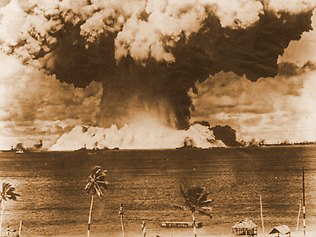 Paris to up Tahiti nuclear debt payment http://www.radionz.co.nz/international/pacific-news/312402/paris-to-up-tahiti-nuclear-debt-payment France says it plans to give French Polynesia an additional ten million US dollars from next year as part of its nuclear compensation payment.
This was announced by the French High Commission in Papeete and relates to the funding set up by Paris in 1996 after it stopped testing its nuclear weapons in the South Pacific.
The funding was originally conceived as a limited subsidy to help the territory readjust its economy overly dependent on military spending but it has since been converted into an annual transfer.
According to the High Commission, the French budget will next year allot French Polynesia $US100 million as a so-called autonomy fund.
This also follows an undertaking by the French president Francois Hollande in February to help the territory overcome the nuclear legacy.
France carried out weapons tests in French Polynesia for 30 years from 1966 and claimed until six years ago that they were clean.
There are continued calls for France to compensate the test victims and French Polynesia’s Protestant church has decided to take France to the International Criminal Court for alleged crimes against humanity.
Fort Calhoun nuclear power plant to shut down permanently on October 24
| OPPD announces shutdown date for Fort Calhoun nuclear power plant http://enformable.com/2016/08/oppd-announces-shutdown-date-fort-calhoun-nuclear-power-plant/?utm_source=feedburner&utm_medium=email&utm_campaign=Feed%3A+Enformable+%28Enformable%29 31 Aug 2016 The PWR reactor at the Fort Calhoun nuclear power plant in Nebraska will shut down for good on October 24th, 2016. The reactor first went online in September, 1973 and was the smallest nuclear reactor in the United States in terms of power generation (476 MW). The Nuclear Regulatory Commission received a letter from Omaha Public Power District (OPPD) that notified them of the utilities decision to decommission the lone reactor at the power plant.In June, the OPPD announced that it had reached a decision to shut down the plant, but an exact date had not been announced. The utility estimated that it would save $1 billion over the next 20 years if it decommissioned the power plant.
The plant was the focus of international concern after the Missouri River flooded and surrounded the facility with rising water. The reactor was forced to remain offline for nearly three years while OPPD responded to a wide range of deficiencies identified in inspections by the NRC after the flooding event.
|

Our Future Will Be Powered by the Sun, Water and Wind – the reasons why
 Here’s Why Our Future Will Be Powered by the Sun, Water and Wind https://www.thestreet.com/story/13691371/1/here-s-why-our-future-will-be-powered-by-the-sun-water-and-wind.html
The time may have finally come to make money investing in renewable energy. Kim Iskyan, Sep 1, 2016
- Coal and oil are slowly being replaced by sunlight, water and wind as civilization’s main energy sources, and there will be a lot of money to be made from this shift.
- Renewable energy comes from nature. The most common forms are solar (from sunlight), hydro (from water) and wind power.
- Renewable energy can generally be replenished faster than it is used.
- Last year, global renewable energy investment hit nearly $350 billion, a record and an increase of 11% from 2014. China was the biggest contributor, accounting for 36% of the total or $125 billion.
- Between this year and 2020, renewables will be the biggest source of energy growth, according to the International Energy Agency.
But this year has so far seen a slowdown in investment in renewables.
Another possible reason for the slowdown in investment is that it is getting cheaper to make solar panels. There is also a shift away from smaller solar energy projects to larger ones, which are cheaper on a per-unit basis.
A lot of this growth is expected to come from developing nations.
Big corporations are the biggest buyers of renewable energy
Corporate America Is Buying More Clean Energy Than Power Utilities Are https://www.fastcoexist.com/3063266/corporate-america-is-buying-more-clean-energy-than-power-utilities Want to get solar and wind power off the ground? It might be smarter to turn to Apple or Google rather than the power company. These days, the biggest buyers of renewable energy aren’t utilities. They’re corporations like Google, Walmart, and Owens Corning. Over the last year and a half, there’s been a surge of power purchases first by tech companies and more recently by more mainstream businesses, such as General Motors and Steelcase.
And, in some cases, companies are not only buying up power from a solar field or wind farm operator. They’re actually investing and running the plant themselves, or selling on power they don’t need. Ikea has invested in wind turbines in Texas and Illinois. And Apple has applied to sell on excess electricity as part of its $848 million California solar project (the new company would be called Apple Energy LLC).
Analysts say corporate players are increasingly driving decision-making in the large-scale energy market. “We’ve now reached the point where these companies that have shown leadership on renewables are doing that at a greater scale than utilities,” says Ian Kelly, manager of Rocky Mountain Institute’s Business Renewables Center. “It puts pressure on utilities to either offer renewable energy or see these companies go out and secure it directly themselves and leave utilities out of the picture.”
Tell Trudeau we need a nuclear watchdog – not a lapdog!

 Tell Trudeau we need a nuclear watchdog – not a lapdog! https://act.greenpeace.org/ea-action/action?ea.client.id=1847&ea.campaign.id=55257
To protect the profits of polluters, the Harper government muzzled scientists and turned independent industry watchdogs into lapdogs.
The Canadian Nuclear Safety Commission (CNSC) was no exception.
In 2008, Harper fired the Commission’s president for imposing modern safety standards on Canadian nuclear reactors.
The new Harper-appointed president has behaved like a lapdog ever since.
Things are so bad, even CNSC staff are speaking out: a group of anonymous whistleblowers sent a letter to media alleging nuclear safety risks are being covered up. These specialists wrote anonymously because they fear reprisal.
The whistleblowers called for an independent investigation, but the CNSC president is doing his best to sweep their allegations under the rug.
This is a step too far. It’s time for the Trudeau government to protect public safety by cleaning up the CNSC. This responsibility falls on Natural Resources Minister Jim Carr.
Please tell Minister Carr to repair the damage done by Stephen Harper and clean up the CNSC!
USA determined to market nuclear reactors to India
 India, US set the ball rolling for Westinghouse’s nuclear plants By Dipanjan Roy Chaudhury, ET Bureau | Sep 01, 2016, NEW DELHI: India and the US moved closer to the planned construction of six reactors by American company Westinghouse at a proposed nuclear plant in Andhra Pradesh, with the two sides deciding to immediately commence the work on engineering and site design, and make an early conclusion of a competitive financing package.
1 This Month


18 March Webinar @ 1 PM EST: An Assessment of SMR Projects: The Case of Canada
register for the zoom:
https://us02web.zoom.us/webinar/register/WN_o8BIIOUvQ2ONJR1nta65DQ#/registration


of the week – STOP SMALL MODULAR REACTORS IN CANADA
To see nuclear-related stories in greater depth and intensity – go to https://nuclearinformation.wordpress.com
-
Archives
- March 2026 (146)
- February 2026 (268)
- January 2026 (308)
- December 2025 (358)
- November 2025 (359)
- October 2025 (376)
- September 2025 (258)
- August 2025 (319)
- July 2025 (230)
- June 2025 (348)
- May 2025 (261)
- April 2025 (305)
-
Categories
- 1
- 1 NUCLEAR ISSUES
- business and costs
- climate change
- culture and arts
- ENERGY
- environment
- health
- history
- indigenous issues
- Legal
- marketing of nuclear
- media
- opposition to nuclear
- PERSONAL STORIES
- politics
- politics international
- Religion and ethics
- safety
- secrets,lies and civil liberties
- spinbuster
- technology
- Uranium
- wastes
- weapons and war
- Women
- 2 WORLD
- ACTION
- AFRICA
- Atrocities
- AUSTRALIA
- Christina's notes
- Christina's themes
- culture and arts
- Events
- Fuk 2022
- Fuk 2023
- Fukushima 2017
- Fukushima 2018
- fukushima 2019
- Fukushima 2020
- Fukushima 2021
- general
- global warming
- Humour (God we need it)
- Nuclear
- RARE EARTHS
- Reference
- resources – print
- Resources -audiovicual
- Weekly Newsletter
- World
- World Nuclear
- YouTube
-
RSS
Entries RSS
Comments RSS
 nuclear-news