On July 28, Japan’s Supreme Court handed down its ruling in a case filed originally by the national government over tents pitched by anti-nuclear groups outside buildings of the Ministry of Economy, Trade and Industry (METI) in Kasumigaseki, Tokyo. It upheld an earlier order that the groups evacuate and pay for their use of the land.
The court’s petty bench, led by Judge Naoto Ohtani, rejected an appeal made by members of the groups against a lower court ruling. The Tokyo District Court is expected to carry out the forcible removal of the tents upon the request of the government, though members of the groups are expected to resist…….. The ruling includes an order that two defendants of the groups pay about JPY21,000 (USD206 at USD1 = JPY102) per day for use of the land, for a total of nearly JPY40 million (USD392,000) for the five-year period, plus interest. http://www.jaif.or.jp/en/japanese-government-wins-in-supreme-court-tents-of-anti-nuclear-groups-next-to-meti-ministry-building-to-be-forcibly-removed/
Fukushima: A Nuclear War Without A War: The Unspoken Crisis Of Worldwide Nuclear Radiation Fukushima Watch 1 Aug 16 Global Research’s Online Interactive I-Book Reader brings together, in the form of chapters, a collection of Global Research feature articles and videos, including debate and analysis, on a broad theme or subject matter. (Article by Michel Chossudovsky) In this Interactive Online I-Book we bring to the attention of our readers an important collection of articles, reports and video material on the Fukushima nuclear catastrophe and its impacts (scroll down for the Table of Contents).
INTRODUCTION The World is at a critical crossroads. The Fukushima disaster in Japan has brought to the forefront the dangers of Worldwide nuclear radiation.
The crisis in Japan has been described as “a nuclear war without a war”. In the words of renowned novelist Haruki Murakami:
“This time no one dropped a bomb on us … We set the stage, we committed the crime with our own hands, we are destroying our own lands, and we are destroying our own lives.”
Nuclear radiation –which threatens life on planet earth– is not front page news in comparison to the most insignificant issues of public concern, including the local level crime scene or the tabloid gossip reports on Hollywood celebrities.
Moreover, while all eyes were riveted on the Fukushima Daiichi plant, news coverage both in Japan and internationally failed to fully acknowledge the impacts of a second catastrophe at TEPCO’s (Tokyo Electric Power Co Inc) Fukushima Daini nuclear power plant.
The shaky political consensus both in Japan, the U.S. and Western Europe is that the crisis at Fukushima has been contained.
The realties, however, are otherwise. Fukushima 3 was leaking unconfirmed amounts of plutonium. According to Dr. Helen Caldicott, “one millionth of a gram of plutonium, if inhaled can cause cancer”………..
The Online Interactive I-Book Reader on Fukushima: A Nuclear War without a War
In view of the official cover-up and media disinformation campaign, the contents of the articles and video reports in this Online Interactive Reader have not trickled down to to the broader public. (See Table of contents below)
This Online Interactive Reader on Fukushima contains a combination of analytical and scientific articles, video reports as well as shorter news reports and corroborating data.
Part I focusses on The Fukushima Nuclear Disaster: How it Happened? Part II pertains to The Devastating Health and Social Impacts in Japan. Part III centers on the “Hidden Nuclear Catastrophe”, namely the cover-up by the Japanese government and the corporate media. Part IVfocusses on the issue of Worlwide Nuclear Radiation and Part V reviews the Implications of the Fukushima disaster for the Global Nuclear Energy Industry.
In the face of ceaseless media disinformation, this Global Research Online I-Book on the dangers of global nuclear radiation is intended to break the media vacuum and raise public awareness, while also pointing to the complicity of the governments, the media and the nuclear industry.
We call upon our readers to spread the word.
We invite university, college and high school teachers to make this Interactive Reader on Fukushima available to their students.
As the former chief of staff to Secretary of State Colin Powell, Wilkerson played an important role in the George W. Bush administration. In the years since, however, the former Bush official has established himself as a prominent critic of U.S. foreign policy.
“I think Smedley Butler was onto something,” explained Lawrence Wilkerson, in an extended interview with Salon.
In his day, in the early 20th century, Butler was the highest ranked and most honored official in the history of the U.S. Marine Corps. He helped lead wars throughout the world over a series of decades, before later becoming a vociferous opponent of American imperialism, declaring “war is a racket.”
Wilkerson spoke highly of Butler, referencing the late general’s famous quote: “Looking back on it, I might have given Al Capone a few hints. The best he could do was to operate his racket in three districts. I operated on three continents.”
“I think the problem that Smedley identified, quite eloquently actually,” Wilkerson said, “especially for a Marine — I had to say that as a soldier,” the retired Army colonel added with a laugh; “I think the problem is much deeper and more profound today, and much more subtle and sophisticated.”
Today, the military-industrial complex “is much more pernicious than Eisenhower ever thought it would be,” Wilkerson warned. In his farewell address in 1961, former President Dwight D. Eisenhower famously cautioned Americans that the military and corporate interests were increasingly working together, contrary to the best interests of the citizenry. He called this phenomenon the military-industrial complex.
As a case study of how the contemporary military-industrial complex works, Wilkerson pointed to leading weapons corporations like Lockheed Martin, and their work with draconian, repressive Western-allied regimes in the Gulf, or in inflaming tensions in Korea.
“Was Bill Clinton’s expansion of NATO — after George H. W. Bush and [his Secretary of State] James Baker had assured Gorbachev and then Yeltsin that we wouldn’t go an inch further east — was this for Lockheed Martin, and Raytheon, and Boeing, and others, to increase their network of potential weapon sales?” Wilkerson asked.
“You bet it was,” he answered.
“Is there a penchant on behalf of the Congress to bless the use of force more often than not because of the constituencies they have and the money they get from the defense contractors?” Wilkerson continued.
Again, he answered his own question: “You bet.”
“It’s not like Dick Cheney or someone like that went and said let’s have a war because we want to make money for Halliburton, but it is a pernicious on decision-making,” the former Bush official explained. “And the fact that they donate so much money to congressional elections and to PACs and so forth is another pernicious influence.”
“Those who deny this are just being utterly naive, or they are complicit too,” Wilkerson added.
“And some of my best friends work for Lockheed Martin,” along with Raytheon, Boeing and Halliburton, he quipped.
Wilkerson — who in the same interview with Salon defended Edward Snowden, saying the whistle-blower performed an important service and did not endanger U.S. national security — was also intensely critical of the growing movement to “privatize public functions, like prisons.”
“I fault us Republicans for this majorly,” he confessed — although a good many prominent Democrats have also jumped on the neoliberal bandwagon. In a 2011 speech, for instance, Secretary of State Hillary Clinton declared, “It’s time for the United States to start thinking of Iraq as a business opportunity” for U.S. corporations.
Wilkerson lamented, “We’ve privatized the ultimate public function: war.”
“In many respects it is now private interests that benefit most from our use of military force,” he continued. “Whether it’s private security contractors, that are still all over Iraq or Afghanistan, or it’s the bigger-known defense contractors, like the number one in the world, Lockheed Martin.”
Journalist Antony Loewenstein detailed how the U.S. privatized its wars in Iraq and Afghanistan in another interview with Salon. There are an estimated 30,000 military contractors working for the Pentagon in Afghanistan today; they outnumber U.S. troops three-to-one. Thousands more are in Iraq.
Lockheed Martin simply “plans to sell every aspect of missile defense that it can,” regardless of whether it is needed, Wilkerson said. And what is best to maximize corporate interest is by no means necessarily the same as what is best for average citizens.
“We dwarf the Russians or anyone else who sells weapons in the world,” the retired Army colonel continued.
“We are the death merchant of the world.”
Ben Norton is a politics staff writer at Salon. You can find him on Twitter at@BenjaminNorton.
Chinese firm with military ties invited to bid for role in UK’s nuclear future
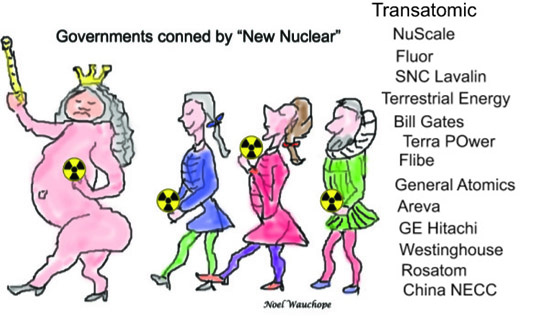
China National Nuclear Corporation on government list of preferred bidders for development funding for next-generation modular reactors, Guardian, Adam Vaughan, 8 Aug 16“……….The list of companies accepted for the competition was published briefly, apparently accidentally, on the website of the new Department for Business, Energy and Industrial Strategy on Friday before being deleted. It reads as a who’s-who of US, British, Japanese and Chinese industry players hoping to develop and build small modular reactors. These are much smaller than conventional nuclear plants with a capacity of less than 300MW – or a 10th of what Hinkley Point C should provide.
They are pitched by industry as a cheaper and quicker way to provide low-carbon energy capacity than conventional big nuclear plants because they could be built in a factory and transported to where their power is needed. The US and UK are racing to be the most attractive home for the first of the new designs to be commissioned.
Last November, George Osbornepromised £250m over five years for a nuclear research and development programme to “revive the UK’s nuclear expertise and position the UK as a global leader in innovative nuclear technologies”. An undisclosed amount of that sum is for a competition to find the best value SMR design for the UK, to “pave the way” towards building one in the UK in the 2020s.
CNNC sits alongside US companies such as NuScale; British ones including Rolls-Royce, Sheffield Forgemasters and Tokamak Energy; Japanese-owned Westinghouse; and the US-Japanese partnership GE-Hitachi, as participants the government considers eligible for phase one of its competition.
CNNC’s chief designer of small nuclear plants visited a conference in London last year to pitch a plan for cooperating with UK industry, and is already partnering with Rolls-Royce. It hopes to build the first SMR in the UK, with future ones sold around the world.
NuScale Power put itself forward for the competition in the spring. Its design, said its managing director, Tom Mundy, “answers the particular needs of the UK’s energy market and the wider UK economy, and we intend to participate fully in the government’s competition”.
The 33 participants will be whittled down in several phases, with the announcement of the eventual winners scheduled for late 2017……
When asked about the list published on Friday, a spokeswoman for the Department of Business, Energy and Industrial Strategy, said: “In March 2016, the government launched the first phase of a competition to identify the best value SMR for the UK. The ambition is to create an opportunity for the UK to become a world leader in SMRs.
Fukushima: A Nuclear War Without A War: The Unspoken Crisis Of Worldwide Nuclear Radiation Fukushima Watch 1 Aug 16 “………Public Health Disaster. Economic Impacts What prevails is a well organized camouflage. The public health disaster in Japan, the contamination of water, agricultural land and the food chain, not to mention the broader economic and social implications, have neither been fully acknowledged nor addressed in a comprehensive and meaningful fashion by the Japanese authorities.
Japan as a nation state has been destroyed. Its landmass and territorial waters are contaminated. Part of the country is uninhabitable. High levels of radiation have been recorded in the Tokyo metropolitan area, which has a population of 39 million (2010) (more than the population of Canada, circa 34 million (2010)) There are indications that the food chain is contaminated throughout Japan:
Radioactive cesium exceeding the legal limit was detected in tea made in a factory in Shizuoka City, more than 300 kilometers away from the Fukushima Daiichi nuclear power plant. Shizuoka Prefecture is one of the most famous tea producing areas in Japan.
A tea distributor in Tokyo reported to the prefecture that it detected high levels of radioactivity in the tea shipped from the city. The prefecture ordered the factory to refrain from shipping out the product. After the accident at the Fukushima nuclear power plant, radioactive contamination of tea leaves and processed tea has been found over a wide area around Tokyo. (See 5 More Companies Detect Radiation In Their Tea Above Legal Limits Over 300 KM From Fukushima, June 15, 2011)
Japan’s industrial and manufacturing base is prostrate. Japan is no longer a leading industrial power. The country’s exports have plummeted. The Tokyo government has announced its first trade deficit since 1980.
While the business media has narrowly centered on the impacts of power outages and energy shortages on the pace of productive activity, the broader issue pertaining to the outright radioactive contamination of the country’s infrastructure and industrial base is a “scientific taboo” (i.e the radiation of industrial plants, machinery and equipment, buildings, roads, etc). A report released in January 2012 points to the nuclear contamination of building materials used in the construction industry, in cluding roads and residential buildings throughout Japan.(See FUKUSHIMA: Radioactive Houses and Roads in Japan. Radioactive Building Materials Sold to over 200 Construction Companies, January 2012)
A “coverup report” by the Ministry of Economy, Trade and Industry (May 2011), entitled “Economic Impact of the Great East Japan Earthquake and Current Status of Recovery“presents “Economic Recovery” as a fait accompli. It also brushes aside the issue of radiation. The impacts of nuclear radiation on the work force and the country’s industrial base are not mentioned. The report states that the distance between Tokyo -Fukushima Dai-ichi is of the order of 230 km (about 144 miles) and that the levels of radiation in Tokyo are lower than in Hong Kong and New York City.(Ministry of Economy, Trade and Industry, Impact of the Great East Japan Earthquake and Current Status of Recovery, p.15). This statement is made without corroborating evidence and in overt contradiction with independent radiation readings in Tokyo (se map below). In recent developments, Sohgo Security Services Co. is launching a lucrative “radiation measurement service targeting households in Tokyo and four surrounding prefectures”.
“A map of citizens’ measured radiation levels shows radioactivity is distributed in a complex pattern reflecting the mountainous terrain and the shifting winds across a broad area of Japan north of Tokyo which is in the center of the of bottom of the map.”
“Radiation limits begin to be exceeded at just above 0.1 microsieverts/ hour blue. Red is about fifty times the civilian radiation limit at 5.0 microsieverts/hour. Because children are much more sensitive than adults, these results are a great concern for parents of young children in potentially affected areas.”
The fundamental question is whether the vast array of industrial goods and components “Made in Japan” — including hi tech components, machinery, electronics, motor vehicles, etc — and exported Worldwide are contaminated? Were this to be the case, the entire East and Southeast Asian industrial base –which depends heavily on Japanese components and industrial technology– would be affected. The potential impacts on international trade would be farreaching. In this regard, in January, Russian officials confiscated irradiated Japanese automobiles and autoparts in the port of Vladivostok for sale in the Russian Federation. Needless to say, incidents of this nature in a global competitive environment, could lead to the demise of the Japanese automobile industry which is already in crisis.
Israel minister admits Iran has respected nuclear deal, Yahoo 7 News, AFP on August 7, 2016 Jerusalem Israel’s energy minister on Sunday criticised a landmark nuclear accord between the Jewish state’s arch-foe Iran and world powers but said Tehran had so far respected the deal.
The agreement, which was signed in July 2015 and came into force in January, saw Tehran accept curbs to its nuclear programme in exchange for a lifting of economic sanctions by world powers.
“It’s a bad deal but it’s an accomplished fact and during the first year we spotted no significant breach from the Iranians,” said Youval Steinitz, who is close to Prime Minister Benjamin Netanyahu.
“But it’s still too early to conclude that this 12-year deal is a success,” he told public radio.
North Korea accuses US of planning nuclear strike, 9 News, 8 Aug 16North Korea has accused Washington of planning a pre-emptive nuclear strike, after the US announced it would deploy its B-1 bomber in the Pacific for the first time in a decade.
The strategic aircraft were to be deployed on Saturday on the US island of Guam, the US military said last month, describing the operation as a routine rotation with the B-52 bomber.
Tensions have been running high since North Korea carried out its fourth nuclear test in January, followed by a barrage of missile launches that this month reached Japanese waters directly for the first time.
Pyongyang accused Washington of “becoming all the more pronounced in their moves to topple down the DPRK by mobilizing all nuclear war hardware”……..
On July 29, the US Air Force said it would upgrade its hardware on Guam, a US territory in the western Pacific, by sending the B-1 for the first time since April 2006.
Fukushima: A Nuclear War Without A War: The Unspoken Crisis Of Worldwide Nuclear Radiation Fukushima Watch 1 Aug 16
“…………The crisis in Japan has also brought into the open the unspoken relationship between nuclear energy and nuclear war.
Nuclear energy is not a civilian economic activity. It is an appendage of the nuclear weapons industry which is controlled by the so-called defense contractors. The powerful corporate interests behind nuclear energy and nuclear weapons overlap.
In Japan at the height of the disaster, “the nuclear industry and government agencies [were] scrambling to prevent the discovery of atomic-bomb research facilities hidden inside Japan’s civilian nuclear power plants”.1 (See Yoichi Shimatsu,Secret Weapons Program Inside Fukushima Nuclear Plant?Global Research, April 12, 2011)
It should be noted that the complacency of both the media and the governments to the hazards of nuclear radiation pertains to the nuclear energy industry as well as to to use of nuclear weapons. In both cases, the devastating health impacts of nuclear radiation are casually denied. Tactical nuclear weapons with an explosive capacity of up to six times a Hiroshima bomb are labelled by the Pentagon as “safe for the surrounding civilian population”.
No concern has been expressed at the political level as to the likely consequences of a US-NATO-Israel attack on Iran, using “safe for civilians” tactical nuclear weapons against a non-nuclear state.
Iran executes nuclear scientist who returned to country from US Iranian judiciary confirms hanging of Shahram Amiri who it claims was a spy who had given away state secrets, Guardian, Saeed Kamali Dehghan, 7 Aug 16 Iran An Iranian nuclear scientist, whose disappearance in Saudi Arabia in 2009 and subsequent return to Tehran a year later from Washington was shrouded in mystery, has been executed in his home country.
The family of Shahram Amiri, an expert in radioactive isotopes at Tehran’s Malek Ashtar University, which is affiliated to Iran’s ministry of defence, told two overseas Persian-language TV networks at the weekend that he had been executed earlier in the week at an unknown location.
The spokesman for the Iranian judiciary confirmed on Sunday that Amiri had been hanged, claiming he had given away state secrets. The semi-official Tasnimnews agency quoted Gholam-Hossein Mohseni-Eje’i as saying that Amiri had been convicted of spying and put to death after his sentence was upheld by the supreme court.
“This person had obtained top secret information and established contacts with our number one sworn enemy, America, and passed on our country’s most crucial intelligence to the enemy,” Mohseni-Eje’i said.
Amiri’s execution marks the final dark chapter in a real-life spy drama that was the subject of much speculation. It also gives more weight to claims that he defected to the US after going missing on a pilgrimage to Mecca some time in spring 2009.
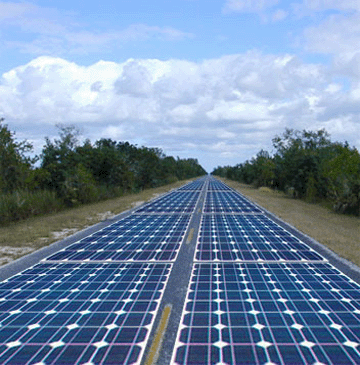
France gets a step closer to solar roadshttp://reneweconomy.com.au/2016/france-gets-step-closer-solar-roads-56433By Ilias Tsagas on 5 August 2016 French energy minister Ségolène Royal has inaugurated a manufacturing plant that will produce the so-called “Wattway” paving, made of solar PV. One of its pilot projects will be a 1 kilometer solar road, built in the same region as where the plant is located.
On 26 July French energy minister Ségolène Royal inaugurated a manufacturing unit for the Wattway photovoltaic panels in Tourouvre, Orne. Wattway is a French innovation and is the result of 5 years of research undertaken by Colas, a transport infrastructure company, and the French National Institute for Solar Energy (INES).
The joint patent for the product is based on crystalline silicon, and although it is very thin, Colas argues it is also “very sturdy, skid-resistant and designed to last,” with the durability to bear all types of vehicles, including trucks. Wattway panels can be applied directly to existing pavements, with the aim of generating green electricity while also allowing traffic to flow.
The new manufacturing facility is adjacent to Colas’ headquarters in the village of Tourouvre, in France’s north western department Orne. The new facility is expected to speed up the panel production time, as the Wattway panels had previously been manufactured at the INES laboratory.
Colas is already taking orders for panels ranging from 10 m2 to 50 m2, however, as of 2017, Wattway panels will be included in the Colas product line and the panel surface will increase.
One of the first applications of the Wattway panels will be a 1 kilometer road in the Onre region, the local council has announced.
France’s energy minister took the opportunity at the event to also announce the mobilization of €5 million in state funding to support the development of the Wattway photovoltaic panel. Royal herself is a great support of the innovative patent and has often spoken publicly of the variety of projects the Wattway can be applied to.
A Wattway panel, said Colas, can last “at least 10 years depending on the traffic, which speeds up wear. If the section is not covered by heavy traffic – a stadium parking lot for example – then Wattway panels can last roughly 20 years.”
Furthermore, “given the technical issues involved in the connection process, the panels need to be installed by an authorized technician,” added Colas, who also expressed that “within the next two to three years, it will be possible to install Wattway panels on private roads and driveways.”
Inside the Institutions for the Chernobyl Victims Forgotten by Society, VICE By Tom Usher, Photos: Jadwiga Bronte January 18, 2016The Chernobyl disaster took place 30 years ago this April, but its effects are still being felt. The meltdown of the nuclear power plant in northern Ukraine thrust a huge amount of radioactive particles into the Earth’s atmosphere, contaminating much of the surrounding area, with neighboring Belarus taking 70 percent of the fallout.
In her photo series “The Invisible People of Belarus,” photographer Jadwiga Bronteexplored the effects of the Chernobyl disaster on the people of Belarus, specifically those living in governmental institutions called “internats.” These institutions are part asylum, part orphanage, and part hospice, where thousands of Belarusians spend their lives, hidden from public view, often “handed over” to the government by relatives soon after birth.
I spoke to Jadwiga about her project.
VICE: What drew you to the story of the internats? Jadwiga Bronte: This topic has always been very personal to me. I was born in neighboring Poland, a satellite state of the USSR at the time of the Chernobyl disaster. After learning more about the aftermath of this disaster from an amazing photo essay—“Chernobyl Legacy,” by Paul Fusco—I felt like it was my duty to go to Belarus and work on this subject……..https://mail.google.com/mail/u/0/#inbox/15662659a8d2ba4c?compose=1566729b3d2417d4
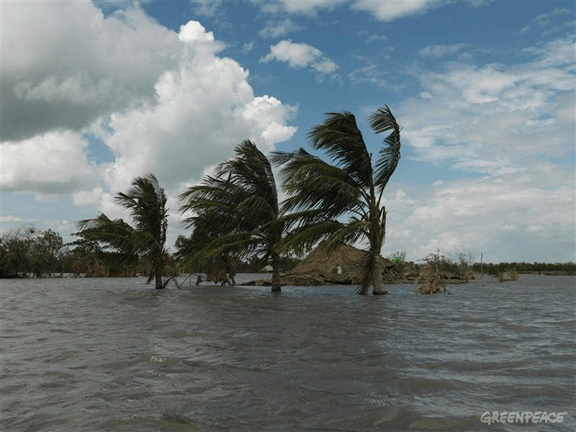
Carteret climate refugees seek home A grassroots group in Bougainville is scrambling to relocate the Carteret Islanders before rising sea levels swallow their land forever. ABC News 7 Aug 16 By Lauren Beldi for Pacific BeatAt only 1.5 metres above sea level at their highest point, the Carteret Islands are some of the first to succumb to the rising ocean tides.
The grassroots Tulele Peisa group, which means “sailing the waves on our own” in the local Halia language, is hoping to relocate more than half of the population by 2020. They have secured land for new homes on the main island of the Autonomous Region of Bougainville, to the east of mainland Papua New Guinea.Tulele Peisa formed in late 2006 after the Council of Elders on the islands decided to establish their own relocation program. The group’s chief executive, Ursula Rakova, says the encroaching tides on the islands have a major impact on people’s health. “We’re beginning to get more requests for people wanting to move because of the situation and the dire need for food,” she says.
The storm surges not only wash away houses, but also vegetable gardens, which are critical for the islanders’ survival.
With no cash economy on the Carterets, the only source of food is what people are able to grow for themselves……
Tulele Peisa has also provided thousands of mangrove seedlings to prevent the erosion of the coastline, and helped to build raised garden beds. But this will only stave off the inevitable for so long.
“Those are adaptation strategies, they aren’t really long-term solutions to containing the islands, because we know the islands are going, but we are looking at supporting our families,” Ms Rakova says.
She says the islanders want to maintain their independent way of living but that the international community should provide more support.
“The islanders on the Carterets are victims of what other people have caused and the international community needs to aid and support the work that we are doing,” she says.
Don Hancock, a nuclear waste expert with the nonprofit Southwest Research and Information Center, is skeptical officials will make the December 2016 deadline. He thinks it could take several million dollars more and a few more years to fully reopen WIPP.
“DOE was overly optimistic about scheduling and overly optimistic about costs,” Hancock said. “Unfortunately, DOE continues to not learn from its past. This is not unique to WIPP.”
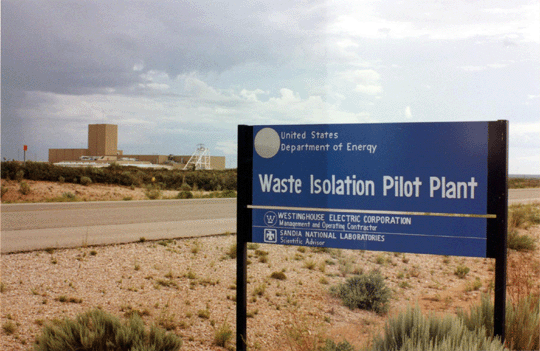
That prediction comes after federal officials once promised the Waste Isolation Pilot Plant would be cleaned up and reopened by this March, the Santa Fe New Mexican reports (http://goo.gl/9QvNEq).
The New Mexico plant has been closed since February 2014, when an inappropriately packed container of waste from Los Alamos National Laboratory ruptured and contaminated part of the facility.
The closure derailed cleanup at federal sites around the nation and recovery is costing the Energy Department hundreds of millions of dollars.
A Government Accountability Office audit released this week said the agency knew it had only a 1 percent chance of meeting that March 2016 deadline.
In 2015, the agency admitted it couldn’t safely reopen the Waste Isolation Pilot Plant, even for limited operations, until at least December 2016 — and at a higher cost. Now auditors say even the revised cost estimate was flawed. The agency “did not follow all best practices for cost and schedule estimates,” federal auditors found, including having an independent analyst review them.
The report says the Energy Department also admitted in May 2015 that the pressure to meet the March 2016 deadline “contributed to poor safety practices in WIPP recovery efforts.”
The result of missteps in the process of reopening the facility, according to auditors, was a nine-month delay and a price tag $64 million higher than the original cleanup estimate. The Energy Department initially estimated it would cost $242 million to restore WIPP for limited waste disposal and an additional $77 million to $309 million to install a new ventilation system critical to providing clean air to workers.
The delays led to an additional $61.4 million in operating costs at WIPP, and the cost to prepare the facility for limited activity went up another $2 million.
Don Hancock, a nuclear waste expert with the nonprofit Southwest Research and Information Center, is skeptical officials will make the December 2016 deadline. He thinks it could take several million dollars more and a few more years to fully reopen WIPP.
“DOE was overly optimistic about scheduling and overly optimistic about costs,” Hancock said. “Unfortunately, DOE continues to not learn from its past. This is not unique to WIPP.”
New facility in Moyock makes massive spent nuclear fuel storage casksBy Jeff Hampton The Virginian-Pilot MOYOCK, N.C., 7 Aug 16 Marlin Stoltz put on a hard hat and bright yellow vest before walking out into the four-acre work area of the Moyock Casting Facility, a new operation in the business of spent nuclear fuel storage.
A line of concrete cases, each 21 feet long and weighing 100 tons, rested along a rail spur, ready for shipment. Several men stood atop a steel form where hydraulic power vibrated and settled four truckloads of concrete for the next case. A concrete plant operated less than 100 yards away.
The property along N.C. 168 near the Chesapeake border is a short trip by rail or truck from the Norfolk ports, where barges haul in cement and rock. A rail line, a concrete plant, a good highway, proximity to the ports and isolation from residential development all make the site nearly perfect for its purposes, Stoltz said.
“This allows us to work very efficiently,” said Stoltz, supervisor of the Moyock Casting Facility and a deputy of the services business line for parent company Areva TN, a division of Areva, Inc, based in Charlotte.
Areva, Inc. has operations within the entire nuclear cycle, including uranium mining.
The Moyock facility with 25 employees opened in January. It makes concrete modules that encase steel canisters containing spent nuclear fuel. From here, the modules head to nuclear plants elsewhere……
demand for spent fuel storage remains strong, Stoltz said. The Moyock plant means to deliver.
An entire district in Rajasthan to be powered by solar energy, will end all water woes in the desert state! Rajasthan Electronics and Instrumentation Ltd, the firm currently handling the project has been given the green signal to spend Rs 11.91 crore for the entire project. India.com By Rutu Ladage on August 2, 2016“……..For Rajasthan government, coming up with newer techniques to ensure that the water issues never crop up, Barmer district in Jaiselmer is coming up with a unique solution. While we do have villages and homes in India that boast of solar power and using solar energy to meet their electricity needs, there are hardly any complete districts that boast of running solely on solar power. If the project works out, it will definitely be one of the major firsts in India and set the benchmark for other regions too. The Mukhyamantri Solar Adharit Nalkoop Yojana (MSANY). will provide 70 solar tubewells in Barmer district to help people become reliant on solar energy and use solar power even for agriculture.









 nuclear-news