The Anthropocene epoch is here
The Anthropocene epoch: scientists declare dawn of human-influenced age Experts say human impact on Earth so profound that Holocene must give way to epoch defined by nuclear tests, plastic pollution and domesticated chicken, Guardian, Damian Carrington, 29 Aug 16, Humanity’s impact on the Earth is now so profound that a new geological epoch – the Anthropocene – needs to be declared, according to an official expert group who presented the recommendation to the International Geological Congress in Cape Town on Monday.
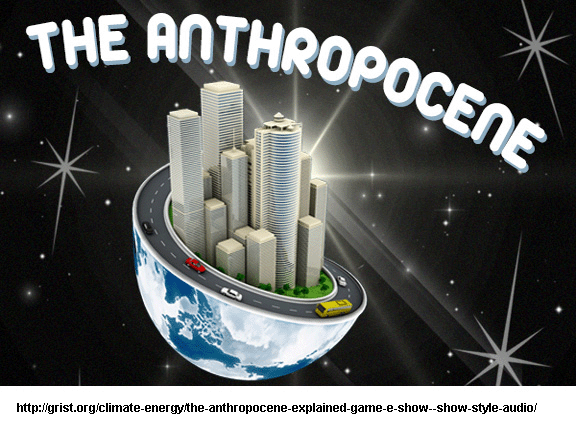
The new epoch should begin about 1950, the experts said, and was likely to be defined by the radioactive elements dispersed across the planet by nuclear bomb tests, although an array of other signals, including plastic pollution, soot from power stations, concrete, and even the bones left by the global proliferation of the domestic chicken were now under consideration.
The current epoch, the Holocene, is the 12,000 years of stable climate since the last ice age during which all human civilisation developed. But the striking acceleration since the mid-20th century of carbon dioxide emissions and sea level rise, the global mass extinction of species, and the transformation of land by deforestation and development mark the end of that slice of geological time, the experts argue. The Earth is so profoundly changed that the Holocene must give way to the Anthropocene………
To define a new geological epoch, a signal must be found that occurs globally and will be incorporated into deposits in the future geological record. For example, the extinction of the dinosaurs 66m years ago at the end of the Cretaceous epoch is defined by a “golden spike” in sediments around the world of the metal iridium, which was dispersed from the meteorite that collided with Earth to end the dinosaur age.
For the Anthropocene, the best candidate for such a golden spike are radioactive elements from nuclear bomb tests, which were blown into the stratosphere before settling down to Earth. “The radionuclides are probably the sharpest – they really come on with a bang,” said Zalasiewicz. “But we are spoiled for choice. There are so many signals.”
Other spikes being considered as evidence of the onset of the Anthropocene include the tough, unburned carbon spheres emitted by power stations. “The Earth has been smoked, with signals very clearly around the world in the mid-20th century,” said Zalasiewicz.
Other candidates include plastic pollution, aluminium and concrete particles, and high levels of nitrogen and phosphate in soils, derived from artificial fertilisers. Although the world is currently seeing only the sixth mass extinction of species in the 700m-year history of complex life on Earth, this is unlikely to provide a useful golden spike as the animals are by definition very rare and rarely dispersed worldwide.
In contrast, some species have with human help spread rapidly across the world. ……..https://www.theguardian.com/environment/2016/aug/29/declare-anthropocene-epoch-experts-urge-geological-congress-human-impact-earth
No comments yet.
1 This Month


18 March Webinar @ 1 PM EST: An Assessment of SMR Projects: The Case of Canada
register for the zoom:
https://us02web.zoom.us/webinar/register/WN_o8BIIOUvQ2ONJR1nta65DQ#/registration


of the week – STOP SMALL MODULAR REACTORS IN CANADA
To see nuclear-related stories in greater depth and intensity – go to https://nuclearinformation.wordpress.com
-
Archives
- March 2026 (146)
- February 2026 (268)
- January 2026 (308)
- December 2025 (358)
- November 2025 (359)
- October 2025 (376)
- September 2025 (258)
- August 2025 (319)
- July 2025 (230)
- June 2025 (348)
- May 2025 (261)
- April 2025 (305)
-
Categories
- 1
- 1 NUCLEAR ISSUES
- business and costs
- climate change
- culture and arts
- ENERGY
- environment
- health
- history
- indigenous issues
- Legal
- marketing of nuclear
- media
- opposition to nuclear
- PERSONAL STORIES
- politics
- politics international
- Religion and ethics
- safety
- secrets,lies and civil liberties
- spinbuster
- technology
- Uranium
- wastes
- weapons and war
- Women
- 2 WORLD
- ACTION
- AFRICA
- Atrocities
- AUSTRALIA
- Christina's notes
- Christina's themes
- culture and arts
- Events
- Fuk 2022
- Fuk 2023
- Fukushima 2017
- Fukushima 2018
- fukushima 2019
- Fukushima 2020
- Fukushima 2021
- general
- global warming
- Humour (God we need it)
- Nuclear
- RARE EARTHS
- Reference
- resources – print
- Resources -audiovicual
- Weekly Newsletter
- World
- World Nuclear
- YouTube
-
RSS
Entries RSS
Comments RSS
 nuclear-news
Leave a comment