Nuclear industry started the now sophisticated practice of corporate greenwashing
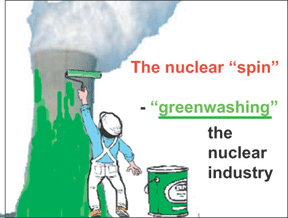
The troubling evolution of corporate greenwashing The term “greenwashing” was coined in the 1980s to describe outrageous corporate environmental claims. Three decades later, the practice has grown vastly more sophisticated, Guardian, Bruce Watson, 21 Aug 16, In the mid-1980s, oil company Chevron commissioned a series of expensive television and print ads to convince the public of its environmental bonafides. Titled People Do, the campaign showed Chevron employees protecting bears, butterflies, sea turtles and all manner of cute and cuddly animals.
The commercials were very effective – in 1990, they won an Effie advertising award, and subsequently became a case study at Harvard Business school. They also became notorious among environmentalists, who have proclaimed them the gold standard of greenwashing – the corporate practice of making diverting sustainability claims to cover a questionable environmental record.
The term greenwashing was coined by environmentalist Jay Westerveld in 1986, back when most consumers received their news from television, radio and print media – the same outlets that corporations regularly flooded with a wave of high-priced, slickly-produced commercials and print ads. The combination of limited public access to information and seemingly unlimited advertising enabled companies to present themselves as caring environmental stewards, even as they were engaging in environmentally unsustainable practices.
But greenwashing dates back even earlier. American electrical behemoth Westinghouse’s nuclear power division was a greenwashing pioneer. Threatened by the 1960’s anti-nuclear movement, which raised questions about its safety and environmental impact, it fought back with a series of ads proclaiming the cleanliness and safety of nuclear power plants. One, featuring a photograph of a nuclear plant nestled by a pristine lake, proclaimed that “We’re building nuclear power plants to give you more electricity,” and went on to say that nuclear plants were “odorless […] neat, clean, and safe”……
One shift has been outreach. Many companies are now working to engage customers in their sustainability efforts, even as their core business model remains environmentally unsustainable. The Home Depot and Lowes, for example, both encourage customers to do their part by offering onsite recycling for several products, including compact fluorescent lights and plastic bags. Meanwhile, they continue to sell billions of dollars per year worth of environmentally damaging products, such as paints that are loaded with toxic ingredients and which release noxious fumes.
“It’s misdirection, and it’s intended to shift the customer’s focus from a company’s appalling behaviors to something that’s peripheral,” Ballard says.
The bottled water conundrum
The water industry trades heavily on images of rugged mountains and pristine lakes to sell its products. And many companies – Nestle, in particular – spend millions of dollars trying to convince the public that their bottled water isn’t only good to drink, but is also good for the planet. Over the past few years, the bottled water giant has claimed that its Eco-Shape bottle is more efficient, that itsResource recycled plastic bottle is more environmentally responsible and that its use of plant-based plastics is less damaging to the planet.
In 2008, Nestle Waters Canada even ran an ad claiming: “Bottled water is the most environmentally responsible consumer product in the world.”…….
A golden oldie
What the commercial failed to mention was that, two years earlier, Westinghouse was cited by the Nuclear Regulatory Commission for concealing flaws in its reactor designs and submitting false information to regulators. And, in February 2016, another plant that uses Westinghouse reactors, New York’s Indian Point,leaked radioactive material into the surrounding area’s groundwater.
Greenwashing may have taken on a new shape in the last decade, but it’s still as murky as ever. https://www.theguardian.com/sustainable-business/2016/aug/20/greenwashing-environmentalism-lies-companies
No comments yet.
1 This Month
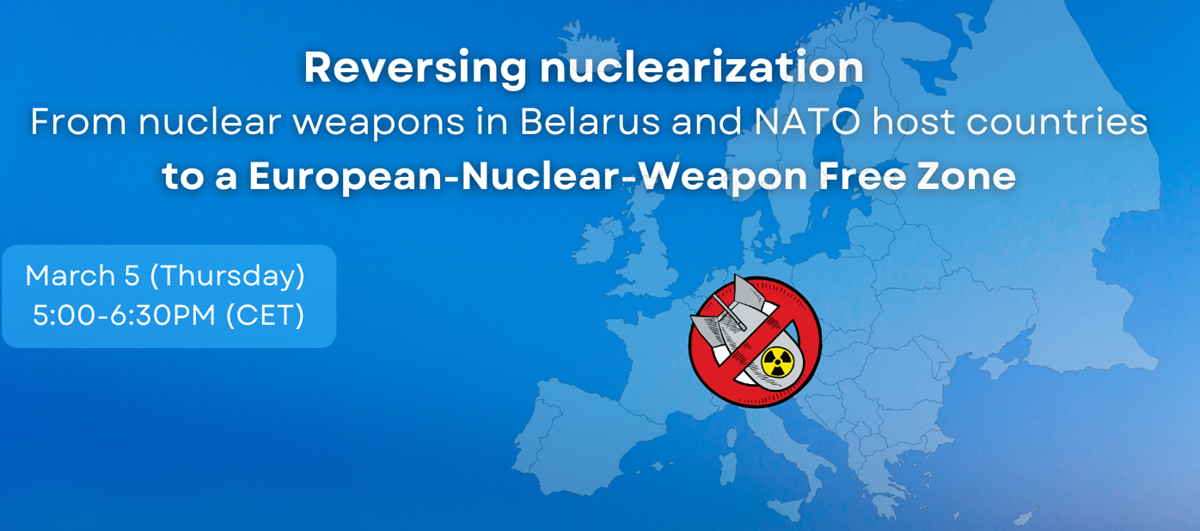
5 March -Online – Reversing nuclearization:
From nuclear weapons in Belarus and NATO host countries to a European-Nuclear-Weapon Free Zone
11am-12:30pm Eastern Time USA / 5pm-6:30pm CET

of the week – Advocating for a
nuclear free beach – https://www.samuellawrencefoundation.org/
The Samuel Lawrence Foundation advocates for a Nuclear Waste Free Beach at San Onofre, join us and take action!

10 March A LIVE WEBINAR THE REAL EFFECTS OF NUCLEAR POWER
What the Industry Isn’t Telling Us
1:00 PM Mountain, 2 pm Central, 3 pm Eastern. Live on the Keepers of the Water Facebook page


18 March Webinar @ 1 PM EST: An Assessment of SMR Projects: The Case of Canada
register for the zoom:
https://us02web.zoom.us/webinar/register/WN_o8BIIOUvQ2ONJR1nta65DQ#/registration

of the week – STOP SMALL MODULAR REACTORS IN CANADA
To see nuclear-related stories in greater depth and intensity – go to https://nuclearinformation.wordpress.com
-
Archives
- March 2026 (37)
- February 2026 (268)
- January 2026 (308)
- December 2025 (358)
- November 2025 (359)
- October 2025 (376)
- September 2025 (258)
- August 2025 (319)
- July 2025 (230)
- June 2025 (348)
- May 2025 (261)
- April 2025 (305)
-
Categories
- 1
- 1 NUCLEAR ISSUES
- business and costs
- climate change
- culture and arts
- ENERGY
- environment
- health
- history
- indigenous issues
- Legal
- marketing of nuclear
- media
- opposition to nuclear
- PERSONAL STORIES
- politics
- politics international
- Religion and ethics
- safety
- secrets,lies and civil liberties
- spinbuster
- technology
- Uranium
- wastes
- weapons and war
- Women
- 2 WORLD
- ACTION
- AFRICA
- Atrocities
- AUSTRALIA
- Christina's notes
- Christina's themes
- culture and arts
- Events
- Fuk 2022
- Fuk 2023
- Fukushima 2017
- Fukushima 2018
- fukushima 2019
- Fukushima 2020
- Fukushima 2021
- general
- global warming
- Humour (God we need it)
- Nuclear
- RARE EARTHS
- Reference
- resources – print
- Resources -audiovicual
- Weekly Newsletter
- World
- World Nuclear
- YouTube
-
RSS
Entries RSS
Comments RSS
 nuclear-news
Leave a comment