Beyond Nuclear calls for answers on safety probe into Palisades nuclear power
 Beyond Nuclear Wants Answers in Latest Palisades Probe http://wkzo.com/news/articles/2016/jul/09/beyond-nuclear-wants-answers-in-latest-palisades-probe/ , July 09, 2016 by Gary Stevens TAKOMA PARK, MD (WHTC) – The most outspoken opponent of the Palisades nuclear power plant wants answers.
Following a report by WWMT-TV on Friday of an investigation over several security officers at the Covert facility being placed on administrative leave, the group Beyond Nuclear on Saturday sent a “backgrounder” to media outlets that provides “significant additional context, information and documentation” about “current and long-standing security and fire risks at Palisades.”
Lead spokesman Kevin Kamps added in a statement that, “Beyond Nuclear also plans to file a Freedom of Information Act request at the US Nuclear Regulatory Commission as soon as possible regarding this matter, in order to make the NRC investigations into ‘fire inspection anomalies’ … at Palisades accessible and transparent to the concerned public.”
An unnamed employee admitted to the television station concerns about security at the plant due to the absence of the guards. Officials of Entergy, the operator of the plant, told WWMT that they are looking into the matter but “denied any change of security levels in or around” the 45-year-old facility. “An investigation identified anomalies within the site’s fire tour records, and we have implemented strong interim actions to make sure we have appropriate staffing levels and that fire tours are conducted properly,” Entergy Senior Communications Specialist Val Gent told WWMT, who refused to give other specifics, citing the ongoing investigation.
The Nuclear Regulatory Commission admits that a probe is ongoing and defended not notifing the media before the television station was alerted by an unnamed employee about the matter, saying that there was never an immediate concern about public safety. NRC inspectors at the plant “continue to monitor this issue,” agency spokeswoman Viktoria Mitlyng told WWMT, and she added that a public statement will be issued when the investigation is complete.
Beyond Nuclear has been the most outspoken in asking the NRC to decommission the Palisades plant due to its age and its operation.
Santee Cooper and South Carolina Electric and Gas Co. (SCE&G) increase budget for new nuclear plant
 Santee Cooper works toward fixing costs to complete nuclear station, Berkely Independent Staff Report Saturday, July 9, 2016
The Santee Cooper Board of Directors has authorized the utility to proceed with securing an option that fixes the costs to complete two new units at V.C. Summer Nuclear Station located in Jenkinsville, northwest of Columbia.
The fixed price option could give greater cost and schedule certainty to customers of Santee Cooper and South Carolina Electric & Gas Co. (SCE&G), joint owners of the new nuclear project.
The state-owned utility’s board also approved the sale of $831 million in revenue obligation bonds, primarily to finance the ongoing nuclear construction project. A portion of the proceeds will be used to refinance existing utility debt……..
Santee Cooper owns 45 percent of the nuclear expansion project, and SCE&G owns 55 percent. The two utilities negotiated an amended EPC Agreement with Westinghouse Electric Co. LLC in October, featuring terms that incentivize schedule adherence and shift financial risk to Westinghouse for any additional delays in the current scope of work. The amended EPC Agreement also offers a fixed price option, and Santee Cooper’s authorization to proceed is contingent upon SCE&G receiving approval this fall of a related petition being considered by the South Carolina Public Service Commission.
Exercising this option will increase Santee Cooper’s budget for the nuclear project by about 20 percent……..
The 2016BD bond sale included $508 million in tax-exempt series B bonds and $323 million in taxable series D bonds. The series B issue includes $91.3 million in refunding bonds, which provide $9 million in net present value savings. The term “tax exempt” means exempt from federal and South Carolina income taxes for South Carolina residents under current law……http://www.berkeleyind.com/20160709/160709801/santee-cooper-works-toward-fixing-costs-to-complete-nuclear-station
July 10 Energy News

Science and Technology:
¶ Rising sea levels and increased pollution linked to global warming are posing a huge threat to the future of the world’s peatland areas, new research shows. Peat bogs cover 3% of the Earth’s surface and play a crucial role in absorbing and storing carbon from the atmosphere, but climate change can alter their chemistry. [Scotsman]
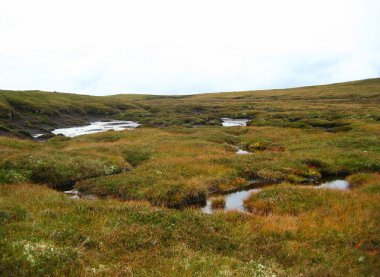 A boggy plateau west of Carn a’ Bhacain.
Photo by Richard Webb. CC BY-SA 2.0. Wikimedia Commons.
World:
¶ The forward to a new report quotes National Grid’s head of energy insights as saying, “We are in the midst of an energy revolution.” Two years ago, National Grid expected solar capacity in the UK to be 8 to 17 GW by 2030. Today, they see 15 GW as a minimum, and believe capacity could be as much as 39 GW. [CleanTechnica]
¶ Asserting that the Indian…
View original post 512 more words
Drigg Nuclear Waste Dump Menaced By Coastal Erosion: Foreign Companies Profit; UK Taxpayer Holds Liability (Still Time to Oppose-Decision 15th July)

For information on how to oppose Drigg see: https://mariannewildart.wordpress.com/2016/07/03/lock-the-gate-on-drigg-nuclear-waste-site-15th-july-in-kendal/
“The Low Level [Radioactive] Waste Repository (LLWR) is situated near to areas of Cumbrian coastline where historical evidence indicates that the coast has receded in the past, and as it is anticipated that sea level will rise, it is expected that the repository area will be disrupted through coastal erosion and sea-level rise will accelerate this process.” (NDA, 2015)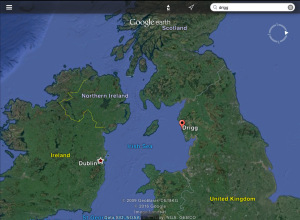
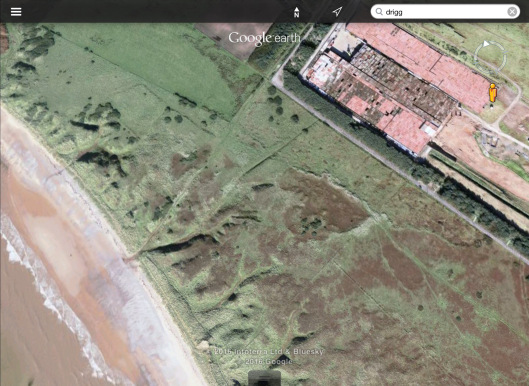
Rusting Shipping Containers Storing Radioactive Waste At Drigg Near the Irish Sea
Looking at the picture above, it doesn’t take much imagination to see that the LLW Nuclear Waste Dump at Drigg will fall onto the beach and eventually into the Irish sea, (unless it’s moved). Official documents even say so. It’s not a matter of if, only how quickly.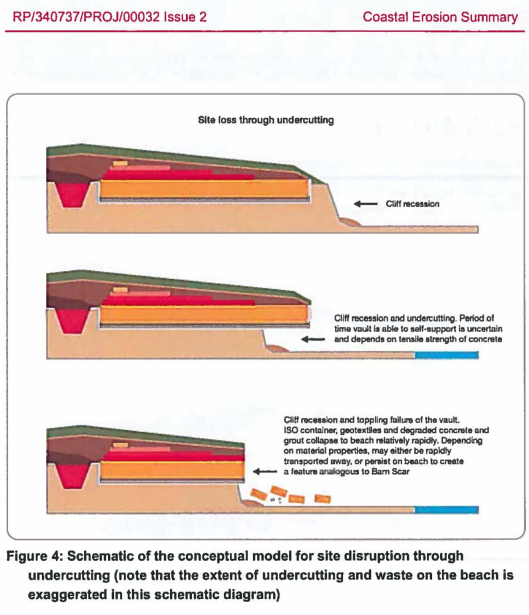
“LLW Repository, Holmrook, Cumbria: Coastal Erosion Summary, Version 2, January 2015”, NDA-OGL
Who benefits from this dump along the coast…
View original post 1,723 more words
“Outrageous and Reckless Endangerment of Public Health” Proposed by US EPA: Increased Radiation in Drinking Water after Nuclear Accident- Comment Deadline 25 July 2016
Comment on the Environmental Protection Agency (EPA) Draft “Guide for Drinking Water after a Radiological Incident” here: https://www.regulations.gov/docket?D=EPA-HQ-OAR-2007-0268 Due Jul 25, 2016 11:59 PM ET 06/10/2016 ID: EPA-HQ-OAR-2007-0268
Comment submitted on June 13th, 2016:
“ID: EPA-HQ-OAR-2007-0268-0214
Tracking Number: 1k0-8q4j-uogf
“TO WHOM IT MAY CONCERN:
In order to defend the withdrawal of your “Draft Protective Action Guide for Drinking Water after a Radiological Incident,” I urge you to consider the National Academy of Sciences BEIR VII report which reaffirms that there is no safe dose of radiation no matter how small.
No only is any increase in allowable radiation exposures a danger to the populations you are charged with protecting, BEIR VII particularly emphasizes that infants, women and children are harmed more severely by a given dose of radiation exposure than the adult males generally used as the basis for setting radiation exposure standards.
Please consider in addition…
View original post 132 more words
Allowing Increased Radiation in Drinking Water After Nuclear Disaster Akin To Murder Says Three Mile Island – Cancer Survivor: US EPA Comment Deadline 25 July 2016
S/he is being diplomatic. Increasing the amount of radioactive materials allowed in drinking water is not akin to murder. It is premeditated murder.
Comment on the US EPA Notice: “… Guide for Drinking Water after a Radiological Incident” here: https://www.regulations.gov/docket?D=EPA-HQ-OAR-2007-0268 Due Jul 25, 2016 11:59 PM ET 06/10/2016, ID: EPA-HQ-OAR-2007-0268

Fairewinds 8 Aug 2013 podcast TMI Fallout – http://youtu.be/xu7xWpRi-mY
“Anonymous Comment:
ID: EPA-HQ-OAR-2007-0268-0238
Tracking Number: 1k0-8qc9-wu2o
In 1979 Three Mile Island released radioactivity, drifting northward due to prevailing winds, through Chemung County NY. I lived there then, with my family. My dad died of Cancer, my wife died recently from cancer, I have had cancer and am a cancer survivor, other friends, neighbours and friends have died from or had cancer. Yet the local, state, and federal government and the nuclear industry said that everything was safe, that there was no danger to the public from…
View original post 127 more words
July 9 Energy News
Opinion:
¶ “Will US Taxpayers Foot The Bill For Cleaning Up After Bankrupt Coal Companies?” • Fifty US coal companies have filed for bankruptcy since 2012. But before the collapse, speculating top producers ran up billions in debt to finance unwise acquisitions. Now we have a question. Who will clean up the mess they made? [CleanTechnica]
 Strip mining, Powder River Basin, Wyoming.
WildEarth Guardians/Flickr, CC BY-NC-ND
¶ “Clean energy gets warm welcome from First Nations” • At the opening ceremony for the Box Canyon Hydro Project near Port Mellon, British Columbia, Squamish women elders cleansed the project of any ill spirits and sentiments, blessing it for a long and prosperous operation, providing power for 4,500 homes. [Vancouver Sun]
Photos:
¶ GE Renewable Energy is assembling the parts for five of their Haliade wind turbines for America’s first offshore wind farm, which is being built by Deepwater…
View original post 534 more words
Japan wanting to market nuclear technology to United Arab Emirates
 Japan teaches UAE lessons learnt from Fukushima nuclear disaster Caline Malek, The National UAE 11 July 16, ABU DHABI // Japan is offering experts and technology to the UAE to increase its nuclear energy cooperation with the country and share lessons learnt from the Fukushima disaster.
Professors with vast experience of the industry are being flown in to educate the Emiratis who aim to be the future of the country’s growing nuclear energy sector, while Japanese companies have provided essential parts for the UAE’s first nuclear power plant…….
Lectures are part of wider nuclear cooperation between the countries through an agreement signed in 2014 on the peaceful use of nuclear energy…..
Japan will also help to develop human resources in nuclear science and engineering.
“Japanese experts come to universities in the UAE to teach the most updated science and technology,” Mr Fujiki said…….
cooperation is based on the idea that nuclear energy should be used for the production of desalinated water to be used by the industry,” Mr Fujiki said. “A study is being carried out on the feasibility of this by a Japanese institute and the UAE.”
Japan has extensive nuclear experience and a well-developed industry, said Hamad Alkaabi, UAE ambassador to the International Atomic Energy Agency…..
Japan has one of the largest nuclear industries, dating back to the 1950s.
“It has a large body of knowledge and expertise in nuclear and a large corps of experts, scientists, engineers, businessmen, critics and journalists who have looked after the nuclear business,” said Nobuyasu Abe, vice chairman of the Japan Atomic Energy Commission…..http://www.thenational.ae/uae/government/japan-teaches-uae-lessons-learnt-from-fukushima-nuclear-disaster
Indigenous Fight Against Nuclear Colonialism – theme for July 16
Indigenous Fight Against Nuclear Colonialism
Indigenous people protest EPA’s nuclear plans
“Indian Point” New Documentary Investigates Nuclear Power from New York to Fukushima
 New Documentary Investigates Nuclear Power from New York to Fukushima, Earth Island Journal BY ED RAMPELL – JULY 8, 2016 A Conversation with Indian Point Director Ivy Meeropol
“…………..The Brooklyn-born, Massachusetts-raised Meeropol’s absorbing, incisive, new documentary Indian Point investigates this 1960s-built nuclear power facility, which sits just 35 miles north of New York City and is currently working to relicense two of its reactors. It also probes the 2012 ousting of the Nuclear Regulatory Commission’s chairman, Gregory Jaczko, who was accused of bullying and intimidating employees, plus the Fukushima Daiichi nuclear disaster, triggered by a 2011 earthquake and tidal wave that caused meltdowns and the release of radioactive isotopes at the Japanese nuclear power plant.
The writer/director skillfully interweaves these three strands into a cohesive, comprehensive 94-minute tapestry exploring the controversial nuclear industry. In doing so, she evenhandedly interviews employees and executives of Entergy Corporation, which operates Indian Point, as well as activists opposing it. Her rare access enabled the intrepid filmmaker to enter both the Fukushima and New York facilities, allowing unusual insight into the inner workings, and politics, of the plants.
Like a cinematic sleuth, Meeropol doggedly pursued the different threads of the saga. If Woodward and Bernstein “followed the money” during Watergate, Meeropol followed the radiation, so to speak. In a balanced yet bold, unflinching way, Meeropol proves once again in Indian Point that the personal is political, and reveals that controversies swirling around nuclear power are anything but a tempest in a teapot……..
 Your film has three main leitmotifs: Indian Point, Fukushima, and former NRC Chairman Gregory Jaczko. Do you think that Jaczko was subjected to allegations about his treatment of employees and eventually left his position as chairman because he was too critical of the nuclear industry?

Yes, I do. I do. It was a confluence of events but they really raked him over the coals. This is a guy who self-admittedly says Fukushima changed how he viewed his job. He was a regulator who worked for a powerful industry and probably didn’t feel like he had a lot of power. Before Fukushima he bought into what the industry line was and what a lot of the NRC members believe, which is that a meltdown like Fukushima couldn’t happen.
Then when Fukushima happened, it changed the way he viewed his job. He became more of an activist chairman. He gathered the staff around him.
Much of what he was proposing wasn’t anything all that radical… He really was just trying to respond to Fukushima, to figure out what happened there and try to make sure it didn’t happen here in the US. Not the tsunami part — but the meltdown. He directed his staff to look closely at Fukushima and come up with recommendations for the NRC, which they did. The rest of the commissioners didn’t like it because — I’m totally convinced of this — they’re too close to the industry and knew it would cost the industry a lot to make the new changes and they weren’t going to do it.
I’m sure there was some real friction there, but the NRC blew it up into a different story, saying that Jaczko was a horrible boss and yelled at people. That he was an angry boss, he kept things from them, and he kept people out of meetings. When that didn’t really stick, the story became that he yelled at women staffers and made them cry. His staff, when he did resign, made this beautiful book for him, because they knew what he had been through and how he was really railroaded out of there.
I got to know him really well — he’s a gentle person, he’s not a tyrant. The NRC painted this picture of him but none of the allegations stuck in the end. The NRC’s Inspector General’s report came back with absolutely nothing on him. He’s unemployed now. ……..
I came out of there [Indian Point Nuclear Station] really, really respecting everyone who worked there and feeling better about it in some ways, but also ultimately feeling this is a dying industry. Especially now, with solar and wind, we don’t need it.
Well, those employees at the plant concerned with safety are literally on the frontlines.
Exactly………
In 2015, Indian Point was denied a permit to continue withdrawing water from the Hudson River, right?
Yes. Basically, the New York Department of Environmental Conservation decided after many years of looking at how the plant abuses the river that Indian Point should not be allowed a water permit because of the impact on the fish population. Water withdrawals just destroy too much fish larvae and disrupt the river’s aquatic life.
Indian Point Movie CLIP – Water (2016) – Documentary
Indian Point uses 1.5 billion gallons of water a day, sucked through the plant from the Hudson River, then spit back out, hotter — another way nuclear power plants affect the environment. Indian Point creates terrible pollution in the river and it’s destroying the river. The plant uses as much water in one day as everyone in New York City uses combined.
So the DEC denied the plant a water permit. It’s a great way to try and shut the plant down because the Nuclear Regulatory Commission requires plants to have a water permit from the state they operate in in order to get relicensed.
This is precedent-setting, because as far as I’m aware, at no other time has a plant been shut down because a water permit was denied. They haven’t done it yet. That’s why we’re so optimistic in the film, because the water permit denial could be the way the plant gets shut down. There’s a lot of momentum. New York Governor Andrew Cuomo, New York State, and the DEC are not giving up on shutting down the plant.
In the midst of all this, licenses for both reactors ran out, and they haven’t been renewed by the NRC, so Indian Point is operating the reactors without a license. [Indian Point reactors can continue operating without a license during the relicensing process. The plant has experience several difficulties this year, however, including two shutdowns of the Unit 2 reactor since late June.]……..
Indian Point will be theatrically released July 8 in New York at the Film Society of Lincoln Center and on July 22 in Los Angeles, and released on DVD Oct. 25. For more information, visit the Indian Point website. http://www.earthisland.org/journal/index.php/elist/eListRead/documentary_investigates_nuclear_power_new_york_to_fukushima/
.
Mayors For Peace call on next US President and Congress to reduce nuclear weapons spending
 There Are 15,000 Nuclear Weapons Still Posing an Intolerable Threat to Humanity
These mayors are trying to change that. The Nation By Mayor Frank Cownie, 8 July 16 The members of Mayors for Peace, an international organization of cities dedicated to eliminating nuclear weapons, are keenly aware that these devices were designed to wipe cities off the map. As the mayor of Des Moines, I can expect that my city is an unlikely target, but the same cannot be said for many of my counterparts. Cities around the world are utterly unprepared to respond to a catastrophe of that scale. Prevention is the only cure. Yet the presidential candidates have said little about how they would address the existential threat posed by nuclear weapons.
Motivated by growing concern about rising international tensions and a disquieting presidential campaign, the United States Conference of Mayors (USCM), at its recent annual meeting in Indianapolis, unanimously adopted a strong resolution put forward by members of Mayors for Peace, warning that “the nuclear-armed countries are edging ever closer to direct military confrontation in conflict zones around the world,” and calling on the next president of the United States “to pursue new diplomatic initiatives to lower tensions with Russia and China and to dramatically reduce U.S. and Russian nuclear stockpiles.”
The USCM is the nonpartisan association of American cities with populations over 30,000, and resolutions adopted at its annual meetings become official policy. The USCM has annually adopted resolutions introduced by Mayors for Peace since 2006. This resolution was cosponsored by 22 of my counterparts, including New York City Mayor Bill de Blasio and Washington, DC, Mayor Muriel Bowser. (See below for full list of sponsors.)
Cautioning that “more than 15,000 nuclear weapons, most orders of magnitude more powerful than the Hiroshima and Nagasaki bombs, 94% held by the United States and Russia, continue to pose an intolerable threat to cities and humanity,” and that “the largest NATO war games in decades, involving 14,000 U.S. troops, and activation of U.S. missile defenses in Eastern Europe are fueling growing tensions between nuclear-armed giants,” the USCM resolution “calls on the next President of the United States, in good faith, to participate in or initiate…multilateral negotiations for the elimination of nuclear weapons as required by the 1970 Nuclear Nonproliferation Treaty.”
The resolution commends President Obama for visiting Hiroshima and concluding negotiations with Iran, but notes that “the Obama Administration has laid the groundwork for the United States to spend one trillion dollars over the next three decades to maintain and modernize its nuclear bombs and warheads, production facilities, delivery systems, and command and control,” and that “federal funds are desperately needed in our communities to build affordable housing, create jobs with livable wages, improve public transit, and develop sustainable energy sources.”
The USCM resolution “calls on the next President and Congress of the United States to reduce nuclear weapons spending to the minimum necessary to assure the safety and security of the existing weapons as they await disablement and dismantlement, and to redirect those funds to address the urgent needs of cities and rebuild our nation’s crumbling infrastructure.”……….
The full text of the resolution can be read here. https://www.thenation.com/article/there-are-15000-nuclear-weapons-still-posing-an-intolerable-threat-to-humanity/
America’s major taxpayer liability – the Department of Energy

 How the Department of Energy became a major taxpayer liability http://www.cnbc.com/2016/07/05/how-the-department-of-energy-became-a-major-taxpayer-liability.html Mark Fahey | @marktfahey Wednesday, 6 Jul 2016 If you were to guess which government agency has had to pay out the most in court in recent years, the Department of Energy probably wouldn’t come to mind.
And according to the department itself, the bloodletting as far from over. The DOE has failed to make good on some of its most important contractual obligations for years, and its private partners have been collecting billions in damages.
The Nuclear Waste Policy Act of 1982 requires that the DOE dispose of nuclear waste being produced at civilian energy plants around the country, which in turn pay fees for a long-term storage facility. The department’s contracts with dozens of energy companies said it would start disposing of the waste in 1998.
The companies held up their end, feeding about $750 million into the Nuclear Waste Fund each year. But the department did not manage to set up any facility to receive the waste, forcing energy companies to store it themselves on-site.
All those partial breaches of contract haven’t come cheap. As of the end of 2015, the DOE has paid $5.3 billion for failing to fulfill its obligations, and even if it manages to start disposing of waste in the next 10 years, it could still be on the hook for nearly $24 billion in additional liability.
“Because the United States has no facility available to receive spent nuclear fuel (SNF) and high-level radioactive waste (HLW) under the Nuclear Waste Policy Act, it has been unable to begin disposal of SNF from utilities as required by the standard contract with utilities,” said a DOE spokesperson in an email. “Significant litigation claiming damages for partial breach of contract has ensued as a result of this delay.”
At the end of 2015, the DOE had settled 35 lawsuits and resolved 33 with judgments, with 19 cases pending, according to the Congressional Budget Office. A court ruling halted the collection of storage fees in 2014, but energy companies are still seeking to recoup the money they’re spending every year on waste storage. Even after settlements for back pay are reached, the department is usually required to reimburse those costs going forward.
The hang-up has been in finding a location for the centralized storage facility. For decades, Yucca Mountain in Nevada was the only location that could legally be considered, despite fierce opposition from state and local groups. The Obama administration eventually abandoned the site as “unworkable” in 2011.
At the recommendation of the administration’s Blue Ribbon Commission (BRC), the department is now pursuing a “consent-based” approach, meaning that the DOE will seek the approval of relevant communities before construction, rather than trying to force all of the country’s spent nuclear waste on a pre-decided site in Nevada.
“The administration concurs with the conclusion of the BRC that a fundamental flaw of the 1987 amendments to the NWPA was the imposition of a site for characterization,” wrote then-Energy Secretary Steven Chu in the department’s most recent guiding strategy document from January 2013. “In practical terms, this means encouraging communities to volunteer to be considered to host a nuclear waste management facility.”
The DOE plans to have a pilot interim storage facility by 2021, initially to accept waste from reactor sites that were shut down years ago. Limiting the government’s massive liabilities is a major focus of the department’s strategy, according to the document.
The question isn’t whether the DOE will continue to have to pay out an exorbitant amount of money, but just how exorbitant that sum will end up being. The department itself projects that its total liabilities based on previous payouts will ultimately come to $29 billion in 2015 dollars, but that’s assuming it manages to start accepting waste in the next decade.
Neither the Department of Energy nor the Department of Justice could provide a list of related judgments and settlements so far, and the DOE said an updated liability estimate will not be available until its fiscal 2016 financial report comes out later this year.
“The department is currently developing a consent-based siting process for storage and disposal of SNF [spent nuclear fuel] and HLW [high-level radioactive waste],” said the department spokesperson. “Since January, DOE has held a series of public meetings and received feedback on how best to develop this process.”
The energy industry does not seem optimistic about a quick solution. According to the Nuclear Energy Institute, the department’s total liabilities could stretch to more than $50 billion. But that’s a more pessimistic figure that assumes a “total default” by the DOE.
The DOE’s own documentation for the Yucca Mountain project forecasts that if it failed completely and waste had to stay at the current sites indefinitely, it would cost between $75 billion and $82 billion in 2015 dollars over the first 100 years (including the cost of decommissioning Yucca).
Jay Silberg, a prominent energy industry attorney, said his estimate for total liability is closer to the $50 billion figure.
“I think that number is going to bear out, because I unfortunately don’t have much faith that the government will do what they promised to do in 1982,” said Silberg. “We all hope they can get their act together, but whether that will actually happen and whether it will be at large enough scale to remove the fuel piled up on these sites, I don’t have a lot of confidence in that.”
Nuclear smuggling in Georgia
 Georgia: Nuclear Smuggling Cases Raise Concern, Eurasianet July 8, 2016
Three incidents within the past six months involving the attempted smuggling of radioactive materials – uranium 235 and 238, and cesium 137 – are driving concerns about Georgia. Turkey was the materials’ presumed destination, some experts say…….
Officials are not commenting on precisely how the radioactive materials were transported to Georgia. ……Gedevanishvili and other Georgian officials sidestepped questions about the recent spate of arrests for transporting such materials. Unrest to the south of Turkey, in Syria and Iraq, would seem one possible contributing factor. Little doubt exists, however, that Turkey is smugglers’ ultimate destination……..http://www.eurasianet.org/node/79576
USA economy’s climate threat if Donald Trump’s energy plan adopted

 Trump’s energy plan poses climate threat to U.S. economy, Skeptical Science, 6 July 2016 by Trump’s energy plan poses climate threat to U.S. economy, Skeptical Science, 6 July 2016 by  Robert Kopp, Rutgers University Last December in Paris, the nations of the world agreed to an ambitious goal forgreenhouse gas emissions: to bring net emissions to zero in the second half of this century. Their objective: to limit global warming to 1.5 to 2 degrees Celsius (2.7 to 3.6 degrees Fahrenheit) above preindustrial temperatures, or equivalently about 0.5 to 1.0°C (0.9 to 1.8°F) above the current global average temperature.The Paris Agreement set up a process by which countries commit to emissions targets and then, every five years, report on their progress and make increasingly stringent new commitments. Current national commitments, which lay out targets for the 2025-2030 time frame, aren’t enough to get us to the long-term goal. But the current commitments and the new process constitute a major step toward breaking the dangerous fossil fuel addiction of the last two centuries. Robert Kopp, Rutgers University Last December in Paris, the nations of the world agreed to an ambitious goal forgreenhouse gas emissions: to bring net emissions to zero in the second half of this century. Their objective: to limit global warming to 1.5 to 2 degrees Celsius (2.7 to 3.6 degrees Fahrenheit) above preindustrial temperatures, or equivalently about 0.5 to 1.0°C (0.9 to 1.8°F) above the current global average temperature.The Paris Agreement set up a process by which countries commit to emissions targets and then, every five years, report on their progress and make increasingly stringent new commitments. Current national commitments, which lay out targets for the 2025-2030 time frame, aren’t enough to get us to the long-term goal. But the current commitments and the new process constitute a major step toward breaking the dangerous fossil fuel addiction of the last two centuries.
Market forces and public policy in the U.S. and around the world are already helping push the world away from carbon-intensive fuels and toward renewable energy. U.S. carbon dioxide emissions peaked in 2007, and it’s possible that Chinese emissions peaked in 2014. This market-led, policy-accelerated shift is making reduction goals more attainable than they seemed a decade ago. Donald Trump’s “America First” energy plan, outlined in May and focused on expanding fossil-fuel production, would reverse these advances. Trump has promised to “cancel” the Paris climate agreement and pledged to reopen coal mines – a pledge which, given the unfavorable economics of coal mining, he could fulfill only through a massive expansion of corporate welfare for coal companies. Backing out of the Paris Agreement would undermine U.S. leadership and stallgreenhouse gas reduction efforts around the world. And expanding production of coal could return us to the pathway of rapidly rising emissions that characterized the 2000s. The climate consequences of such a great leap backwards would be severe. Far from placing America first, they would threaten the health of Americans and of the American economy – not to mention people and economies throughout the world……….http://www.skepticalscience.com/trump-energy-plan-threat-us-economy.html |
Toxic vapors affecting Hanford nuclear workers – effort being made to limit this problem
Hanford nuclear contractor makes offer to cut vapor exposure, Bellingham Herald, 8 July 16
The contractor that operates radioactive waste storage tanks on the Hanford Nuclear Reservation has proposed that employees who move tank farm waste perform their shifts on nights and weekends to reduce exposure to chemical vapors, after dozens of employees said they were sickened from vapors associated with the tanks. BY NICHOLAS K. GERANIOS Associated Press SPOKANE, WASH.
The contractor that operates radioactive waste storage tanks on the Hanford Nuclear Reservation has proposed that employees who move tank farm waste perform their shifts on nights and weekends to reduce exposure to chemical vapors, after dozens of employees said they were sickened from vapors associated with the tanks.
Washington River Protection Solutions this week asked unions to approve making evenings, nights and weekends the standard shifts for employees who transport the waste and work close to waste tanks. The request came a month after union leaders demanded that work that could release vapors be limited at the sprawling facility during the day when many more employees are present.
More than 8,000 people work at Hanford, but only about 700 have jobs involving waste transport and regular tasks at the waste tanks. Tank farm work involving the movement of nuclear waste is suspected in the release of the non-radioactive chemical vapors.
More than 50 Hanford workers in recent months have sought medical examinations for possible exposure to chemical vapors. Some reported smelling suspicious odors and some experienced respiratory problems. Nearly all were cleared to return to work……….
Hanford for decades made plutonium for nuclear weapons, work that generated a massive inventory of nuclear waste that is stored in 177 underground tanks. The site is now dedicated to cleaning up the waste, a process expected to last decades and cost billions of dollars. WRPS is a contractor for the U.S. Department of Energy, which owns the Hanford site near Richland, Washington.
The union coalition had also asked management to supply air respirators for all work performed within the Hanford zones that contain steel-lined waste tanks. Some of the tanks are protected by single steel walls while newer ones have double walls.
Workers must already wear respirators while near the single-wall tanks known to emit vapors………http://www.bellinghamherald.com/news/article88411777.html#storylink=cpy
1 This Month
Chernobyl: The Lost Tapes – A good documentary on Chernobyl on SBS available On Demand for the next 3 weeks– https://www.sbs.com.au/ondemand/tv-program/chernobyl-the-lost-tapes/2352741955560

of the week–London Campaign for Nuclear Disarmament

Tell the Ukrainian Government to Drop Prosecution of Peace Activist Yurii Sheliazhenko
To see nuclear-related stories in greater depth and intensity – go to https://nuclearinformation.wordpress.com
-
Archives
- April 2026 (114)
- March 2026 (251)
- February 2026 (268)
- January 2026 (308)
- December 2025 (358)
- November 2025 (359)
- October 2025 (376)
- September 2025 (257)
- August 2025 (319)
- July 2025 (230)
- June 2025 (348)
- May 2025 (261)
-
Categories
- 1
- 1 NUCLEAR ISSUES
- business and costs
- climate change
- culture and arts
- ENERGY
- environment
- health
- history
- indigenous issues
- Legal
- marketing of nuclear
- media
- opposition to nuclear
- PERSONAL STORIES
- politics
- politics international
- Religion and ethics
- safety
- secrets,lies and civil liberties
- spinbuster
- technology
- Uranium
- wastes
- weapons and war
- Women
- 2 WORLD
- ACTION
- AFRICA
- Atrocities
- AUSTRALIA
- Christina's notes
- Christina's themes
- culture and arts
- Events
- Fuk 2022
- Fuk 2023
- Fukushima 2017
- Fukushima 2018
- fukushima 2019
- Fukushima 2020
- Fukushima 2021
- general
- global warming
- Humour (God we need it)
- Nuclear
- RARE EARTHS
- Reference
- resources – print
- Resources -audiovicual
- Weekly Newsletter
- World
- World Nuclear
- YouTube
-
RSS
Entries RSS
Comments RSS
 nuclear-news
