How America carefully DIDN’T tests workers contaminated with plutonium
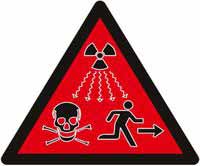 Decades Later, Sickness Among Airmen After a Hydrogen Bomb Accident, NYT, by DAVE PHILIPPSJUNE 19, 2016 “….. Tests Thrown Out During the cleanup, a medical team gathered more than 1,500 urine samples from the cleanup crew to calculate how much plutonium they were absorbing. The higher the level in the samples, the greater the health hazard.
The records of those tests remain perhaps the most prominent artifact from the cleanup. They show about only 10 of the men absorbed more than the allowed safe dose, and the rest of the 1,500 responders were not harmed. The Air Force today relies on the results to argue that the men were never harmed by radiation. But the men who actually did the testing say the results are deeply flawed and are of little use in determining who was exposed.
“Did we follow protocol? Hell, no. We had neither the time nor the equipment,” said Victor B. Skaar, now 79, who worked on the testing team. The formula for determining the contamination level required collecting urine for 12 hours, but he said he was able to get only a single sample from many men. And others, he said, were never tested at all.
He sent samples to the Air Force’s chief of radiation testing, Dr. Lawrence T. Odland, who started seeing alarmingly high results. Dr. Odland decided the extreme levels did not indicate a true health threat, but were caused by plutonium loose in the camp that contaminated the men’s hands, their clothes and everything else. He threw out about 1,000 samples — 67 percent of the results — including all samples from the first days after the blasts when exposure was probably highest.
Now 94 and living in a rambling Victorian house in Hillsboro, Ohio, where a photo from the Greenland crash hangs in his hall, Dr. Odland questioned his decision.
“We had no way of knowing what was from contamination and what was from inhalation,” he said. “Was the world ending or was everything fine? I just had to make a call.”
He said he never got accurate results for hundreds of men who may have been contaminated. In addition, he soon realized plutonium lodged in the lungs could not always be detected in veterans’ urine, and men with clean samples might still be contaminated.
“It’s sad, sure, it’s sad,” he said. “But what can you do? You can’t take the plutonium out; you can’t cure the cancer. All you can do is bow your head and say you are sorry.”
Monitoring Program Killed
Convinced that the urine samples were inadequate, Dr. Odland persuaded the Air Force in 1966 to set up a permanent “Plutonium Deposition Registry Board” to monitor the men for life.
Experts from the Air Force, Army, Navy, Veterans Administration (now the Department of Veterans Affairs) and Atomic Energy Commission met to establish the program shortly after the cleanup. In welcoming remarks, the Air Force general in charge said the program was “essential” and following the men to their graves would provide “urgently needed data.”
The organizers proposed not notifying troops of their radiation exposure and keeping details of testing out of medical records, according to minutes of the meeting, out of concern notifying them could “set a stage for legal action.”
The plan was to have Dr. Odland’s staff follow the men. Within months, though, he had hit a wall.
“He is not able to get the support from the Department of Defense to go after the remaining people or set up a real registry because of the sleeping-dog policy,” an Atomic Energy Commission memo from 1967 noted.
“The sleeping dog policy? It was to leave it alone. Let it lie. I didn’t agree. Hell no, I didn’t agree,” Dr. Odland said. “Everyone decided we should watch these guys, take care of them. And then from somewhere up high they decided it was better to get rid of it.”
Dr. Odland did not know who gave the order to terminate the program, but said since the board included all the military branches and the veterans agency, it likely came from top-level officials.
The Air Force officially dismantled the program in 1968. The “permanent” board had met just once…….. http://www.nytimes.com/2016/06/20/us/decades-later-sickness-among-airmen-after-a-hydrogen-bomb-accident.html
No comments yet.
1 This Month

of the week – Shut Down Drone Warfare!


Tell the Ukrainian Government to Drop Prosecution of Peace Activist Yurii Sheliazhenko

Petition to revoke the licensing of the Near Surface Nuclear Disposal Facility (NSDF) at Chalk River. https://www.ourcommons.ca/petitions/en/Petition/Details?Petition=e-7247
To see nuclear-related stories in greater depth and intensity – go to https://nuclearinformation.wordpress.com
-
Archives
- March 2026 (244)
- February 2026 (268)
- January 2026 (308)
- December 2025 (358)
- November 2025 (359)
- October 2025 (376)
- September 2025 (257)
- August 2025 (319)
- July 2025 (230)
- June 2025 (348)
- May 2025 (261)
- April 2025 (305)
-
Categories
- 1
- 1 NUCLEAR ISSUES
- business and costs
- climate change
- culture and arts
- ENERGY
- environment
- health
- history
- indigenous issues
- Legal
- marketing of nuclear
- media
- opposition to nuclear
- PERSONAL STORIES
- politics
- politics international
- Religion and ethics
- safety
- secrets,lies and civil liberties
- spinbuster
- technology
- Uranium
- wastes
- weapons and war
- Women
- 2 WORLD
- ACTION
- AFRICA
- Atrocities
- AUSTRALIA
- Christina's notes
- Christina's themes
- culture and arts
- Events
- Fuk 2022
- Fuk 2023
- Fukushima 2017
- Fukushima 2018
- fukushima 2019
- Fukushima 2020
- Fukushima 2021
- general
- global warming
- Humour (God we need it)
- Nuclear
- RARE EARTHS
- Reference
- resources – print
- Resources -audiovicual
- Weekly Newsletter
- World
- World Nuclear
- YouTube
-
RSS
Entries RSS
Comments RSS
 nuclear-news
Leave a comment