Probability of a big nuclear accident within the next 10 years
The Chances of Another Chernobyl Before 2050? 50%, Say Safety Specialists
And there’s a 50:50 chance of a Three Mile Island-scale disaster in the next 10 years, according to the largest statistical analysis of nuclear accidents ever undertaken. MIT Technology Review April 17, 2015 Given that most countries with nuclear power intend to keep their reactors running and that many new reactors are planned, an important goal is to better understand the nature of risk in the nuclear industry. What, for example, is the likelihood of another Chernobyl in the next few years?
Today, we get an answer thanks to the work of Spencer Wheatley and Didier Sornette at ETH Zurich in Switzerland and Benjamin Sovacool at Aarhus University in Denmark. These guys have compiled the most comprehensive list of nuclear accidents ever created and used it to calculate the likelihood of other accidents in future.
Their worrying conclusion is that the chances are 50:50 that a major nuclear disaster will occur somewhere in the world before 2050. “There is a 50 per cent chance that a Chernobyl event (or larger) occurs in the next 27 years,” they conclude.

The nuclear industry has long been criticised for its over-confident attitude to risk. But truly independent analyses are few and far between, partly because much of the data on accidents is compiled by the nuclear industry itself, which is reluctant to share it.
The International Atomic Energy Agency rates accidents using a system called the International Nuclear Event Scale, which is related to the amount of radiation released. However, the Agency does not publish a historical database of these accidents, probably because it has a dual role of both regulating the nuclear industry and promoting it.
So it has fallen to others to compile lists of accidents, the most comprehensive of which contains details of 102 events. (By comparison there are 72 events that have a rating on the International Nuclear Event Scale.)
Wheatley and co have significantly increased this number. They refrain from using the data from the International Atomic Energy Agency and compile their own list instead……..
The resulting list ranks 174 accidents between 1946 and 2014 and includes their date, location, the monetary cost in U.S. dollars, and the rating where available on the International Nuclear Event Scale and on another well-known scale called the Nuclear Accident Magnitude Scale.
The top five accidents ranked by monetary cost are the Fukushima accident in March 2011, the Chernobyl explosion in April 1986, a fire at the Tsuruga nuclear plant in December 1995, a fire at Rocky Flats nuclear weapons plant in September 1957 and an incident in March 1955 at Sellafield, then known as Windscale, two years before the infamous fire at the facility. Indeed, Sellafield appears five times in the list of the top 15 of most expensive nuclear accidents.
The new database contains 75 percent more entries than the most comprehensive list up until now. And this extra data significantly improves the kind of statistical analysis that can be done.
Wheatley and co take full advantage of this. They say for a start that the new database reveals just how poor the International Nuclear Event Scale actually is. For that to be consistent, the Fukushima disaster would need to be rated at 10 or 11, rather than at the current maximum level of 7, they say…….
These kinds of large unexpected events are known as dragon king events and particularly difficult to analyse because they follow this different distribution, have unforeseen causes, and are few in number.
Nevertheless, Wheatley and co say their data suggests that the nuclear industry remains vulnerable dragon king events. “There is a 50% chance that a Fukushima event (or larger) occurs in the next 50 years,” they say……
The team calculate that a Chernobyl-scale event, the most severe in terms of radiation release, is as likely as not in the next 27 years. And they say a Three Mile Island event in the next 10 years has a probability of 50 percent……
Wheatley and co’s work suggests that a Chernobyl-scale accident is worryingly likely to occur within the working lifetime of the reactors now being built. And when that happens, a once obscure place will enter the lexicon as a synonym for catastrophe, just like Chernobyl, Windscale and Fukushima.
These risks will have to be carefully weighed against the advantages. The question for engineers, policy makers and the general public alike is whether that risk is worth taking, given what’s at stake.
Ref: arxiv.org/abs/1504.02380 : Of Disasters and Dragon Kings: A Statistical Analysis of Nuclear Power Incidents & Accidents https://www.technologyreview.com/s/536886/the-chances-of-another-chernobyl-before-2050-50-say-safety-specialists/
Once more with fervour – nuclear marketing: theme for June 2016
The nuclear lobby is playing a high stakes gamble – marketing nuclear power with renewed fervour. It’s a gamble, because they’ve gotta sell it off fast, before the next radioactive catastrophe.
INTERNAL Nuclear Marketing is going on like crazy, especially in the USA, They’re still toting nuclear as a climate change action – a patently false story. They push that for Big Nuclear, and then they push a new set of lies for New Little Nuclear
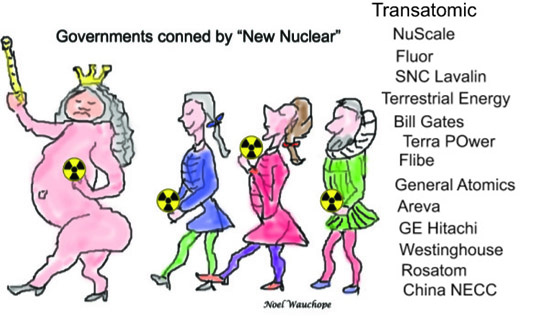
EXTERNAL Nuclear marketing. Any country that already has this unsafe, uneconomic, trash-producing technology is mad keen to salvage the drastic financial nuclear situation – by flogging their nuclear technology off to other countries.

UK: Secrecy over nuclear waste plans regarding EDF’s Hinkley Point deal
 EDF’s Hinkley Point deal over radioactive waste sparks anger https://www.theguardian.com/business/2016/may/30/edf-hinkley-point-deal-radioactive-waste-sparks-anger?utm_source=esp&utm_medium=Email&utm_campaign=GU+Today+main+NEW+H+categories&utm_term=174833&subid=12125&CMP=EMCNEWEML6619I2
Expert criticises ministers over refusal to disclose agreement with energy supplier for planned nuclear plant Guardian, Terry Macalister, 31 May 16, A furious row has broken out after the Department of Energy and Climate Change (DECC) refused to disclose the arrangement with EDF for dealing with radioactive waste at the planned Hinkley Point C nuclear plant.
The information commissioner’s office has turned down a freedom of information (FoI) request for state aid arrangements between the UK and the European commission to be made public.
The FoI complainant, David Lowry, has launched an appeal, claiming it is in the public interest for British citizens to be able to judge whether their government had made the right decision about the new reactors in Somerset.
Lowry, a British-based senior research fellow with the Institute for Resource and Security Studies in the US, said: “I do not believe the balance of judgment should be in favour of a foreign company, EDF Energy, who will potentially make huge multibillion-pound financial gain from the continued non-disclosure, and hence non scrutiny, over myself as a British tax and electricity bill payer.”
The government said that anyone building new reactors in Britain must manage and pay for the cost of handling waste products, unlike the existing situation where all radioactive materials are effectively dealt with through the public purse via the Nuclear Decommissioning Authority.
However, although the operator must agree to take responsibility for the spent fuel and other radioactive waste, the cost is expected to be passed on to the domestic electricity user through higher bills.
Under the new arrangements, the prospective nuclear operators must enter into a waste transfer contract (WTC). Those contracts, like the one covering Hinkley, must be submitted for scrutiny by the EC under its state aid rules. It is the pricing methodology of the WTC that Lowry wished to review and which remains under wraps.
Greenpeace said Lowry raised critical issues that went to the heart of whether the £18.5bn project was good or bad value for the taxpayer and British energy consumers.
John Sauven, the executive director of Greenpeace, said: “The government has repeatedly said that Hinkley is great news for the British public and our energy security. But they refuse to back this up with hard evidence. In fact, DECC is incredibly cagey and is failing to answer questions on where the dangerous radioactive waste will go or how much Hinkley will cost us.
“If Hinkley is such a good deal, it should be no problem for the government to release the information to prove it. Their failure to do so leaves us to believe that their assumptions are correct – it’s a terrible deal for bill payers and they simply don’t know what to do with the nuclear waste.”
DECC turned down the original request under regulation 12(5)(a) of the Environmental Information Regulations 2004 arguing, “disclosure would adversely affect international relations, defence, national security or public safety”.
This argument was accepted by the information commissioner who believed that disclosure of the state aid discussions with the EC “would adversely affect the relationship between the (UK) government and the commission’s ability to work effectively together”.
Lowry said he thought the real reason the government did not want to disclose the information was to save ministers from embarrassment. “I think the concern is if the truth were to come out with documents being made public would adversely affect the credibility of the government submissions as their threadbare content would be laid bare for all to see,” he said.
DECC declined to comment, saying it was a matter for the information commissioner.
Growing anxiety over the safety of Indian Point Nuclear Power Plant
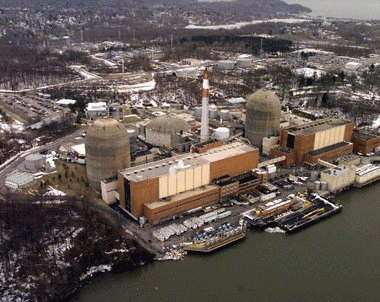 Concern Mounts For Indian Point Nuclear Power Plant http://www.ladailypost.com/content/concern-mounts-indian-point-nuclear-power-plant by Carol A. Clark on May 31, 2016 SECURITY News:
Located 26 miles from New York City, in the right weather conditions a radiation release at Indian Point nuclear power plant could reach Times Square in as little as 90 minutes, making evacuation of New York City impossible and rendering the area uninhabitable for a long time.
Critics of the agiing plant say that the disappearance and disintegration of more than 1 in 4 critical bolts holding the Indian Point nuclear reactor cooling system together is far more serious than owner, Entergy, admits.
Friends of the Earth (FOE) filed an emergency petition with the Nuclear Regulatory Commission (NRC) May 24, calling for immediate action by the agency. The filing demands keeping reactor 2 offline until theNRC certifies that the problem is fully diagnosed and fixed, and that the reactor is safe to operate. It also calls for an immediate shutdown to inspect reactor 3 to ensure that the reactor’s bolts have not also disintegrated. Reactor 3 is the twin of reactor 2, but Entergy has rejected inspecting it until 2017 despite it being the same design and almost as old. Friends of the Earth also released an expert report detailing the breadth and depth of the bolt problem.
Although critical to the core cooling system (essential to preventing a nuclear meltdown), bolts securing the plates that channel cooling water through the reactor core are broken, degraded or missing in reactor 2. FOE says that Entergy is pushing simply to replace the bolts and restart the reactor in June—in time for the profitable peak summer energy season. The company has said that it will conduct a root cause analysis of why the bolts broke or disappeared but are conducting the repairs without completing such a comprehensive review.
“This is a matter of common sense denied: if a machine breaks, you have to figure out what is wrong and then fix it,” said Damon Moglen of Friends of the Earth. “Instead, at Indian Point, Entergy has decided that the priority is to get the damaged reactor up and running by summer to protect their profits. They are making a theoretical fix to a serious but undiagnosed problem. This is a recipe for disaster.”
The technical report, also released by Friends of the Earth, concludes that the more than 25 percent failure rate of the bolts is extraordinarily high and appears to be unprecedented in the history of the global nuclear power industry. Without a full root cause analysis approved by the NRC, the report warns that there can be no assurance that the remaining old bolts will not fail or that simply replacing bolts will fix the problem.
“Only a utility that puts profits ahead of public safety would resume running this nuclear reactor without an “all clear” from the federal regulator,” said Dave Freeman, who was the head of NYPA in the mid-1990s, and operated the nuclear reactors at that time.
FOE says that just as the Space Shuttle Challenger was brought down by a seemingly minor faulty O-ring, Indian Point is in danger from the damaged and missing bolts. Located twenty-six miles from New York City,in the right weather conditions a radiation release at Indian Point could reach Times Square in as little as ninety minutes, making evacuation of New York City impossible and rendering the area uninhabitable for a long time.
The Indian Point reactors’ licenses expired in 2013 and 2015, respectively, and the plant is operating beyond its 40-year life span. The NRC must intervene and take immediate steps to protect the public.
Russia halts nuclear waste disposal from Ukraine

 https://www.rt.com/business/344821-russia-halts-nuclear-waste-disposal/ 30 May, 2016 Russia’s state nuclear agency Rosatom has stopped removing spent nuclear fuel from Ukraine because bills have been unpaid, said nuclear decommissioning executive Oleg Kryukov. There are problems related to Ukraine’s payments,” he said, adding that the first shipment of nuclear waste for disposal has been postponed.
Kryukov affirmed the agency plans to continue disposing of nuclear waste already in Russia for processing.
“We have a contract with Ukraine on storing spent nuclear fuel and its recycling. We are going to continue with the contract, although the Ukrainian side plans to build its own warehouse for spent fuel without recycling,” he said on the sidelines of the Atomexpo-2016 forum.
Under the agreement signed between two countries in 1993, Russia supplies reactor fuel to Ukraine and takes spent fuel rods for storage and reprocessing.
A year ago, Ukraine said it planned to invest $25 million in a centralized spent nuclear fuel storage facility at the Chernobyl nuclear power plant.
Kiev is currently trying to attract Western investors to kick-start the project.
Russia’s backyard a hotbed of nuclear danger – Armenia
 Dangerous Nuclear Security Failures in Russia’s Backyard Armenia is gambling with nuclear safety. National Interest Petra Posega May 30, 2016 Nuclear security is seemingly at the forefront of global attention, but the large framework of international safeguards is increasingly perceived as a toothless tiger. In the contemporary age, where asymmetric threats to security are among the most dangerous, the time is nigh to mitigate the risk of rogue actors having potential access to materials that are necessary to develop nuclear weapons.
Nowhere is this urgency more pivotal than in already turbulent areas, such as the South Caucasus. With many geopolitical instabilities, lasting for decades with no completely bulletproof conflict resolution process in place, adding the threat of potential nuclear weapons means creating a house of cards that can cause a complete collapse of regional peace and stability. That is precisely why Armenia’s recently uncovered recurring actions toward the goal of building its own nuclear capacity must be addressed more seriously. They should also attract a bolder response to ensure safety of the region is sustained.
According to a report by the Vienna-based nuclear watchdog the International Atomic Energy Agency (IAEA), Armenia has established a record of illegal trafficking in nuclear and other radioactive materials. There have been several serious incidents spanning from 1999 onward. A large number of reported incidents has occurred on the country’s border with Georgia, leading the IAEA to conclude there is high probability that a so-called Armenian route does in fact exist. There is a further evidence to support this assertion. An unusually high number of Armenians have been caught in nuclear trafficking activities. Additionally, some of the incidents that made their way into the official reports suggest that the main focus of trafficking activities is the smuggling of materials that could be used for nuclear weapons. There were also reports suggesting the trafficking of other radioactive materials that could be used for alternate purposes, such as building a so-called dirty bomb. Since the stakes are always high with nuclear weapons, this threat must not be underrated and dismissed too easily……..
It is worrying that some of the nuclear material that was trying to find its way into Armenia through South Ossetia has been, at least according to some reports, traced back to Russian nuclear facilities. This is of course no small wonder, since Russia is the official supplier of nuclear fuel for the only nuclear power plant in Armenia—the Metsamor nuclear plant, which supplies roughly 40 percent of the country’s electricity.
But the reactor itself demonstrates another facet of the nuclear threats that Armenia poses, namely, nuclear safety threats. The reactor is extremely outdated, and there are no proper safeguards and safety mechanisms installed to ensure adequate monitoring of its operations and recognition of potential faults in the system.
The world just marked the thirtieth anniversary of the devastating Chernobyl accident, and it is unsettling to know there is high risk of a similar disaster in an adjacent area. …. http://nationalinterest.org/feature/dangerous-nuclear-security-failures-russias-backyard-16392?page=2
North Korea: Ballistic missile launch fails for the fourth time in recent months, South Korea says
 North Korea appears to have tried and failed with a fresh ballistic missile launch in violation of existing UN resolutions, South Korea’s Defence Ministry said.
Key points:
- The fourth recent attempt to launch the North’s medium-range Musudan missile has failed
- Japan had readied naval destroyers and anti-ballistic missile batteries, media said
- G7 leaders demanded last week that the North refrain from provocative action
Seoul said the missile test took place at 6:30am AEST on Tuesday near the eastern port city of Wonsan.
“The attempted missile launch … is believed to have failed,” a ministry spokesman said……..http://www.abc.net.au/news/2016-05-31/north-korea-ballistic-missile-launch-fails-south-korea-says/7461280
Time to call a halt to UK’s embarrassing Hinkley nuclear debacle
 Leave Hinkley to the hedgehogs. This debacle needs to be taken in hand, Guardian 31 May 16
Environmental protections on EDF’s troubled Somerset construction site are excellent, apparently. Very little else about the project is ave you heard about the terrific bat houses and hedgehog tunnels down at Hinkley Point in Somerset? Energy minister Andrea Leadsom has been to inspect them herself and raved about them last week to a select committee of MPs. They were evidence, she suggested, of the depth of commitment of French firm EDF to the £18bn nuclear power station due to be built on the site.
Well, maybe. Talk of bats and hedgehogs at least provided some relief from the familiar crop of Hinkley news. French economy minister Emmanuel Macron said he was “fully behind” the project but EDF’s unions confirmed that they weren’t. Jean-Luc Magnaval, secretary of EDF’s workers’ committee, told the BBC that the unions “have reservations about several aspects of the project: organisation, supply chain, installation and procurement”. That’s a long list.
Meanwhile, EDF Energy chief executive Vincent de Rivaz, appearing before the same committee as Leadsom, had to adopt a humbler tone than on his last outing two months ago. Then he had promised a final investment decision “very soon”; this time he wouldn’t speculate about a date.
This farce – which has been running since last October, when the final sign-off was due within weeks – could yet roll on and on. The UK government is disinclined to set a deadline: it’s a “commercial decision” for EDF.
Meanwhile, the current French government could have a radically different shape this time next year – there is a presidential election in 2017 and the incumbent, François Hollande, is the least popular leader in modern French history. French union opposition to Hinkley Point appears entrenched and the workers’ representatives have six seats on an 18-strong board.
In theory, management and government can proceed regardless; but to embark on an £18bn venture with a divided boardroom would invite trouble down the line. That is especially so when you remember EDF’s last finance director, Thomas Piquemal, resigned over concerns that Hinkley could threaten the company’s future.
The best thing the UK government could do at this point is to stop and consider whether the obstacles facing Hinkley are simply too big. ……
there are other ways to meet the legally binding emissions targets. Offshore wind is expanding with no Hinkley-style fuss, and its costs are falling. More importantly for the UK’s requirement for secure baseload supplies, other builders are waiting to pursue projects that use different nuclear technology. In theory, planning and appraisal can continue in parallel; in practice, confidence in the UK’s commitment to its new-nuclear programme will drain away.
There is not – yet – a crisis in UK energy policy because it is always possible to build a few gas-fired stations to avert an emergency. But the Hinkley show is becoming an embarrassment. The project is expensive, uses unproven technology and its builder is a disunited and over-borrowed company that requires constant financial assurances from an ever-changing cast of politicians. The UK government should set EDF a deadline and be ready to enforce it. We can do better – much better – than Hinkley. https://www.theguardian.com/business/2016/may/29/hinkley-point-c-leave-hedgehogs-nuclear-debacle
New York: opposition to subsidies for nuclear power stations
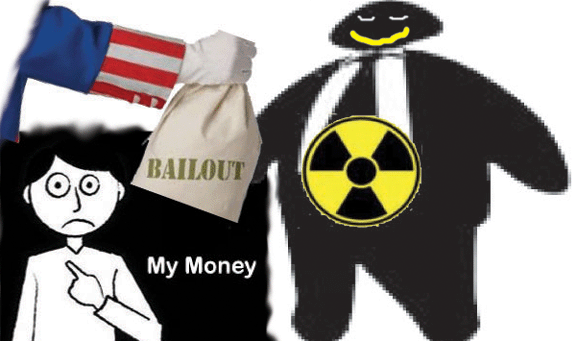 Nuclear Plant Subsidies Anger Clean Energy Advocates, WSHU 1 June 16 By INNOVATION TRAIL Clean energy activists in New York say the state should not subsidize the nuclear energy industry.
The activists spoke at a Public Service Commission hearing last week on Governor Andrew Cuomo’s proposed energy plan. The goal is to have New York generate half of its energy from renewable sources, like wind and solar power, by 2030.
It would also require utilities to buy power from nuclear plants.
Peter Swords, with the Nuclear Free World Committee, says subsidizing nuclear power undermines the state’s green energy industry.
“We have this fast growing green energy industry here. A lot more jobs are created in retrofitting in solar and renewables per million dollars than in nuclear energy.”
The activists say the subsidies are designed to shield nuclear companies from competition with lower-cost energy sources. …..http://wshu.org/post/nuclear-plant-subsidies-anger-clean-energy-advocates
Nuclear concerns hold back Apple data centre plans in Ireland
Alice MacGregor Tue 31 May 2016 Apple is being questioned over its site selection for a new Irish data centre, with opponents arguing that the proposed €850 million (approx. £648 million) server farm would be located too close to nuclear facilities in Wales and Cumbria.
Oscar Gonzalez, Apple’s head of data centre site selection, came against arguments from a group including engineer Allan Daly at an oral hearing last week. Daly raised the issue that Apple requires that new centres be at least 320km from any nuclear facility in the UK – and was concerned that the proposed Irish site would not meet this specification……..https://thestack.com/data-centre/2016/05/31/nuclear-concerns-hold-back-apple-data-centre-plans-in-ireland/
1 This Month

of the week – Shut Down Drone Warfare!


Tell the Ukrainian Government to Drop Prosecution of Peace Activist Yurii Sheliazhenko

Petition to revoke the licensing of the Near Surface Nuclear Disposal Facility (NSDF) at Chalk River. https://www.ourcommons.ca/petitions/en/Petition/Details?Petition=e-7247
To see nuclear-related stories in greater depth and intensity – go to https://nuclearinformation.wordpress.com
-
Archives
- April 2026 (91)
- March 2026 (251)
- February 2026 (268)
- January 2026 (308)
- December 2025 (358)
- November 2025 (359)
- October 2025 (376)
- September 2025 (257)
- August 2025 (319)
- July 2025 (230)
- June 2025 (348)
- May 2025 (261)
-
Categories
- 1
- 1 NUCLEAR ISSUES
- business and costs
- climate change
- culture and arts
- ENERGY
- environment
- health
- history
- indigenous issues
- Legal
- marketing of nuclear
- media
- opposition to nuclear
- PERSONAL STORIES
- politics
- politics international
- Religion and ethics
- safety
- secrets,lies and civil liberties
- spinbuster
- technology
- Uranium
- wastes
- weapons and war
- Women
- 2 WORLD
- ACTION
- AFRICA
- Atrocities
- AUSTRALIA
- Christina's notes
- Christina's themes
- culture and arts
- Events
- Fuk 2022
- Fuk 2023
- Fukushima 2017
- Fukushima 2018
- fukushima 2019
- Fukushima 2020
- Fukushima 2021
- general
- global warming
- Humour (God we need it)
- Nuclear
- RARE EARTHS
- Reference
- resources – print
- Resources -audiovicual
- Weekly Newsletter
- World
- World Nuclear
- YouTube
-
RSS
Entries RSS
Comments RSS
 nuclear-news