April 1 Energy News

Science and Technology:
¶ Researchers have shown climate change to have similar, significant impacts on bird populations in large, distant areas of the world. Their study used population-predicting models and three decades of field data, gathered by bird-watching volunteers. The findings are published in the journal Science. [BBC]
 The American robin has declined in some southern states, but increased further north. US Fish and Wildlife Service
World:
¶ A total of 57.7% of electricity consumed in Scotland was renewably generated last year, up 7.9 percentage points on 2014, according to provisional UK government statistics. Scottish politicians and green groups hailed the figure, but warned further progress would be hindered by UK policy. [Energy Voice]
¶ According to new figures published by the UK’s Department of Energy and Climate Change, 2015 saw renewable energy generate a record 24.7% of the country’s electricity, an increase of 5.6%…
View original post 613 more words
UK-French-Spanish Origin Chilean Spent Nuclear Fuel Dumped on America at US Taxpayer Expense – The Opening Round of Obama’s “Nuclear Security” Plan

The first known import of foreign nuclear waste from foreign origin fuel into the USA, to be dumped there, seems to have been from Chile. Tom D’Agostino, then of the NSSA and now of Fluor, signed a “Record of Decision” making this possible in January of 2009. Thus, the new category of “Gap” nuclear materials was born. “Gap” is US government euphemism for the nuclear garbage that no one else wants and which never had anything to do with the USA (meaning the original fuel, etc. came from elsewhere).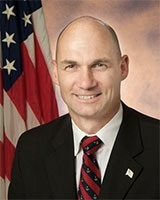
Almost certainly eligible for Italian-EU citizenship will Tom D’Agostino be sorry once he finds that there is rarely air conditioning in Italy? And that Italy itself has been poisoned by German nuclear waste? No air conditioning in hell either.
Chile actually has a much lower risk of terrorist attack than the USA. What’s more, there was an 8.8 earthquake during the…
View original post 4,161 more words
St Louis radioactive landfill – West Lake Landfill Moms Meet with Head of EPA
Kevin Killeen (@KMOXKilleen)March 30, 2016 ST. LOUIS (KMOX) – Members of the West Lake Landfill Moms group meet with the head of the EPA in Washington, D.C., calling for a buyout of homes near the landfill, and transfer of the site from the EPA to the Army Corps of Engineers.
In a phone interview afterwards, Dawn Chapman of Just Moms described the meeting with EPA Administrator Gina McCarthy as positive and constructive.
“It was really emotional talking to her, sitting in front of a Presidential appointee who can with the snap of her finger change so many people’s lives,” Chapman said.
Chapman says McCarthy made no promises about supporting federal buyouts for homeowners close to the landfill, but indicated she would evaluate the request.
The other action item sought–transfer of the West Lake Landfill to the Army Corps of Engineers–remains stalled in a House committee, after the plan passed the Senate.
After the meeting with McCarthy, Chapman says the group, along with a representative of Missouri Attorney General Chris Koster, met for about an hour with the White House Council on Environmental Quality.
Chapman says the discussion centered on widespread frustration over “EPA inaction ” on the site, and the desire to give the site to the Army Corps………http://stlouis.cbslocal.com/2016/03/30/west-lake-landfill-moms-meet-with-head-of-epa/
Transatlantic flights with nuclear waste cargo – an unacceptable danger
“Nuclear waste should be dealt with as close to where it is produced as possible rather than risking transporting it in ships or planes. This waste will remain dangerous for tens of thousands of years. The consequences of an accident during transit would be horrific.”
the proposed shipment sent an “open invitation to terrorists keen to get their hands on this prime terrorist material”.

Campaigners condemn UK Government for playing transatlantic nuclear ping-pong,
Herald Scotland, MICHAEL SETTLE, 31 Mar 16 CAMPAIGNERS have denounced the UK Government’s decision to play “transatlantic nuclear ping-pong” by agreeing a deal to transport 700 kilograms of weapons-grade uranium fuel from Dounreay in Caithness to the US.
The SNP’s Paul Monaghan, the local MP, said he too was deeply concerned by the development and is to demand assurances from David Cameron about the safety of the transportation, which he believes will involve up to nine flights from Wick airport using huge American c-130 Galaxy aircraft.
“Wick airport is not built for that kind of aircraft. I’m very concerned about the prospect of the planes flying over the town,” declared the backbencher.
Mr Monaghan stressed that the highly-enriched uranium fuel, which he said had originated from the former soviet state of Georgia, could only be used for nuclear weapons.
Claiming the Prime Minister had “obfuscated” in his replies when asked previously about the planned shipment of nuclear fuel from Dounreay to the US, the Nationalist MP said the safety of local people was his “paramount concern” and that the UK Government, through its lack of clarity, was “abrogating its responsibility to the people of Scotland”.
Mr Cameron is due formally to announce the deal when he attends an international nuclear security summit in Washington DC tomorrow. It will involve the largest ever shipment of radioactive material from the UK to America, which in turn will send a different form of the nuclear element to Euratom, the European atomic agency, for conversion in France into medical isotopes to be used in European hospitals for the diagnosis and treatment of cancer.
A UK Government source said: “It’s a win-win; we get rid of waste and we get back something that will help us to fight cancer.”
But Richard Dixon, director of Friends of the Earth Scotland, said: “Only the nuclear industry could think it was a good idea to risk playing ping pong with large quantities of one of the most dangerous materials on the planet across the Atlantic.
He added: “Nuclear waste should be dealt with as close to where it is produced as possible rather than risking transporting it in ships or planes. This waste will remain dangerous for tens of thousands of years. The consequences of an accident during transit would be horrific.”
John Finnie, justice spokesman for the Scottish Greens, dismissed the UK Government’s attempt to present the proposal to send dangerous nuclear waste across the Atlantic as helping in the fight against cancer as “at best misleading and at worst cynical”.
He added: “Moving such a large amount of toxic waste shows callous disregard for the safety of people in the Highlands. There must be better ways to fight cancer than sending dangerous uranium on an 11,000 kilometre round trip.”
Whitehall has, for security reasons, not confirmed the details of the transportation or the timescale.
Last year, the Sunday Herald broke the story about a “secret plan” to ship nuclear material from Dounreay to America.
The report said the plan was for nearly five kilograms of enriched uranium to be transported by sea from Caithness to the US Government’s nuclear complex at Savannah River in South Carolina.
The material was said to have come from a research institute in Mtskheta, some six miles from the Georgian capital, Tbilisi, in a secretive US operation codenamed Auburn Endeavour in April 1998. Washington was said to have been worried at the time that it could have fallen into the hands of Chechen gangs or Iran.
However, the proposed UK Government plan is to ship not five kilograms but 700kg or more than 110 stones of the nuclear material.
At the time of “secret plan” report one anti-nuclear campaigner warned the proposed shipment sent an “open invitation to terrorists keen to get their hands on this prime terrorist material”……..http://www.heraldscotland.com/news/14395623.Campaigners_condemn_UK_Government_for_playing_transatlantic_nuclear_ping_pong/
Both Coal and Nuclear Electricity Generation Will Be Severely Affected By Hotter Climate
 HOW A HOTTER CLIMATE DESTROYS THERMAL ELECTRICITY GENERATION Earth Techling, BY SUSAN KRAEMER MARCH 30, 2016
Both hydropower and conventional thermal combustion electricity is depleted in a hotter new climate.
A new paper published at Nature Climate Change, Power-generation system vulnerability and adaptation to changes in climate and water resources provides a comprehensive look at how two categories of power generation will be impacted by climate change on a global level.
The study looked at both thermal power stations (that depend on the combustion of fossil fuels, biomass or uranium), and also at hydropower systems.
Hydropower relies directly on abundant flow in falling water from mountain snow melt, while each type of thermal energy requires a lot of water to boil to make steam to drive turbines, and water to cool off the boiled water as it is discharged.
 Unlike solar PV and wind power, thermal electric power stations are totally dependent on adequate water supplies, at cool water temperatures

The estimates in the study are based on an assumption that 80% of the world’s electricity is generated thermally – coal, gas, nuclear, biomass – with an additional 17% generated using hydropower. (Only 3% of global energy comes from PV and wind, according to the study*.)
(*The figures originated from a 2009 paper from the IEA – so it’s based on 2008 data. The IEA has been fairly notorious for undercounting renewables for some time, as the adoption rate has increased exponentially, so in the future, it is unlikely that 80% will still be thermal.)
As of now, however, of all water taken from rivers and lakes; the percentage used in thermal power generation amounts to about 50% in the UK and about 40% in the US.
With so much electricity generation so dependent on water, the study shows just how vulnerable is the world’s combustion-based energy supply in a hotter, drier world, when water will be warmer and droughts and heat waves longer and more frequent in many regions.
The paper is one of several that look at the impact of a hotter climate on thermal electricity generation, between coal, gas, biomass and nuclear. Two more quantify the effects on electricity costs.
How rising temperatures cause rising cost: droughts reduce cheap hydropower
As Californians have just experienced, hotter temperatures have already begun to result in the droughts long predicted for the entire Southwest US by climate scientists as the 21st century continues to warm.
What California has just seen is that when droughts deepen, mountain reservoirs and lakes and rivers dry up, and hydropower dries up with them………
How thermal power is reduced as water temperatures increase:
The changes that higher temperatures bring not only deplete water flow, impacting hydropower, but also act to warm the water that is needed to cool discharged water from thermal power plants. This warmer water, both in rivers and the ocean, also reduces electricity production.
Because of rules governing environmental degradation, thermal plants that essentially boil water must shut down if the water used for cooling gets too warm.
Discharged water temperature is monitored to ensure that coal and nuclear plants don’t discharge water that is too hot, endangering wildlife in surrounding waterways.
But already in 2007, during a heat wave that contributed to river water reaching an astounding 90 °F, the Tennessee Valley Authority had to shut down a nuclear plant due to hot river water in Kentucky.
During the heat wave in Europe in 2003 and 2006; 17 nuclear plants across Germany, France, Spain and Romania had to idle production or shut down entirely because the waterways normally used to cool down boiled water coming out of the electricity plants was too warm to discharge hot water into.
Shutting down or idling plants reduces generation and raises electricity prices because the lowered output of electricity results in higher prices per unit of generation
Paper assesses global costs of thermal generation in a hotter water future
In a third paper published at Norges Handelshøyskole, Electricity Prices, River Temperatures and Cooling Water Scarcity, a future of higher costs for thermal electricity is predicted as a direct result of the warmer water temperatures caused by climate change. In the longer term, these costs could become unsupportable.
The study co-author Øivind Anti Nilsen estimated that even as little as a one degree rise in average river temperatures will result in almost a 4% percent increase in electricity prices, over the course of a week.
“The analysis shows that higher temperatures lead to reduced production in power plants and hence higher electricity costs. Prices shoot up”, explained Nilsen, a co-author of the paper, and professor at the Department of Economics at Norges Handelshøyskole.
“The higher the temperature, the lower the power plant’s efficiency. Prices therefore rise in line with the temperature,” said Nilsen
“Many people who work on the effects of climate change have overlooked these price effects and their implications,” he said.
These increasing costs of climate change will be felt in the US as much as in Europe, because in the US, the thermal energy industry accounts for as much as 40% of all freshwater withdrawals, according to the US Department of Energy
This effect will only continue to increase in the future, as the world sees more frequent and hotter heat waves. Yet the world continues to build thermal plants that are dependent on a diminishing resource – cool water.
The Arabian Gulf region already has one of the highest ocean temperatures in the world, reaching above 95°F in the summer. Despite this inability to act as a cooling resource, the Arabian Gulf is to provide the cooling for two proposed nuclear plants, a 1 GW nuclear plant from a Russian manufacturer, and another much larger one, comprising four adjoined 1.4 GW units, that is made in Korea.
So, which regions will be most affected?
“In particular the US, southern South America, southern Africa, central and southern Europe, Southeast Asia and southern Australia are vulnerable regions,” said Dr Michelle van Vliet, a researcher at the International Institute for Applied Systems Analysis (IIASA) and lead author of Power-generation system vulnerability and adaptation to changes in climate and water resources.
“This is because declines in mean annual streamflow are projected combined with strong increases in water temperature under changing climate.”
One more reason to abandon thermal combustion for making electricity. http://earthtechling.com/2016/03/how-a-hotter-climate-destroys-thermal-electricity-generation/
USA and China – joint statement: both will sign Paris climate deal
 US and China to sign Paris climate deal http://www.heraldsun.com.au/news/breaking-news/us-and-china-to-sign-paris-climate-deal/news-story/94b6ac23151ca2d99645372ed0bf9269
The United States and China have confirmed that they will sign the Paris climate change agreement in New York on April 22, a move that officials hope will help the accord enter into force this year.
The world’s two biggest greenhouse gas emitters issued a joint presidential statement on Thursday in which they called on other countries to sign the accord next month “with a view to bringing the Paris Agreement into force as early as possible”.
Leaders from nearly 200 countries forged the landmark agreement to transform the world’s fossil fuel-driven economy on December 12 after four years of fraught negotiations.
But the Paris climate agreement needs at least 55 countries, representing at least 55 per cent of global emissions, to formally accede to it before it can enter into force.
Stern has stepped down from his role as the chief US climate negotiator, and will be replaced by his former deputy, Jonathan Pershing, on April 1.
United Nations Secretary-General Ban Ki-moon said earlier this month that he expected 120 or more countries would sign the accord at the April 22 ceremony at its New York headquarters.
Donald Trump and Ted Cruz agree on undoing Obama’s climate action work
 Trump, Cruz vow to undo Obama environmental work, The Hill, By Devin Henry – 03/30/16 GOP presidential candidates Donald Trump and Ted Cruz are pledging to undo several Obama administration climate efforts and block future work on global warming if elected this fall.
In responding to a survey from the American Energy Alliance, both candidates said they would undo major Obama-era Environmental Protection Agency rules on clean water and power plant carbon emissions, with Trump saying, “under my administration, all EPA rules will be reviewed.”
“The observed temperature evidence does not support the claims that carbon dioxide is dangerous,” Cruz wrote in his questionnaire.
The two said they would also reassess the Obama administration’s finding that carbon dioxide and greenhouse gases are harmful to the public. That decision is the basis for EPA rule-making on greenhouse gas emissions. …….
Both candidates have previously said they doubt the science behind climate change and have promised to undo what Obama has done on the issue. http://thehill.com/policy/energy-environment/274671-trump-cruz-vow-to-undo-obama-environmental-work
“Clean coal” technology is not working
Technology to Make Clean Energy From Coal Is Stumbling in Practice, NYT, By IAN AUSTEN MARCH 29, 2016 OTTAWA — An electrical plant on the Saskatchewan prairie was the great hope for industries that burn coal.
In the first large-scale project of its kind, the plant was equipped with a technology that promised to pluck carbon out of the utility’s exhaust and bury it underground, transforming coal into a cleaner power source. In the months after opening, the utility and the provincial government declared the project an unqualified success.
 But the $1.1 billion project is now looking like a green dream.
Known as SaskPower’s Boundary Dam 3, the project has been plagued by multiple shutdowns, has fallen way short of its emissions targets, and faces an unresolved problem with its core technology. The costs, too, have soared, requiring tens of millions of dollars in new equipment and repairs.
“At the outset, its economics were dubious,” said Cathy Sproule, a member of Saskatchewan’s legislature who released confidential internal documents about the project. “Now they’re a disaster.”……….http://www.nytimes.com/2016/03/30/business/energy-environment/technology-to-make-clean-energy-from-coal-is-stumbling-in-practice.html?_r=0
White House says Donald Trump’s nuclear policy is ‘catastrophic’,
White House says ABC News, 1 Apr 16Key points:
- Trump suggests Asian allies should develop nuclear weapons
- White House says US should focus on preventing nuclear proliferation
- Trump’s team calls abortion comments “simple misspeak”
A major nuclear summit in Washington DC is discussing the threat of terrorism and North Korea.
But it was Mr Trump’s comments raising the prospect of returning fire with a nuke if the Islamic State group was to attack the US that raised concerns.
“I’m afraid this kind of talk in an election is bluntly irresponsible and is detrimental to our and all of our allies’ security posture,” US Energy Secretary Ernest Moniz said.
The Republican frontrunner also declared that, as president, he would withdraw troops from South Korea and Japan and allow those two countries, as well as others like Saudi Arabia, to develop nukes.
It drew a scathing rebuke from the US deputy national security advisor Ben Rhodes. The entire premise of American foreign policy as it relates to nuclear weapons for the last 70 years has been focused on preventing the proliferation of nuclear weapons,” said Mr Rhodes, one of President Barack Obama’s closest aides.
“That has been the position of bipartisan administrations, of everybody who has occupied the Oval Office.
“It would be catastrophic for the United States to shift its position and indicate that we somehow support the proliferation of nuclear weapons.”……….http://www.abc.net.au/news/2016-04-01/donald-trump-white-house-says-nuclear-policy-catastrophic/7290854
Donald Trump would contemplate dropping nuclear bomb on Europe
Donald Trump Has Refused To Rule Out Dropping A Nuclear Weapon On Britain‘I’m not taking any cards off the table’ Ned Simons Assistant Political Editor, The Huffington Post UK , 31 Mar 16
Donald Trump has refused to rule out dropping a nuclear weapon on Europe.
In a Town Hall interview with MSNBC’s Chris Matthews on Wednesday evening, the frontrunner in the race to become the Republican president said he would be “the last one to use nuclear weapons”.
But when pressed by Matthews if he would attack Europe or the Middle East with nukes if he felt it necessary, Trump said he was “not going to take it off the table”.
Matthews, who was clearly astounded by Trump’s comments, told the Republican: “The trouble is when you said that, the whole world, David Cameron in Britain heard it, the Japanese who we bombed in 1945 heard it, they are hearing a guy running for president of the United States maybe using nuclear weapons. Nobody wants to hear that about an American president.”
Trump asked the MSNBC host in reply: “Then why are we making them?”
Democratic frontrunner Hillary Clinton told MSNBC’s Rachel Maddow on Wednesday Trump was “in over his head” when it came to foreign policy with his “national security ad-libbing”.
Clinton said she did not think Trump “even studies or cares to understand” foreign policy……..http://www.huffingtonpost.co.uk/entry/donald-trump-has-refused-to-rule-out-dropping-a-nuclear-weapon-on-britain_uk_56fcd9cce4b0c5bd919ab4de
Four dangers overlooked in nuclear security summit
Overlooked –
- Accidental explosions…..
- Many other nuclear thefts or sabotage……
- Military stocks of nuclear fuel plus civilian plutonium…..
- These efforts don’t include plutonium reprocessing
 Four dangers the nuclear talks will overlook http://www.usatoday.com/story/news/world/2016/03/30/what-nuclear-summit-discuss-and-overlook-nuclear-terrorism/82436156/
Here are four nuclear security vulnerabilities they will discuss Thursday and Friday — and four that are not on the agenda:
1.TERRORISM AND DIRTY BOMBS
What they’ll discuss: The recent uptick in terrorist attacks in Europe have made world leaders more worried about terrorists using conventional bombs combined with nuclear material to explode radioactive “dirty bombs” that could cause injuries, panic and economic damage over a large area.
The leaders will discuss safeguards at facilities such as hospitals and research labs that use nuclear materials, ways to improve intelligence to better detect plots to use dirty bombs, and responses to a potential dirty-bomb attack, said Bruce Blair, co-founder of Global Zero, the international movement for eliminating nuclear weapons.
Overlooked: Accidental explosions. More recent nuclear weapons countries, such as India, Pakistan and North Korea, are decades behind the United States and Russia in terms of safeguarding their nuclear weapons in case of a mishap, Blair said. If a weapon falls from an aircraft that is crashing and is hit by an explosive force, “chances are there’d be a chain reaction and the weapons would explode,” he said.
Also, those countries along with China are moving toward a state of nuclear readiness that raises the risk of accidental nuclear launches and detonations. “That whole agenda is being ignored,” Blair said.
2. NUCLEAR THEFT
What they’ll discuss: The summit will address the possible theft of highly enriched uranium and plutonium in civilian facilities, such as research reactors, that can be used to fuel a nuclear device, Blair said.
Previous summits have focused on converting nuclear reactors to use less harmful low-enriched uranium or sending it back to Russia or the United States, where it would be more secure.
Overlooked: Many other nuclear thefts or sabotage, such as rogue military insiders working with outside groups to steal nuclear material or detonate a device, Blair said.
3. NUCLEAR MATERIAL UNDER CIVILIAN CONTROL
What they’ll discuss: The summit deals with highly enriched uranium and plutonium that are under civilian control, mainly nuclear power authorities around the world, but also some medical and research facilities. They oversee 2% of the world’s total stock of highly enriched uranium and plutonium — enough to produce 4,000 nuclear weapons.
Overlooked: Military stocks of nuclear fuel plus civilian plutonium, which represent 98% of the world’s supply of weapons-grade material. Ben Rhodes, Obama’s deputy national security adviser for strategic communication, told reporters that military programs will be discussed. But they can’t be specific because the United States is the only nuclear power that has declared the size of its nuclear stockpile. Plus, Russia, which has the world’s largest nuclear stockpile, is boycotting the summit because of displeasure over how the U.S. organizers prepared the agenda. “So how can they focus on it with any specificity?” Blair said.
4. NUCLEAR WATCHDOGS
What they’ll discuss: The White House says international attention has focused on improving institutions that deal with nuclear security around the world. This includes improving the capabilities of the U.N. nuclear watchdog, the International Atomic Energy Agency; the international law-enforcement agency, INTERPOL, which combats nuclear smuggling; and the Global Initiative to Combat Nuclear Terrorism, an 86-nation group. All have been reinvigorated in recent years.
“We will look for ways to enhance the global nuclear security architecture,” Rhodes said.
Overlooked: These efforts don’t include plutonium reprocessing, which countries use to recycle spent nuclear fuel. It can be used to produce fuel for nuclear weapons.
Japan now has 10 tons of civilian plutonium on its soil, enough to build 2,500 nuclear bombs, Blair said. But it’s not being discussed for diplomatic reasons.
Japan could convert that material into nuclear fuel and produce nuclear weapons if it decided it needed to deter North Korea, a nuclear state that repeatedly has threatened to launch nuclear missiles targeting Japan, South Korea and the United States. “We’re not talking to Japan about that because it’s a proliferation risk,” Blair said. To do so is too sensitive, he said. It “would be a clear statement of concern that Japan would go nuclear.”
New proof that South Africa planned a binding nuclear deal with Russia


 SA planned binding nuclear deal with Russia, Business Day BY CAROL PATON, 31 MARCH 2016, NEW proof has emerged that SA intended to sign a binding deal with Russia to buy a fleet of nuclear reactors, bypassing public finance management rules along the way.
This is contained in court papers lodged on Wednesday by the Southern African Faith Communities Environmental Initiative and Earthlife Africa in the High Court in Cape Town.
The lobby groups, which are asking the court to declare the inter-governmental agreements on nuclear energy signed in 2014 unlawful, secured the new information through court processes that compelled the government to provide the record of decisions on the deal.
Among the records provided is an explanatory memorandum drafted by the state law adviser in November 2013 on the draft Russian deal, which makes clear — they say — that the deal was “intended” and was “understood as creating a firm commitment that Russia would construct the required nuclear plants in SA”.
The state law adviser’s memo has been long sought by the media and opponents of the forthcoming nuclear procurement as it was widely rumoured at the time that the office had given a strong warning that the proposed agreement was binding in nature, had budgetary implications and had to be debated publicly before it could be adopted.
Asked at the time to comment, chief state law adviser Enver Daniels refused, citing client confidentiality……..http://www.bdlive.co.za/business/energy/2016/03/31/sa-planned-binding-nuclear-deal-with-russia
Absence of Russia at nuclear security summit
Russia’s absence means nuclear summit likely to end in anticlimax for Obama
Signature policy initiative for the president is set to fall short of its goals as the state with the biggest nuclear arsenal stays away from the Washington meeting, IWhen Barack Obama welcomes more than 50 world leaders to Washington on Thursday ahead of his fourth and final nuclear security summit, one of the most important chairs will be empty.
Russia is thought to possess more nuclear weapons than any other country,including the US. Together the cold war foes share more than 90% of the world’s arsenal. So President Vladimir Putin’s decision to boycott the high-level talks threatens to turn them into an elaborate anticlimax, even as fears of nuclear terrorism are on the up……..
n an opinion column in the Washington Post on Wednesday, Obama argued that the US and Russia should negotiate to further reduce their nuclear stockpiles. “Our massive cold war nuclear arsenal is poorly suited to today’s threats,” he said. But the Kremlin spokesman, Dmitry Peskov, told Reuters that Russia was skipping the summit because of a “shortage of mutual cooperation” in working out the agenda……….
Jim Walsh, research associate at the Massachusetts Institute of Technology’s security studies programme, said: “He deserves credit among the nuclear weapons states for being a leader trying to move things in the right direction. You can’t say that about anybody else.”
Assessing the legacy of the Prague speech, Walsh added: “Would you like to have cleared up all the nuclear materials? Of course. Was it realistic? Of course not. But we got a new start.”
Whoever succeeds Obama – and the prospect of Donald Trump gaining access to the nuclear codes fills some with dread – it is very possible that the issue will be less of a diplomatic priority for the next president. Walsh added: “I’m a fan of the summit process but over time the momentum has slowed. Among those attending there’s a bittersweet feeling this may be the last one for a while. It’s hard to build an international regime in six to eight years.” http://www.theguardian.com/world/2016/mar/31/nuclear-security-summit-obama-russia-absence
US and UK to do cyber attack tests on a nuclear power plant
 UK and US to simulate cyber-attack on nuclear plants to test resilience UK and US to simulate cyber-attack on nuclear plants to test resilienceCountries plan to cooperate by exploring the resilience of nuclear infrastructure to a terrorist attack, Guardian, Heather Stewart, 31 Mar 16 Britain and the US will stage a war-game later this year, simulating a cyber attack on a nuclear power plant, to test the readiness of the government and utility firms.As David Cameron prepares to fly to Washington to attend a nuclear security summit, convened by Barack Obama, government sources said the two countries plan to cooperate on exploring the resilience of nuclear infrastructure to a terrorist attack……. Separately, Cameron is also set to announce an exchange deal with the US, which will see the UK ship 700kg (110st) of nuclear waste, most of it currently stored at Dounreay, in Scotland, to be processed in America.
Cameron will also commit to spend £10bn this year to fund the world of agencies including the IAEA, on improving the security of civil nuclear infrastructure worldwide. Over lunch on Friday, the world leaders will discuss “scenario-planning” for protecting their nuclear facilities, and preventing volatile nuclear materials falling into the wrong hands…….http://www.theguardian.com/uk-news/2016/mar/31/uk-us-simulate-cyber-attack-nuclear-plants-test-resilience
|


Closing Canada’s Pickering nuclear station will result in jobs, savings and safety
 Shuttering Pickering = jobs, savings and safety
Closing the Pickering Nuclear Station when its license expires in 2018 and getting to work on dismantling the plant immediately will be safer, create more jobs between now and 2030, and save hundreds of millions of dollars.
That’s the finding of a new report commissioned by Ontario Clean Air Alliance Research from energy consultants Torrie Smith and Associates. Torrie Smith compared Ontario Power Generation’s (OPG’s) plan of leaving the plant untouched for 30 years before starting decommissioning to the internationally preferred approach of immediate decommissioning.
They found that getting to work immediately would create 16,000 person years of employment, save $800 million to $1.2 billion on decommissioning costs, and ensure a smoother transition for workers and the local economy.
In fact, Torrie Smith points out that the only reason to leave Canada’s oldest nuclear plant sitting idle on the Pickering waterfront for the next 30+ years is money. While there is enough money in OPG’s Decommissioning Fund to fully cover the costs of decommissioning Pickering today, OPG would prefer to wait and let investment returns over the next three decades do the heavy financial lifting.
From a safety perspective, a 30-year wait simply means that Pickering’s components and structures will continue to age and deteriorate, actually raising risks while producing more low-level radioactive waste. A 30-year delay will have little impact on levels of radioactivity in the plant or affect how the dismantling work is approached, which is why the International Atomic Energy Agency states that “the preferred decommissioning strategy shall be immediate dismantling.”
The Pickering Nuclear Station is North America’s 4th oldest and one of the largest nuclear stations on the continent. We should not leave this legacy of a bygone era to future generations to deal with. Instead, we should seize the opportunity to develop expertise in a growing new industry – nuclear decommissioning.
Given that Canada’s nuclear industry hasn’t sold a new reactor in 30 years, the future of our nuclear industry clearly lies in providing the expertise to safely decommission old nuclear facilities – including other aging CANDU reactors in Canada and around the world.
Please send Premier Wynne a message here asking her to order OPG to develop an immediate decommissioning plan for Pickering and to close this dinosaur by 2018 (when its license expires) at the latest.
1 This Month
Chernobyl: The Lost Tapes – A good documentary on Chernobyl on SBS available On Demand for the next 3 weeks– https://www.sbs.com.au/ondemand/tv-program/chernobyl-the-lost-tapes/2352741955560

of the week–London Campaign for Nuclear Disarmament

Tell the Ukrainian Government to Drop Prosecution of Peace Activist Yurii Sheliazhenko
To see nuclear-related stories in greater depth and intensity – go to https://nuclearinformation.wordpress.com
-
Archives
- April 2026 (152)
- March 2026 (251)
- February 2026 (268)
- January 2026 (308)
- December 2025 (358)
- November 2025 (359)
- October 2025 (376)
- September 2025 (257)
- August 2025 (319)
- July 2025 (230)
- June 2025 (348)
- May 2025 (261)
-
Categories
- 1
- 1 NUCLEAR ISSUES
- business and costs
- climate change
- culture and arts
- ENERGY
- environment
- health
- history
- indigenous issues
- Legal
- marketing of nuclear
- media
- opposition to nuclear
- PERSONAL STORIES
- politics
- politics international
- Religion and ethics
- safety
- secrets,lies and civil liberties
- spinbuster
- technology
- Uranium
- wastes
- weapons and war
- Women
- 2 WORLD
- ACTION
- AFRICA
- Atrocities
- AUSTRALIA
- Christina's notes
- Christina's themes
- culture and arts
- Events
- Fuk 2022
- Fuk 2023
- Fukushima 2017
- Fukushima 2018
- fukushima 2019
- Fukushima 2020
- Fukushima 2021
- general
- global warming
- Humour (God we need it)
- Nuclear
- RARE EARTHS
- Reference
- resources – print
- Resources -audiovicual
- Weekly Newsletter
- World
- World Nuclear
- YouTube
-
RSS
Entries RSS
Comments RSS
 nuclear-news