Computer viruses have infected German nuclear power station
 German nuclear plant infected with computer viruses, operator says http://www.dailymail.co.uk/wires/reuters/article-3560358/German-nuclear-plant-infected-computer-viruses-operator-says.html , 27 April 2016 FRANKFURT, – A nuclear power plant in Germany has been found to be infected with computer viruses, but they appear not to have posed a threat to the facility’s operations because it is isolated from the Internet, the station’s operator said on Tuesday.
The Gundremmingen plant, located about 120 km (75 miles) northwest of Munich, is run by the German utility RWE.
The viruses, which include “W32.Ramnit” and “Conficker”, were discovered at Gundremmingen’s B unit in a computer system retrofitted in 2008 with data visualisation software associated with equipment for moving nuclear fuel rods, RWE said.
Malware was also found on 18 removable data drives, mainly USB sticks, in office computers maintained separately from the plant’s operating systems. RWE said it had increased cyber-security measures as a result.
W32.Ramnit is designed to steal files from infected computers and targets Microsoft Windows software, according to the security firm Symantec.
First discovered in 2010, it is distributed through data sticks, among other methods, and is intended to give an attacker remote control over a system when it is connected to the Internet.
Conficker has infected millions of Windows computers worldwide since it first came to light in 2008. It is able to spread through networks and by copying itself onto removable data drives, Symantec said.
RWE has informed Germany’s Federal Office for Information Security (BSI), which is working with IT specialists at the group to look into the incident.
The BSI was not immediately available for comment.
After Japan’s Fukushima nuclear disaster five years ago, concern in Germany over the safety of nuclear power triggered a decision by the government to speed up the shutdown of nuclear plants. Tuesday was the 30th anniversary of the Chernobyl nuclear disaster. (Reporting by Christoph Steitz, Eric Auchard and Joseph Nasr; Editing by Kevin Liffey)
European Union and other global donors pledge more money for Chernobyl nuclear safety effort
Global donors pledge more money for nuclear safety on Chernobyl anniversary, DW 26 Apr 16 Ukraine has commemorated the 30th anniversary of the Chernobyl nuclear disaster. Global donors have used the occasion to pledge additional funds to help keep the area safe for generations to come………A UN report in 2005 estimated that “up to 4,000” people could eventually perish from the invisible poison in Ukraine and neighboring Russia and Belarus.
The exact number of dead remains a subject of intense debate because the Soviet authorities kept most of the information about the disaster hidden.
Global donors
The EU was among the global donors that promised an additional 87.5 million euros ($99 million) to help secure the Chernobyl nuclear power plant, as the Ukrainian government began marking 30 years since the disaster.
The money will go toward the construction of a new spent nuclear waste storage facility, adding to the 2 billion euros already donated to helping clean up and secure the site. Ukraine still needs 15 million additional euros to be able to safely store hazardous materials underground.
“It’s an important project for the world as well as, of course, for Ukraine and Ukrainians,” said Suma Chakrabarti, chief of the European Bank for Reconstruction and Development (EBRD), the organization in charge of the project…….http://www.dw.com/en/global-donors-pledge-more-money-for-nuclear-safety-on-chernobyl-anniversary/a-19214334
Series of earthquakes is delaying Japan’s ‘nuclear revival’

 Japan’s Worst Quake Since 2011 Seen Delaying Nuclear Starts http://www.bloomberg.com/news/articles/2016-04-26/japan-s-worst-quake-since-fukushima-seen-delaying-nuclear-starts Stephen Stapczynski sstapczynski
-
Earthquakes on southern island of Kyushu kill 49 people
-
Japan lawyer group renews call for shutdown of Sendai reactors
A series of earthquakes, including amagnitude-7.3 tremor that struck about 119 kilometers (74 miles) from the Sendai nuclear facility on the southern island of Kyushu this month, destroyed hundreds of homes, snapped bridges and left at least 49 people dead. It has also revived an effort to halt the plants’ operations.
“Nuclear is under a magnifying glass now, so even the smallest problem can create big delays,” Michael Jones, a Singapore-based gas and power analyst at Wood Mackenzie Ltd. said in an e-mail. “Fukushima has changed everything, and earthquakes and volcanoes are only making things worse.”
Transport Disruptions
Trains and highways were damaged in the Kyushu earthquake and if there is a nuclear accident from another earthquake or volcanic eruption, evacuations may be difficult, Datsugenpatsu Bengodan, a group of lawyers working to wean Japan off nuclear power said in an April 19 statement. The group said Kyushu Electric Power Co.’s Sendai No. 1 and 2 reactors, which were the first to restart under post-Fukushima safety rules last year, should be shut.
An e-mail to Japan’s Nuclear Regulation Authority outside of normal business hours wasn’t immediately answered.
“Given this is the largest earthquake in over a century in Kyushu that has caused significant damage to infrastructure, it could slow down the pace of restarts,” said Tom O’Sullivan, founder of Mathyos, a Tokyo-based energy consultant. “It may now be even more imperative that emergency evacuation procedures are thoroughly tested.”
A nuclear accident at Sendai would require the evacuation of about 5,000 people in the surrounding 5 kilometers and more than 200,000 would need to seek immediate shelter within a 5- to 30-kilometer radius, according to a local government simulation from 2014.
The NRA, Japan’s nuclear regulator, said on April 18 that it sees no need to shut the two Sendai reactors. A high court on April 6 upheld a ruling that the Sendai reactors can withstand seismic damage and don’t pose a risk to the surrounding area.
A local court issued an injunction in March preventing the operation of Kansai Electric Power Co.’s Takahama No. 3 and 4 reactors, questioning whether evacuation plans and tsunami prevention measures — which had been endorsed by the government — were robust enough.
The earthquake near Japan’s only operating reactors “may boost the nation’s anti-nuclear sentiment,” Joseph Jacobelli, an analyst at Bloomberg Intelligence, said in an April 22 note. “Technical and political obstacles mean even those units approved for restart are returning at a snail’s pace.”
Ukraine: Over 2 million people receiving benefits due to radiation effects of Chernobyl nuclear disaster
Chernobyl wounds still fresh as Ukrainians mark 30th anniversary of disaster, WP, By Andrew Roth April 26 “……….On Monday, the United States announced that it was pledging an additional $10 million to the Chernobyl restoration project, on top of $400 million Washington has already committed.
The completion of construction will probably have major consequences for a small army of more than 2,000 workers, many of whom will probably no longer be needed once the project is finished. But as Ukraine seeks to cut social benefits and enact austerity measures to comply with the International Monetary Fund, the situation appears toughest for the survivors of the accident 30 years ago.
Some of the surviving liquidators, the first responders who suffered debilitating or even lethal doses of radiation while fighting to contain the fallout, have protested their treatment.
More than 2 million people in Ukraine are on Health Ministry rolls for benefits because of the accident…….https://www.washingtonpost.com/world/europe/30-years-after-chernobyl-disaster-containment-is-nearing-completion/2016/04/24/fa6888a4-064f-11e6-bfed-ef65
Toshina writes down the value of its nuclear business
Toshiba to Take $2.3 Billion Write-Down on Nuclear Business, WSJ, Toshiba also revised earnings guidance for the fiscal year, forecasting a larger operating loss By TAKASHI MOCHIZUKI April 26, 2016
TOKYO—Toshiba Corp. said it would write down the goodwill value of its nuclear-power-plant business, including its U.S. subsidiary Westinghouse Electric Co., after years of criticism that the company’s outlook on the business was too optimistic.
The electronics giant said Tuesday that it would book the one-time loss of ¥260 billion ($2.3 billion) to reflect the change in the business’s earnings prospects and Toshiba’s financial standing.Toshiba’s recent financial scandal led to downgrades of its debt,which will make borrowing more expensive and so hurt profits.
The impairment charge will be recorded in results for the fiscal year that ended on March 31, due to be reported May 12…….http://www.wsj.com/articles/toshiba-to-take-2-3-billion-write-down-on-nuclear-business-1461654771
Ukraine’s nuclear industry remains a time bomb
But the nuclear danger in Ukraine does not go away with the conflict in the east quieting down this year, the scale and intensity of the war reduced to a shadow of what it was during 2014 and the beginning of 2015. The country, already facing economic depression, a war and a PTSD epidemic, has to deal with the lifetime of its nuclear reactors going to an end.
Ukraine has 15 nuclear reactors divided between four nuclear power plants. Built during Soviet times, 12 of them have a designed lifetime that ends before 2020. As the government in Kiev together with the operating company Energoatom are determined to keep all reactors running for at least 10 years beyond their expiry date, four units have already received licenses for their expanded lifetime.

“The situation is that the reactors are in a bad shape and always have been,” says Patricia Lorenz, nuclear safety expert with Friends of the Earth, an organization that campaigns for solutions to environmental problems. “They lag 15 years in safety level and they are definitely not catching up. The general problem is aging, maintenance — that is always a big topic, especially with power plants here where they admit they don’t have enough money for keeping them.”
But Ukraine got a loan for bringing its reactors up to international standards. The European Bank for Reconstruction and Development is providing 300 million euro in a project that will cost 1.4 billion euro in total and is scheduled for completion by the end of 2017. The European Atomic Energy Community, or Euratom, iscontributing another 300 million euro.
According to Bankwatch, an NGO that monitors the activities of international financial institutions in order prevent them from financing environmentally and socially harmful investments, the lifetime of the four reactors was prolonged without completing necessary safety upgrades and without properly assessing all risks. This means disregarding the legal conditions attached to the EBRD loan.
The same NGO is concerned that this European financial support is nothing else but “cementing Ukraine’s dependence on an outdated and highly unsafe nuclear sector” — and with that, its dependence on Russia, as all of Ukraine’s nuclear reactors use Russian technology and are almost entirely dependent on nuclear fuel from Russia. Furthermore, Ukraine has yet to make long-term investments in infrastructure and safe disposal of radioactive waste, which is also sent back to Russia.
No peaceful atom
With the Chernobyl disaster still casting its long shadow, Ukraine’s decision to base its long-term energy policies on the lifetime extension of its Soviet-era nuclear reactors is at least worrisome. Between 2010 and 2015 alone, three different unitswere forced to shut down due to accidents, while severe safety issues wereidentified in two more units. The reality is that Ukraine’s nuclear power plants currently supply over half the country’s electricity. But some say that this comes more from a political choice of the government, rather than necessity or lack of options.
The problem with a nuclear disaster is that it doesn’t give a damn for borders. So this is not only Ukraine’s problem, it is a European one and the danger lurks on at least all of its neighboring countries. And there are questions that still need answering: Is the lifetime extension process performed so that it can ensure the safety of not only Ukrainians but all Europeans as well? Are all the measures being taken to avoid another Chernobyl? Because in the end, says Oleksandr Galuh, “there is no such thing as the peaceful atom.” http://www.huffingtonpost.com/ioana-moldovan-/chernobyl-nuclear-menace_b_9774040.html
Ukraine will have to move beyond nuclear power, but when?

 Thirty years after Chernobyl, what chance of a post-nuclear Ukraine? Ecologist, Jan Haverkamp & Iryna Holovko 26th April 2016“………A move towards clean, renewable energy sources – such as wind, water, sun, biomass and geothermal – would seem a logical route, especially given the potential savings in health costs and increase in energy independence.
Here, in these countries most afflicted by Chernobyl, economic realities make this switch to a clean energy future inevitable: the old centralised energy economy is collapsing, slowly but surely, and an awareness movement is growing.
In Ukraine, future-oriented enterprises will choose independence from the politically and economically unstable conglomerates that dominate the country’s energy sector. The question is: are these companies getting the space they need to start Ukraine’s energy [r]evolution?
The [r]evolution is inevitable – but not when it happens
Clearly, Ukraine currently faces several fundamental choices for the future. These choices relate to political contexts and preferences, but none of them is as inevitable as the need for an energy [r]evolution.
We are not asking anyone to experiment with unknown technologies. The techniques for a clean energy future exist, and Ukraine has even built up experience with them. Technically, then, the next step is an evolution. But one that means a revolutionary departure from a highly unstable energy politics that rely on centralisation of access to gas, oil, coal and nuclear power, and the energy policy and planning paradigms associated with it.
Ukraine has significant potential for the development of renewable energy sources. Asresearch for The Solutions Project by Mark Jacobson and his team at Stanford University shows, Ukraine could cover its entire energy demand in 2050 with wind, solar and water and a 32% decrease in primary energy need.
However, the fact that Ukraine currently enjoys only 1 GW of installed capacity from renewable sources signals that energy policy is yet to undergo fundamental change, and the obstacles are many.
The staying power of old energy structures should not be underestimated. Ukraine’s electricity market is a political battlefield, and not only due to interference of oligarchs and dependency on Russia for coal, nuclear fuel and technology. The market is virtually completely regulated, and regulation has become a political tool…….
Twelve of these reactors were built in the 1980s, and are now in need for large safety upgrades if they are to be operated with a lifetime extension beyond 30 years.
Risky business: ageing nuclear plants starved of investment……..
The necessary safety upgrades (for life-time extension, but also in reaction to the Fukushima catastrophe – Ukraine participated in the EU post-Fukushima nuclear stress tests) are thus weakened or postponed, and there are even indications that there is a lack of money for operational costs.
At the same time, Ukraine’s nuclear fleet faces an increased security risk due to political instability. The risks for terrorist or insurgent attack on nuclear infrastructure are currently higher than in peace time, meaning further upgrades are necessary.
In addition, most of the upgrading work is dependent on Russian technological input. Delays in the implementation of upgrades are not only caused by lack of finance, but also by unforeseen technical complications and problems with tender procedures. On top of that, Energoatom is bleeding funds on an unrealistic nuclear new build programme in Khmelnytksy, western Ukraine.
The political position of Ukraine’s increasingly risky nuclear sector is strengthened by the rhetoric that only lifetime extension of the ‘independent’ ageing nuclear fleet can fill the gap left by lost coal resources in the east.
The nuclear sector’s dependency on Russia has been masked by swapping the tenders for upgrading and new builds from Russian companies to a Czech-based company Skoda JS (a deal that is part of anti-corruption investigations in Switzerland), which is actually Russian-owned, and by tests at the Yuzhnoukrainsk nuclear power station with the use of Westinghouse nuclear fuel (produced in Sweden), partly in reaction to delivery problems with Russian fuel in the last few years.
The fact that economic control over technology and a large proportion of fuel will always come from Russia remains off the table…… the awareness that a lot of the corruption in Ukraine is related to the centralised nature of the old energy carriers is growing, and we see an increasing amount of courageous small and medium investors seeing efficiency and renewables as chances for job and income creation…….. http://www.theecologist.org/essays/2987610/thirty_years_after_chernobyl_what_chance_of_a_postnuclear_ukraine.html
Over 1,500 defects at aging Israeli nuclear plant
 Report finds more than 1,500 defects at aging Israeli nuclear plant April 26, 2016 by JNS.org.A recent examination of Israel’s nuclear reactor site in Dimona has revealed signs of 1,537 defects to the site’s aging aluminum core, according to a study released at a scientific forum held in Tel Aviv, Haaretz reported.
According to the report, the reactor core, which houses the fuel rods where nuclear fission takes place, has absorbed a great deal of heat and radiation over the years, raising questions over its ability to operation.
Israel’s nuclear reactor was supplied by France in the late 1950s and became active in 1963. According to manufacturer standards, the reactors were intended to be operational for only 40 years. …..http://www.jns.org/news-briefs/2016/4/26/report-finds-more-than-1500-defects-at-aging-israeli-nuclear-plant#.VyAwOdR97Gg=
Climate Feedback helps climate scientists to evaluate media stories
 Climate scientists are now grading climate journalism Climate Feedback provides a venue for climate scientists to evaluate the accuracy of climate news stories, Guardian, Daniel Nethery and Emmanuel Vincent, 26 Apr 16 “…..despite the scientific consensus that global warming is real and primarily due to human activity, studies show that only about half the population in some countries with among the highest CO2 emissions per capita understand that human beings are the driving force of our changing climate. Even fewer people are aware of the scientific consensus on this question. We live in an information age, but the information isn’t getting through. How can this be?
While the internet puts information at our fingertips, it has also allowed misinformation to sow doubt and confusion in the minds of many of those whose opinions and votes will determine the future of the planet. And up to now scientists have been on the back foot in countering the spread of this misinformation and pointing the public to trustworthy sources of information on climate change.
Climate Feedback intends to change that. It brings together a global network of scientists who use a new web-annotation platform to provide feedback on climate change reporting. Their comments, which bring context and insights from the latest research, and point out factual and logical errors where they exist, remain layered over the target article in the public domain. You can read them for yourself, right in your browser. The scientists also provide a score on a five-point scale to let you know whether the article is consistent with the science. For the first time, Climate Feedback allows you to check whether you can trust the latest breaking story on climate change.
Last year the scientists looked at some influential content. Take the Pope’s encyclical, for instance. The scientists gave those parts of the encyclical relating to climate science a stamp of approval. Other “feedbacks,” as we call them, have made a lasting impact. When the scientists found that an article in The Telegraphmisrepresented recent research by claiming that the world faced an impending ice age, the newspaper issued a public correction and substantially modified the online text.
But there’s more work to be done. Toward the end of the year the scientists carried out a series of evaluations of some of Forbes magazine’s reporting on climate change. The results give an idea of the scale of the problem we’re tackling. Two of the magazine’s most popular articles for 2015, one of which attracted almost one million hits, turned out to be profoundly inaccurate and misleading. Both articles, reviewed by nine and twelve scientists, unanimously received the lowest possible scientific credibility rating. This rarely occurs, and just in case you’re wondering, yes, the scientists do score articles independently: ratings are only revealed once all scientists have completed their review……http://www.theguardian.com/environment/climate-consensus-97-per-cent/2016/apr/26/climate-scientists-are-now-grading-climate-journalism
USA Dept of Energy – new funds for nuclear energy development
 Department of Energy Announces New Awards for Advanced Nuclear Energy Development
April 26, 2016 WASHINGTON, D.C. – Building on the President’s all-of-the-above energy strategy, the Department of Energy today awarded more than $5 million to undergraduate and graduate students in pursuit of nuclear engineering degrees and other nuclear science and engineering programs relevant to nuclear energy. The awards include 57 undergraduate scholarships and 33 graduate-level fellowships for students at American colleges and universities…….
French and Russian nuclear utilities to work together, on decommissiong, and more
 French and Russian nuclear utilities extend collaboration, World Nuclear News, 26 April 2016
French utility EDF has signed an agreement to extend its cooperation with Rosenergoatom, the operator of Russia’s civil nuclear power plants. The companies will cooperate in reactor operations, decommissioning and waste management…..
Through the agreement, EDF and Rosenergoatom intend to develop cooperation in areas such as the maintenance, modernization and operating period extension of nuclear power plants, as well as decommissioning and radioactive waste management http://www.world-nuclear-news.org/C-French-and-Russian-nuclear-utilities-extend-collaboration-2604164.html
Nuclear safety is beyond politics. Ukraine and Russia must c o-operate on this
CHERNOBYL: FALLOUT 30 (SPECIAL PROJECT)
Chernobyl NPP CEO Igor Gramotkin shared his thoughts on the plant’s future in an interview with the Ukrainian newspaper Zerkalo Nedeli published on Friday.
“Russia and Ukraine are going through difficult times, but we must now figure out how to build the relationship in the future, and why not start restoring it by jointly looking for solutions to a common problem, namely, eliminating the consequences of the Chernobyl catastrophe,” Gramotkin said.
He stressed that “nuclear radiation safety is an area that is beyond politics.”……https://www.rt.com/news/340741-chernobyl-nuclear-disaster-cooperation/
Nuclear power workers protest in Ukraine
Ukrainian nuclear power workers to protest on 30th Chernobyl disaster anniversary Rt.com 25 Apr, 2016 Ukraine’s state nuclear energy giant says all employees of the country’s nuclear plants will stage a massive protest over its frozen assets in Kiev on Tuesday, as the world will be marking the 30th anniversary of the Chernobyl disaster.
Energoatom, the operator of Ukraine’s four functioning nuclear plants, saidon its website on Monday that its workers resorted to such “extreme measure” because of the “inaction” of the state in addressing the issue of “unjustified seizure” of the company’s assets.
The assets freeze led to Energoatom stopping payments for nuclear fuel, nuclear materials and removal of used nuclear fuel, it stressed.
“The payment arrears may result in the delay in the supply of nuclear fuel to Ukrainian nuclear power plants and therefore stoppage nuclear power units,” the company warned.
The wages of the employees are also under threat, the statement by state-owned Energoatom added.
The protests action was scheduled after attempts to resolve the issue “peacefully” by the nuclear worker’s union turned out unsuccessful, it said.
The Energoatom assets were arrested in March after the court ordered to collect 127.3 million hryvnia (around $5 million) of debt from the company.
The debt to Ukrelektrovat company “is not confirmed by any primary accounting documents, while the liability of 2.5 million hryvnia that had been present on Energoatom’s balance account was written off in 2004 due to the expiration of the statute of limitations,” it explained.
The amount of the debt was artificially increased after legal enquiry by an individual expert, whose conclusions were put in doubt by the Justice Ministry and led to the launch of a criminal case, Energoatom said.
In April, the company has sent an open letter to Justice Minister, Pavel Petrenko, urging him to interfere into the situation, but the plea was ignored by the official……..https://www.rt.com/news/340902-ukraine-chernobyl-nuclear-protest/
1 This Month
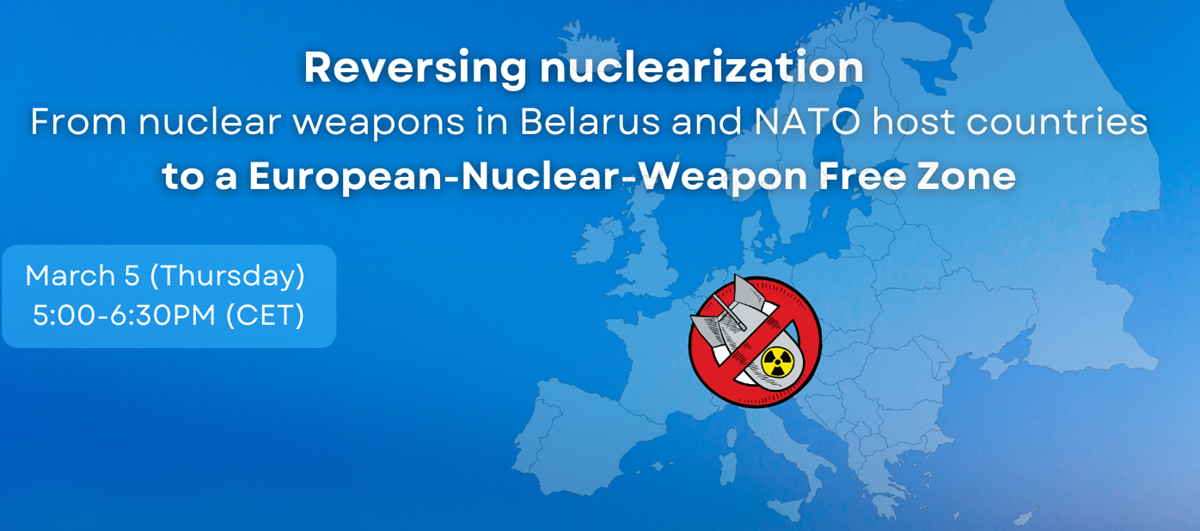
5 March -Online – Reversing nuclearization:
From nuclear weapons in Belarus and NATO host countries to a European-Nuclear-Weapon Free Zone
11am-12:30pm Eastern Time USA / 5pm-6:30pm CET

of the week – Advocating for a
nuclear free beach – https://www.samuellawrencefoundation.org/
The Samuel Lawrence Foundation advocates for a Nuclear Waste Free Beach at San Onofre, join us and take action!

10 March A LIVE WEBINAR THE REAL EFFECTS OF NUCLEAR POWER
What the Industry Isn’t Telling Us
1:00 PM Mountain, 2 pm Central, 3 pm Eastern. Live on the Keepers of the Water Facebook page


18 March Webinar @ 1 PM EST: An Assessment of SMR Projects: The Case of Canada
register for the zoom:
https://us02web.zoom.us/webinar/register/WN_o8BIIOUvQ2ONJR1nta65DQ#/registration

of the week – STOP SMALL MODULAR REACTORS IN CANADA
To see nuclear-related stories in greater depth and intensity – go to https://nuclearinformation.wordpress.com
-
Archives
- March 2026 (51)
- February 2026 (268)
- January 2026 (308)
- December 2025 (358)
- November 2025 (359)
- October 2025 (376)
- September 2025 (258)
- August 2025 (319)
- July 2025 (230)
- June 2025 (348)
- May 2025 (261)
- April 2025 (305)
-
Categories
- 1
- 1 NUCLEAR ISSUES
- business and costs
- climate change
- culture and arts
- ENERGY
- environment
- health
- history
- indigenous issues
- Legal
- marketing of nuclear
- media
- opposition to nuclear
- PERSONAL STORIES
- politics
- politics international
- Religion and ethics
- safety
- secrets,lies and civil liberties
- spinbuster
- technology
- Uranium
- wastes
- weapons and war
- Women
- 2 WORLD
- ACTION
- AFRICA
- Atrocities
- AUSTRALIA
- Christina's notes
- Christina's themes
- culture and arts
- Events
- Fuk 2022
- Fuk 2023
- Fukushima 2017
- Fukushima 2018
- fukushima 2019
- Fukushima 2020
- Fukushima 2021
- general
- global warming
- Humour (God we need it)
- Nuclear
- RARE EARTHS
- Reference
- resources – print
- Resources -audiovicual
- Weekly Newsletter
- World
- World Nuclear
- YouTube
-
RSS
Entries RSS
Comments RSS
 nuclear-news