Indian govt announces highly ambitious solar energy target

 India Sets Target Of 48 GW Solar Power Capacity By March 2019, Clean Technica April 23rd, 2016 by Saurabh Mahapatra Originally published on PlanetSave.
Highly ambitious annual solar power capacity addition targets have been announced by the Indian Ministry of New & Renewable Energy.
With a target to have an operational solar power capacity of 100 GW by March 2022, the Indian government has announced annual capacity addition targets for the next few years. The Ministry of New & Renewable Energy (MNRE) plans to add 15 GW and 16 GW solar power capacity in the financial years 2017-18 and 2018-19, respectively.
In the current financial year, the government targets an addition of 12 GW solar power capacity. If this target is achieved, India’s installed solar power capacity will cross 17 GW by the end of March 2017. By early March this year more than 5.7 GW of solar power capacity was operational in India…….
India is also in talks with development banks like the Asian Development Bank, International Finance Corporation, KfW, the Japan International Cooperation Agency, and the New Development Bank to access cheap debt finance for setting up solar power projects. https://cleantechnica.com/2016/04/23/101231/
Denmark’s solar energy growth – way ahead of schedule
 Denmark Hits 200 Megawatt Solar Capacity Goal 8 Years Ahead of Schedule, inhabitat, by Molly Cotter 18 Apr 16 “….. VIEW SLIDESHOW
Lets face it – its rare we see a government goal reached on time, let alone early. Not too long ago, the Danish Government announced an ambitious goal to reach 200 megawatts of solar capacity by 2020, and as of last week, they have already met it! The country is currently installing an average of 36megawatts of solar panels each month. At this rate, their resulting capacity by 2020 will be over five times the original goal. Denmark‘s power is currently 20% supplied by renewable sources, and the nation has set a goal of sourcing 100% of its energy from renewable sources by 2050.
Solar panels are a hot commodity in Denmark, saving energy costs and giving homeowners the possibility of storing extra energy in the public grid. Building owners and communities alike have taken advantage of government-funded incentives and benefits of grid connectivity, solidifying the importance of renewable energy sources for the entire country. This national strategy has paid off big time for countries such as Denmark, Germany, Japan, and Spain who have all set solar goals and are moving toward a greener energy system. Lets hope in the light of this fantastic news, more countries jump on board the green train! http://inhabitat.com/denmark-hits-200-megawatt-solar-capacity-goal-8-years-ahead-of-schedule/
French corporation EDF and its zombie nuclear reactors
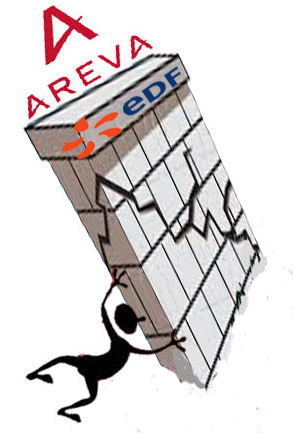 EdF: Living with its ZOMBIE REACTORS!, Jonathon Porritt, 24 Apr 16,
You seriously wouldn’t want to be a Director of EdF at the moment. The agenda for an average Board Meeting must be seriously gloomy on each and every occasion. Here’s how I imagine the key agenda items for their last meeting on 16th February – helpfullysummarised by EdF’s Company Secretary.
Item 1: Existing EPR construction projects
1.1 Olkiluoto (Finland)
Continuing, horrendous cost overruns, leading to ongoing legal stand-off with Finnish partners. Already delayed by seven years, but (hopefully!) could be finished by 2018.
1.2 Flamanville (France)
Continuing, horrendous cost overruns. Already delayed by nine years, but (hopefully!) could be finished by 2018.
1.3 Taishan (China)
Serious problems with both reactors under construction, but, this being China, everything’s shrouded in secrecy. WARNING: This could be much worse than we currently understand.
1.4 Pressure vessels
Still waiting for final safety assessment from French regulators. WARNING: There could be really serious problems here, despite our best efforts to ‘work with’ the regulator.
1.5 Deadlines/UK Treasury
These deadlines are now CRITICAL – as in EXISTENTIAL.
UK Treasury’s loan guarantees are linked to Flamanville operating successfully. And if it is not working properly by 2020, loan guarantee will be completely withdrawn.
Item 2: New reactors at Hinkley Point, Somerset………
Item 3: Extending the life of our UK reactors……
Item 4: Extending the life of our French reactors…….
Item 5: Energy Transition Law (France)…….
Item 6: Financial position…….
…..The implications of all this for the UK couldn’t possibly be more severe. Initially, HinkleyPoint was meant to be on stream by 2025, generating a whacking great 7% of total electricity supply. Earlier delays meant that this had already slipped to 2030. Now that the start date has slipped again, to 2019, AT THE EARLIEST, that 2030 date looks insanely optimistic…….http://www.jonathonporritt.com/blog/edf-living-its-zombie-reactors
France gives €3bn bailout to EDF’s Hinkley nuclear plant

 France gives €3bn lifeline to Hinkley nuclear plant, Sunday Times, Robin Pagnamenta, Energy Editor, 24 Apr 16, A decision on the proposed nuclear power station will not be taken until after an EDF shareholders’ meeeting Erance has thrown its support behind EDF, the French electricity company, and its plan to build the £18 billion nuclear power station at Hinkley Point, Somerset, by supplying a €3 billion lifeline.
President Hollande’s administration has agreed to put in the money towards a proposed €4 billion (£3 billion) cash-raising the company is proposing by issuing new shares. EDF said last night that the confirmation of the fundraising made it possible for the company to proceed with investments including Hinkley Point C by putting it on a “solid financial footing”……http://www.thetimes.co.uk/article/union-threats-force-edf-to-delay-hinkley-decision-0zf56xjms
EDF wants to extend depreciation period for nuclear plants this year, but nuclear watchdog may not be willing
 EDF to extend depreciation period for nuclear plants this year – CEO https://au.news.yahoo.com/world/a/31423313/edf-to-extend-depreciation-period-for-nuclear-plants-this-year-ceo/ Reuters on April 23, 2016 PARIS – French utility EDF will extend the depreciation period for its nuclear plants this year, its CEO said in a newspaper interview, an accounting move that will free up cash for costly investment projects in France and Britain.
“By the closing of our first-half results, we will draw the accounting consequences of our intention to extend the lifespan of our existing nuclear plants beyond 40 years,” EDF CEO Jean-Bernard Levy said in Saturday’s Le Figaro newspaper.
EDF had said before it intended to extend the lifespan of its French nuclear plants to 50 or 60 years, beyond the 40 years they were initially built for. Energy Minister Segolene Royal said in February that the government was willing to give the go-ahead for such a move.
But French nuclear watchdog ASN is the only authority allowed to grant such an extension, and it has said a decision on the matter would not come before 2018-2019. To make the accounting change, which would automatically boost EDF’s profits, the company must convince its auditors that there is a good chance of the extension being granted.
In 2003, EDF extended the depreciation schedule for nuclear reactors in its accounts to 40 years from 30 years – six years before the ASN agreed to the move.
The utility, 85 percent-owned by the French government, said on Friday it would seek to raise 4 billion euros ($4.5 billion), amid concerns that a 23 billion euro nuclear plant project at Hinkley Point in Britain would put a strain on its finances.
(Reporting by Michel Rose; Editing by Toby Chopra and Hugh Lawson)
How ionising radiation affects our bodies

The high-energy radiation given off by radioactive decay can take the form of very high speed particles (electrons in the case of beta radiation; two protons and two neutrons in alpha radiation) or waves (gamma or X-rays).
Regardless of the form it takes, all nuclear radiation has enough energy to strip electrons off atoms and molecules that it interacts with, earning it the name ionising radiation.
It is this electron-stripping (ionising) property that does the damage to our cells and tissues.
As well as generating heat, the removal of electrons can break chemical bonds. When that happens in a molecule of DNA it can cause mutations, which can lead to cancer down the track. And ionising a protein can mess with its shape and function — not something you want in the molecules that coordinate most of the chemistry in our cells.
Those effects are compounded when water molecules (H2O) in our bodies are ionised into the high energy free radicals OH– and H+, which can go on to attack other nearby molecules and cells.
Our bodies are full of water, and almost all cells have DNA, but some cells and tissues are more susceptible to damage from nuclear radiation than others.
Which cells in the body are most affected by radiation?The cells and organs that are most affected by nuclear radiation are the ones that are actively reproducing, because the DNA is more exposed when the cell is in the process of dividing.
Blood cells have the highest turnover rate in our bodies, so the tissue where they are produced — the rapidly dividing cells of the bone marrow — is the most susceptible to radiation damage.
The damage to bone marrow in high doses — and complete destruction of it in very high doses — impairs our immune system by not replacing our white blood cells.
Long-term exposure to lower doses can lead to cancerous DNA mutations in the marrow, which can lead to the blood cancer leukaemia in people exposed through work or location………
Developing foetuses are, of course, incredibly susceptible to radiation, ……
Exposure to external radiation is one thing, but ingesting radioactive particles takes the damage to another level.
Inhaling or swallowing radioactive material delivers the source of radiation directly to your cells, increasing the risk of cancer developing in the tissues where they accumulate.
Radioactive iodine (iodine-131) blown into the atmosphere by the 1986 Chernobyl explosion caused a large number of cases of thyroid cancer in people who drank contaminated milk. (Having been released in the clouds of radioactive material following the explosion, the iodine — a by-product of nuclear fission reactions — landed on fields where it was swallowed by cows).
Iodine is essential for the normal function of the thyroid gland, and with its knack for attracting iodine the gland gets a concentrated dose of iodine-131 when contaminated milk is drunk. Thankfully, thyroid cancer is treatable by removal of the gland, although a lifetime of hormone supplements follows. With a half-life of just eight days, the level of radioactive iodine fell off quickly after the accident, so the risk of exposure dropped within weeks of the disaster.
Not so with the radioactive isotope of caesium-137, which has a half-life of 30 years. Caesium is very soluble in water, so when it enters our bloodstream via contaminated food or water it ends up spreading throughout our bodies, and concentrating in muscle tissue in particular. Our bodies eventually turn over these tissues, but it takes three months to reduce the amount of caesium in our muscles by half, so the long-term exposure to beta and gamma radiation increases the chances of cancer developing in those tissues.
With a half-life of 29 years, strontium-90 joins caesium-137 as a long-lasting source of harmful radiation after nuclear accidents.
Strontium is chemically very similar to calcium, so if you ingest food contaminated with radioactive strontium isotopes like strontium-90, it ends up wherever calcium normally would — primarily in the bones.
In adults, strontium accumulates mainly on the surface of bones, but in children it can be incorporated into the growing bone itself. The beta radiation given off as the radioactive atoms decay into more stable forms can damage the bone marrow and lead to bone cancer. http://www.abc.net.au/news/2016-04-22/what-nuclear-radiation-does-to-your-body/7346324
New Jersey residents near nuclear complex are to get potassium iodide pills
 Radiation-blocking pills to be distributed around N.J. nuclear complex By Bill Gallo Jr. | For NJ.com April 24, 2016 LOWER ALLOWAYS CREEK TWP. —” A fresh supply of radiation-blocking potassium iodide pills will be given to those living near PSEG Nuclear’s Artificial Island generating complex, officials said.
The distribution will take place Monday from 4 to 6 p.m., at the Lower Alloways Creek Township Municipal Building at 501 Locust Island Road in Hancocks Bridge.
Potassium iodide, or KI pills, help stop the thyroid gland from absorbing cancer-causing radioactive iodine in case a nuclear plant accident. The thyroid is the body part most sensitive to radioactive iodine.
“Should there be an accidental release, radiation could affect anyone within 10 miles of the generating center,” said Freeholder Robert Vanderslice, chair of the county’s Health Committee, in announcing the distribution.
PSEG Nuclear operates three reactors — Salem 1, Salem 2 and Hope Creek —” at its generating facility on Artificial Island in Lower Alloways Creek Township. The three plants comprise the second-largest nuclear generating facility in the United States.
In Salem County, the towns within the 10-mile radius of the plants include all or parts of Elsinboro, Lower Alloways Creek, Salem, Pennsville, Mannington and Quinton.
KI pills are distributed in individual foil packets and envelopes. The pills are to be kept on hand in case of an emergency…….
Similar distributions for Cumberland County and Delaware residents who live within the 10-mile radius of Artificial Island have also taken place through their heath departments. http://www.nj.com/salem/index.ssf/2016/04/radiation-blocking_ki_pills_to_be_distributed_arou.html
1 This Month
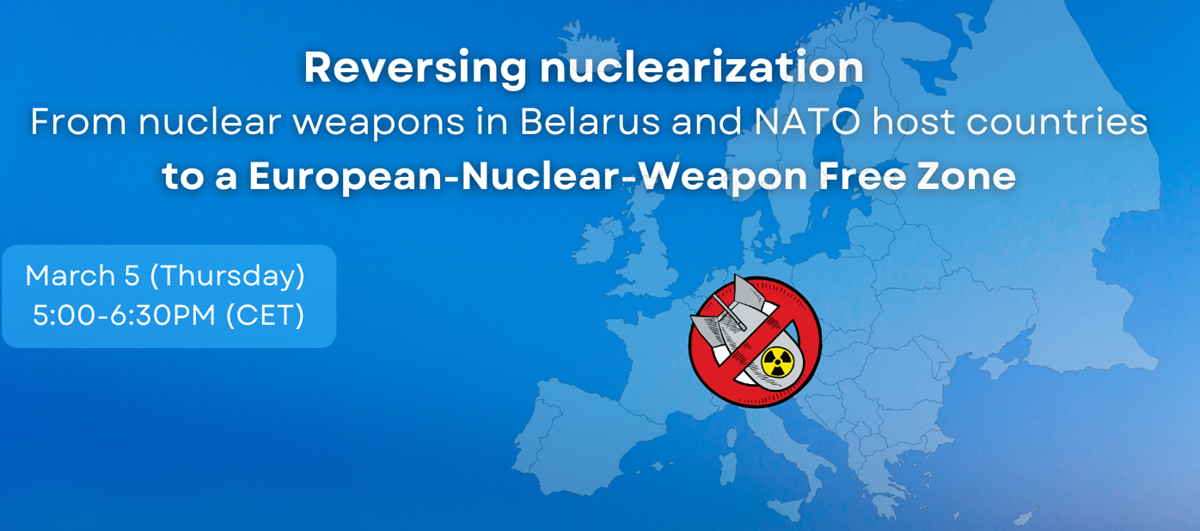
5 March -Online – Reversing nuclearization:
From nuclear weapons in Belarus and NATO host countries to a European-Nuclear-Weapon Free Zone
11am-12:30pm Eastern Time USA / 5pm-6:30pm CET

of the week – Advocating for a
nuclear free beach – https://www.samuellawrencefoundation.org/
The Samuel Lawrence Foundation advocates for a Nuclear Waste Free Beach at San Onofre, join us and take action!

10 March A LIVE WEBINAR THE REAL EFFECTS OF NUCLEAR POWER
What the Industry Isn’t Telling Us
1:00 PM Mountain, 2 pm Central, 3 pm Eastern. Live on the Keepers of the Water Facebook page


18 March Webinar @ 1 PM EST: An Assessment of SMR Projects: The Case of Canada
register for the zoom:
https://us02web.zoom.us/webinar/register/WN_o8BIIOUvQ2ONJR1nta65DQ#/registration

of the week – STOP SMALL MODULAR REACTORS IN CANADA
To see nuclear-related stories in greater depth and intensity – go to https://nuclearinformation.wordpress.com
-
Archives
- March 2026 (51)
- February 2026 (268)
- January 2026 (308)
- December 2025 (358)
- November 2025 (359)
- October 2025 (376)
- September 2025 (258)
- August 2025 (319)
- July 2025 (230)
- June 2025 (348)
- May 2025 (261)
- April 2025 (305)
-
Categories
- 1
- 1 NUCLEAR ISSUES
- business and costs
- climate change
- culture and arts
- ENERGY
- environment
- health
- history
- indigenous issues
- Legal
- marketing of nuclear
- media
- opposition to nuclear
- PERSONAL STORIES
- politics
- politics international
- Religion and ethics
- safety
- secrets,lies and civil liberties
- spinbuster
- technology
- Uranium
- wastes
- weapons and war
- Women
- 2 WORLD
- ACTION
- AFRICA
- Atrocities
- AUSTRALIA
- Christina's notes
- Christina's themes
- culture and arts
- Events
- Fuk 2022
- Fuk 2023
- Fukushima 2017
- Fukushima 2018
- fukushima 2019
- Fukushima 2020
- Fukushima 2021
- general
- global warming
- Humour (God we need it)
- Nuclear
- RARE EARTHS
- Reference
- resources – print
- Resources -audiovicual
- Weekly Newsletter
- World
- World Nuclear
- YouTube
-
RSS
Entries RSS
Comments RSS
 nuclear-news