New documentary showcases the promise of solar energy
http://ensia.com/videos/new-documentary-showcases-the-promise-of-solar-energy/ March 21, 2016 — What do an unemployed American worker, a Tea Party activist and a Chinese entrepreneur have in common? They’re all part of a new documentary film highlighting the growth of solar energy around the world.
Directed by award-winning filmmaker Shalini Kantayya and featuring stories from the U.S. and China, “Catching the Sun” focuses on the global race to lead the clean energy future.
According to a report late last year from the International Energy Agency, new renewable energy installations are predicted to outpace those for fossil fuels and nuclear globally over the next few years.
Some experts are even going so far as to predict that by 2050 solar photovoltaic and solar thermal combined could generate up to 27 percent of the world’s electricity. 
March 22 Energy News

World:
¶ TenneT delivered 7.4 TWh of electricity from offshore wind farms in the German North Sea to the grid, an almost six-fold increase compared with 2014. The transmission operator said offshore wind farms in the German North Sea accounted for about 9.6% of Germany’s overall wind energy generation. [reNews]
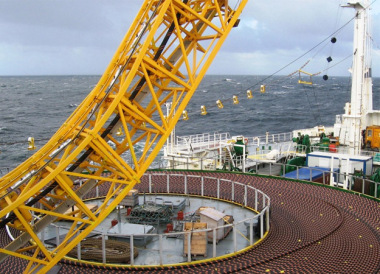 Laying a cable at sea. TenneT increased offshore capacity in
German North Sea to 4.3GW last year (TenneT)
¶ Australia has added 100 MW of rooftop solar in the first two months of 2016, as Victoria overtakes New South Wales to be the country’s second biggest market. The 55 MW added in February still represented a fall from a year ago, with Queensland, the biggest market,down nearly 20%. [CleanTechnica]
¶ Tidal energy projects in the UK can be developed for nearly half the price of the proposed Swansea Bay project, according to the founder of Ecotricity…
View original post 513 more words
World Water Day: Nuclear Power Contaminates Drinking Water with Long-Lived Lethal Radioactive Materials

With an ever-growing world population, how can we afford to let water resources be destroyed by radioactive materials, which remain deadly for decades, centuries and even millions of years?
“Water is of major importance to all living things; in some organisms, up to 90% of their body weight comes from water. Up to 60% of the human adult body is water“. http://water.usgs.gov/edu/propertyyou.html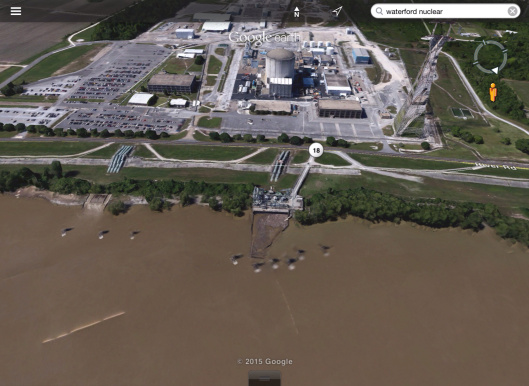
Waterford Nuclear Reactor on the Mississippi: New Orleans and some smaller communities get their drinking water from the Mississippi River.
“A typical 1000-megawatt pressurized-water reactor (with a cooling tower) takes in 20,000 gallons of river, lake or ocean water per minute for cooling, circulates it through a 50-mile maze of pipes, returns 5,000 gallons per MINUTE to the same body of water, and releases the remainder to the atmosphere as vapor. A 1000-megawatt reactor without a cooling tower takes in even more water–as much as…
View original post 852 more words
Accumulation of Sellafield-derived Radioactive Carbon (14C) in Irish Sea and West of Scotland Intertidal Shells and Sediments
Introduction-Background
Anyone who was a serious student of biological sciences is immediately alarmed to learn that nuclear reactors routinely emit radioactive carbon (14C) and radioactive hydrogen (tritium) into the environment. Carbon and hydrogen are the very foundations of life. And, most of the human body is comprised of water (H2O). Tritium makes tritiated water. Radioactive carbon (14C) has a half-life of over five thousand years (5,730 years). Even tritium, with a half-life of 12 years, will be in the environment for almost 200 years.
“Carbon forms the key component for all known life on Earth. Complex molecules are made up of carbon bonded with other elements, especially oxygen, hydrogen and nitrogen, and carbon is able to bond with all of these because of its four valence electrons.” https://en.wikipedia.org/wiki/Carbon-based_life
“Carbon-14 is formed in the fuel (UO2), in core structural materials, and in the cooling water of LWRs”…
View original post 819 more words
World Meteorological Organization — Dangerous Climate Future Has Arrived

The alarming rate of change we are now witnessing in our climate as a result of greenhouse gas emissions is unprecedented in modern records. — Petteri Taalas, Secretary General of the World Meteorological Organization
*****
It would be a bit of an understatement to say that the global scientific community is reeling. Sure, the various scientists and researchers knew that a massive accumulation of greenhouse gasses in the Earth’s atmosphere and oceans was beginning to take a serious toll. They knew that ocean heat content in the top 2,000 meters of the world ocean system (accounting for 93 percent of Earth System warming) was going through the roof. And they knew that this warmth was going to bleed out in a seriously big and bad way as a record El Nino swept through the global climate system during 2014, 2015 and 2016.

(Temperature averages for 2016 are…
View original post 1,006 more words
Secret nuclear negotiations: UK Hinkley, and Australia’s waste import plan

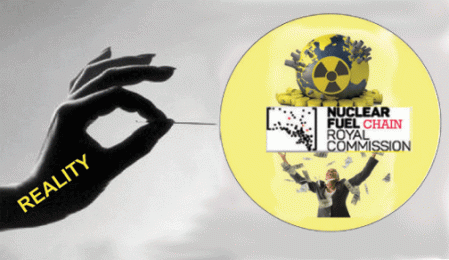 Secret deals: Australia’s nuclear waste plan and the UK’s Hinkley project, Independent Australia 21 March 2016, The South Australian Government scheme to import international nuclear waste has a major flaw in common with the UK’s Hinkley Point C project — secret contracts with foreign organisations, writes Noel Wauchope.
THESE TWO PLANS have something in common. Both the UK’s Hinkley Point C plan and South Australia’s nuclear waste plan are grandiose and very expensive to set up.
But, more than that, they both require the involvement of foreign governments and companies, in secret arrangements.
The South Australian Nuclear Royal Commission‘s plan for importing international wastes already involves confidential communications from foreign companies. Put into operation, the plan will mean secret contracts — South Australia being beholden to the provisions of foreign laws regarding disclosure, shipping and transport security, insurance and other matters relating to a client nation’s high level nuclear wastes (HLNW).
Plans have been suggested for foreign companies paying up…
View original post 417 more words
March 21 Energy News
Science and Technology:
¶ According to NASA, February 2016 was the most anomalously warm month in 135 years of record keeping – 1.35° C (2.43° F) warmer than the 1951 to 1980 average. While the recurring El Niño event certainly drives short-term oscillation, the long-term warming trend is quite apparent. [CleanTechnica]
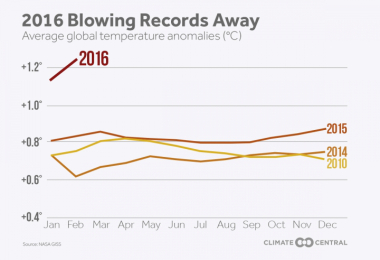 2010, 2014, and 2015 were all record-breaking years. Climate Central graph
World:
¶ The South African Energy Minister launched the Solar Capital De Aar 3 in the Northern Cape – the 17th solar photovoltaic plant in the province. She said the commercial operation of the 75-MW plant is a huge achievement in scaling up the deployment of renewable energy in South Africa. [AllAfrica.com]
¶ Last summer, the Mayor of London unveiled plans to test a fleet of double-decker electric buses to ply the tourist-friendly Route 16. Things must have gone swimmingly because just last week…
View original post 424 more words
Coal and nuclear – in it together promoting global warming. Theme for April 16
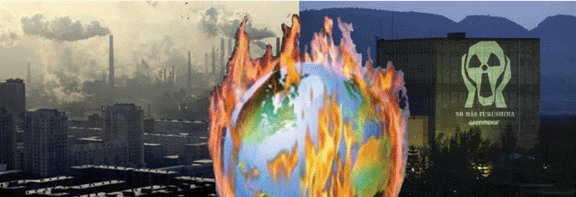
It’s really hard to estimate the full carbon footprint of the nuclear industry . Greenhouse gases are emitted in all stages of the lifecycle of a nuclear reactor: construction, operation, fuel production, dismantling and waste disposal. Leaving out any of these five stages will bias estimates towards lower values. The last two contributions, dismantling and waste disposal are particularly difficult to estimate. Not many commercial reactors have been fully decommissioned.
The ever repeated claim that nuclear power is emissions-free is simply not true.
Without subsidies for coal and nuclear The free market would choose the path to the most cost effective and cleanest sources of energy which would include wind, solar, small-scale hydro, geothermal, energy efficiency, tidal, and certainly not nuclear or “clean coal.”
The fossil fuel and nuclear industries are in this public deception together. Indeed, nuclear power is in itself a fossil fuel industry, depending on mining uranium (or thorium, which is then converted to uranium). The coal industry is confident of continuing for several decades, and then handing over to the nuclear industry, as coal runs out. The nuclear industry is happy about this, because it takes decades to get reactors set up and running.
Where these two toxic industries are also in agreement is in the aim to slow down, preferable stifle, the development of clean, and cheaper renewable energy sources, especially wind and solar power.
They also like the scenario promoted in the nuclear advertising film “Pandora’s Promise” – that is the endless growth of energy use. Coal and nuclear advocates do not like the idea of energy efficiency, energy conservation.
1 This Month

of the week – Shut Down Drone Warfare!


Tell the Ukrainian Government to Drop Prosecution of Peace Activist Yurii Sheliazhenko

Petition to revoke the licensing of the Near Surface Nuclear Disposal Facility (NSDF) at Chalk River. https://www.ourcommons.ca/petitions/en/Petition/Details?Petition=e-7247
To see nuclear-related stories in greater depth and intensity – go to https://nuclearinformation.wordpress.com
-
Archives
- April 2026 (79)
- March 2026 (251)
- February 2026 (268)
- January 2026 (308)
- December 2025 (358)
- November 2025 (359)
- October 2025 (376)
- September 2025 (257)
- August 2025 (319)
- July 2025 (230)
- June 2025 (348)
- May 2025 (261)
-
Categories
- 1
- 1 NUCLEAR ISSUES
- business and costs
- climate change
- culture and arts
- ENERGY
- environment
- health
- history
- indigenous issues
- Legal
- marketing of nuclear
- media
- opposition to nuclear
- PERSONAL STORIES
- politics
- politics international
- Religion and ethics
- safety
- secrets,lies and civil liberties
- spinbuster
- technology
- Uranium
- wastes
- weapons and war
- Women
- 2 WORLD
- ACTION
- AFRICA
- Atrocities
- AUSTRALIA
- Christina's notes
- Christina's themes
- culture and arts
- Events
- Fuk 2022
- Fuk 2023
- Fukushima 2017
- Fukushima 2018
- fukushima 2019
- Fukushima 2020
- Fukushima 2021
- general
- global warming
- Humour (God we need it)
- Nuclear
- RARE EARTHS
- Reference
- resources – print
- Resources -audiovicual
- Weekly Newsletter
- World
- World Nuclear
- YouTube
-
RSS
Entries RSS
Comments RSS
 nuclear-news