India may have to shut down two uneconomic reactors at Tarapur
 Oldest Indian Nuclear Reactors Near Mumbai May Be Shut Down, Bloomberg, Rajesh Kumar Singh, 14 Mar 16
-
Tarapur 1 & 2 unprofitable, undergoing frequent maintenance
-
Nuclear Power Corp. may seek higher tariff from regulator
-
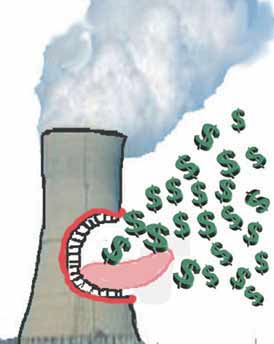
India may shut two of its oldest reactors almost five decades after they went into operation as power tariffs aren’t keeping pace with maintenance costs, according to Sekhar Basu, secretary at the Department of Atomic Energy.
The first two reactors at Tarapur, about 100 kilometers (62 miles) from Mumbai at India’s western coast, suffer frequent maintenance shutdowns that make them unprofitable, Basu said in a phone interview. They earn about 0.89 rupees (1 cent) for every kilowatt hour of electricity produced, which isn’t enough to sustain operations. Nuclear plants in India received an average tariff of 2.78 rupees per kilowatt hour in the year ended March 2015, according to the Department of Atomic Energy.
“We are pouring in money into the reactors rather than making income from them,” Basu said. “At the current tariff, it’s become unviable to run the two reactors and we may be forced to shut them down if the tariff is not increased.”
Basu didn’t provide details on the timing of a possible decommissioning, a process that can take decades and generate thousands of tons of radioactive waste. Nuclear Power Corp., the nation’s sole operator of nuclear power plants, may approach the electricity regulator for a tariff increase when operations become unsustainable, Basu said. -
Liability Law
Nuclear Power spokesman N. Nagaich couldn’t be reached on his office phone for a comment. Sanjeev Kumar, chairman at Maharashtra State Electricity Distribution Co., which buys power from the reactors, didn’t respond to phone calls and a text message sent on his mobile phone.
The boiling water reactors, which can produce 160 megawatts each, were supplied by General Electric Co. and started operating in 1969, marking India’s foray into nuclear energy. India plans to raise atomic power capacity more than ten-fold by 2032 as part of its clean-energy drive. The expansion plans have been complicated by the nation’s liability law. The statute, which exposes plant equipment suppliers to accident claims, is borne out of concerns over nuclear safety……..http://www.bloomberg.com/news/articles/2016-03-15/india-mulls-shutting-oldest-nuclear-plants-amid-mounting-costs
$Billions for US nuclear submarines
 ‘Top priority’: Next-generation US nuclear submarines head Navy’s budget Rt.com 15 Mar, 2016 The US Navy is requesting over $1.8 billion from Congress for the upcoming fiscal year to begin developing and building new nuclear ballistic missile submarines, a top priority for the military branch, according to a Congressional Research Service report.
Should the request for $773.1 million in advance procurement funding and $1.0911 billion for research and development be met, the Navy would be ready begin work on replacing 14 Ohio-class SSBNs, or nuclear ballistic missile submarines, with 12 new subs of a whole new class.
The total cost of the program, known as SSBN(X) or the Ohio Replacement Program, is currently estimated to be $95.8 billion. The small fraction of $1.8 billion would be spent from the Navy’s fiscal year 2017 budget, which runs October 1, 2016 to September 30, 2017. The first new-generation submarine would be acquired in 2021, according to the Congressional Research Service report.
Known as the nuclear triad, land, air and sea nuclear capabilities are reemerging as areas of priority for rearmament and modernization. Submarines, which can remain underwater for months on end, are more likely to survive nuclear attacks than their land and air nuclear counterparts, although they may not be as accurate when it comes to attacks.
According to Popular Mechanics, the nuclear-armed subs “tend to be assigned retaliatory missions against ‘countervalue’ targets – civilian targets such as cities, factories, oil refineries, and transportation infrastructure.”………https://www.rt.com/usa/335612-new-navy-nuclear-submarines/
Tax-payer money proposed in Senate, to keep uneconomic Fitzpatrick nuclear plant going

 Senate proposal includes $100M to keep Fitzpatrick nuclear plant online, North Country Public Radio, by Payne Horning (WRVO) , in Oswego, NY Mar 15, 2016 — The New York Senate Republican budget proposal includes money for Oswego County’s Fitzpatrick nuclear power plant. It would give $100 million to try to extend the life of the financially struggling plant.
The money would provide the immediate support Fitzpatrick needs to pay for the costs of refueling the plant, a lengthy and expensive process that has to take place this year. The ultimate goal is to keep Fitzpatrick open until 2017 when lucrative tax credits from the state could become available……..
Entergy is planning to close the facility next January because they said Fitzpatrick is losing $60 million annually. Since the decision to close the plant was announced last fall, lawmakers have been working to find a quick financial fix. If approved, the $100 million could be available as soon as April, but lawmakers in Albany are just starting the budget process and the proposal could be removed or changed. http://www.northcountrypublicradio.org/news/story/31295/20160315/senate-proposal-includes-100m-to-keep-fitzpatrick-nuclear-plant-online
USA’s nuclear regulator ineffective, as radiation leaks continue
 Nuclear Plants Leak Radiation, and Regulator Faces Scrutiny Five years after one of the worst nuclear disasters in history, America’s nuclear plants still face safety issues. Indian Point nuclear power plant sits on the Hudson River outside New York City.USA News, By Alan Neuhauser March 15, 2016
Yet it’s radioactive, and in the past two months, two nuclear power plants outside New York City and Miami were found to be leaking tritium: the former into groundwater within the facility’s confines, the second straight into Biscayne Bay.
The leaks, revealed in news reports, apparently haven’t contaminated drinking water and don’t pose a threat to human health. But tritium, while less potent than other substances like cesium or strontium or radium, can still be harmful in high enough concentrations, even lethal. And that’s before taking the public reaction into account: The New York incident made headlines across the region, anti-nuclear groups warned the state was “flirting with catastrophe,” and Gov. Andrew Cuomo ordered an investigation.
The incidents came just a few weeks before the fifth anniversary of the meltdown at Japan’s Fukushima Daiichi nuclear plant, which was sparked by a tsunami and earthquake and became the world’s worst nuclear disaster since Chernobyl. They also occurred as the industry was working to burnish its image on safety: All of the nation’s 61 nuclear plants are at least 20 years old, many are over 40, and at least one plant operator has announced it hopes to extend its reactors’ licenses to 80 years.
Yet more than three-quarters of the country’s commercial nuclear power sites have reported some kind of radioactive leak in their life spans, an investigation by the Associated Press found in June 2011 – three months after Fukushima. At the same time, the U.S. Nuclear Regulatory Commission has repeatedly weakened federal regulations to allow plants to keep operating, despite thousands of problems ranging from corroded pipes to cracked concrete and radioactive leaks.
Late last month, seven NRC engineers went public with a petition urging the agency to fix a critical design flaw in the electrical systems of all but one of the nation’s nuclear plants – a highly unusual move for federal employees.
“We have a very ineffective regulator that will not impose any costs that will jeopardize the economics of these plants,” says Paul Blanch, a longtime engineer and industry worker turned watchdog. While a tritium leak may not imperil human health, “it indicates a very sloppy operational environment of aging management and fixing obvious sources of leaks.”………
since finalizing the new standards, the agency has reportedly inspected and approved just two of the country’s 61 plants for compliance: one in Tennessee, the other in Virginia, Bloomberg BNA found. It’s also unclear whether new equipment for maintaining power at the plant during a prolonged outage will even work, experts say: while the NRC’s mandate called for buying the new equipment, it apparently lacked minimum performance standards.
Meanwhile, last fall, Indian Point in New York – the plant leaking tritium – suffered four unplanned outages in two months………http://www.usnews.com/news/articles/2016-03-15/nuclear-plants-leak-radiation-and-regulator-faces-scrutiny
Arkansas Nuclear Reactors found by regulator to need more oversight
 Feds Say Entergy’s Arkansas Nuclear Reactors Need More Oversight, NPR By WESLEY BROWN/ TALK BUSINESS & POLITICS 14 Mar 16 In an annual evaluation of the nation’s commercial nuclear plants, the federal Nuclear Regulatory Commission said Entergy Arkansas’ Nuclear One and Two units in Russellville were among three reactors that require increased oversight because of two safety findings of “substantial significance” in 2015…….
Eleven reactors need to resolve one or two items of low safety significance. For this performance level, regulatory oversight includes additional inspections and follow-up of corrective actions. Plants in this level are: Clinton (Illinois); Davis Besse (Ohio); Dresden 2 (Illinois); Duane Arnold (Iowa); Indian Point 3 (New York); Millstone 3 (Connecticut); Prairie Island 2 (Minnesota); River Bend (Louisiana); Sequoyah 1 (Tennessee); and Susquehanna 1 and 2 (Pennsylvania). Duane Arnold, Millstone 3, and Susquehanna 1 and 2 have resolved their issues since the reporting period ended and have transitioned to the highest performing level, NRC officials.
There were three reactors in the fourth performance category, or Column 4, including Entergy’s Arkansas Nuclear One and Two units in Russellville, and Entergy Corp.’s Pilgrim Nuclear Power Station in Plymouth, Mass. Pilgrim is in the fourth performance Column 4 category because of long-standing issues of low-to-moderate safety significance, NRC officials said.
Nuclear reactors in Column 4 receive additional inspections and increased NRC management attention to confirm performance issues are being addressed. Later this year, the NRC will host a public meeting in the vicinity of each plant to discuss the details of the annual assessment results………
ISSUES ARISE FROM 2013 ACCIDENT
The issues relating to the Entergy nuclear reactors in Russellville stem back to the events surrounding the industrial accident that occurred at the plant on March 31, 2013, which resulted in one fatality and eight injured personnel. At the time of the event, Unit 1 was shut down in a refueling outage with the reactor vessel head off and fuel in the vessel. Beginning in 2013, Entergy Operations officials and the NRC began extensive inspections of the flood protection program at ANO.
All told, more than 100 previously unknown flood barrier deficiencies creating flooding pathways into the site’s two auxiliary buildings were found. These included defective floor seals, flooding barriers that were designed, but never installed, and seals that had deteriorated over time. In one case, a special hatch that was supposed to close a ventilation duct in the Unit 1 auxiliary building in the event of flooding had never been installed.
In June 2014, ANO Units 1 and 2 received yellow violations because electrical equipment damaged during an industrial incident increased risk to the plant. Workers were moving a 525-ton component out of the plant’s turbine building when a temporary lifting rig collapsed on March 13, 2013, damaging plant equipment. Those violations moved both units from Column 1 to Column 3 of the NRC’s Action Matrix, which the agency increases its oversight of plants as performance declines.
Bowling said the NRC placed Arkansas Nuclear One in Column 4 in March 2015 after issuing the two “yellow findings” for each nuclear unit related to the 2013 heavy equipment handling incident in which a lift operated by a contractor failed. Two subsequent yellow findings for Arkansas Nuclear One and Two related to flood barrier effectiveness had the cumulative effect of moving the plant to Column 4………http://ualrpublicradio.org/post/feds-say-entergy-s-arkansas-nuclear-reactors-need-more-oversight#stream/0
France’s auditor brands Hinkley Point nuclear project as financially risky
 Hinkley Point branded potentially risky for EDF by French auditor, Guardian 11 Mar 16
Cour des Comptes urges greater study of nuclear project’s risks given poor recent investments and the fact EDF must fund likely cost overruns. EDF’s £18bn project to build nuclear reactors in Britain is potentially risky for the state-owned utility, whose foreign investments in recent years have proved disappointing, France’s top public auditor has said.
In a report on EDF’s international strategy, the Cour des Comptes – the French equivalent of the UK’s National Audit Office – said EDF and its 85% state shareholding should take a close look at the risks associated with the project to build two nuclear reactors at Hinkley Point in Somerset.
The report, which focuses on the 2009-2014 period – which includes EDF’s October 2013 agreement with the British government but not its deal in October 2015 with the Chinese utility CGN to take a one-third stake – said the financing around the Hinkley Point deal was potentially risky for EDF.
The auditor said EDF’s cashflow and high debt limit its capacity to invest abroad, especially given the huge sums needed to upgrade its ageing French nuclear plants.
“Even though the [Hinkley Point] deal has not been finalised, the complexity of the deal and especially the way it could impact the responsibility of EDF suffice to raise serious questions,” the auditor ……..http://www.theguardian.com/business/2016/mar/11/hinkley-point-risky-edf-french-auditor-cour-de-comptes?CMP=share_btn_tw
No long term solution in sight for nuclear waste
Stop Wasting Time–Create a Long-Term Solution for Nuclear Waste, Three decades after Chernobyl, the U.S. needs to tackle its own ominous nuclear safety problem Scientific American April 1, 2016
April marks the 30th anniversary of the world’s worst nuclear power disaster, the explosion and fire at a reactor at the Chernobyl plant in Ukraine, in the former Soviet Union. It forced more than 300,000 people to flee and created a zone tens of kilometers wide where radiation levels remain hazardous to this day.
A severe reactor accident is unlikely in the U.S. and other countries with safer facilities. But we face another danger that is in many ways more threatening than a meltdown: the steady accumulation of radioactive waste. The U.S. has dithered over this clear and present danger for decades, irresponsibly kicking the can down the road into the indefinite future.
The spent fuel produced by nuclear power plants will emit harmful radiation for hundreds of thousands—even millions—of years. Some 70,000 metric tons of it are now stored at 70 sites scattered across 39 states. One in three Americans lives within roughly 80 kilometers of a storage site. The waste, hot from radioactive decay, is held in deep pools of water or in “dry casks” of concrete and steel that sit on reinforced pads. Accidents or terrorist attacks could drain the pools or crack the casks, with the risk that the exposed waste could catch fire, spreading radioactive soot across the surrounding countryside and into food chains in a Chernobyl-like catastrophe. As the years go by and waste is packed into overcrowded pools and pads, that risk will only grow………
Ultimately, if consent-based siting efforts fail, in favor of the common good the federal government must exercise its power of eminent domain to overcome local opposition, creating a deep geologic repository for nuclear waste. Regardless of whether the next president is for or against nuclear power, he or she must act decisively to avoid poisoning our shared future.
Call to New York Governor to stop supporting nuclear power
Environmentalists call on Cuomo to end support of nuclear power, NCPR, by Tom Magnarelli (WRVO) , in Syracuse, NY Mar 15, 2016 — Five years after the Fukushima nuclear disaster in Japan, protesters in Syracuse called on Governor Andrew Cuomo to stop supporting nuclear and invest in renewable energy instead. The protest was organized by the Alliance for a Green Economy.
Critics of nuclear said it is dangerous and expensive. Joe Heath, an attorney for the Onondaga Nation, grew up in Oswego County and said he understands how important jobs such as the ones at the Fitzpatrick nuclear plant are to the region. But Heath said the governor should be investing in green jobs in Oswego County, the way he did with the solar panel manufacturing plant, SolarCity in Buffalo. “If we invest in the renewable future, then we will have jobs for generations yet to come,” Heath said…….
Heath said nuclear power produces spent fuel rods which are radioactive and require constant maintenance. “Like so many other environmental mistakes that we’re making, we’re kicking the can down the road to future generations,” Heath said. Heath said nuclear is not cheap. The reason Entergy said it is closing Fitzpatrick is because it is losing tens of millions of dollars. Although renewable power sources such as solar can also be expensive, environmentalists argue the more people that use it, the cheaper it will be in the future.
There is one nuclear plant Cuomo wants to close: Indian Point over safety concerns because of its proximity to New York City. http://www.northcountrypublicradio.org/news/story/31297/20160315/environmentalists-call-on-cuomo-to-end-support-of-nuclear-power
1 This Month

of the week – Shut Down Drone Warfare!


Tell the Ukrainian Government to Drop Prosecution of Peace Activist Yurii Sheliazhenko

Petition to revoke the licensing of the Near Surface Nuclear Disposal Facility (NSDF) at Chalk River. https://www.ourcommons.ca/petitions/en/Petition/Details?Petition=e-7247
To see nuclear-related stories in greater depth and intensity – go to https://nuclearinformation.wordpress.com
-
Archives
- April 2026 (68)
- March 2026 (251)
- February 2026 (268)
- January 2026 (308)
- December 2025 (358)
- November 2025 (359)
- October 2025 (376)
- September 2025 (257)
- August 2025 (319)
- July 2025 (230)
- June 2025 (348)
- May 2025 (261)
-
Categories
- 1
- 1 NUCLEAR ISSUES
- business and costs
- climate change
- culture and arts
- ENERGY
- environment
- health
- history
- indigenous issues
- Legal
- marketing of nuclear
- media
- opposition to nuclear
- PERSONAL STORIES
- politics
- politics international
- Religion and ethics
- safety
- secrets,lies and civil liberties
- spinbuster
- technology
- Uranium
- wastes
- weapons and war
- Women
- 2 WORLD
- ACTION
- AFRICA
- Atrocities
- AUSTRALIA
- Christina's notes
- Christina's themes
- culture and arts
- Events
- Fuk 2022
- Fuk 2023
- Fukushima 2017
- Fukushima 2018
- fukushima 2019
- Fukushima 2020
- Fukushima 2021
- general
- global warming
- Humour (God we need it)
- Nuclear
- RARE EARTHS
- Reference
- resources – print
- Resources -audiovicual
- Weekly Newsletter
- World
- World Nuclear
- YouTube
-
RSS
Entries RSS
Comments RSS
 nuclear-news