Widespread effects of Fukushima nuclear radiation: some facts and figures
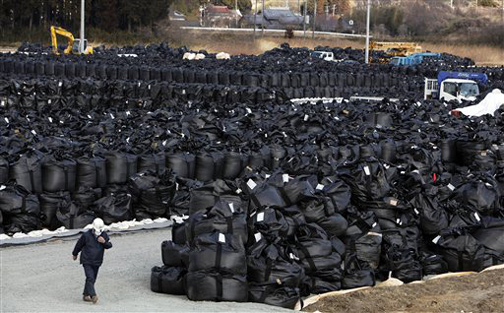
Fukushima nuclear disaster left 10.7 million 1-ton container bags with radioactive debris http://www.thestandard.com.hk/breaking-news.php?id=72359 Five years after a powerful earthquake and tsunami sent the Fukushima Dai-ichi nuclear power plant in Japan into multiple meltdowns, cleaning up the mess both onsite and in surrounding towns remains a work in progress. Here’s a look, by the numbers, at the widespread effects of radiation from the March 11, 2011, disaster:
164,865: Fukushima residents who fled their homes after the disaster.
97,320: Number who still haven’t returned.
49: Municipalities in Fukushima that have completed decontamination work.
45: Number that have not.
30: Percent of electricity generated by nuclear power before the disaster.
1.7: Percent of electricity generated by nuclear power after the disaster.
3: Reactors currently online, out of 43 now workable.
54: Reactors with safety permits before the disaster.
53: Percent of the 1,017 Japanese in a March 5-6 Mainichi Shimbun newspaper survey who opposed restarting nuclear power plants.
30: Percent who supported restarts. The remaining 17 percent were undecided.
760,000: Metric tons of contaminated water currently stored at the Fukushima nuclear plant.
1,000: Tanks at the plant storing radioactive water after treatment.
10.7 million: Number of 1-ton container bags containing radioactive debris and other waste collected in decontamination outside the plant.
7,000: Workers decommissioning the Fukushima plant.
26,000: Laborers on decontamination work offsite.
200: Becquerels of radioactive cesium per cubic meter (264 gallons) in seawater immediately off the plant in 2015.
50 million: Becquerels of cesium per cubic meter in the same water in 2011.
7,400: Maximum number of becquerels of cesium per cubic meter allowed in drinking water by the U.S. Environmental Protection Agency.
Sources: Fukushima prefectural government, Japan Ministry of Internal Affairs, the Tokyo Electric Power Co., the Nuclear Regulation Authority, the Federation of Electric Power Companies and the Woods Hole Oceanographic Institution.—AP
No comments yet.
1 This Month

of the week – Shut Down Drone Warfare!


Tell the Ukrainian Government to Drop Prosecution of Peace Activist Yurii Sheliazhenko

Petition to revoke the licensing of the Near Surface Nuclear Disposal Facility (NSDF) at Chalk River. https://www.ourcommons.ca/petitions/en/Petition/Details?Petition=e-7247
To see nuclear-related stories in greater depth and intensity – go to https://nuclearinformation.wordpress.com
-
Archives
- April 2026 (91)
- March 2026 (251)
- February 2026 (268)
- January 2026 (308)
- December 2025 (358)
- November 2025 (359)
- October 2025 (376)
- September 2025 (257)
- August 2025 (319)
- July 2025 (230)
- June 2025 (348)
- May 2025 (261)
-
Categories
- 1
- 1 NUCLEAR ISSUES
- business and costs
- climate change
- culture and arts
- ENERGY
- environment
- health
- history
- indigenous issues
- Legal
- marketing of nuclear
- media
- opposition to nuclear
- PERSONAL STORIES
- politics
- politics international
- Religion and ethics
- safety
- secrets,lies and civil liberties
- spinbuster
- technology
- Uranium
- wastes
- weapons and war
- Women
- 2 WORLD
- ACTION
- AFRICA
- Atrocities
- AUSTRALIA
- Christina's notes
- Christina's themes
- culture and arts
- Events
- Fuk 2022
- Fuk 2023
- Fukushima 2017
- Fukushima 2018
- fukushima 2019
- Fukushima 2020
- Fukushima 2021
- general
- global warming
- Humour (God we need it)
- Nuclear
- RARE EARTHS
- Reference
- resources – print
- Resources -audiovicual
- Weekly Newsletter
- World
- World Nuclear
- YouTube
-
RSS
Entries RSS
Comments RSS
 nuclear-news
Leave a comment