Very few return to “re-opened” town in Fukushima
Japan’s nuclear refugees face bleak return five years after Fukushima, Yahoo News, By Minami FunakoshNARAHA (Reuters) 3 Mar 16, – Tokuo Hayakawa carries a dosimeter around with him at his 600-year-old temple in Naraha, the first town in the Fukushima “exclusion zone” to fully reopen since Japan’s March 2011 catastrophe. Badges declaring “No to nuclear power” adorn his black Buddhist robe.
(For a video of ‘Fukushima refugees face a bleak return home’ click http://www.reuters.tv/Bus/2016/03/03/inside-fukushima-s-first-town-to-reopen)
Hayakawa is one of the few residents to return to this agricultural town since it began welcoming back nuclear refugees five months ago.
The town, at the edge of a 20-km (12.5 mile) evacuation zone around the crippled Fukushima Daiichi plant, was supposed to be a model of reconstruction.
Only 440 of Naraha’s pre-disaster population 8,042 have returned – nearly 70 percent of them over 60.
“This region will definitely go extinct,” said the 76-year-old Hayakawa.
He says he can’t grow food because he fears the rice paddies are still contaminated. Large plastic bags filled with radioactive topsoil and detritus dot the abandoned fields.
With few rituals to perform at the temple, Hayakawa devotes his energies campaigning against nuclear power in Japan. Its 54 reactors supplied over 30 percent of the nation’s energy needs before the disaster.
Today, only three units are back in operation after a long shutdown following the nuclear meltdown in Fukushima. Others are looking to restart.
“I can’t tell my grandson to be my heir,” said Hayakawa, pointing at a photo of his now-teenaged grandson entering the temple in a full protective suit after the disaster. “Reviving this town is impossible,” he said. “I came back to see it to its death.”
That is bound to disappoint Japan’s Prime Minister Shinzo Abe. Rebuilding Naraha and other towns in the devastated northeast, he says, is crucial to reviving Japan.
Tokyo pledged 26.3 trillion ($232 billion) over five years to rebuild the disaster area and will allocate another 6 trillion for the next five years.
VANISHING TOWN………
No children were in sight at Naraha’s main park overlooking the Pacific Ocean on a recent morning. Several elderly residents were at the boardwalk gazing at hundreds of bags stuffed with radioactive waste.
In fact, the bags are a common sight around town: in the woods, by the ocean, on abandoned rice fields.
Little feels normal in Naraha. Many homes damaged in the disaster have been abandoned. Most of the town’s population consists of workers. They are helping to shut down Tokyo Electric Power Co’s <9501.T> Daiichi reactors or working on decontamination projects around town.
Other workers are building a new sea wall, 8.7 meters high, along a nearly 2 km stretch of Naraha’s coast, similar to other sea walls under construction in the northeast……..
Back at his Buddhist temple, part of which he has turned into an office for his anti-nuclear campaign, Hayakawa called the idea Naraha could be a model of reconstruction “a big fat lie”.
“There’s no reconstructing and no returning to how it used to be before (March 11). The government knows this, too. A ‘model case’? That’s just words.” http://news.yahoo.com/japans-nuclear-refugees-face-bleak-return-five-years-064635977–finance.html
France sued by Geneva over dangerous and polluting nuclear station


 Geneva sues France over ‘dangerous’ nuclear plant, The Local, 03 Mar 2016 Geneva is taking legal action over a French nuclear reactor for “endangering lives and polluting water”. Some 70 kilometres from Geneva as the crow flies, Bugey, in the Ain department, is one of France’s oldest nuclear power plants, having come into service in 1972.
The site creates about 4.5 percent of France’s electricity using pressurized water reactors that harness water from the nearby Rhône River.
It has been the subject of controversy before, notably in 2013 when Greenpeace activists broke in to the plant to highlight alleged security weaknesses at the facility.
The current Swiss legal action is a joint initiative by Geneva’s city and cantonal authorities, which have teamed up on an issue that has preoccupied the region for some time, reports Swiss daily 24 Heures.
Back in 2012, the canton placed an official objection to French energy company EDF’s authorization to create a nuclear waste depot at the Bugey site, but the complaint was rejected by the French government. In March 2015 the city council engaged Corinne Lepage, environmental law specialist and a former French minister, to devise a legal strategy calling for the plant to be shut down.
This fresh Swiss campaign against Bugey, led by Lepage, comes as Switzerland decides to shut down one of its own nuclear plants, at Mühleberg.
The reactor in the canton of Bern will be disconnected from the Swiss electricity grid in 2019 and will be finally put out of service by September 2020 at the latest, its owner BKW Energy announced to the press on Wednesday.
Like Bugey, Mühleberg also dates from 1972, making it one of the oldest nuclear plants in the world.
No age limits
However, despite the old age of some of Switzerland’s nuclear installations, their lifespan should not be limited by law, the federal government said on Wednesday.
On Wednesday the Swiss parliament voted against a motion to set an age limit for nuclear plants………
Worse than before Fukushima’
Quashing the proposal angered some on the political left, however, including president of the Greens, Adèle Thorens.
Speaking to Le Matin, she said: “Instead of moving away from nuclear power it’s been decided to prolong the life of nuclear plants instead.”
Worse, she said, was the fact that parliament “had refused the recommendations of our own monitoring organization!”
“We are now in a security situation worse than before Fukushima,” she added. “That’s the incredible paradox of our energy strategy.” http://www.thelocal.ch/20160303/geneva-sues-france-over-dangerous-nuclear-plant
Russia to test launch ballistic missiles from nuclear-powered submarines
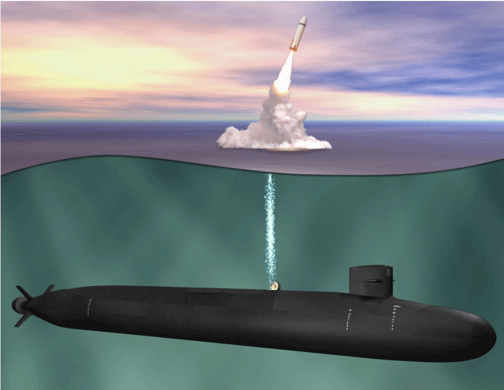 Russia to Launch Massive Ballistic Missile Test From Nuclear Subs
Kim Jong-un orders nuclear weapons readied for use ‘at any time’
North Korea: 
Leader reportedly tells military to adopt ‘pre-emptive’ posture after imposition of toughest UN sanctions to date, Guardian, Justin McCurry. 4 Mar 16, North Korea should be ready to use nuclear weapons “at any time” in the face of a growing threat from its enemies, leader Kim Jong-un has decreed in a further escalation of tensions on the Korean peninsula.
Kim’s warning, issued via state-controlled media on Friday morning, appeared to be an attempt to put pressure on the international community after the UN security council on Wednesday adopted a raft of new sanctions against the regime in response to its recent nuclear test and rocket launch.
Kim, who was supervising the test-firing of newly developed multiple rocket launchers, said North Korea’s situation had become so perilous that it should have the option of launching a “pre-emptive attack” – a departure from previous claims that the North’s nuclear capability was purely a deterrent.
In an apparent threat to neighbouring South Korea, Kim said the new rocket launchers should be “promptly deployed” along with other new weaponry.
He said the regime’s enemies – notably the US – were threatening North Korea’s survival, the state-controlled KCNA news agency reported……
In Beijing, foreign ministry spokesman Hong Lei said China, North Korea’s closest ally, hoped the UN sanctions would be implemented “comprehensively and seriously”, while harm to ordinary North Korean citizens would be avoided…….
While North Korea is believed to possess a small stockpile of nuclear warheads, most experts say the regime has yet to develop the technology to miniaturise them so they can be mounted on a missile…….. http://www.theguardian.com/world/2016/mar/04/north-korea-kim-jong-un-orders-country-to-be-ready-to-use-nuclear-weapons-at-any-time
Court case will unveil ‘the hidden truths’ of the Fukushima nuclear meltdown
 Trial in Japan will delve into ‘the hidden truths’ of the Fukushima nuclear meltdown, LA Times, Jake Adelstein, 29 Feb 16, Three former executives of the Tokyo Electric Power Co. were indicted Monday on charges of failing to take measures to prevent the disaster at the Fukushima Daiichi nuclear power plant in March 2011, the Tokyo prosecutor’s office announced.
The accident resulted in a triple meltdown that displaced more than 100,000 people and raised alarms about nuclear energy around the world. The indictment says it also caused deaths and injuries.
The trial will center on whether key Tokyo Electric Power Co. executives can be held criminally responsible for what the Japanese parliament’s Fukushima Nuclear Accident Independent Investigation Commission called “a man-made disaster.”
Tsunehisa Katsumata, 75, chairman of Tokyo Electric Power Co., or Tepco, at the time of the accident, and two former vice presidents — Sakae Muto, 65, and Ichiro Takekuro, 69 — were indicted on charges of professional negligence resulting in death and injury. A court-approved lawyer will act as the prosecutor in the trial.
The prosecutors office’s announcement noted that the six-reactor plant, located on the Pacific coast, was disabled after tidal waves triggered by the massive earthquake on March 11, 2011, flooded power supply facilities, which were unprotected, and crippled reactor cooling systems.
The Nos. 1 to 3 reactors suffered fuel meltdowns, while hydrogen explosions damaged others.
The indictment blames the three former executives for injuries to more than 10 people from hydrogen explosions at the plant, as well as the deaths of 44 patients forced to evacuate from a nearby hospital.
The indictment does not hold Tepco executives responsible for the deaths of two workers who had rushed to the turbine room of the No. 4 reactor after the earthquake. Autopsies suggested they were killed by the impact of the tsunami.
All of the former executives will probably plead not guilty, Japanese media reported……
The Tepco prosecution has been a long time coming. Last July, the Tokyo Prosecutorial Review Board No. 5 decided to mandate that the three be charged with professional negligence for their handling of the disaster, overturning a 2013 decision by prosecutors not to indict them.
“This trial will take quite a long time but I feel that ultimately they will be found guilty,” lawyer Hiroyuki Kawai, who was instrumental in seeing that Tepco officials faced prosecution, said in an email. “The hidden truths of what really caused the Fukushima nuclear accident keep coming to light, one after another.”……..
Kawai said the Fukushima disaster was a clear demonstration that Japan, which is located in the so-called Ring of Fire, with frequent seismic activity, was unsafe for nuclear power……..http://www.latimes.com/world/asia/la-fg-japan-tepco-fukushima-20160229-story.html
Radioactive fallout a risk factor for hypothyroidism
Elevated airborne beta levels in Pacific/West Coast US States and trends in hypothyroidism among newborns after the Fukushima nuclear meltdown, Scientific Research, Joseph J. Mangano, Janette D. Sherman, 2 March 16
ABSTRACT
Various reports indicate that the incidence of congenital hypothyroidism is increasing in developed nations, and that improved detection and more inclusive criteria for the disease do not explain this trend entirely. One risk factor documented in numerous studies is exposure to radioactive iodine found in nuclear weapons test fallout and nuclear reactor emissions.
Large amounts of fallout disseminated worldwide from the meltdowns in four reactors at the Fukushima-Dai-ichi plant in Japan beginning March 11, 2011 included radioiodine isotopes. Just days after the meltdowns, I-131 concentrations in US precipitation was measured up to 211 times above normal. Highest levels of I-131 and airborne gross beta were documented in the five US States on the Pacific Ocean. The number of congenital hypothyroid cases in these five states from March 17-December 31, 2011 was 16% greater than for the same period in 2010, compared to a 3% decline in 36 other US States (p < 0.03). The greatest divergence in these two groups (+28%) occurred in the period March 17-June 30 (p < 0.04). Further analysis, in the US and in other nations, is needed to better understand any association between iodine exposure from Fukushima-Dai-ichi and congenital hypothyroidism risk…….http://www.scirp.org/journal/PaperInformation.aspx?PaperID=28599
‘Keep pro nuclear signs’ as reminder of Fukushima nuclear catastrophe
Creator slams removal of pro-nuclear signs from Fukushima ghost town, Japan Times, 3 Mar 16 BY MIYA TANAKA KYODO KOGA, IBARAKI PREF. – A few months before the fifth anniversary of the Fukushima No. 1 nuclear crisis, a town near the plant began removing two signs that unintentionally became ironic reminders of how Japan once blindly worshipped atomic power.
A slogan above a street in Futaba town center since 1988 read “Nuclear power: the energy for a bright future.” The town is now radioactive and empty, with all of its residents evacuated.
The signs are historic, but the municipality does not like them. It called them “decrepit” and decided to dismantle them because parts might fall.
Evacuee and father-of-two Yuji Onuma regrets this. He wrote one of the slogans: It was a school homework task, and his entry won a competition. He warns the move could be perceived as an attempt to “cover up” a shameful past.
“The signs should have been kept at the original places to continue reminding people, especially the younger generation, about what the town has gone through. . . . If things are removed just because it does not suit reality, we could repeat the same mistakes,” said the 39-year-old Onuma. He was speaking in Koga, Ibaraki Prefecture, where he has lived since May 2014……..
Onuma said even as a child he was aware of the risks of nuclear accidents. The 1986 Chernobyl catastrophe was still a fresh memory and that European ordeal fueled fears of radiation in Japan.
But at the same time he had relatives working at the Fukushima No. 1 complex and knew that local inns and shopping areas were flourishing as clients such as staffers of plant operator Tokyo Electric Power Co. came and went. “There was an atmosphere of not speaking critically of nuclear power when someone next to you could be in a related job. It was a small town, with a population of about 8,000,” Onuma said…….
…his life plan was ruined by one of the world’s worst nuclear crises, triggered by the huge earthquake and tsunami on March 11, 2011. He and his wife, who was seven months pregnant at the time, fled their home. It was about 4 km from the complex…….
He felt embarrassed: “The accident changed my way of thinking completely,” Onuma said, adding he thought that, in the end, nuclear power had brought a “doomed” future rather than a “bright” one.
Regretting his earlier support for atomic power and in a gesture toward pulling the plug on it, Onuma began using solar power at his home in Ibaraki. He even turned it into a business by purchasing cheap land and installing over 1,000 solar panels with the help of a loan.
Onuma has also taken on the de facto role of guardian of Futaba’s nuclear promotion signs……..http://www.japantimes.co.jp/news/2016/03/03/national/fukushima-ghost-towns-removal-pro-nuclear-signs-irks-designer/#.VtjpwH197Gh
High costs and construction delays cast gloom over nuclear industry
Building projects’ high costs and construction delays raise questions about the industry’s sustainability. US News, By Jasper Scherer March 3, 2016 “……..Underway since getting NRC approval in 2012, the Vogtle plant project is three years behind schedule and billions of dollars over budget. The project was initially expected to cost $14 billion but could reach upward of $21 billion, Georgia Public Service Commission filings indicate.
in 2016, the industry faces stiffer competition from alternative energy sources. In 1977, for instance, solar panels cost $76.67 per watt, according to a Bloomberg New Energy Finance report. That figure had decreased to 73 cents by 2012 – less than 1 percent of the original per-watt cost. And aside from Three Mile Island, the 1986 Chernobyl disaster in Ukraine and the tsunami-induced accident at Japan’s Fukushima Daiichi plant in 2011 have damaged the industry’s image…….
Though the U.S. now operates 99 reactors, more than any other country by a wide margin (France is second with 58), it once had as many as 112. The number of operational reactors in the country has either declined or remained constant in every year since 1993, data from the U.S. Energy Information Administration show.
Dave Lochbaum, director of the Union of Concerned Scientists’ Nuclear Safety Project, points to an underlying challenge for power companies beyond the initial cost of building a nuclear plant: attempted repairs that fail and cost billions to fix. When workers inadvertently cracked the wall of the Crystal River nuclear plant in Florida in 2009 while trying to replace the plant’s steam generators, the plant shut down because it would have cost upward of $1 billion to repair the damages……..
Power companies hoping to upgrade their plants instead of building new ones face financial challenges. For instance, a four-month project at the Monticello Nuclear Plant in Minnesota to upgrade capacity and replace old equipment cost nearly twice its initial estimate. The upgrades cost a fraction of the price of building a new plant, but still blew past initial cost calculations……..
The NRC, which approves the design of reactors before granting them licenses to operate, is expected to receive applications for “design certifications” for small reactors during the next several years, according to the Nuclear Energy Institute. But Small Modular Reactors may not operate in the U.S. until 2025, the Department of Energy says. And they are not guaranteed to work.
“The biggest hurdle that SMRs face is that the reactors that are being built today in the United States – the five reactors that are in various stages of construction – are basically the next evolutionary step to the reactors we’re already operating,” Lochbaum says. “And the SMRs are pretty much different from that. They’re more revolutionary in their design, and that’s going to cause a problem for plant owners. It’s difficult to invest a lot of money in a technology that may have some unforeseen problems.”
The nuclear industry’s clock continues to tick because plants have finite lifespans. Reactors are typically designed to last around 40 years. Simple math illustrates a sobering reality for power companies: We will need to see a slew of costly reactor upgrades for the country’s aging plants to remain operable. http://www.usnews.com/news/special-reports/the-manhattan-project/articles/2016-03-03/another-chance-for-nuclear-power
Nuclear reactor outage caused by bird droppings
Bird poop apparently caused New York nuclear reactor outage http://www.cbsnews.com/news/bird-poop-apparently-caused-new-york-nuclear-reactor-outage/ALBANY, N.Y. — Bird poop was the likely cause of a December shutdown at a nuclear power plant outside New York City, according to the operator.
An Indian Point reactor safely shut down for three days starting Dec. 14 following an electrical disturbance on outdoor high voltage transmission lines, Entergy Corp. said. An outside expert is analyzing whether what’s technically called bird “streaming” was the culprit.
In a report to the Nuclear Regulatory Commission last month, the New Orleans-based company said the automatic reactor shutdown was apparently from bird excrement that caused an electric arc between wires on a feeder line at a transmission tower.
“If it has nowhere to send its electricity, the generator senses that and automatically shuts down,” Entergy spokesman Jerry Nappi said.
Plant managers told the NRC they were revising preventive maintenance for additional inspection and cleaning and installing bird guards on transmission towers.
Nappi said he couldn’t recall a similar incident in the past several years from birds at Indian Point, which is located along the Hudson River north of New York City. He didn’t immediately know what type of bird was suspected. No carcass was found, he said.
Nuclear Regulatory Commission spokesman Eliot Brenner said it’s not uncommon for wildlife to trigger electrical outages on transmission lines regardless of the generation source of the electricity. “Squirrels are the biggest offenders,” he said.
He didn’t know if the NRC was specifically tracking animal-related reactor outages. “They’re kind of few and far between, but certainly not unheard of,” he said.
A recent radioactive leak at the plant had prompted renewed calls for the site to be shut down, amid growing concerns about the potential damage a nuclear accident could cause in one of the most densely populated parts of the country. In the past year alone there have been a number of mishaps at Indian Point, including a power failure in the reactor core, a transformer fire, an alarm failure, and the escape of radiated water into groundwater. The plant sits about 25 miles north of New York City.
Neil Sheehan, a representative for the U.S. Nuclear Regulatory Commission, told CBS News last month that the NRC is continuing to review the recent tritium leakage at Indian Point.
“We recently sent a radiation protection specialist to the plant to assess the situation and learn more about what happened. He was assisted by our three Resident Inspectors assigned to the plant on a full-time basis,” he said in an email.
NRC is also currently reviewing Indian Point’s renewal license, which would authorize it to continue operating for another 20 years. But environmental groups say the region needs to utilize other options to meet its energy needs.
US-German Exptal Nuclear Reactor Waste Blew Up in Nevada-Germany Trying to Send More Nuclear Waste to USA – Comment to Oppose by 11 March 2016, 1159 pm ET

Oppose America becoming Germany’s Nuclear Waste dump here: http://www.regulations.gov/#!documentDetail;D=DOE_FRDOC_0001-3020 It can be very short and anonymous.
What blew up at the Beatty Nuclear waste site last October? Apparently it included metallic sodium coolant from an old MOX (plutonium) fueled US, German, GE, Euroatom experimental nuclear reactor (SEFOR), located in northwestern Arkansas. Meanwhile, following Germany’s request, the US may import high level nuclear waste from Germany’s failed Pebble Bed nuclear reactors. This isn’t the first radioactive waste that they have burned or dumped in America, either. The Italian mafia dumped German nuclear sludge in Italy, as well. The SEFOR drums at Beatty were 92 oil drums with sodium coolant, which may, or may not, have had contaminants, such as plutonium and americium, which are still radioactive.
SEFOR rusting away in Northwest Arkasas, USA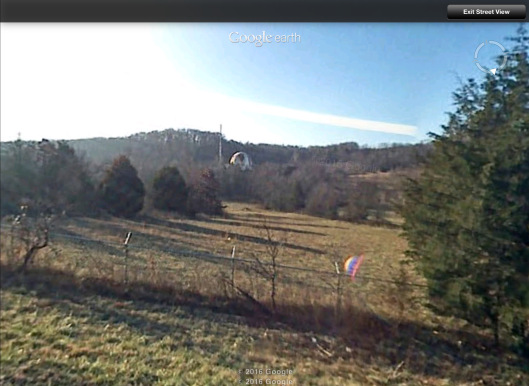


3 pounds of sodium metal plus water, public domain via Wikimedia
Sodium “May ignite spontaneously in air…
View original post 4,609 more words
Japan Diary 2016, Fukushima+5 Part 3. People are Sick Now

 Fukushima Units 3 (right) and 4 (left), April 2011
Friends, I am sorry, but I am not sharing any faces or names. I want to protect these women. Nonetheless I can tell you they are more beautiful than any temple…
Radioactivity and the radiation it produces is invisible. I am here in Japan, and after leaving Fukushima Prefecture have begun our speaking tour. Steve Leeper has called on his networks via YMCA and consumer coops to host events, and his ally, Mori-Jushoku has reached out to his Buddhist communities. We have a brisk schedule with one to three events a day spanning five Prefectures. Arnie Gundersen (www.fairewinds.org) is also touring. Some legs we are together, others we diverge.
People who have fled Fukushima turn up at our events…and side-gatherings are organized for me to meet with mothers and grandmothers who have moved out of contaminated areas. These meetings…
View original post 850 more words
March 3 Energy News

World:
¶ The six-turbine Coonooer Bridge wind farm in the Australian state of Victoria has become the first operational wind farm from the Australian Capital Territory’s wind auction process. The 20-MW wind farm is expected to become fully operational this month. [SeeNews Renewables]
 Wind farm in Australia. Author: Steven Caddy. License: Creative Commons, Attribution 2.0 Generic
¶ According to a study led by the University of Leeds, about 80,000 air quality-related deaths are prevented each year as a direct result of the introduction of European Union policies and new technologies. They led to a 35% reduction in fine particles in the atmosphere since 1970. [CleanTechnica]
¶ In Scotland, 70% of those polled want to see more renewable energy such as wind, solar, wave and tidal, and two-thirds agreed that the next government should “continue to take forward policies that tackle greenhouse gas emissions and climate change.”…
View original post 569 more words
Japan Diary 2016, Fukushima+5 Part 2. Hope and False Hope: Atomic Fallout Changes our Environment and Always Results in Injustice
 Fukushima, April 2011
Some who read yesterday’s post from Temporary Housing near Koriyama, Fukushima Prefecture are probably still unhappy with me! The idea that small reductions in radiation exposure are any kind of “solution” flies in the face of what we know: there is no safe dose of radiation. We say: “No cure, only prevention!”
The women that I met on my first day here have no choice. Elders (60+), many have moved 4 or 5 times since they were forced to leave their homes in March 2011; some report when they reached the first Evacuation Center that their contamination levels were so high they pegged the monitors. Now most of their husbands are gone, their children have jobs in the big cities now, they are alone. For one reason or another, they need the support they get by staying where they are. Where they live now is unrestricted but…
View original post 1,095 more words
1 This Month

of the week – Shut Down Drone Warfare!


Tell the Ukrainian Government to Drop Prosecution of Peace Activist Yurii Sheliazhenko

Petition to revoke the licensing of the Near Surface Nuclear Disposal Facility (NSDF) at Chalk River. https://www.ourcommons.ca/petitions/en/Petition/Details?Petition=e-7247
To see nuclear-related stories in greater depth and intensity – go to https://nuclearinformation.wordpress.com
-
Archives
- April 2026 (68)
- March 2026 (251)
- February 2026 (268)
- January 2026 (308)
- December 2025 (358)
- November 2025 (359)
- October 2025 (376)
- September 2025 (257)
- August 2025 (319)
- July 2025 (230)
- June 2025 (348)
- May 2025 (261)
-
Categories
- 1
- 1 NUCLEAR ISSUES
- business and costs
- climate change
- culture and arts
- ENERGY
- environment
- health
- history
- indigenous issues
- Legal
- marketing of nuclear
- media
- opposition to nuclear
- PERSONAL STORIES
- politics
- politics international
- Religion and ethics
- safety
- secrets,lies and civil liberties
- spinbuster
- technology
- Uranium
- wastes
- weapons and war
- Women
- 2 WORLD
- ACTION
- AFRICA
- Atrocities
- AUSTRALIA
- Christina's notes
- Christina's themes
- culture and arts
- Events
- Fuk 2022
- Fuk 2023
- Fukushima 2017
- Fukushima 2018
- fukushima 2019
- Fukushima 2020
- Fukushima 2021
- general
- global warming
- Humour (God we need it)
- Nuclear
- RARE EARTHS
- Reference
- resources – print
- Resources -audiovicual
- Weekly Newsletter
- World
- World Nuclear
- YouTube
-
RSS
Entries RSS
Comments RSS
 nuclear-news