South Carolina takes legal action against DOE over unfinished Nuclear Fuel Project
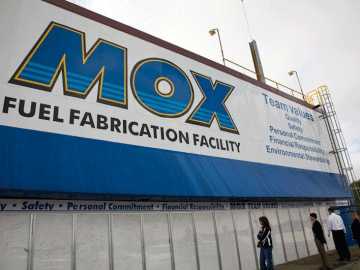
 SC Sues Energy Dept Over Unfinished Nuclear Fuel Project http://abcnews.go.com/US/wireStory/sc-sues-energy-dept-unfinished-nuclear-fuel-project-36812338 By MEG KINNARD, ASSOCIATED PRESS COLUMBIA, S.C. — Feb 9, 2016 South Carolina has again sued the federal government over an unfinished project to convert nuclear weapons components into reactor fuel, saying in a lawsuit filed Tuesday that the administration has acted unconstitutionally in failing to complete the mixed-oxide facility by a Jan. 1 deadline.
“The federal government has a responsibility to follow through with its promises,” state Attorney General Alan Wilson said in a statement provided to The Associated Press. “The Department of Energy has continually shown disregard for its obligations under federal law to the nation, the state of South Carolina and frankly the rule of law.”
Federal officials didn’t immediately return a message seeking comment.
The program is intended to turn weapons-grade plutonium into commercial nuclear reactor fuel to fulfill a nonproliferation deal with Russia. Under the agreement, Russia and the U.S. agreed to dispose of at least 34 metric tons apiece of weapons-grade plutonium, enough material for about 17,000 nuclear warheads, which would then be turned into commercial nuclear reactor fuel.
The project at the Savannah River Site, along the South Carolina-Georgia border, is years behind schedule and billions over its original budget. Because the facility wasn’t operational by a Jan. 1 deadline, the federal government was supposed to remove 1 metric ton of plutonium from South Carolina or pay fines of $1 million a day for “economic and impact assistance” — up to $100 million yearly — until either the facility meets production goals or the plutonium is taken elsewhere for storage or disposal.
The suit also seeks daily fines of $1 million and the plutonium removal.
The lawsuit has been expected. Last month, Gov. Nikki Haley told Wilson that she wanted to sue, also warning Energy Secretary Ernest Moniz in December that the state would be forced to sue if his agency didn’t start making payments. A clause in the law, however, makes the fine “subject to the availability of appropriations.”
The Obama administration has gradually scaled down funding for the project, proposing to mothball it in 2014, citing cost overruns and delays. That prompted a lawsuit, with the state saying the federal government had made a commitment to South Carolina and couldn’t use money intended to build the plant to shut it down.
The state ultimately dropped the suit when the administration committed to funding the project through that fiscal year. But the administration has since said it’s searching for an alternate, less expensive way to dispose of the plutonium, like immobilizing it in glass or processing it in different kinds of reactors.
In his budget submitted Tuesday, President Barack Obama included minimal funding for the mixed-oxide fuel project.
Kinnard can be reached at http://twitter.com/MegKinnardAP . Read more of her work athttp://bigstory.ap.org/content/meg-kinnard/
No comments yet.
1 This Month
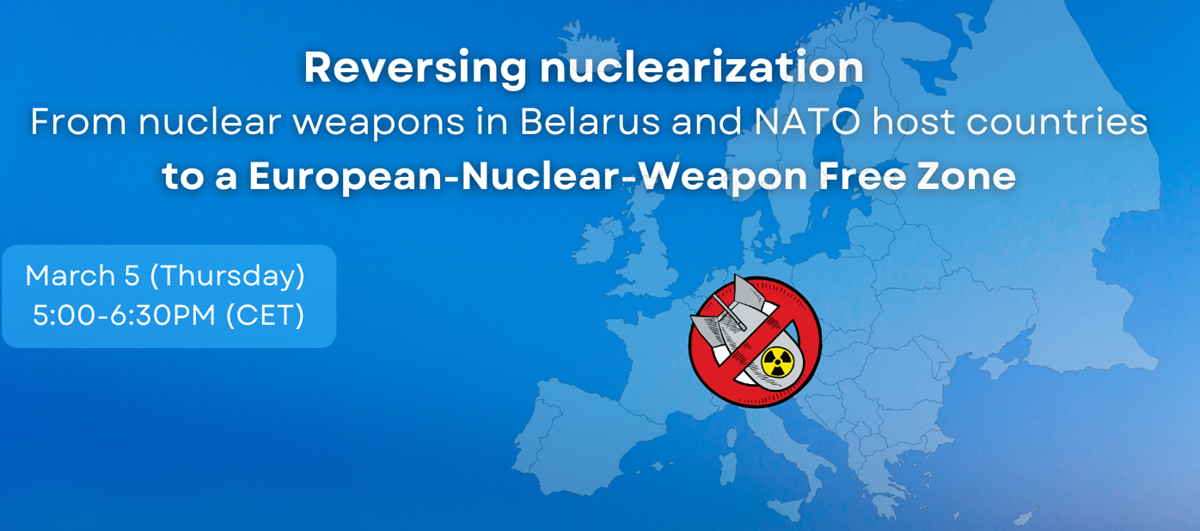
5 March -Online – Reversing nuclearization:
From nuclear weapons in Belarus and NATO host countries to a European-Nuclear-Weapon Free Zone
11am-12:30pm Eastern Time USA / 5pm-6:30pm CET

of the week – Advocating for a
nuclear free beach – https://www.samuellawrencefoundation.org/
The Samuel Lawrence Foundation advocates for a Nuclear Waste Free Beach at San Onofre, join us and take action!
10 March A LIVE WEBINAR THE REAL EFFECTS OF NUCLEAR POWER
What the Industry Isn’t Telling Us
1:00 PM Mountain, 2 pm Central, 3 pm Eastern. Live on the Keepers of the Water Facebook page

18 March Webinar @ 1 PM EST: An Assessment of SMR Projects: The Case of Canada
register for the zoom:
https://us02web.zoom.us/webinar/register/WN_o8BIIOUvQ2ONJR1nta65DQ#/registration

of the week – STOP SMALL MODULAR REACTORS IN CANADA
To see nuclear-related stories in greater depth and intensity – go to https://nuclearinformation.wordpress.com
-
Archives
- March 2026 (38)
- February 2026 (268)
- January 2026 (308)
- December 2025 (358)
- November 2025 (359)
- October 2025 (376)
- September 2025 (258)
- August 2025 (319)
- July 2025 (230)
- June 2025 (348)
- May 2025 (261)
- April 2025 (305)
-
Categories
- 1
- 1 NUCLEAR ISSUES
- business and costs
- climate change
- culture and arts
- ENERGY
- environment
- health
- history
- indigenous issues
- Legal
- marketing of nuclear
- media
- opposition to nuclear
- PERSONAL STORIES
- politics
- politics international
- Religion and ethics
- safety
- secrets,lies and civil liberties
- spinbuster
- technology
- Uranium
- wastes
- weapons and war
- Women
- 2 WORLD
- ACTION
- AFRICA
- Atrocities
- AUSTRALIA
- Christina's notes
- Christina's themes
- culture and arts
- Events
- Fuk 2022
- Fuk 2023
- Fukushima 2017
- Fukushima 2018
- fukushima 2019
- Fukushima 2020
- Fukushima 2021
- general
- global warming
- Humour (God we need it)
- Nuclear
- RARE EARTHS
- Reference
- resources – print
- Resources -audiovicual
- Weekly Newsletter
- World
- World Nuclear
- YouTube
-
RSS
Entries RSS
Comments RSS
 nuclear-news
Leave a comment