New educational video on Canada’s plan for nuclear waste dump near Great Lakes
That’s the nut-shelled version of the new 3.5-minute video from Stop the Great Lakes Nuclear Dump, the Canadian group that has been spearheading an international petition drive to convince the Canadian government not to proceed with a plan to build a Deep Geological Repository to store low- and intermediate-level nuclear waste in Kincardine, Ontario, on the shore of Lake Huron.
“We had been thinking about making a video for some time,” said Beverly Fernandez, founder of Stop the Great Lakes Nuclear Dump. “With the decision coming up from the Trudeau government, we decided to go ahead with it.”
Catherine McKenna, the Canadian Minister of Environment and Climate Change, is scheduled to decide the fate of the dump on March 1.
The video has a dual purpose. “The first goal is to build awareness and opposition in Canada and the U.S. to the proposed dump,” said Fernandez, who lives in Southampton, a lakefront community just north of Kincardine. “Second is to get a flood of emails going to Prime Minister Justin Trudeau and Minister McKenna so they can see how large the opposition is to this.”
“The three sites are Asse II and Morsleben in Germany and the Western Isolation Pilot Plant in New Mexico,” Fernandez said as an aside in the interview.Published: Saturday, January 23, 20162
“They all leaked,” the video continues. “The protection of the Great Lakes from buried radioactive nuclear waste is responsible stewardship and is of national and international importance. Canadians, Americans and indigenous peoples have a right to clean, safe drinking water. It is imperative that a responsible solution for dealing with Ontario’s nuclear waste be found. Burying and abandoning radioactive nuclear waste right beside the drinking water of 40 million people is not the answer. The fate of Ontario’s nuclear waste burial plan is in the hands of Prime Minister Justin Trudeau.”
“Would you bury poison beside your well? Email Prime Minister Trudeau, Minister McKenna and your Member of Parliament. Urge them to say no to Ontario’s planned nuclear waste dump … before it’s too late,” the video says.
The video can be found online at youtube.com/watch?v=_s6C4ClH17U&feature=youtu.be or the group’s website at stopthegreatlakesnucleardump.com. http://www.voicenews.com/articles/2016/01/23/news/doc56a252c2461a4623903048.txt?viewmode=3
Japan’s nuclear regulator needs to strengthen inspections, says IAEA

 IAEA: Japan’s nuclear watchdog needs to strengthen inspections, staff competency http://www.japantoday.com/category/national/view/iaea-japans-nuclear-watchdog-needs-to-strengthen-inspections-staff-competency By Mari Yamaguchi JAN. 23, 2016 TOKYO —
Japan has improved its nuclear safety regulation since the 2011 Fukushima disaster, but it still needs to strengthen inspections and staff competency, a team of experts from the International Atomic Energy Agency said Friday.
It was the first IAEA review for Japan’s Nuclear Regulation Authority since it was established in 2012. Japan adopted stricter safety requirements for plant operators, but a law regulating on-site inspections remained mostly unchanged.
The 17-member team, which concluded a 12-day inspection that included the wrecked Fukushima plant, said the Nuclear Regulation Authority demonstrated independence and transparency — crucial elements lacking before the disaster, when an earlier agency was in charge.
The Fukushima Dai-ichi nuclear power plant was hit by a massive earthquake and tsunami in March 2011, triggering triple meltdowns. Government, parliamentary and private investigations have blamed complacency about safety, inadequate crisis management skills, a failure to keep up with international safety standards, and collusion between regulators and the nuclear industry.
The IAEA inspection team urged the Nuclear Regulation Authority to enhance inspection competence and the government to amend its nuclear safety law to make on-site safety checks more effective and flexible.
Mission leader Philippe Jamet, a French regulatory commissioner, said Japan’s inflexible inspection rules do not allow inspectors to move freely at nuclear facilities or respond quickly when there is a problem.
“What we found is that the system that is regulating, that is defining the framework of inspection is very complex and very rigid,” Jamet said at a news conference.
Japan has a comprehensive framework but “it doesn’t give enough freedom for the inspectors to react immediately and to provide results,” he said. “At any time and for any plant, inspectors should be allowed to go where they want.”
A final report by the team is expected in about three months.
Japan’s top nuclear commissioner, Shunichi Tanaka, acknowledged the shortcomings and said, “We have to focus on tackling the challenges of inspection system and human resources.”
Masakazu Shima, a Japanese regulator who assisted the inspection team, said the inspection issue was also raised by an earlier IAEA mission in 2007 but Japan never took action.
Renewable energy development hindered in Japn
The powerful nuclear industry, frozen in the immediate aftermath of the disaster, has since reasserted itself.
the so-called “nuclear village” — a term applied to the various intersecting groups with an interest in the industry — has deliberately thwarted renewables progress, through things like grid access refusal and misrepresenting costs.

Despite nuclear fears, Japan solar energy sector slow to catch on, Aljazeera America January 23, 2016by Joe Jackson FUKUSHIMA, Japan — Morihiko Shimamura has a vision for the future, depicted in a cartoonish community map on his partially biomass-powered truck. In the drawing, solar panels sit atop self-sufficient buildings, as waterways generate hydropower alongside wind turbines, and transmission cables are buried underground.
As he drives around this large prefecture, teaching schoolchildren how to make rudimentary photovoltaic cells, the 57-year-old cofounder of an umbrella of not-for-profit sustainability organizations advertises his optimistic vision.
But current reality is very different. The landscape here still bears the scars of a 2011 earthquake, tsunami, and subsequent nuclear reactor meltdown. Piles of black bags containing contaminated topsoil litter hillsides; display panels along an expressway show high radioactivity readings; and some villages remain ghost towns, largely off-limits to residents.
“I want people to know that the technology, we can make it, and then also we can make by ourselves the energy … [and] create the society without nuclear plants,” Shimamura explained through a translator.
Local officials endorse his plan, in theory. They too want Fukushima to get all its energy from renewables by 2040. Solar panels are already visible on rooftops, in backyards and open spaces, while green enterprises and research institutes are encouraged to locate there. Nor is the prefecture is alone in its hope to use the tragedy as the catalyst for change. In opinion polls, a majority of Japanese citizens consistently support the goal of abandoning nuclear power while harnessing more renewable energy. Former prime ministers, leading businessmen and a one-time nuclear industry executive are among those urging rapid transformation. Continue reading
UK Nuclear Offshore Pipeline Test Drilling will Churn Up Old Nuclear Waste; Operation will Add More Nuclear Waste to Irish Sea-Ocean: Write to Oppose

NuGeneration Limited (NuGen) wants to build three nuclear reactors (Moorside) near Sellafield nuclear site in Cumbria UK. NuGen is a consortium of Japan’s Toshiba and France’s ENGIE (GDF-Suez). Like all nuclear reactors, they will legally discharge lethal radioactive materials into waterways. Although ocean dumping of nuclear waste is supposed to be illegal, offshore pipelines apparently remain a loophole. Radioactive discharges from the offshore pipeline(s) of Moorside would add to the already heavy radioactive burden of the Irish Sea and ultimately the Arctic. Not only Britain, but Ireland, Norway and those concerned with the Arctic should be alarmed. Additionally, cooling water intake pipes trap and kill marine life. Of current concern, borehole surveys for the intake and outfall pipes will disturb over half a century of radioactive sediment from nearby Sellafield’s discharges.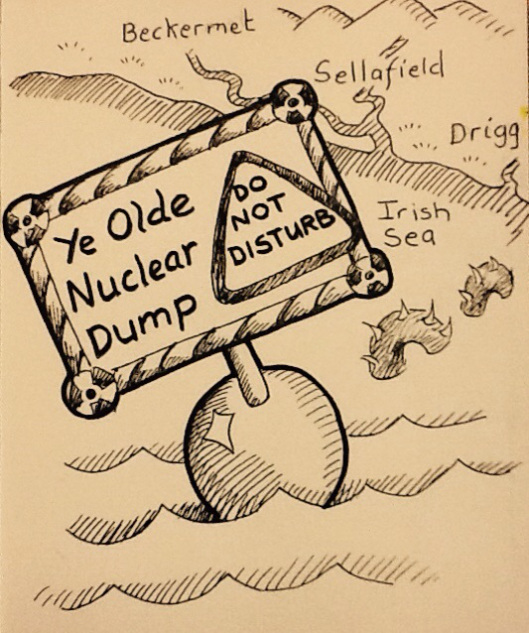
Artwork by Marianne Birkby
As explained by Marianne Birkby of Radiation Free Lakeland:
“NuGen plan to drill/blast 40…
View original post 658 more words
The Best Way to Cure Cancer is to Prevent It and Stephen Comley’s Letter to VP Joe Biden re Nuclear Safety Concerns
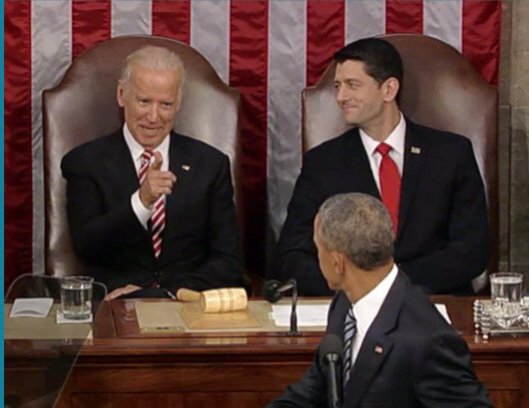
VP Biden and President Obama know about cancer. Biden lost his son and Obama his mother. They say they want to “cure” cancer:
“Last year, Vice President Biden said that with a new moonshot, America can cure cancer… So tonight, I’m announcing a new national effort to get it done… I’m putting Joe in charge of Mission Control. For the loved ones we’ve all lost, for the families that we can still save, let’s make America the country that cures cancer once and for all. (Applause.)… Medical research is critical. We need the same level of commitment when it comes to developing clean energy sources.” https://www.whitehouse.gov/the-press-office/2016/01/12/remarks-president-barack-obama-–-prepared-delivery-state-union-address
The best way to cure cancer is to prevent it in the first place. Recent research suggests that cancer risk from ionizing radiation is worse than previously thought – maybe 26 times (or more) worse:
https://miningawareness.wordpress.com/2015/12/19/another-look-at-the-recent-low-dose-radiation-exposure-study-inworks/. There is no safe…
View original post 2,536 more words
Did Lightening Kill Louisiana Nuclear Reactor? Zero Power for Almost 2 Weeks After Thunderstorm. Revive It Not Again!
Almost two weeks ago “On 1/9/16 at 0237 [CST], River Bend Station sustained a reactor scram during a lightning storm.“. It belongs to Entergy.
It has been at zero power since. Is the River Bend Nuclear Reactor dead? Or will they put it back on life support for it… Death support for everyone else?
It is unclear if it took a direct hit or if it was a surge from the electrical grid, since strangely nuclear reactors are dependent upon outside power from the grid or backup diesel generators.
Huh? Yeah, that’s right! The US NRC says so:
“The reactor’s core contains fuel assemblies that are cooled by water circulated using electrically powered pumps. These pumps and other operating systems in the plant receive their power from the electrical grid. If offsite power is lost, emergency cooling water is supplied by other pumps, which can be powered…
View original post 499 more words
The week in nuclear news
 EUROPE. Nuclear hazards extend beyond a nation’s borders: Belgium a case in point
UK. Senior Tories agree with Jeremy Corbyn on ditching Trident nuclear weapons system. Jeremy Corbyn suggests submarines without warheads. Inquiry into Litvinenko’s radiation murder points to Putin as instigator. EDF Directors might delay UK Hinkley nuclear decision yet again.Nuclear waste plans an abuse of democracy in Britain.
China, Russia. Big anxieties with China and Russia’s plans for floating nuclear reactors
USA. Republican presidential candidates clueless on the danger of nuclear arms race. Bernie Sanders opposes the one $trillion nuclear weapons plan. “Modernisation” making nuclear war more likely: time to renew disarmament process. Best to store nuclear wastes locally in deep bores, not export it. Stanford experts warn on the nuclear risks for Waste Isolation Pilot Plant in southeastern New Mexico. Radioactive material constantly being emitted from LA gas blowout.
JAPAN. Fukushima cleanup will need underwater robots
CANADA. 92,000 petition Canada.Don’t store nuclear waste near Great Lakes
TAIWAN. Why is the media ignoring the anti nuclear success in Taiwan‘s election landslide?
SPAIN. Anniversary of a nuclear disaster in Spain.
IRAN. Sanctions lifted as Iran complies with nuclear deal
SOUTH AFRICA. Political connections in South Africa’s uranium energy drive. Radiation hazards in planned uranium mining in the Karoo, South Africa.
RENEWABLE ENERGY Record $329BN GLOBAL INVESTMENT IN 2015 in RENEWABLE ENERGY.
How the tax payer funds the nuclear industry – to keep it alive
The many ways of counting subsidies
Among the goodies routinely given away, according to the Concerned Scientists, are:
- Subsidies at inception, reducing capital costs and operating costs.
- Accounting rules allowing companies to write down capital costs after cost overruns, cancellations and plant abandonments, reducing capital-recovery requirements,
- Recovery of ‘stranded costs’ (costs to a utility’s assets because of new regulations or a deregulated market) passed on to rate payers.
 Yes, you read that last item correctly. Even when the energy industry receives its wish to be rid of regulation, it is entitled to extra money because of the resulting rigors of market pressures.
The ongoing environmental disaster at Fukushima is a grim enough reminder of the dangers of nuclear power. But nuclear does not make sense economically, either. Continue reading
Local medical cyclotrons, not nuclear reactors, best for producing medical isotopes
 Medical isotope production in Australia: Should we be using reactor based or cyclotron technology? 15th January 2016 Dr Margaret Beavis MBBS FRACGP MPH Medical Association for Prevention of War, Australia Health Professionals Promoting Peace “…….Cyclotron isotope production A cyclotron is an electromagnetic device (about the size of a four wheel drive car) used to accelerate charged particles (ions) to sufficiently high speed (energy) so that when it impinges upon a target the atoms in the target are transformed into another element. 10 In other words, it uses electricity and magnets to shoot a narrow beam of energy at elements, e.g. molybdenum-100, a natural material, and this produces technetium-99.
Senior Tories agree with Jeremy Corbyn on ditching Trident nuclear weapons system
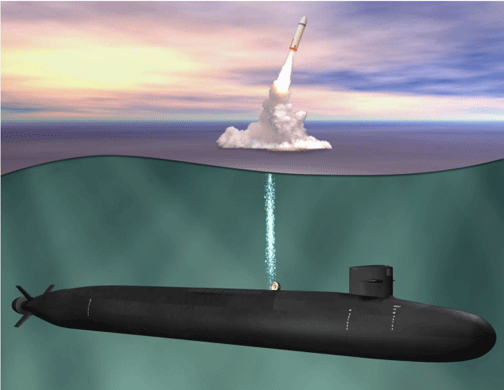
 Not just Jeremy Corbyn – senior Tories also think ditching Trident might be a good idea https://tompride.wordpress.com/2016/01/18/not-just-jeremy-corbyn-senior-tories-also-think-ditching-trident-might-be-a-good-idea/18 Jan 2016 by Tom Pride
Perhaps the Cameron government should be more careful before labelling Jeremy Corbyn a national security ‘threat’ just for saying Trident should be scrapped. Because there are several influential people in the Tory Party who think Trident should be scrapped too.
Former Conservative Defence Secretary Michael Portillo agrees with Jeremy Corbyn:
“Our independent nuclear deterrent is not independent and doesn’t constitute a deterrent against anybody that we regard as an enemy. It is a waste of money and it is a diversion of funds that might otherwise be spent on perfectly useful and useable weapons and troops. But some people have not caught up with this reality.”
And Tim Montgomerie – who has been called one of the most influential Tories outside the cabinet – has also floated ditching Trident (from the Times last March): In fact, in 2009 Montgomerie praised the willingness of the Tory Party to discuss the scrapping of Trident as “tough thinking”.
Veteran Tory MP and former Tory Party chairman David Davis has alsoquestioned the affordability of Trident.
And before he was Prime Minister, David Cameron himself refused to rule outscrapping Trident.
But it’s not just senior Tories who agree with Corbyn.
Field Marshal Lord Bramall, General Lord Ramsbotham, General Lord Ramsbotham and General Sir Hugh Beach have denounced Trident as “irrelevant”.
And in 2009, that well-known hotbed of radical socialism, the Daily Telegraphdiscussed reasons why Trident should be scrapped.
Even the Daily Mail has in the past pondered getting rid of Britain’s nuclear deterrent.
OK. I think I’ve just about got the hang of this Trident discussion thing now.
Scrapping Trident is only a threat to national security when it’s not being proposed by a Tory?
Oh shit. Our nuclear deterrent runs on Windows XP. No, really, it does.
Big anxieties with China and Russia’s plans for floating nuclear reactors
 China and Russia plan to cover the oceans with floating nuclear power plants http://www.marketwatch.com/story/china-and-russia-plan-to-cover-the-oceans-with-floating-nuclear-power-plants-2016-01-21 By JURICADUJMOVIC Jan 21, 2016
And the big problem: Human memory is short, even when it comes to disaster
In an effort to become the largest exporter of nuclear-energy technology, China has started building a reactor housed in a floating vessel, which is scheduled to be finished by 2020. If that sounds alarming, brace yourself: More than 100 additional nuclear reactors are planned for the next decade.
The idea behind this “micro” 200-megawatt reactor (1 megawatt can power 1,000 homes) was to create a mobile energy source for offshore oil and gas exploration, as well as provide electricity, heating, and facilitate desalination for islands and coastal areas.
I don’t know about you, but this certainly gets my Geiger counter beeping with unease. While some dismiss the danger, saying floating nuclear reactors aren’t all that dangerous — nuclear-powered submarines and aircraft carriers basically fit that description — the truth remains that it’s still a freaking nuclear reactor. History taught us the price we have to pay every time “highly unlikely” disasters happen, and now that another 100 of these will be built in the coming decade, the likelihood of yet another nuclear disaster will increase.
The Chinese government did its best to cover up the disaster, silencing local and foreign journalists. Now imagine if it were a floating nuclear reactor. Nothing would change, apart from more dire consequences and even more censorship.
Also looking to join the fun in the radioactive sun is Russia’s Akademik Lomonosov. This floating nuclear power plant will be ready for deployment in October. It’s going to be used to power port cities, industrial infrastructure, and oil and gas drilling rigs and refineries, which, according to Russian Deputy Prime Minister Dmitry Rogozin, will prove to be a great asset in Arctic exploration. The ship is 144 meters long with two reactors capable of producing 70 megawatts of electricity.
Although they have their fair share of nuclear “mishaps,” the Russians are kicking their nuclear efforts up a notch: Akademik Lomonosov is only the first of many floating nuclear power plants that will be built. Vessels will also be available to rent. So far, 15 countries have shown interest in having these power plants for their own use.
Here’s where things get scary: Imagine that out of hundreds of these floating nuclear power plants, just a dozen or so become targeted by terrorists or a military force. Regardless of the scenario, the resulting tragedy would be felt worldwide.
Of course, I could be wrong. Perhaps we’re ushering in a sort of a nuclear renaissance, an age in which nuclear energy really proves to be a safer and better solution than fossil-fuel sources.
But I doubt it. Humanity has proven that it understands the dangers of something only when the worst has already happened, and even then just for a brief while. ..
You can thank the Chernobyl disaster for 20 years of stagnation (1986-2006) during which time fewer nuclear power plants were built. In 2007, however, humanity tried its luck with nuclear energy again. Following a short increase, we saw yet another decline in 2011. Why? You guessed it: That was the year of the Fukushima disaster, and it took the world less than five years to forget the effects of the meltdown. It’s time for another adventure!
But what of Fukushima? As of 2013, the site in Japan remained highly radioactive, with some 160,000 evacuees still living in temporary housing, and tracts of land that will likely remain unsuitable for farming for centuries. The difficult cleanup job will take 40 years or longer to complete, and will cost tens of billions of dollars. Following the disaster, Japan shut down 54 nuclear power plants.
We’ve seen what happens when things go awry with just one nuclear power plant. Now, with hundreds in the making, will we live long enough to finally learn from our mistakes? Let’s hope so.
Best to store nuclear wastes locally in deep bores, not export it
The deep borehole project is particularly interesting because almost anywhere you look in America, there are deep rocks perfect for this method. Every state can have its own borehole repository, much to some of these state’s annoyance, since most political leaders would rather foist their waste off on someone else and claim victory for their constituents.
But Congress doesn’t exactly like the deep borehole idea because they would not be able to gang up on one state and force it down their throat. Each state would have its own deep nuclear disposal boreholes and wouldn’t be able to promise their citizens that the nuclear waste would ever leave their state
 DOE Tries To Change The Rules On Nuclear Waste Disposal http://www.forbes.com/sites/jamesconca/2016/01/21/doe-tries-to-change-the-rules-on-nuclear-waste-disposal/#2715e4857a0b28df073f561e James Conca , “……..DOE is funding a study to drill a borehole more than 3 miles deep into the Earth’s crust below North Dakota to test a disposal method for radioactive waste called Deep Borehole Disposal. In this scenario, waste would be placed in the lower mile of the borehole in crystalline rock that would isolate the waste from the surface and shallow environments.
The borehole would then be filled up with some special layers, including asphalt, bentonite, concrete and crushed rock that will isolate the waste for geologic time. The borehole would need a diameter of at least 17 inches at the bottom for placing containers, and would be lined with steel casing. Future boreholes will be wider as the technology evolves, which is has been doing lately.
These developments follow directly the recommendations of President Obama’s Blue Ribbon Commission on America’s Nuclear Future, and followed up in thePresident’s Memorandum on disposal of Defense High-Level Waste and the2013 Administration’s Strategy for the Management and Disposal of Used Nuclear Fuel and High-Level Radioactive Waste. Conca and Wright (2012)provide background on nuclear waste and interpretation of the three BRC recommendations pertaining to nuclear waste disposal that has led to these changes.
But the basic strategy of this new disposal initiative is: Continue reading
Don’t store nuclear waste near Great Lakes – 92,000 petition Canada
 92,000 petition Canada not to store nuclear waste near Great Lakes, Phys Org, January 21, 2016 Ninety-two-thousand people have pressed Ottawa to reject a proposal to store nuclear waste in an underground vault near the Great Lakes, fearing a spill would contaminate this source of drinking water for 40 million in Canada and the United States.

A 6,000-page petition signed by opponents of local utility Ontario Power Generation’s proposal to store waste in a deep limestone vault to be drilled beneath the world’s largest operating nuclear power plant on the Bruce Peninsula, more than 200 kilometers northwest of Toronto, was delivered to Environment Minister Catherine McKenna, her office confirmed Thursday.
McKenna is expected to rule on the project in March after an independent review panel in May 2015 recommended that it be approved………
any risk of contamination of the largest group of freshwater lakes, created by retreating glaciers 14,000 years go, and containing more than 20 percent of the world’s surface fresh water, is too great.
Cities and towns in the United States and Canada, including Chicago and Toronto, have passed 184 resolutions opposing the building of a nuclear waste repository here.
“No scientist, nor geologist can provide us with a 100,000-year guarantee that this nuclear waste dump will not leak and contaminate the Great Lakes,” Beverly Fernandez, who spearheaded the campaign against the storage facility, told AFP.
“So when we found out that OPG was trying to locate this nuclear waste right besides the Great Lakes—the drinking water for 40 million people in two countries—we felt compelled to do something,” she said http://phys.org/news/2016-01-petition-canada-nuclear-great-lakes.html#jCp
Green Cross assesses legacy of Fukushima and Chernobyl nuclear disasters
 FIVE YEARS AFTER FUKUSHIMA, GREEN CROSS ASSESSES LEGACY OF DISASTER Green Cross is organizing a dialogue with international experts in Zurich on 30 January to shed light on the consequences of nuclear disasters in Japan and the former Soviet Union. This year marks the fifth anniversary of the Fukushima catastrophe, and the 30th anniversary of the Chernobyl meltdown. Both of those incidents continue to affect the people and environment of surrounding regions to this day.
Green Cross has been working on the ground at Fukushima ever since the disaster hit, and has over 20 years’ experience helping victims of Chernobyl in Russia, Ukraine and Belarus. The Zurich conference brings together experts and practitioners from Japan, Russia and Switzerland to share their experiences and participate in a frank exchange about the state of atomic energy in the world today.
The event will run from 13h30 to 15h30 in the EPF’s Maximum auditorium (Ramistrasse 101, 8092 Zurich). It will feature former Japanese Prime Minister Naoto Kan, Swiss Professor Dr. Horst-Michael Prasser, Green Cross’ own Dr. Stephen Robinson, Prof. Jonathan Samet from the University of Southern California, and Professor Dr. Vladimir Kusnetsov from the Moscow Electrotechnical Institute.
The panelists will each make a presentation, after which they will respond to audience questions. Simultaneous translation will be provided in English, German, Japanese and Russian.
Inquiry into Litvinenko’s radiation murder points to Putin as instigator
 Vladimir Putin ‘probably’ ordered KGB defector Alexander Litvinenko’s death by radioactive poisoning: inquiry, SMH, January 22, 2016 Nick Miller London: Russian President Vladimir Putin “probably” ordered the murder of defected KGB spy Alexander Litvinenko in London, an official inquiry in Britain has found.
The finding will put pressure on the British government to take fresh measures against Russia, possibly including targeted sanctions and travel bans. It may also harm potential co-operation in military action against ISIS, and upcoming peace talks on the Syrian conflict.
Litvinenko died in November 2006 after a radioactive poison was slipped into his tea at a London hotel.
The inquiry examined expert evidence and heard testimony from forensic scientists and family members, as well as secret evidence that was not disclosed in the public report – but believed to be from Western intelligence agencies.
Sir Robert said he was “sure” that Litvinenko was deliberately poisoned with the radioactive element polonium 210, which he ingested on November 1, 2006.
That afternoon Litvinenko had met two men for tea at the Pine Bar of the Millennium Hotel in Mayfair, London.
The men were Andrey Lugovoy and his associate Dmitri Kovtun – former Russian army officers. Lugovoy was a former KGB agent.
Forensic evidence showed the Pine Bar was “heavily contaminated” with polonium 210, the inquiry found………http://www.smh.com.au/world/vladimir-putin-probably-ordered-kgb-defector-alexander-litvinenkos-death-inquiry-20160121-gmba0w
1 This Month
Chernobyl: The Lost Tapes – A good documentary on Chernobyl on SBS available On Demand for the next 3 weeks– https://www.sbs.com.au/ondemand/tv-program/chernobyl-the-lost-tapes/2352741955560

of the week–London Campaign for Nuclear Disarmament

Tell the Ukrainian Government to Drop Prosecution of Peace Activist Yurii Sheliazhenko
To see nuclear-related stories in greater depth and intensity – go to https://nuclearinformation.wordpress.com
-
Archives
- April 2026 (114)
- March 2026 (251)
- February 2026 (268)
- January 2026 (308)
- December 2025 (358)
- November 2025 (359)
- October 2025 (376)
- September 2025 (257)
- August 2025 (319)
- July 2025 (230)
- June 2025 (348)
- May 2025 (261)
-
Categories
- 1
- 1 NUCLEAR ISSUES
- business and costs
- climate change
- culture and arts
- ENERGY
- environment
- health
- history
- indigenous issues
- Legal
- marketing of nuclear
- media
- opposition to nuclear
- PERSONAL STORIES
- politics
- politics international
- Religion and ethics
- safety
- secrets,lies and civil liberties
- spinbuster
- technology
- Uranium
- wastes
- weapons and war
- Women
- 2 WORLD
- ACTION
- AFRICA
- Atrocities
- AUSTRALIA
- Christina's notes
- Christina's themes
- culture and arts
- Events
- Fuk 2022
- Fuk 2023
- Fukushima 2017
- Fukushima 2018
- fukushima 2019
- Fukushima 2020
- Fukushima 2021
- general
- global warming
- Humour (God we need it)
- Nuclear
- RARE EARTHS
- Reference
- resources – print
- Resources -audiovicual
- Weekly Newsletter
- World
- World Nuclear
- YouTube
-
RSS
Entries RSS
Comments RSS
 nuclear-news
