Wisconsin Assembly approves lifting nuclear moratorium
 Assembly approves lifting nuclear moratorium http://www.startribune.com/assembly-to-vote-on-lifting-nuclear-moratorium/364957481/ Associated Press JANUARY 12, 2016 MADISON, Wis. — The state Assembly has approved a bill that would lift Wisconsin’s ban on new nuclear power plants.
Right now, state regulators can’t approve a new nuclear power plant unless a federal facility for storing waste from nuclear plants nationwide exists and such a plant wouldn’t burden ratepayers. No central federal repository exists, leaving nuclear plants to store their waste on-site.
The bill would erase the storage facility and ratepayer clauses from state law, clearing the way for new plants. The bill’s author, Republican Rep. Kevin Peterson, maintains nuclear power is an affordable option as the state faces new federal rules on greenhouse gas emissions.
The Assembly approved the bill on a voice vote Tuesday. It goes next to the state Senate.
Wisconsin could get nuclear waste dump if moratorium is lifted on new reactors

 Al Gedicks: Bill would invite radioactive waste dump to Wisconsin Wisconsin State Journal , 12 Jan 16 LA CROSSE — The Wisconsin Assembly plans to take up a bill today lifting a moratorium on new nuclear reactors.
Under current law, the state cannot approve another nuclear power plant unless there is a federally licensed repository for high-level nuclear waste, and the plant wouldn’t burden ratepayers. The nuclear industry can’t meet these common-sense conditions that have protected Wisconsin citizens for 33 years, so it wants to repeal the law.
If Wisconsin’s moratorium on building nuclear power plants is repealed, the U.S. Department of Energy (DOE) will have all the more reason to reconsider the granite bedrock of Wisconsin’s Wolf River Batholith as a permanent nuclear waste repository. The DOE is desperate to find a host for a permanent geologic repository for nuclear waste because of the failed attempt to site such a repository on the lands of the Western Shoshone Indians in Nevada.
The legislative sponsors of the repeal seem to be unaware that the moratorium was enacted to protect Wisconsin citizens from becoming the host to a permanent geologic nuclear waste repository.
In the 1980s, the DOE ranked Wisconsin’s Wolf River Batholith as one of the top three options for a high-level nuclear waste repository.
The proposed facility would be located somewhere in a 1,000-square-mile watershed that includes Langlade, Shawano, Waupaca, Menominee, Portage, Marathon and Oconto counties. The area also contains the reservation land of three tribes — the Stockbridge-Munsee, Menominee, Ho-Chunk and the ceded treaty lands where 11 bands of the Lake Superior Chippewa retain extensive hunting, fishing and gathering rights.
Wisconsin citizens and American Indian tribes were overwhelmingly opposed to becoming nuclear guinea pigs for the DOE. In a 1983 statewide referendum, 89 percent voted against a nuclear waste disposal site in Wisconsin.
After massive public opposition at public hearings in the potentially affected communities, the DOE said it would indefinitely postpone the search for a second nuclear waste site……..
Regardless of what the nuclear industry and its proponents say, there is no known way to safely dispose of this waste, which remains dangerously radioactive for thousands of years.
The only existing geologic repository for nuclear waste in this country is the Waste Isolation Pilot Plant in Carlsbad, New Mexico. This site was considered the model of safe nuclear waste storage.
But on Valentine’s Day 2014, plutonium and other radioactive elements were accidentally released into the atmosphere from the site, exposing 22 workers to small amounts of radiation. The plant has been closed since the accident.
There is no good reason to expose Wisconsin communities and Indian tribes to the risks of radioactive contamination when there are nuclear-free and carbon-free renewable energy technologies that are truly cleaner, safer, faster and cheaper. http://host.madison.com/wsj/opinion/column/al-gedicks-bill-would-invite-radioactive-waste-dump-to-wisconsin/article_a44c0713-e13b-5ab9-b1f7-d8f9a7132c42.html
Liberal govt to lock Ontario into costly nuclear rebuild

 Liberals Repeat Electricity Mistakes With Costly Nuclear Rebuild http://www.wireservice.ca/index.php?module=News&func=display&sid=18005 The Liberal government plans to lock Ontario into an expensive and risky nuclear rebuild – without reviewing costs and alternatives.


WireService.ca Media Release (01/11/2016) Queen’s Park, ON – “It’s Groundhog Day in Ontario,” says GPO leader Mike Schreiner. “Another billion dollar Liberal boondoggle without any public review of costs or alternatives to a Liberal electricity decision.”
The GPO has called for an independent, public review of rebuilding Ontario’s aging nuclear reactors – what they would cost, and what alternative options might be available. No nuclear project in Ontario’s history has delivered on time or budget. The Darlington rebuild is already over budget.
“Would you rebuild your home without exploring all options?” asks Schreiner. “It’s outrageously irresponsible for Liberals to commit billions of your dollars to a project without a review of costs and alternatives. Will Ontario taxpayers be on the hook for cost overruns once again?”
Most of the debt retirement charge on your electricity bill is to pay for past nuclear cost overruns. The Liberal decision would lock Ontario into another 30 years of nuclear power at a time when alternatives may be available – water imports from Quebec are cheaper, and the costs of renewable energy is dropping dramatically.
In addition to the tremendous financial risk, the government still has no plan to deal with radioactive nuclear waste and has not publicly released emergency plans to deal with a Fukushima scale nuclear disaster. No company will fully insure nuclear plants because the risks are too high.
OPG’s credit rating was downgraded in 2012, due to the costs associated with rebuilding Darlington. “Why do the Liberals refuse to consider less risky, cheaper alternatives to nuclear power?” asks Schreiner. “What are they trying to hide by not conducting an independent public review of costs and alternatives?”
The GPO is on a mission to bring honesty, integrity and good public policy to Queen’s Park
Census shows rapid growth of solar industry jobs in USA
 USA National Solar Jobs Census 2015 Released http://www.energymatters.com.au/renewable-news/solar-jobs-census-em5291/ January 13, 2016
The U.S. solar workforce grew to a total of nearly 209,000 last year; adding more than 35,000 workers – the third consecutive year in which growth exceeded 20%.
The Solar Foundation’s National Solar Jobs Census 2015 states the workforce has increased by 123% since 2010.
“The solar industry has once again proven to be a powerful engine of economic growth and job creation,” said Andrea Luecke, President and Executive Director of The Solar Foundation. ” Our Census findings show that one out of every 83 new jobs created in the U.S. over the last 12 months was in the solar industry – 1.2% of all new jobs.”
The USA’s solar workforce is now three times the number employed in the coal mining industry and also larger than the oil and gas extraction industry.
Last year, solar industry employment grew 12 times faster than the overall US workforce.
In addition to direct employment, the US solar industry supports an additional 610,650 ancillary jobs throughout the supply chain.
When the first Census was run in 2010, the USA had installed 929MW of solar capacity that year. Last year, 7,430MW of capacity was added.
The installation sector represented the bulk of jobs in the US solar industry in 2015.
Installation – 119,931
Manufacturing – 30,282
Sales and distribution – 24,377
Project development – 22,452
All others – 11,816
Employment in all sectors grew in 2015, with the exception of solar manufacturing. However, manufacturing jobs are expected grow by 3,800 positions in 2016; supported by industry construction activity.
Approximately 90% of all solar workers are 100% dedicated to solar activities; a percentage that has been effectively unchanged since 2013.
Jobs in the solar industry continue to pay above the median wage of all occupations in the USA.
Looking ahead, a further 14.7% increase in positions is expected this year – an extra 30,000 jobs – bringing the total of U.S. solar workers to 239,625 by the end of 2016. It could perhaps be even higher as Census data collection was completed before the extension of the 30% Federal Investment Tax Credit (ITC) was announced.
The sixth annual National Solar Jobs Census can be viewed in full here (PDF).
Dangers in transporting nuclear weapons through residential areas

 Fears voiced as nuclear weapons are transported through the Vale of Leven (incl video) Daily Record, 12 JAN 2016 BY MARTIN LAING A CONCERNED resident says movement of warheads in difficult driving conditions put lives at risk
CONCERN has been expressed for public safety after a nuclear convoy was filmed rumbling through residential areas of West Dunbartonshire.
Renton man Les Robertson shot video of the mult-vehicle convoy as it moved past the Co-Op store in Balloch and through the Vale of Leven on Saturday at tea time.
However, a spokesman for the Ministry of Defence denied there was any threat to public safety and said the police had been involved in helping to organise the movement of materials to the Clyde naval base at Faslane and Couplort.
Mr Robertson wrote to the Lennox Herald this week to highlight his fears that the transportation of live nuclear warheads through the area put lives at risk.
He said: “On Saturday, January 9, a nuclear warhead convoy, consisting of four warhead carriers and support vehicles, travelled through West Dunbartonshire on route to Coulport.
“Trident warheads are carried in large crates inside the large green trucks. They are fully assembled and complete. The core of the warhead is a ball of plutonium and uranium. This is surrounded by specially developed conventional high explosives which would be ignited to create the critical mass necessary for a nuclear detonation when launched and targeted.
“The Ministry of Defence says there is little risk of a nuclear detonation during transport but, in an accident, the highly volatile conventional explosive could be set off, causing the warhead to jet plutonium. It estimates that in a serious accident a circle some 550 metres in radius would be affected by blast and fragments of explosive.
“Given the terrible driving conditions on Saturday evening, the risk of an accident was heightened yet a convoy carrying its deadly cargo was allowed to travel close to a busy supermarket in Balloch and heavily populated housing schemes including the Haldane and Dalvait.”……… To view the video, go to www.lennoxherald.co.uk.
Smaller nuclear weapons make greater risk of nuclear weapons use
As U.S. Modernizes Nuclear Weapons, ‘Smaller’ Leaves Some Uneasy, NYT By WILLIAM J. BROAD and DAVID E. SANGER JAN. 11, 2016 “…… while the North Koreans have been thinking big — claiming to have built a hydrogen bomb, a boast that experts dismiss as wildly exaggerated — the Energy Department and the Pentagon have been readying a line of weapons that head in the opposite direction.
The build-it-smaller approach has set off a philosophical clash among those in Washington who think about the unthinkable.
Mr. Obama has long advocated a “nuclear-free world.” His lieutenants argue that modernizing existing weapons can produce a smaller and more reliable arsenal while making their use less likely because of the threat they can pose. The changes, they say, are improvements rather than wholesale redesigns, fulfilling the president’s pledge to make no new nuclear arms.
But critics, including a number of former Obama administration officials, look at the same set of facts and see a very different future. The explosive innards of the revitalized weapons may not be entirely new, they argue, but the smaller yields and better targeting can make the arms more tempting to use — even to use first, rather than in retaliation.
Gen. James E. Cartwright, a retired vice chairman of the Joint Chiefs of Staff who was among Mr. Obama’s most influential nuclear strategists, said he backed the upgrades because precise targeting allowed the United States to hold fewer weapons. But “what going smaller does,” he acknowledged, “is to make the weapon more thinkable.”…….
while the North Koreans have been thinking big — claiming to have built a hydrogen bomb, a boast that experts dismiss as wildly exaggerated — the Energy Department and the Pentagon have been readying a line of weapons that head in the opposite direction.
The build-it-smaller approach has set off a philosophical clash among those in Washington who think about the unthinkable.
Mr. Obama has long advocated a “nuclear-free world.” His lieutenants argue that modernizing existing weapons can produce a smaller and more reliable arsenal while making their use less likely because of the threat they can pose. The changes, they say, are improvements rather than wholesale redesigns, fulfilling the president’s pledge to make no new nuclear arms.
But critics, including a number of former Obama administration officials, look at the same set of facts and see a very different future. The explosive innards of the revitalized weapons may not be entirely new, they argue, but the smaller yields and better targeting can make the arms more tempting to use — even to use first, rather than in retaliation.
Gen. James E. Cartwright, a retired vice chairman of the Joint Chiefs of Staff who was among Mr. Obama’s most influential nuclear strategists, said he backed the upgrades because precise targeting allowed the United States to hold fewer weapons. But “what going smaller does,” he acknowledged, “is to make the weapon more thinkable.”…….
Inside the administration, some early enthusiasts for Mr. Obama’s vision began to worry that it was being turned on its head.
In late 2013, the first of the former insiders spoke out. Philip E. Coyle III and Steve Fetter, who had recently left national security posts, helped write an 80-page critique of the nuclear plan by the Union of Concerned Scientists, a private group that made its name during the Cold War, arguing for arms reductions.
American allies and adversaries, the report warned, may see the modernization “as violating the administration’s pledge not to develop or deploy” new warheads. …….
the bigger risk to the modernization plan may be its expense — upward of a trillion dollars if future presidents go the next step and order new bombers, submarines and land-based missiles, and upgrades to eight factories and laboratories.
“Insiders don’t believe it will ever happen,” said Mr. Coyle, the former White House official. “It’s hard to imagine that many administrations following through.”
Meanwhile, other veterans of the Obama administration ask what happened.
“I think there’s a universal sense of frustration,” said Ellen O. Tauscher, a former under secretary of state for arms control. She said many who joined the administration with high expectations for arms reductions now feel disillusioned.
“Somebody has to get serious,” she added. “We’re spending billions of dollars on a status quo that doesn’t make us any safer.” http://www.nytimes.com/2016/01/12/science/as-us-modernizes-nuclear-weapons-smaller-leaves-some-uneasy.html?_r=0
It’s becoming the ‘new normal’ across the globe – renewable energy
 No2 NuclearPower January 2016 “……….Something incredible is happening right now across the globe. Achieving 100% clean energy is becoming “the new normal” in the fight to solve climate change. What’s driving this trend is a flowering of ambition. Cities across the globe are demonstrating what it means to lead with ambition. In Paris at the Climate Summit for Local Leaders, the largest-ever global gathering of local leaders focused on climate change, 1,000 mayors issued a declaration which states: “We—the undersigned mayors, governors, premiers, and other local government leaders—commit collectively to support ambitious long-term climate goals such as a transition to 100% renewable energy in our communities.” ………
World needs a global carbon tax, says aluminium billionaire
Almost every Australian mining company believes that a carbon tax in some form or another is necessary to provide the certainty required for investment. But Mr Deripaska’s call for a $US15-a-tonne tax represents a bold call in comparison
Rusal’s Deripaska calls for worldwide carbon tax THE AUSTRALIAN JANUARY 13, 2016 Barry Fitzgerald Resources Editor Melbourne
Billionaire Russian aluminium king Oleg Deripaska has slammed the lack of action after the Paris climate summit, saying the world needs to act now on introducing a carbon tax to curb emissions and fund the rise of renewables.
Writing exclusively in The Australian, Mr Deripaska, president of the world’s biggest aluminium group Rusal, says the outcome of the Paris summit late last year was nothing more than an agreement for 196 countries to “kick the can down the road a few decades’’……..
He says that without immediate action on a carbon tax, the losers from the Paris Summit are “those of us who breathe the air, drink the water, and wish for the safe and healthy environment our children and grandchildren deserve”.
………….“It is now incumbent on global governments, corporations and citizens to bring action to the words of Paris,’’ Mr Deripaska adds. He has suggested a carbon tax starting off at $US15 a tonne, increasing over time.
- “Such a tax would constitute a clear pricing mechanism and signal to the global market, providing a powerful disincentive to carbon producers and consumers,’’ Mr Deripaska says.He suggests one-third of the revenue raised could be used to “unleash an unprecedented wave of R&D investment in energy-efficient and lower carbon emissions energy sources’’……….
- A carbon tax is no stranger to either Australian government or industry, with the first proposal coming from the Hawke-Keating government in 1991 in a secret cabinet proposal sponsored by treasurer Keating. Industry reacted savagely against the proposal when the news was leaked via the media and the idea was shut down.The Howard government picked up the ball with its Renewable Energy Target in November 1997. It was a forerunner of the emissions trading system proposed by the Rudd government, which ended in Kevin Rudd’s eventual ousting on the back of Tony Abbott’s relentless campaign against the introduction of any carbon tax or emissions trading.
Mr Rudd’s successor Julia Gillard introduced the carbon tax in July 2012 that ended in her defeat as prime minister, and the tax was repealed by the newly elected Abbott government in July 2014.
Almost every Australian mining company believes that a carbon tax in some form or another is necessary to provide the certainty required for investment. But Mr Deripaska’s call for a $US15-a-tonne tax represents a bold call in comparison……. http://www.theaustralian.com.au/business/mining-energy/rusals-deripaska-calls-for-worldwide-carbon-tax/news-story/651eabfd65e51841b6b9899fd895f444
Tax-payers could end up on the hook for Ontario’s upgrade of Pickering nuclear station
Ontario to squeeze more life out of Pickering nuclear station, City News, THE CANADIAN PRESS JAN 11, 2016 Ontario’s Liberal government wants to squeeze four more years of life out of the Pickering nuclear station.
It will start a $12.8 billion refurbishment of the Darlington power station this fall.
Nuclear reactors at both stations owned by Ontario Power Generation (OPG) were originally scheduled to be decommissioned in 2020.
But cabinet decided to keep Pickering running until 2024 while the four nuclear reactors at the Darlington station are rebuilt to extend their lives by about 30 years…….
Ontario’s Progressive Conservatives and New Democrats are worried taxpayers will be on the hook for huge cost overruns with the Darlington rebuild, noting nuclear projects never come in on budget…… Ontario companies in the CANDU reactor supply chain.http://www.citynews.ca/2016/01/11/ontario-to-squeeze-more-life-out-of-pickering-nuclear-station/
Louisiana Nuclear Reactor Scrammed by Lightning Strike

A nuclear reactor in Louisiana and it is not prepared for thunderstorms? If it cannot be protected why did they even open this nuclear reactor?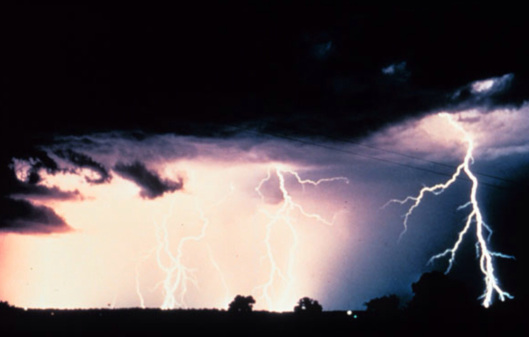

“WORLDWIDE LIGHTNING STRIKES
Imaging Sensor (LIS) Science Team Data from space-based optical sensors reveal the uneven distribution of worldwide lightning strikes, with color variations indicating the average annual number of lightning flashes per square kilometer. The map includes data obtained from April 1995 to February 2003 from NASA’s Optical Transient Detector; and from January 1998 to February 2003 from NASA’s Lightning Imaging Sensor (LIS). CREDIT: NASA MSFC Lightning
http://www.nasa.gov/centers/goddard/news/topstory/2004/0621lightning_prt.htm
Zoom in to Louisiana.
“AUTOMATIC REACTOR SCRAM ON MAIN STEAM ISOLATION DUE TO ELECTRICAL FAULT
On 1/9/16 at 0237 [CST], River Bend Station sustained a reactor scram during a lightning storm. An electrical transient occurred resulting in a full main steam isolation [MSIV] (Group 6) and a Division II Balance of Plant isolation signal…
View original post 343 more words
January 12 Energy News

Opinion:
¶ What does solar have to do with the bankruptcy of the second-largest US coal miner? • There is a relationship between both solar and wind and the decline of fossil fuels. As there is no fuel cost for solar or wind, both can bid into competitive electricity systems with no marginal cost. [pv magazine]
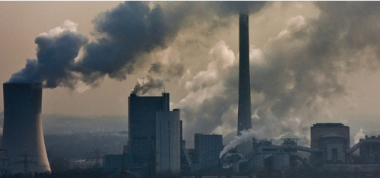 Coal power is on its way out in the United States,
and solar can benefit. Wikimedia/Flocko
Science and Technology:
¶ The methane and other pollutants spewing from a gas well in California is invisible to the naked eye, making it hard to comprehend just how large the leak is. Fortunately, the California Air Resources Board has been taking periodic measurements, which we can use to make some comparisons. [BBC]
World:
¶ Lloyd’s Register’s consulting business will be working with Denmark’s transmission system operator to measure underwater sound propagation for the…
View original post 661 more words
Nuclear Japan and Nuclear India vs. Nuclear Russia in the Ukraine: Toshiba and Holtec vs. Rosatom
Since 2006 Westinghouse is majority owned by Toshiba. It is 90% Japan owned: Toshiba (87%) and IHI (3%) and 10% Kazakhstan state owned. Before that it belonged to the UK’s BNFL. https://en.wikipedia.org/wiki/Westinghouse_Electric_Company
Kris Singh’s Holtec was apparently founded in India before he even came to the US to graduate school. It still exists in India. He is supposed to have done his basic degree in what was apparently then a new university in India prior to going to America.
Both of these companies are “based” in the US or have bases there. Whether or not they are “American” depends on your definition of an American company.
For whatever reasons the US DOE appears to want to push the Westinghouse-Toshiba agenda in the Ukraine.
One must wonder if the personality and/or regulation conflicts mentioned below have to do with the Ukraine’s unwillingness to accept bribes? After all, Holtec was involved in…
View original post 1,445 more words
Nuclear Power Station Shenanigans Intensify in Ukraine; Defamation Case Update
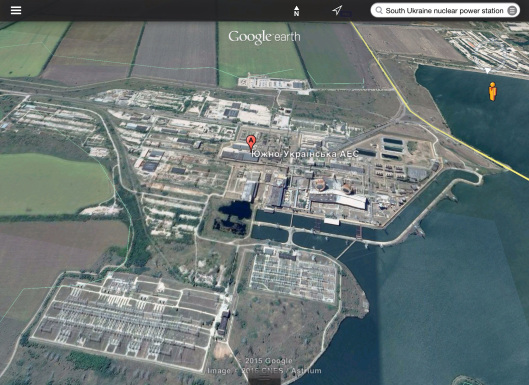

From Bankwatch.org:
“Nuclear plant shenanigans intensify in Ukraine
Bankwatch Mail, December 17, 2015
An ageing nuclear unit in the South Ukraine power plant has become the latest to have its expiry date rewritten by Ukrainian authorities, despite a number of pending safety issues and concerns over compliance with international treaties.
The board of Ukraine’s nuclear regulator SNRIU decided in early December to prolong the operation of unit 2 in the South Ukraine nuclear power plant beyond its original expiry date. Designed to work for no more than three decades, this nuclear reactor will be able to continue operations for ten more years as soon as the board decision is approved by the head of the SNRIU, even though a number of high priority safety upgrades are yet to be completed.
The nuclear regulator had ruled earlier this year that the unit had 33 safety deviations which needed to be…
View original post 484 more words
Ukraine Snubs Safety Concerns, European Donors, Transboundary Impacts: Extends Lifetime of Fourth Soviet-Era Nuclear Reactor
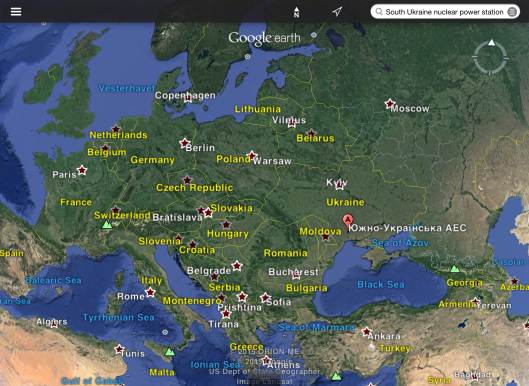

From Bankwatch.org:
“Ukraine snubs safety concerns and European donors, extends lifetime of fourth Soviet-era nuclear reactor
December 8, 2015
Kiev, Prague – An ageing nuclear unit in the South Ukraine power plant is the latest to have its expiry date rewritten by overzealous Ukrainian authorities, despite a number of pending safety issues and concerns over compliance with international treaties.
The board of Ukraine’s nuclear regulator SNRIU has yesterday (Monday) given the green light to the prolonged operation of unit 2 in the South Ukraine nuclear power plant beyond its original expiry date. Designed to work for no more than three decades, this nuclear reactor will be able to continue operations for ten more years as soon as the board decision is approved by the head of the SNRIU, even though a number of high priority safety upgrades are yet to be completed.
In its meeting on April 30, 2015…
View original post 545 more words
PTS at Palisades; yes, they knew.

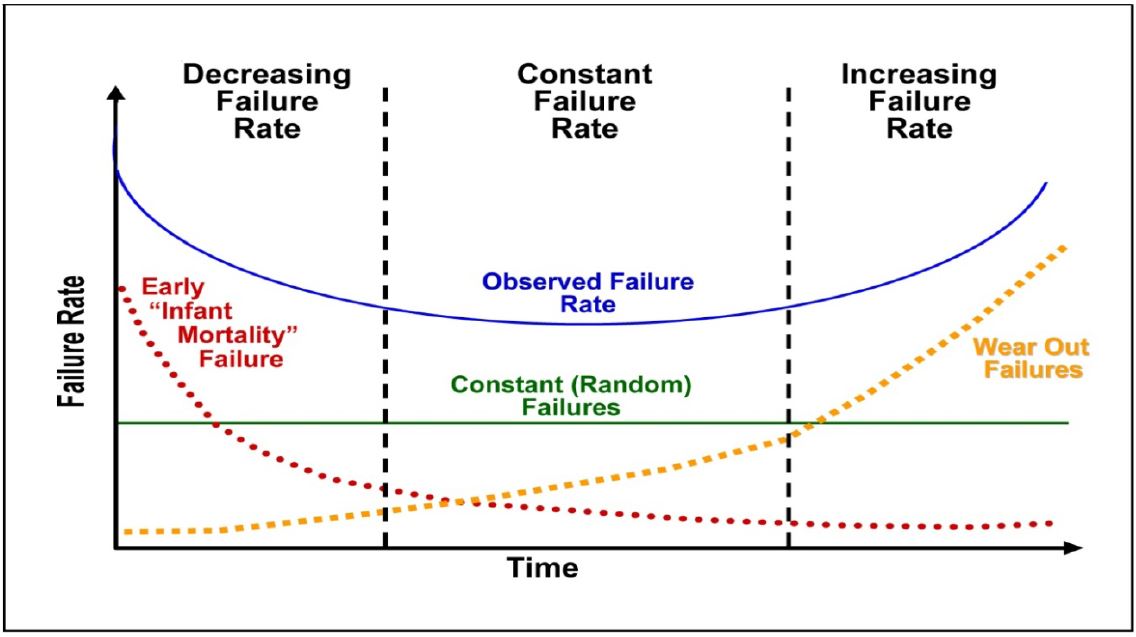 A couple decades ago, the Union of Concerned Scientists (UCS) published what it called the “bathtub curve.” This curve charted the expected and observed performance of nuclear reactors from initial operation until final shutdown. The main finding of note was that when a reactor first comes online, typically there are a large number of problems as the operators learn the technology of that specific reactor, issues resulting from construction deficiencies surface, etc. After a shakedown period of a year or two, reactor operations typically settle down for quite a while, with most reactors operating relatively efficiently. But as time goes on, problems associated with reactor aging–components being exposed to extraordinarily high heat and radiation as well as the simple reality that all things mechanical break down over time–begin to materialize and safety issues begin to mount again.
As we have been seeing at reactors across the nation, especially those in…
View original post 1,017 more words
1 This Month
Chernobyl: The Lost Tapes – A good documentary on Chernobyl on SBS available On Demand for the next 3 weeks– https://www.sbs.com.au/ondemand/tv-program/chernobyl-the-lost-tapes/2352741955560

of the week–London Campaign for Nuclear Disarmament

Tell the Ukrainian Government to Drop Prosecution of Peace Activist Yurii Sheliazhenko
To see nuclear-related stories in greater depth and intensity – go to https://nuclearinformation.wordpress.com
-
Archives
- April 2026 (152)
- March 2026 (251)
- February 2026 (268)
- January 2026 (308)
- December 2025 (358)
- November 2025 (359)
- October 2025 (376)
- September 2025 (257)
- August 2025 (319)
- July 2025 (230)
- June 2025 (348)
- May 2025 (261)
-
Categories
- 1
- 1 NUCLEAR ISSUES
- business and costs
- climate change
- culture and arts
- ENERGY
- environment
- health
- history
- indigenous issues
- Legal
- marketing of nuclear
- media
- opposition to nuclear
- PERSONAL STORIES
- politics
- politics international
- Religion and ethics
- safety
- secrets,lies and civil liberties
- spinbuster
- technology
- Uranium
- wastes
- weapons and war
- Women
- 2 WORLD
- ACTION
- AFRICA
- Atrocities
- AUSTRALIA
- Christina's notes
- Christina's themes
- culture and arts
- Events
- Fuk 2022
- Fuk 2023
- Fukushima 2017
- Fukushima 2018
- fukushima 2019
- Fukushima 2020
- Fukushima 2021
- general
- global warming
- Humour (God we need it)
- Nuclear
- RARE EARTHS
- Reference
- resources – print
- Resources -audiovicual
- Weekly Newsletter
- World
- World Nuclear
- YouTube
-
RSS
Entries RSS
Comments RSS
 nuclear-news