Japan’s Nuclear Regulator – a toothless body

 France Peddles Unsafe Nuclear Reactors to India, Drawing Protest , 29 January 2016 By Kumar Sundaram, Truthout | News Analysis “…….India’s nuclear regulator, the Atomic Energy Regulatory Board (AERB), is itself a toothless body, which depends on the Atomic Energy Commission (AEC) for its finances and human resources, an agency, which it is supposed to supervise. India’s newly proposed nuclear regulator – the Nuclear Safety Regulatory Authority – would be an even weaker body than the AERB, according to the former head of AERB, Dr. A K Gopalakrishnan. In fact, India is the only country to further dilute its already lax safety regulation under the AERB to accommodate foreign-imported reactors, as Areva’s EPR might not even pass the licensing procedures of the existing AERB.
Safety concerns at Jaitapur are legitimate and extremely serious. The EPR design has come under severe criticism from the French nuclear regulator, ASN. In April 2015, the ASN warned Areva about some very crucial vulnerabilities in its design. It has found the reactor pressure vessel (or the core of the reactor) to be vulnerable. Yet two days after the publication of ASN’s report, Prime Minister Modi reaffirmed the commitment to buy the EPRs during his visit to Paris.
Independent experts and the government’s own institutions have also cautioned about active seismic fault lines in the region passing exactly beneath the proposed reactor site. There have been 92 earthquakes in Jaitapur over the past 20 years……..http://www.truth-out.org/news/item/34627-france-peddles-unsafe-nuclear-reactors-to-india-drawing-protest
Democracy in Japan cannot survive nuclear power
You yourself are an expert on nuclear energy. But you’ve decided to switch your focus to renewable energy sources. Why?
It’s because nuclear energy has no sustainable, democratic future. And that’s why I decided not to dedicate my life to nuclear, instead switching my focus to renewable sources.
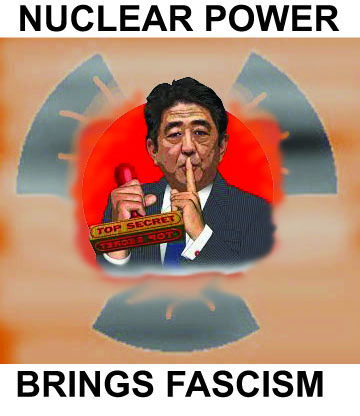
Nuclear energy has no sustainable, democratic future in Japan’, DW, 29 Jan 16 Despite the majority of Japanese opposing a restart of the nation’s nuclear reactors, the government continues to press for a full resumption of nuclear power. Energy expert Tetsunari Iida tells DW the reasons behind it………Tokyo plans to increase nuclear power as a share of the country’s energy profile to between 20 and 22 percent by 2030.
However, public opposition to nuclear energy remains steadfast, as the disaster continues to loom in the Japanese psyche and many harbor safety concerns in the earthquake-prone country.
Kansai Electric Power Co. announced on January 28 plans to restart the nation’s third nuclear reactor, after it cleared new post-Fukushima safety regulations.
In a DW interview, sustainable energy policy expert Tetsunari Iida says the nuclear lobby in Japan has not only economic interests, but also a strong conviction in the conservative energy policy concept, which gives nuclear power a major role in the energy policy mix.
DW: Why has the government decided to restart some of the reactors despite protests from the population?
Tetsunari Iida: There is a strong belief among certain sections in Japan that nuclear power is one of the most important components of the energy mix. This is an old-fashioned and conservative energy policy concept shared by those at the center of Japan’s energy policy circle, such as the ruling Liberal Democratic Party (LDP) and the country’s industry association Keidanren.
For them, the resumption of nuclear power generation is of utmost importance. That is why Japan’s government has been strongly urged to restart the nuclear reactors.
s the conservative government of PM Abe not taking the concerns of the population seriously?
No, I do not believe PM Abe takes the concerns of the population seriously. I am of the view that Abe still believes nuclear energy is safe, cheap and stable, even after the Fukushima disaster.
According to nuclear energy opponents, many Japanese are afraid of the potential consequences of restarting the nuclear reactors, and demand a change in energy policy. So why isn’t there much more public resistance to the government’s plans?
The majority of people in Japan have been against the Abe government’s plans to restart the nuclear reactors. This opposition, however, is not necessarily having an impact on the people’s political affiliations and their voting tendencies.
The Abe administration’s control over the media also helps explain the reason behind the lack of more public resistance to the nuclear plans.
How strong is the influence exerted by Japan’s nuclear lobby?
The nuclear lobby in Japan is powerful. It has not only economic interests, but also a strong conviction in the conservative energy policy concept, which gives nuclear power a major role in the energy policy mix……
Of course, renewable energy is really helpful to achieve energy independence. But the benefits are not solely limited to securing energy independence, as renewables also help to mitigate climate change, create jobs and boost economic growth.
Speaking in ecological and economic terms, which renewable energy sources are best suited for an industrialized nation such as Japan?
From resource potential point of view, wind and solar power are the best suited for Japan……..
Japan can afford to completely give up nuclear power. In fact, sticking to nuclear represents an old-fashioned economy, whereas renewable energy is a symbol of a new industrial revolution.
You yourself are an expert on nuclear energy. But you’ve decided to switch your focus to renewable energy sources. Why?
It’s because nuclear energy has no sustainable, democratic future. And that’s why I decided not to dedicate my life to nuclear, instead switching my focus to renewable sources.
Tetsunari Iida is director of the Institute for Sustainable Energy Policies in Japan. http://www.dw.com/en/nuclear-energy-has-no-sustainable-democratic-future-in-japan/a-19011468
Psychology and Culture: the Pitfalls for Nuclear Deterrence
The nuclear deterrence game: Promises and pitfalls , BY AT EDITOR on JANUARY 29, 2016 in ASIA TIMES NEWS & FEATURES By Michael Rühle ………….Perhaps the most common mistake in thinking about nuclear deterrence is the belief that the larger your nuclear arsenal, the more credible your deterrent. This is way too simplistic. Since a state will only take nuclear risks in defense of existential interests, an opponent may still resort to force if he concludes that the issue at stake is not existential to the defender.
That’s why allies of nuclear powers constantly need to be reassured by their protector that he considers their security a truly vital interest. Or, as former British Defense Secretary Denis Healy aptly noted, during the Cold War it took only 5% credibility to deter the Soviet Union but 95% to assure one’s allies.
 Psychology. A stable deterrence regime requires all actors to adhere to a “rational” cost-benefit calculus. Thus, nuclear deterrence cannot work against actors that are “irrational” to begin with, e.g. suicidal fanatics.
Deterrence may also fail when rationality evaporates, for example, when ideological beliefs make certain leaders adopt risky offensive strategies.
However, the most likely scenario in which rationality could disappear is defensive. Since humans fear suffering losses more than they value gains, the fear of losing something valuable will make leaders take far greater risks than the opportunity of changing the status quo in their favor.
Hence, as much as one would want to have the upper hand in a crisis, one should still avoid pushing a nuclear adversary into a corner.
 Culture. Deterrence may be a universal concept, but its practical application may well be culture-specific. For example, a culture which attaches great value to sacrifice or martyrdom will be much harder to deter by the prospect of military punishment than a “post-heroic” society. This is not to say that certain states cannot be deterred, yet their cost-benefit calculus might be so different as to render the defender’s deterrence message ineffective.
To ensure that an adversary understands one’s deterrence message, one needs to have a fairly good grasp of his “strategic culture”: historical experiences, values, core beliefs, and military traditions. Obtaining such a thorough understanding of one’s adversary is extremely difficult. But simply hoping that an impressive nuclear arsenal will deter just by its mere existence would be a dangerous gamble. In the deterrence business, ignorance isn’t bliss — it might well be fatal.
Michael Rühle heads the Energy Security Section of NATO’s Emerging Security Challenges Division http://atimes.com/2016/01/the-nuclear-deterrence-game-promises-and-pitfalls/
The nuclear age is an age of terror
Nuclear Weapons and Nuclearism Abolish or be abolished http://dissidentvoice.org/2016/01/nuclear-weapons-and-nuclearism/ by Jan Oberg / January 29th, 2016
The nuclear age is an age of terror
Nuclear weapons are the ultimate weapons of terror. You can’t use them without killing millions of innocent people. Targetting innocent people, people who are not part of a conflict, is a central defining characteristics of terrorism.
That’s why the world’s governments decades ago decided to work for general and complete disarmament – i.e. for nuclear abolition – in the spirit too of Alfred Nobel.
As a matter of fact, the first UN General Assembly resolution of January 24, 1946 established a Security Council tasked with achieving ‘the eliminationfrom national armaments of atomic weapons and all other weapons adaptable to mass destruction.’
70 years ago!!
Today that Security Council consists of five arrogant nuclear powers in possession of more than 95% of the world’s nuclear weapons – and standing behind 75% of the world’s arms trade.
Today, however, people without a sense of history, addicted to militarist power and ignorant about ethics believe we can safely continue with nuclear arms races, doctrines for their use – and everything will go fine.
They even believe that those of us who uphold the ideals of nuclear abolition are naive: it is un-realistic to rid the world of these doomsday weapons, isn’t it?
Well, that’s like the man who has thrown himself out from the 48th floor and when passing the 8th convinces himself that “this is going fine.”
Private terrorism and state terrorism
The terrorist ideology most people associate with al-Qaeda and ISIS – small-scale and private – is found at a mega-level in state terrorism – the planned or accidental killing by nukes of millions upon millions of innocent civilians.
Whoever produces, possesses, stockpiles, does research on, has nuclear doctrines, plans the use of or actually uses nukes believes fundamentally in the philosophy of terrorism.
Whether NATO countries or North Korea.
Governments operating on that philosophy – also embedded in the term“balance of terror” – don’t want you to think of them in such terms.
They want us to believe that nuclear weapons preserve peace by deterring war.
However, this is nonsense. A deterrent is no deterrent if the adversaries know that the other will never, under any circumstance, push the button.
Fortunately, 107 countries are committed to ban nuclear weapons today.
Why they are so dangerous
1) Every nuclear weapon is there to be used if…the logic is false and human beings do not react rationally in stress situations.
2) There are constant incidents, accidents, risks, human and technical failures that endanger humanity’s survival.
Why do we so easily accept to live with the nuclear terror threat when we are obsessed about fighting a ‘war on terror’ only against the small-scale terrorists?
It’s time to take the fight to the next level – the fight against nuclear stateterror. Before it too becomes a nuclear private terror.
Jan Oberg is a peace researcher, art photographer, and Director ofTransnational Foundation for Peace and Future Research (TFF) where this article first appeared. Reach him at: oberg@transnational.org.Read other articles by Jan.
In politically unstable regions, nuclear power faces special cyber attack danger
 Report: Nuclear plants in unstable regions vulnerable to cyberattacks, UPI By Allyson Chiu, Medill News Service WASHINGTON, D.C., January 28, 2016 — Nuclear power plants need to improve security systems to safeguard against non-traditional terrorist attacks, but that’s challenging for developing countries, experts said Thursday…….
a report released Thursday by the Stimson Center, a Washington think tank, said many nations do not have the resources to adequately protect their nuclear facilities from insider or cybersecurity attacks.
“In particular countries in close proximity to terrorist groups with vulnerable or unstable economies, the potential for incidents is much higher,” said Debra Decker, the report’s co-author and Stimson Center senior adviser.
West African nations like Nigeria are battling terrorist groups including Boko Haram. In the Middle East, territory in Syria has been taken by the Islamic State. Both countries are considering nuclear power programs, according to the World Nuclear Association.
Attacking a nuclear power plant can disrupt power grids or even cause a nuclear meltdown. Kathryn Rauhut, co-author of the Stimson report, said the Fukushima power plant in Japan — destroyed by a meltdown caused by a tsunami — could also have been vulnerable to cyberterrorism.
“Rather than the tsunami taking out backup power supply, you could just have that engineered through a cyberattack,” she said. “We hope that nobody would ever use planes or weapons of mass destruction again, but you don’t need to do that, you can wreak the same amount of havoc through cyber intrusions.”
Unlike American nuclear power plants, which are strictly monitored by the Nuclear Regulatory Commission, international plants do not have any binding safety standards, Decker said…….. http://www.upi.com/Top_News/US/2016/01/28/Report-Nuclear-plants-in-unstable-regions-vulnerable-to-cyberattacks/2321454019965/
New research shows USA could economically cut emissions by 80% with wind and solar energy
But that might not be the case anymore. New research suggests it might actually be feasible to use solar and wind power across the United States. In fact, researchers propose a new model that could cut emissions by up to 80 percent by 2030 from 1990 levels, without developing new technologies or raising prices.
How would it work? Power from solar, wind, and other existing technologies would all contribute to a grid across the continental United States to share the burden of power production. That combination would make it economically feasible to cut carbon emissions significantly in the electricity sector, according to a study published Monday in the journalNature.
……The trick, according to this model, is to use multiple power sources together on the national scale.
National Oceanic and Atmospheric Administration, NOAA, scientists built this model based on the weather system. Some regions, like the southwest, might be particularly sunny. Others, like the Dakotas, might have just the right wind conditions.
“If you can trade power over the whole US at the same time, then there’ll always be someplace that’s generating power like crazy,” study co-lead author Alexander MacDonald tells the Monitor. …..
MacDonald adds that it will be up to policymakers and the people. “Our job is to show that there is a system that is possible with existing technology, technology available right now.”
It could all hinge on that political will, Jeff Deyette, assistant director of energy research at the Union of Concerned Scientists, who was not involved in the study, tells the Monitor. He explains that creating a national scale power system would “require a major shift in how we transmit and distribute power across the country.” Currently, the electricity sector is largely controlled by regional transmission organizations. To employ the system proposed by the NOAA researchers, discussion would have to happen on the federal level too. “I think it comes down to the political will to make it happen,” Mr. Deyette says……
With new systems like these, all hope is not lost. “Technological advances can take us a long way toward solving the climate crisis,” Deyette says. This new model “is certainly a very strong positive step in the right direction.”http://www.csmonitor.com/Science/2016/0129/Could-wind-solar-slash-carbon-emissions-affordably
Conservative South Carolina leading USA trend to wind energy?
Why conservative South Carolina could actually be a sign of the future of U.S. energy WP, By Chelsea Harvey January 28 Coastal South Carolina has long been recognized by locals and tourists alike for its warm waters, dazzling natural landscapes and prime seafood cuisine. But lately, communities up and down the shoreline have been making a name for themselves in another way: They’re leading the historically conservative state in a shift toward support for alternative energy and away from fossil fuel energy development.
And protests against the idea of offshore drilling, which has been proposed in regions up and down the Atlantic coast, have cropped up in many of the other Southeastern states as well, some of which have also been involved in talks with the federal government about the development of wind energy……..https://www.washingtonpost.com/news/energy-environment/wp/2016/01/28/why-conservative-south-carolina-could-actually-be-a-sign-of-the-future-of-u-s-energy/
Solar business India: coal develop makes the switch to solar
India Coal Plant Developer Switches to Solar for Site in Punjab, Bloomberg Business, Anindya Upadhyay 29 Jan 16
-
RattanIndia to convert 800-acre site to PV instead of coal
-
Company to raise 6 billion rupees for current solar projects
-
A prominent developer of coal-fired power plants in India is seeking to switch to solar for an 800-acre (324-hectare) site in Punjab it had earmarked for another thermal plant, saying the economics of photovoltaics are more attractive.
RattanIndia Power Ltd. which has 1.6 gigawatts of thermal capacity in central India, asked government permission to install solar panels at the site in Punjab instead of the coal plant it was planning, said Rajiv Rattan, chairman of RattanIndia Group.
“In the next three to four years, you will see the entire 800 acres getting used for solar,” Rattan said in an interview.
The decision highlights increasing interest in India’s solar program after Prime Minister Narendra Modi set out a target to install 100 gigawatts of capacity by 2020 at an estimated cost of $100 billion. Incentives and regulations designed to draw finance from companies to help meet the target have attracted a handful of overseas developers to bid in auctions for power contracts in India, reducing the cost of solar electricity to a record low.RattanIndia is the only domestic firm to take on large foreign companies in Indian government auctions for solar contracts, which were dominated by SunEdison Inc. of the U.S., SoftBank Group Corp. from Japan, Fortum OYJ of Finland and Solairedirect Group from France.
RattanIndia has made a bold statement by making aggressive bids and competing with foreign companies in large government solar tenders where most Indian corporates were out, the solar research firm Bridge to India said……….
- The cost of solar power touched a record low of 4.34 rupees (or 6 cents) a kilowatt-hour for contracts awarded on Jan. 19 in the sunny southern state of Rajasthan, where a total of 420 megawatts of capacity was granted…….http://www.bloomberg.com/news/articles/2016-01-29/india-coal-plant-developer-switches-to-solar-for-site-in-punjab
Britain axes nuclear protective jobs: who will guard Hinkley IF it goes ahead
 If the nuclear button is finally pressed on Hinkley, who will guard the site? Independent, 29 Jan 16 Parliamentary Business “……..It seems astonishing now but Hinkley Point’s French owner vowed that the new plant – Hinkley’s third since “A” opened in the 1960s – would be built and generating 7 per cent of the UK’s electricity needs by Christmas next year. EDF Energy’s UK boss, Vincent de Rivaz, made that promise in 2007, before the timetable slipped back first to 2019 and then to 2025.
The last completed British nuclear station was Sizewell B in Suffolk, which opened in 1995, while older plants have stopped generating electricity or are preparing for decommissioning. Hinkley C is supposed to be the catalyst for a new fleet of reactors across the UK. ……
Despite the problems, it was still a bit of a shock to see EDF’s board delay a meeting this week in which directors would have made what has been coined a “final investment decision” on the project. After all these years, EDF still doesn’t seem to be fully confident that billions of pounds of investment is worth the risk, and has delayed a decision for at least a month.
…….Mr Lewis took the opportunity to put the boot into George Osborne, saying: “The Chancellor promised he would protect the police but now we know they need to be protected from his cuts. Hundreds of the front-line officers who protect sensitive nuclear power stations and radioactive materials are facing the axe, even though these are top terrorist targets.”
……….. we should be training more of these specialist officers before these new reactors are built. As the CNC puts it, this is “a unique force with a unique role”. Instead, we seem happy to lose 16.35 per cent of those few who know how to protect nuclear sites. ……..http://www.independent.co.uk/news/business/comment/if-the-nuclear-button-is-finally-pressed-on-hinkley-who-will-guard-the-site-a6840836.html
Effects on wildlife of massive LA gas disaster
Report: Wildlife “disappearing” around massive LA gas disaster — Residents: “It’s completely quiet”… birds, butterflies, rabbits, coyotes are missing… all fish in pond found dead — “All of this is gone… Makes me wonder how bad it really is” — Animal with “worst blood” ever seen by doctor (VIDEO)
City News Service, Jan 18, 2016 (emphasis added): Porter Ranch residents report unexplained ailments, behaviors in pets… [A family] lost all 20 of their brightly colored Koi fish after they started dying… [Others] have noticed fewer bird and wildlife sightings.
Al Jazeera, Jan 22, 2016: [The Katz’s], parents of five… are living a nightmare… Her pride and joy was her garden and a koi pond. She cries when she recounts how all 20 fish died…“The birds, the butterflies, all of this is gone. It’s quiet now.”
L.A. Daily News, Jan 22, 2016: “We used to see coyotes and animals” [Jennifer Marotta] said. “It makes me wonder how bad it really is.”
L.A. Daily News, Jan 16, 2016: [Residents] have noticed fewer bird and wildlife sightings… [Attorney Rex Parris wrote to officials] that pets are ill or disappearing and wildlife, such as birds and rabbits, seem to be disappearing as well from the community… [Sally Taylor’s dog] quickly became lethargic and threw up some 20 times within an hour… “[The vet hospital] said it was the worst blood work the vet has ever seen”… For the Balen family, it’s thesound of birds they’ve missed the most. In late December, they said the absence made their home… “completely quiet… for 10 years… every morning, we wake up to the birds chirping. Not anymore.”
KABC, Jan 19, 2016: [The gas leak is] affecting many pets… “We’re seeing probably several hundred total and it’s been going on for around three months now,” [Dr. David Smith at Northridge Animal Hospital] said. Smith said it started shortly after [they] first reported the leak… Smith said he has serious concerns about the health risks for the animals.
Government officials have come up with their own interesting explanations for the disappearance of wildlife:
L.A. Times, Jan 18, 2016: Wild animals may have left the area because of the noise coming from crews attempting to fix the well, [Department of Fish and Wildlife] spokeswoman Mary Fricke said.
Steve Gonzalez, public information officer for the Dept. of Fish & Wildlife, Jan 16, 2016: “There is a lot of noise and construction… Typically, animals like coyotes and bears will stay away from loud noises.”
1 This Month

of the week – Shut Down Drone Warfare!


Tell the Ukrainian Government to Drop Prosecution of Peace Activist Yurii Sheliazhenko

Petition to revoke the licensing of the Near Surface Nuclear Disposal Facility (NSDF) at Chalk River. https://www.ourcommons.ca/petitions/en/Petition/Details?Petition=e-7247
To see nuclear-related stories in greater depth and intensity – go to https://nuclearinformation.wordpress.com
-
Archives
- April 2026 (79)
- March 2026 (251)
- February 2026 (268)
- January 2026 (308)
- December 2025 (358)
- November 2025 (359)
- October 2025 (376)
- September 2025 (257)
- August 2025 (319)
- July 2025 (230)
- June 2025 (348)
- May 2025 (261)
-
Categories
- 1
- 1 NUCLEAR ISSUES
- business and costs
- climate change
- culture and arts
- ENERGY
- environment
- health
- history
- indigenous issues
- Legal
- marketing of nuclear
- media
- opposition to nuclear
- PERSONAL STORIES
- politics
- politics international
- Religion and ethics
- safety
- secrets,lies and civil liberties
- spinbuster
- technology
- Uranium
- wastes
- weapons and war
- Women
- 2 WORLD
- ACTION
- AFRICA
- Atrocities
- AUSTRALIA
- Christina's notes
- Christina's themes
- culture and arts
- Events
- Fuk 2022
- Fuk 2023
- Fukushima 2017
- Fukushima 2018
- fukushima 2019
- Fukushima 2020
- Fukushima 2021
- general
- global warming
- Humour (God we need it)
- Nuclear
- RARE EARTHS
- Reference
- resources – print
- Resources -audiovicual
- Weekly Newsletter
- World
- World Nuclear
- YouTube
-
RSS
Entries RSS
Comments RSS
 nuclear-news