The Ongoing Saga 66: News, Updates, Tidbits & Trivia

Most recent updates are on top, after images-intro commentary, so that routine readers will not have to scroll-down far. Time is UTC-GMT. Updates as frequently as possible. This is a continuation of: https://miningawareness.wordpress.com/2015/12/27/the-ongoing-saga-65-news-updates-tidbits-trivia/
In the interest of shutting down the nuclear industry, we extend the deadline for shut-down to traditional Japanese, current Chinese, (lunar) New Year. Thus, you’ve until Feb 8th…still not much time!
There is such a thing as too late. We are standing on the threshold of too late. At any moment a nuclear disaster as big or bigger than Chernobyl or Fukushima may occur. Those currently involved in legal action re the crimes of the nuclear industry need to get moving and stop dragging their feet. It’s been many months now. If the lawyers continue to drag their feet, the technical experts need to make the information public. It can be anonymous. This is an emergency.
View original post 1,441 more words
January 18 Energy News

Opinion:
¶ Clean power: It’s just a click away • While many don’t think of the Internet’s scope beyond their own personal devices, Greenpeace has recently noted that if the Internet were a country, its energy consumption would rank it sixth in the world. Of course this total is only expected to grow. [eco-business.com]
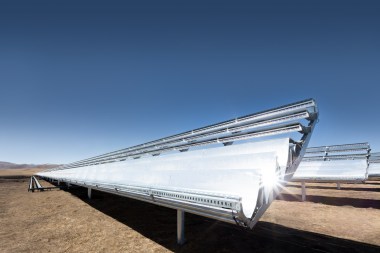 An Apple solar farm in Hongyuan, China. Image: Apple
World:
¶ Oil prices fell below $28 a barrel amid fears the lifting of Western sanctions on Iran could increase the oversupply. Brent crude, used as an international benchmark, fell as low as $27.67 a barrel, its lowest since 2003, before recovering slightly to trade at $28.17. The price of US crude fell to $28.86. [BBC]
¶ The North African country of Morocco has achieved a new low for wind energy costs, securing average bids of just $30/MWh from its tender for 850…
View original post 494 more words
Why is the media ignoring the anti nuclear success in Taiwan’s election landslide?

Many articles on the Net today, about the dramatic win in Taiwan’s elections, for Ing-wen Tsai and her DPP Party . But why so far nary a mention of the role of her anti nuclear stance in that election. ?
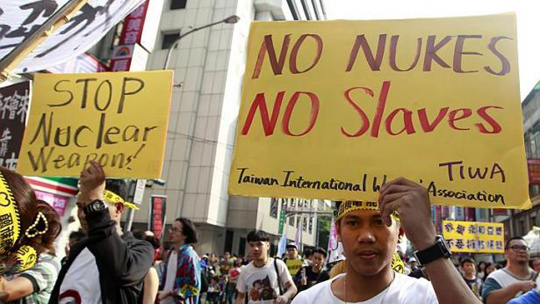
 Independence-minded opposition wins Taiwan election, Irish Times, 17 Jan 16
“…….“Regardless of how you voted, the exercise of democratic expression was the most important meaning of this election,” Ms Tsai said in a news conference.
Ms Tsai unseated Ma Ying-jeou of the Kuomintang (KMT) nationalist party, which has ruled the island of 23 million people since “Generalissimo” Chiang Kai-shek fled there in 1949, with the exception of 2000-2008 when the DPP were in charge.
The DPP win was by a landslide margin. According to the China News Agency, Ms Tsai won the presidency with 56.1 per cent of the vote. The DPP also took control of the Executive Yuan parliament for the first time, taking 68 of the 113 seats compared to the KMT’s 35 seats…….http://www.irishtimes.com/news/world/asia-pacific/independence-minded-opposition-wins-taiwan-election-1.2499792
Taiwan election points to nuclear phase-out by 20231, Climate Home, 14/01/2016,
Ing-wen Tsai, who leads the presidential polls, envisions a ‘nuclear-free homeland’ with a bigger role for energy efficiency and renewables. By Megan Darby
Taiwan is facing a phase-out of atomic power, with nuclear sceptic Ing-wen Tsai tipped to win a presidential election on Saturday.
The island state’s three operating nuclear plants are due for retirement by 2023. A fourth, 90% built, was mothballed last year in response to protests from a public spooked by Japan’s Fukushima disaster.
Opinion polls predict a landslide victory for Tsai, with her Democratic Progressive Party (DPP) in with a chance of its first ever parliamentary majority……
Setting out her green energy platform in September, Tsai predicted NT$1 trillion (US$30 billion) of investment in the renewables sector.
“The time is ripe for Taiwan’s green energy development — what we lack is a government determined to see it through,” she said in remarks reported by the China Post…..
Tze-Luen Lin, energy and climate expert at National Taiwan University, expressed confidence the emissions targets were attainable…..http://www.climatechangenews.com/2016/01/14/taiwan-election-points-to-nuclear-free-future/
Nuclear Waste Isolation Pilot Plant (WIPP)- what needs to be done?
Analyses of the accidents by the DOE have documented a lack of a ‘safety culture’ at WIPP.
The current regulatory period of 10,000 years is short relative to the 24,100-year half-life of plutonium-239, let alone that of uranium-235, which has a half-life of 700 million years.
Policy: Reassess New Mexico’s nuclear-waste repository, Nature Cameron L. Tracy, Megan K. Dustin & Rodney C. Ewing 13 January 2016
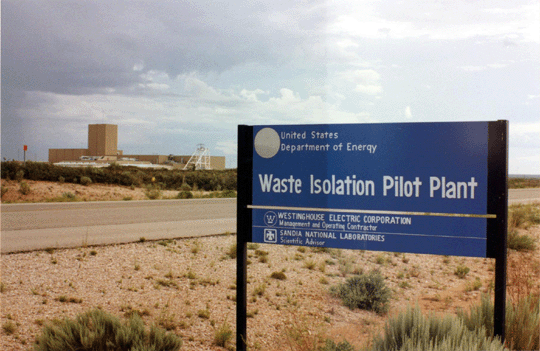
Proposals to bury plutonium from nuclear weapons must address chemical interactions and intrusion risks. More than 600 metres below ground near Carlsbad, New Mexico, is the world’s only operating deep geological repository currently accepting transuranic nuclear waste: that contaminated by elements heavier than uranium. The Waste Isolation Pilot Plant (WIPP), run by the US Department of Energy (DOE), is used to dispose of laboratory equipment, clothing and residues from the nation’s nuclear-defence programme. In the past 15 years, around 91,000 cubic metres (equivalent to covering a soccer field to a depth of about 13 metres) of such transuranic waste, mostly of relatively low radiation levels, has been placed there.
The main contaminants are long-lived isotopes of plutonium (mainly plutonium-239, with a half-life of 24,100 years, and plutonium-240, with a half-life of 6,560 years) and shorter-lived isotopes of americium and curium. In rooms carved out of a 250-million-year-old salt bed, the waste is stored in hundreds of thousands of plastic-lined steel drums. The repository is now at about half of its planned capacity and is to be sealed in 2033.
The DOE is responsible for performing safety assessments to ensure that WIPP will not exceed limits on exposure to radioactivity, as set by the US Environmental Protection Agency (EPA), for 10,000 years.
But new demands are emerging. An arms-control agreement with Russia made in 2000 obliges the United States to dispose of 34 tonnes of plutonium from dismantled nuclear weapons1. Following the terms of the agreement, the United States planned to convert the material into a fuel — mixed (uranium and plutonium) oxide, or MOX — to burn in commercial nuclear-power plants. But faced with soaring construction costs for a MOX fabrication facility at the Savannah River Site in South Carolina, the DOE has commissioned evaluations of alternatives2.
The most recent report3, published in August 2015, recommends burying the weapons’ plutonium at WIPP. Judging the repository’s performance to have been “successfully demonstrated”, the DOE’s Red Team expert panel proposes that the 34 tonnes of weapons plutonium can be added to WIPP once it has been diluted to low concentrations comparable to that of the transuranic waste at WIPP.
In fact, WIPP’s safety record is mixed. Continue reading
Renewable energy can dramatically cut emissions – International Renewable Energy Agency
Some of those changes are already underway. Global clean energy investment attracted a record $329bn last year, according to a report released on Thursday by Bloomberg New Energy Finance.
The report noted the rise in clean energy investment came despite the drop in oil prices.

Rapid switch to renewable energy can put Paris climate goals within  reach http://www.theguardian.com/environment/2016/jan/16/rapid-switch-to-renewable-energy-can-put-paris-climate-goals-within-reach
Increasing renewables to 36% of the global energy mix by 2030 would provide about half emissions reductions needed to hold warming to 2C, says International Renewable Energy AgencyGuardian, Suzanne Goldenberg, 16 Jan 16
Countries can deliver on the promises of the historic Paris climate change agreement by rapid scaling up wind and solar power to 36% of the global energy mix by 2030, an international energy gathering will be told on Saturday.
The International Renewable Energy Agency (Irena) meeting in Abu Dhabi – the first major global gathering since Paris – is seen as an important test of countries’ readiness to put those plans into action.
Nearly 200 countries agreed to keep warming below 2C, and work towards a 1.5C limit, during the Paris climate negotiations last month. Some 187 put forward plans to cut greenhouse gas emissions.
Now comes the hard part, government officials admit: making good on those promises by translating emissions cutting targets into policies, and expanding access to clean energy technologies.
Irena said those goals were within reach – if countries move fast. Scaling up renewable energy to 36% of the global energy mix by 2030 would provide about half of the emissions reductions needed to hold warming to 2C. Energy efficiencycould make up the rest.
“The Paris agreement set a long-term vision for the deep reduction of global emissions and the need to decarbonise the energy sector,” Adnan Amin, Irena’s director general said in a prepared statement. “The Irena assembly must now take the next steps and establish a blueprint for action to meet our climate goals and set the world on a path to a sustainable energy future.”
In an effort to spur countries to action, an Irena report released on Saturday found doubling the share of renewables by 2030 would increase global GDP by up to 1.1% or about $1.3tn, and provide jobs for more than 24 million in the renewable sector.
The United Nations climate chief, Christiana Figueres, has said repeatedly she was looking to the Paris agreement to send a clear signal to the business community of a shift away from a fossil-fuel driven economy.
Some of those changes are already underway. Global clean energy investment attracted a record $329bn last year, according to a report released on Thursday by Bloomberg New Energy Finance.
The report noted the rise in clean energy investment came despite the drop in oil prices.
Irena officials said they hoped that the Paris climate accord would add momentum to the shift.
“We are not seeing climate change action as a cost, but starting to see it in terms of opportunities,” said Angela Kallhauge, Irena’s climate change officer.
Sanctions lifted as Iran complies with nuclear deal
 Iran Complies With Nuclear Deal; Sanctions Are Lifted, NYT, By DAVID E. SANGER JAN. 16, 2016 VIENNA — The United States and European nations lifted oil and financial sanctions on Iran and released roughly $100 billion of its assets after international inspectors concluded that the country had followed through on promises to dismantle large sections of its nuclear program.
This came at the end of a day of high drama that played out in a diplomatic dance across Europe and the Middle East, just hours after Tehran and Washington swapped long-held prisoners.
……..“Iran has undertaken significant steps that many people — and I do mean many — doubted would ever come to pass,” Secretary of State John Kerry said Saturday evening at the headquarters of the International Atomic Energy Agency, which earlier issued a report detailing how Iran had shipped 98 percent of its fuel to Russia, dismantled more than 12,000 centrifuges so they could not enrich uranium, and poured cement into the core of a reactor designed to produce plutonium……… http://www.nytimes.com/2016/01/17/world/middleeast/iran-sanctions-lifted-nuclear-deal.html?_r=0
Jeremy Corbyn suggests submarines without warheads
Jeremy Corbyn hints at no-nuke subs in Trident compromise
Labour leader suggests  to protect defence jobs while maintaining his stance on disarmament, Guardian, Rowena Mason, 17 Jan 16, Jeremy Corbyn has suggested the UK could have Trident submarines without nuclear weapons, a move that would mean disarmament while protecting defence jobs in Scotland and Cumbria……..
Stanford experts warn on the nuclear risks for Waste Isolation Pilot Plant in southeastern New Mexico.
“These accidents during the first 15 years of operation really illustrate the challenge of predicting the behavior of the repository over 10,000 years,”
The Stanford experts also suggest more attention to how the buried materials may interact with each other, particularly with salty brine, over centuries.
Buried nuclear waste risky, say Stanford experts http://news.independence-card.com/buried-nuclear-waste-risky-say-stanford-experts/ Stanford Report, January 15, 2016 Radioactive material from the laboratories that design America’s nuclear weapons will have to be buried and kept away from humans for at least 10,000 years. But three Stanford experts say the safety analysis of this project needs to be revised to reflect new strategies that aim to substantially increase the amounts of plutonium to be disposed of. By Dan Stober
The Department of Energy’s long-term plan for dealing with material contaminated with plutonium and heavier elements from the U.S. weapons program is to bury it underground at the Waste Isolation Pilot Plant in southeastern New Mexico.
The Energy Department’s plan aims to safeguard nuclear material for the next 10,000 years. But three Stanford nuclear scientists point out in a new commentary article in the journal Nature that the Waste Isolation Pilot Plant (WIPP) was not designed to hold as much plutonium as is now being considered for disposal there. And, in fact, the site has seen two accidents in recent years.
“These accidents during the first 15 years of operation really illustrate the challenge of predicting the behavior of the repository over 10,000 years,” said Rod Ewing, the Frank Stanton Professor in Nuclear Security at Stanford and a senior fellow at the Center for International Security and Cooperation.
What’s more, there’s more plutonium proposed for disposal at WIPP in the future, a result of treaties with the former Soviet Union and now Russia to decrease the number of nuclear weapons by dismantling them.
A recent assessment of what to do with the plutonium from dismantled weapons has proposed that the material be diluted and disposed of at WIPP. But this analysis does not include a revision of the safety analysis for the site, wrote Ewing and his two Stanford co-authors in the Department of Geological Sciences, postdoctoral scholar Cameron Tracy and graduate student Megan Dustin.
They call on the U.S. Department of Energy, which operates WIPP, to take another look at the safety assessment of the site. Particular emphasis should be on the estimates of drilling activity in the oil-rich Permian Basin, where WIPP is located, and on the effects of such a huge increase in the plutonium inventory for the pilot plant.
“The current regulatory period of 10,000 years is short relative to the 24,100-year half-life of plutonium-239, let alone that of its decay product, uranium-235, which has a half-life of 700 million years,” the researchers wrote.
“We cannot be certain that future inhabitants of the area will even know WIPP is there,” they added. As a result, it is important to understand the impact of future drilling in the area.
The waste is stored 2,150 feet below the surface in hundreds of thousands of plastic-lined steel drums in rooms carved out of a 250-million-year-old salt bed. The repository is at about half of its planned capacity and slated to be sealed in 2033.
The researchers question some of the assumptions used in the safety studies. For example, to determine the odds of oil drilling in the future, the study uses a 100-year historical average drill rate, even though drilling has intensified in recent decades, throwing this assumption into question.
The Stanford experts also suggest more attention to how the buried materials may interact with each other, particularly with salty brine, over centuries. A single storage drum may contain a variety of materials, such as lab coats, gloves and laboratory instruments; thus, the chemistry is complex.
Ewing said that the complacency that led to the accidents at WIPP can also occur in the safety analysis. Therefore, he advises, it is important to carefully review the safety analysis as new strategies for more plutonium disposal are considered.
N. Korea Offers to Halt Nuclear Tests in Exchange for Peace Treaty
N. Korea Offers to Halt Nuclear Tests in Exchange for Peace Treaty VOA NewsJanuary 16, 2016
North Korea says it will stop conducting nuclear tests in exchange for a peace treaty with the United States and an end to joint military exercises between Washington and Seoul.
The proposal, published in North Korea’s state media late Friday, is similar to previous offers by Pyongyang that have been quickly rejected by the U.S. and South Korea……..
Earlier this week, the U.S. Congress passed legislation that seeks to deny the Pyongyang government the hard currency it needs for its nuclear weapons program by imposing stronger sanctions. http://www.voanews.com/content/north-korea-offers-to-halt-nuclear-tests-in-exchange-for-peace-treaty/3148838.html
The Irradiated of the Republic: Testimonies of the French nuclear test victims.
 Brothers in Nuclear Arms:
Testimony of a Veteran of French Nuclear Testing Nuclear Free by 2045? 13 Jan 16 the oral histories of nuclear victims are still met with official dismissal, no matter how methodically they are compiled.
1 This Month

of the week – Shut Down Drone Warfare!


Tell the Ukrainian Government to Drop Prosecution of Peace Activist Yurii Sheliazhenko

Petition to revoke the licensing of the Near Surface Nuclear Disposal Facility (NSDF) at Chalk River. https://www.ourcommons.ca/petitions/en/Petition/Details?Petition=e-7247
To see nuclear-related stories in greater depth and intensity – go to https://nuclearinformation.wordpress.com
-
Archives
- April 2026 (98)
- March 2026 (251)
- February 2026 (268)
- January 2026 (308)
- December 2025 (358)
- November 2025 (359)
- October 2025 (376)
- September 2025 (257)
- August 2025 (319)
- July 2025 (230)
- June 2025 (348)
- May 2025 (261)
-
Categories
- 1
- 1 NUCLEAR ISSUES
- business and costs
- climate change
- culture and arts
- ENERGY
- environment
- health
- history
- indigenous issues
- Legal
- marketing of nuclear
- media
- opposition to nuclear
- PERSONAL STORIES
- politics
- politics international
- Religion and ethics
- safety
- secrets,lies and civil liberties
- spinbuster
- technology
- Uranium
- wastes
- weapons and war
- Women
- 2 WORLD
- ACTION
- AFRICA
- Atrocities
- AUSTRALIA
- Christina's notes
- Christina's themes
- culture and arts
- Events
- Fuk 2022
- Fuk 2023
- Fukushima 2017
- Fukushima 2018
- fukushima 2019
- Fukushima 2020
- Fukushima 2021
- general
- global warming
- Humour (God we need it)
- Nuclear
- RARE EARTHS
- Reference
- resources – print
- Resources -audiovicual
- Weekly Newsletter
- World
- World Nuclear
- YouTube
-
RSS
Entries RSS
Comments RSS
 nuclear-news