Sea level rise threatens nuclear stations and nuclear waste dumps
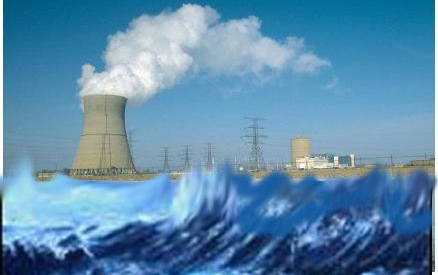 As Sea Levels Rise, Are Coastal Nuclear Plants Ready? National Geographic, By Christina Nunez, 16 Dec 15 [EXCELLENT MAPS] National Geographic Just east of the Homestead-Miami Speedway, off Florida’s Biscayne Bay, two nuclear reactors churn out enough electricity to power nearly a million homes. The Turkey Point plant is licensed to continue doing so until at least 2032.
At some point after that, if you believe the direst government projections, a good part of the low-lying site could be underwater. So could at least 13 other U.S. nuclear plants, as the world’s seas continue to rise. Their vulnerability, and that of many others, raises serious questions for the future……. safety concerns have stoked opposition to nuclear. Reactors can’t operate safely without uninterrupted power and vast amounts of cool water, which is why they’re often located near coastlines, rivers, and lakes. Even when a plant isn’t running, its fuel continues to generate heat that needs to be controlled to prevent explosions or radioactive leaks.
The disaster at Japan’s Fukushima Daiichi showed what can happen when a massive surge of water hits a nuclear plant……
Storms and Warming
The United States has 100 operational nuclear reactors, and another 17 that are being decommissioned. In the past, historical data about storms and flooding would inform the licensing requirements for a unit.
“We generally thought that backward look was sufficient,” says Dave Lochbaum, director of the Nuclear Safety Project at the nonprofit Union of Concerned Scientists. Fukushima and big storms like Hurricane Sandy in 2012 showed “that’s a tenuous assumption at best.”………
“The Nuclear Regulatory Commission has been slow to implement those Fukushima lessons learned,” says Matthew McKinzie, nuclear program director at the environmental group Natural Resources Defense Council. “Nuclear safety is a work in progress.”
Researchers at Stanford University echoed that concern in 2013, flagging four East Coast plants (the Salem and Hope Creek plants in New Jersey; Millstone in Connecticut; and Seabrook in New Hampshire) as especially vulnerable to storm surges and arguing for, among other measures, more and taller seawalls. A more recent analysis from the Union of Concerned Scientists found that at least four nuclear plants are vulnerable to storm surges by 2050.
The NRC is considering two new rules, one based on post-Fukushima safety orders issued in 2012, and another that would create new standards related to decommissioning.
The former rule, to be finalized at the end of next year, requires “an extra level of defense for a plant to deal with events that could interfere with ability to keep the core cool,” says Nuclear Regulatory Commission spokesperson Scott Burnell. That defense includes portable backup power generators, battery banks, and additional supplies if needed……..
 The more immediate concern from climate change, says Dominion spokesperson Ken Holt, is the water near Millstone getting too warm. One of its units had to shut down temporarily in 2012, because its intake from the Niantic Bay exceeded 75 degrees. It’s a problem that has affected other plants, too…….
Even if the plants aren’t running, though, the industry will need to address the radioactive waste left behind.
The question of what happens with spent fuel left at shuttered nuclear plants is, Lochbaum says, “the biggest wild card.”
He adds: “We do have a number of plants around the country where the spent fuel may remain there for decades, and nature may not give us that much time.”
The concern is that the shorter-term pools used to cool spent fuel rods require continuously circulated water. Loss of power at Fukushima, for example, led to urgent efforts to keep the water in the spent fuel pools from boiling away.
After a few years, fuel can be moved from pools to dry casks made of steel reinforced with concrete. Though the safety risk for casks is much lower—all of Fukushima’s emerged unscathed—some are concerned about how long those casks can remain safe at vulnerable sites, especially those buffeted by salty sea air. At the decommissioned San Onofre plant in California, for example, local activists tried but failed to stop plans to store nuclear waste 100 feet from the coast…….. http://news.nationalgeographic.com/energy/2015/12/151215-as-sea-levels-rise-are-coastal-nuclear-plants-ready/
No comments yet.
1 This Month
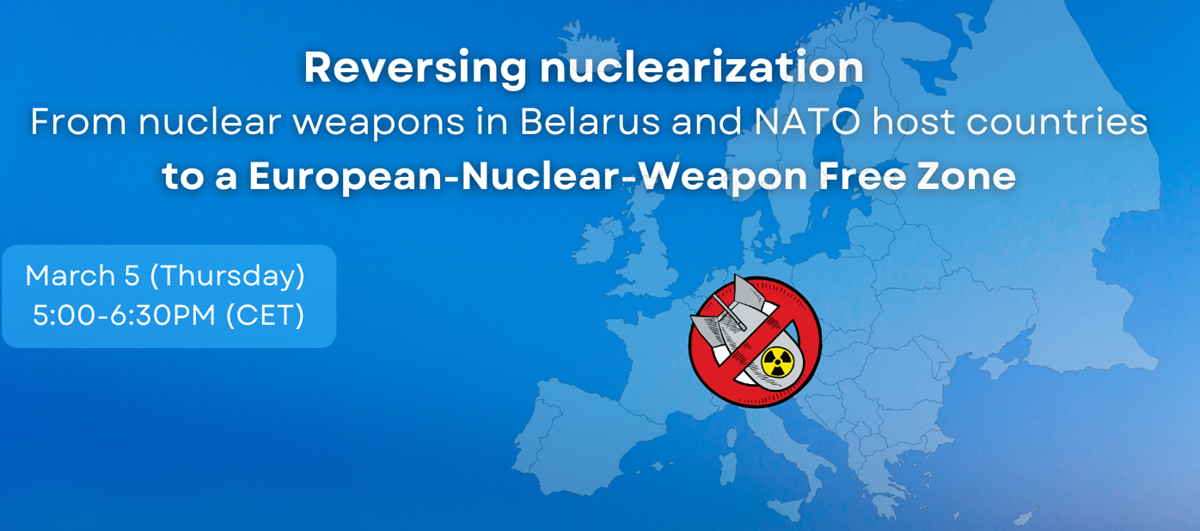
5 March -Online – Reversing nuclearization:
From nuclear weapons in Belarus and NATO host countries to a European-Nuclear-Weapon Free Zone
11am-12:30pm Eastern Time USA / 5pm-6:30pm CET

of the week – Advocating for a
nuclear free beach – https://www.samuellawrencefoundation.org/
The Samuel Lawrence Foundation advocates for a Nuclear Waste Free Beach at San Onofre, join us and take action!

10 March A LIVE WEBINAR THE REAL EFFECTS OF NUCLEAR POWER
What the Industry Isn’t Telling Us
1:00 PM Mountain, 2 pm Central, 3 pm Eastern. Live on the Keepers of the Water Facebook page

18 March Webinar @ 1 PM EST: An Assessment of SMR Projects: The Case of Canada
register for the zoom:
https://us02web.zoom.us/webinar/register/WN_o8BIIOUvQ2ONJR1nta65DQ#/registration

of the week – STOP SMALL MODULAR REACTORS IN CANADA
To see nuclear-related stories in greater depth and intensity – go to https://nuclearinformation.wordpress.com
-
Archives
- March 2026 (38)
- February 2026 (268)
- January 2026 (308)
- December 2025 (358)
- November 2025 (359)
- October 2025 (376)
- September 2025 (258)
- August 2025 (319)
- July 2025 (230)
- June 2025 (348)
- May 2025 (261)
- April 2025 (305)
-
Categories
- 1
- 1 NUCLEAR ISSUES
- business and costs
- climate change
- culture and arts
- ENERGY
- environment
- health
- history
- indigenous issues
- Legal
- marketing of nuclear
- media
- opposition to nuclear
- PERSONAL STORIES
- politics
- politics international
- Religion and ethics
- safety
- secrets,lies and civil liberties
- spinbuster
- technology
- Uranium
- wastes
- weapons and war
- Women
- 2 WORLD
- ACTION
- AFRICA
- Atrocities
- AUSTRALIA
- Christina's notes
- Christina's themes
- culture and arts
- Events
- Fuk 2022
- Fuk 2023
- Fukushima 2017
- Fukushima 2018
- fukushima 2019
- Fukushima 2020
- Fukushima 2021
- general
- global warming
- Humour (God we need it)
- Nuclear
- RARE EARTHS
- Reference
- resources – print
- Resources -audiovicual
- Weekly Newsletter
- World
- World Nuclear
- YouTube
-
RSS
Entries RSS
Comments RSS
 nuclear-news
Leave a comment