Endless delays – that’s the system for Hanford nuclear waste clean-up
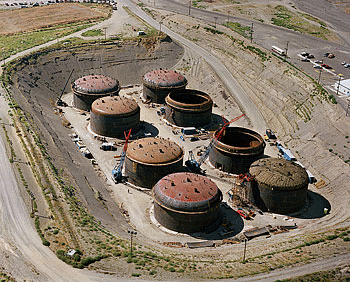 Will Hanford’s Big Clean-Up Ever Begin? Fifteen years past its originally scheduled start-up date, the nuclear facility’s glassification plant is way over budget and no one seems able to nail down a deadline. At fault, say critics, are mismanagement, frequent turnover in the top brass, and a culture that doesn’t take kindly to criticism. Seattle News Weekly, By John Stang , Dec 15 2015 “……….The story of Tamosaitis’ unheralded warnings is not the exception in the ongoing struggle to contain Hanford’s waste. Rather, this episode is just the latest in a litany of setbacks that has put the project over budget and off schedule again and again.
Officially, the reasons are that this is a first-of-its-kind project with difficult-to-perfect new technology.
In reality, the glassification project—like most of Hanford—resembles a giant Dilbert comic book. The culture is the culprit. There are immense corporate and social pressures to look good now and hope someone else is in charge when things go wrong later. These pressures include high turnover in upper management, bonuses to corporations, individual career advancement, and retaliation against those who rock the boat at inconvenient times.
This culture dates back to 1989 when Hanford was ceasing its plutonium development operations. At that time the U.S. Department of Energy, the U.S. Environmental Protection Agency, and the Washington Department of Ecology made a pact, dubbed the Tri-Party Agreement, that was to set the path for all Hanford’s cleanup obligations.
The master plan at the center of that pact involves a complex that includes “a pretreatment plant” that would convert the tank wastes so it can be sent to one of two melters—one for highly radioactive wastes, one for less-radioactive wastes. By 2047, according to the pact, all 56 million gallons of nuclear wastes would be converted into glass. The complex came with a $4 billion estimate to build and to be operating by 1999. Then the startup dates drifted back: first to 2007, then 2011, then 2019.
Now the state and DOE are litigating and negotiating a revised schedule based on a 2008 state lawsuit on missed legal deadlines and a 2010 “consent decree,” a negotiated agreement on that lawsuit that set the 2019 and 2022 deadlines. This timetable issue is still in federal court. However, the state and DOE have both acknowledged the 2019 and 2022 deadlines are not feasible……..
So far the budget for the glassification plant has officially grown to $12.3 billion, with the caveat that this price tag won’t glassify all 56 million gallons of wastes. In fact, the plant as currently designed will glassify all the high-level wastes, but only a third of the low-level wastes, by 2047, said the state, DOE, and Bechtel. Extra low-level-waste glassification equipment might be needed in order to make the final 2047 deadline, or that deadline might have to be extended, state officials have speculated.
The federal government has spent $19 billion since 1989 to both take care of Hanford’s tank wastes and to build a glassification complex—with no wastes converted yet into a safe form, said a 2015 General Accounting Office report.
That number is likely to grow. ……..
Meanwhile, critics argue that major mistakes are not met with enough financial punishment to get the project back on track. DOE has not penalized Bechtel for cost increases and delays that have appeared after the original deadlines were supposedly met, even though that has been a pattern at the glassification project, the GAO report said.
“Do I think this is the pinnacle of project management? No,” said Jane Hedges, manager of the Washington Department of Ecology’s nuclear-waste program. No doubt many problems arise from the fact that the Hanford project is one of the world’s most complicated nuclear-waste projects in terms of volumes and complexities of the wastes. Yet observers point to other factors causing delays and overruns: project management problems, frequent turnover in the top brass, and a culture that wants to ignore major troubles.
In both Richland and Washington, D.C., top DOE officials spend radically less of their careers on planning and leading Hanford’s cleanup than the middle managers and rank-and-file employees doing the actual work. At the top levels, the routine is to spend two to four years on the job and then move on to something else—adding a few lines to a resume before seeking a new post.
Pressured by then-U.S. Rep. Doc Hastings (R-Pasco), the Department of Energy in 1999 set up a specific agency—the Office of River Protection in Richland—to deal solely with the tank wastes and building the glassification complex. Since 1999, that DOE agency has had nine permanent and interim chief managers—by rough average, a new federal boss in Richland for the glassification project every 18 months……..
Critics argue that the waste-glassification plant is being designed and built in a culture that rewards an alternating combination of speed and delays.
That scenario unfolds like this: Contractors sacrifice quality and safety to make deadlines in order to get full bonus payments from DOE, dubbed “award fees.” Then the improperly completed work leads to delays, which lead to renegotiating deadlines and fees that send more money to the contractors’ coffers as time drags on. Meanwhile, the rapid turnover in high-ranking DOE and contractor officials means the top leaders will have moved to better jobs elsewhere by the time their earlier decisions actually backfire.
“Bechtel knows how to slow-walk a schedule to make the most money,” Tamosaitis told Seattle Weekly. “If something fouls up, you’ve got to pay them more to fix it.”………..
Another issue plaguing the project is the fact that Bechtel is both the “design agency” and the “design authority” for the glassification project.
In English, that means Bechtel is in charge of designing the glassification complex and of approving those designs. Tamosaitis believes that this is a massive flaw in managing Hanford’s glassification project, in that there are no checks and balances to ensure its designs are the best for the nation’s taxpayers rather than for the corporation……..
Meanwhile, another twist recently surfaced that could affect the speed of constructing Hanford’s glassification complex. Since 1995, DOE has had a permanent group of academics to advise it on nuclear cleanup matters. As requested by Congress’ fiscal 2014–15 budget legislation, the group did a study and then released a report in August that included a recommendation that DOE approach Congress for legislation to make its nuclear-cleanup decisions across the nation exempt from state government lawsuits and consent decrees. This would affect the consent-decree dispute that Washington and DOE are having over Hanford’s tank wastes.
The advisory group’s rationale is that DOE does not have enough money to meet all its nationwide nuclear-cleanup obligations on time, and that the various cleanup agreements the DOE signed many years ago with several states are based on outdated information. Those obligations include major Cold War nuclear sites such as Idaho Falls; Savannah River, S.C.; Oak Ridge, Tenn.; and others. The group recommended that DOE set up a committee of experts to map out DOE’s nationwide cleanup priorities independently of its legal agreements.
That prompted an August 27 letter from Govs. Jay Inslee and Oregon’s Kate Brown to the U.S. House and Senate subcommittees that handle nuclear-cleanup allocations. That letter argued that the advisory group’s recommendation would eliminate all of Washington’s, Oregon’s, and other states’ legal abilities to enforce DOE’s lapsed cleanup obligations in court.
In its last several annual nationwide budget requests to Congress, the Obama administration has usually requested less than what is needed to meet the federal government’s legal obligation to states with nuclear-cleanup projects—mostly because of numerous federal agencies fighting over a limited amount of money, according to the staff of Sen. Patty Murray. Then Murray, Sen. Maria Cantwell, and Congressional members from other states with nuclear-cleanup sites have fought to increase that budget to try to meet all of DOE’s cleanup obligations, observers said.
An extra wrinkle is the fiscal 2012–13 sequestration legislation, in which Congress made across-the-board cuts, including money headed to Hanford’s tank-waste projects. That put the tank-waste projects into deeper financial holes from which they are still trying to recover, said state and federal officials.
While Hanford Challenge’s Carpenter agrees Hanford’s tank-waste projects have been underfunded, he also contended that is not their top problem: “It’s not a matter of the money, but how the money is being spent.” http://www.seattleweekly.com/home/962289-129/story.html
No comments yet.
1 This Month
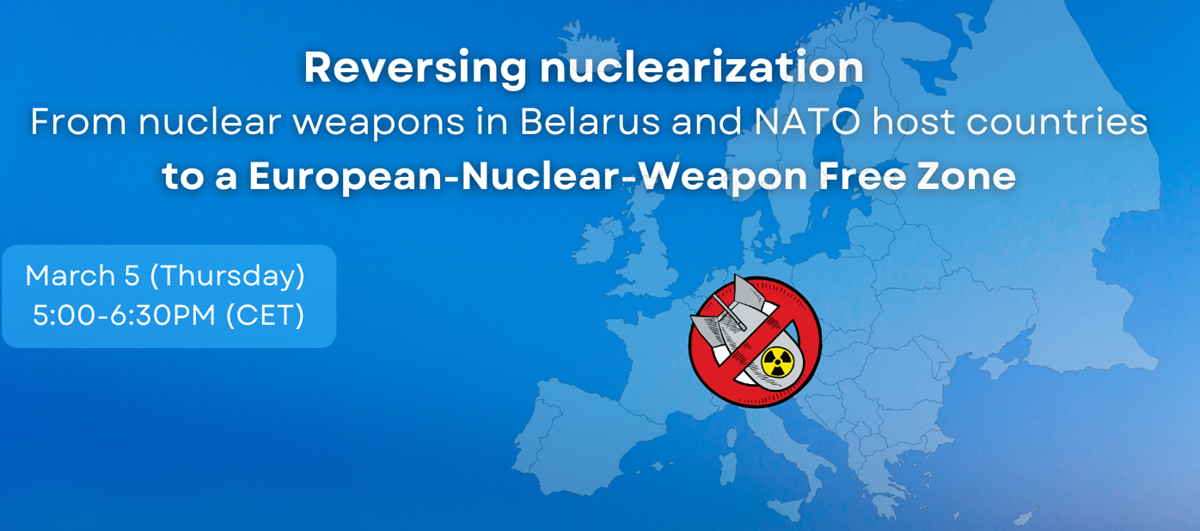
5 March -Online – Reversing nuclearization:
From nuclear weapons in Belarus and NATO host countries to a European-Nuclear-Weapon Free Zone
11am-12:30pm Eastern Time USA / 5pm-6:30pm CET

of the week – Advocating for a
nuclear free beach – https://www.samuellawrencefoundation.org/
The Samuel Lawrence Foundation advocates for a Nuclear Waste Free Beach at San Onofre, join us and take action!

10 March A LIVE WEBINAR THE REAL EFFECTS OF NUCLEAR POWER
What the Industry Isn’t Telling Us
1:00 PM Mountain, 2 pm Central, 3 pm Eastern. Live on the Keepers of the Water Facebook page

18 March Webinar @ 1 PM EST: An Assessment of SMR Projects: The Case of Canada
register for the zoom:
https://us02web.zoom.us/webinar/register/WN_o8BIIOUvQ2ONJR1nta65DQ#/registration

of the week – STOP SMALL MODULAR REACTORS IN CANADA
To see nuclear-related stories in greater depth and intensity – go to https://nuclearinformation.wordpress.com
-
Archives
- March 2026 (38)
- February 2026 (268)
- January 2026 (308)
- December 2025 (358)
- November 2025 (359)
- October 2025 (376)
- September 2025 (258)
- August 2025 (319)
- July 2025 (230)
- June 2025 (348)
- May 2025 (261)
- April 2025 (305)
-
Categories
- 1
- 1 NUCLEAR ISSUES
- business and costs
- climate change
- culture and arts
- ENERGY
- environment
- health
- history
- indigenous issues
- Legal
- marketing of nuclear
- media
- opposition to nuclear
- PERSONAL STORIES
- politics
- politics international
- Religion and ethics
- safety
- secrets,lies and civil liberties
- spinbuster
- technology
- Uranium
- wastes
- weapons and war
- Women
- 2 WORLD
- ACTION
- AFRICA
- Atrocities
- AUSTRALIA
- Christina's notes
- Christina's themes
- culture and arts
- Events
- Fuk 2022
- Fuk 2023
- Fukushima 2017
- Fukushima 2018
- fukushima 2019
- Fukushima 2020
- Fukushima 2021
- general
- global warming
- Humour (God we need it)
- Nuclear
- RARE EARTHS
- Reference
- resources – print
- Resources -audiovicual
- Weekly Newsletter
- World
- World Nuclear
- YouTube
-
RSS
Entries RSS
Comments RSS
 nuclear-news
Leave a comment