Plumes of disinformation from nuclear lobby hide the truth on radiation
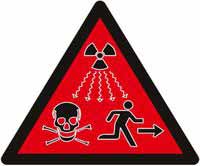 The National Council on Radiation Protection (NCPR) says, “…the Council assumes that, for radiation-protection purposes, the risk of stochastic [random] effects is proportional to dose without threshold…”[17] (Emphasis added) In other words, “… every increment of radiation exposure produces an incremental increase in the risk of cancer.”[18]
Nuclear Power: Dead in the Water it Poisoned, CounterPunch, by JOHN LAFORGE NOVEMBER 5, 2015 “……….Another part of reactor greenwashing is the powerful influence of mis- and disinformation following the Great East Japan Earthquake, the resulting tsunami, and the catastrophic Fukushima radiation gusher that began March 11, 2011.
In reporting on the contamination of soil, tap water, rain water, groundwater, breast milk, vegetables, fish, baby food, animal feed, beef, and incinerator ash, radiation was and is almost always said to pose little or no “immediate” danger. This minimization is designed to and quite successfully does ease public concern and push Fukushima’s ongoing radio-contamination from public consciousness.
Contaminated spinach and milk “do not pose an immediate health threat,” NPR’s Giles Snyder reported April 19, 2011. The Agence France-Presse reported October 6, 2011, “An exposure of 100 millisieverts per year is considered the lowest level at which any increase in cancer risk is evident.” However, as the US Nuclear Regulatory Commission says, “…any increase in dose, no matter how small, results in an incremental increase in risk.”[11]
An April 11, 2011 Forbes report flatly misstated the US EPA’s published public warning about radiation. Noting that a Phoenix, Arizona, drinking water sample contained 3.2 pico-curies per liter of radioactive iodine-131 from Fukushima, and that the EPA’s maximum contaminant level is 3.0, the writer concluded, “EPA does not consider these levels to pose a health threat.” In fact, the EPA officially warns that “there is no level below which we can say an exposure poses no risk.”
This pattern of misstatement and official falsehood went to the very top of the food chain. Japan’s Chief Cabinet Secretary Yukio Edano famously declared March 11, 2011, “Let me repeat that there is no radiation leak, nor will there be a leak.”[12] He later asked the public not to overreact to reports of radioactively contaminated food, saying, according to the BBC, “Even if you eat contaminated vegetables several times, it will not harm your health at all.”
President Obama followed suit. Six days into the Fukushima disaster, he said, “We do not expect harmful levels of radiation to reach the United States…”[13] Obama’s carefully-worded lullaby was immediately translated by Mike Viqueira of NBC News into, “The president said there was absolutely no danger whatsoever,” and the by NBC’s news anchor who said there was, “no reason to be concerned on the west coast.”
If only a president could stem the tide. Seventeen days later, Forbesreported that iodine-131 from Fukushima was found in drinking water in dozens of U.S. cities from California to Massachusetts, from Washington to Alabama. The EPA found either iodine-131 or cesium-137, and even strontium-90, in milk from Washington, Arizona, California, Vermont and Hawaii.[14]
A classic example of the trivialization of radiation risk is a 1989 New York Times report on a study of cancers caused by low doses of radiation previously thought to be harmless. Under the headline, “Higher Cancer Risk Found in Low-Level Radiation,” the story said, “… [T]he new estimate that radiation is a more potent carcinogen than previously believed should cause no concern for the average person, experts said, because the public is not exposed to enough radiation to exceed levels considered safe.”[15] This is perfectly untrue.
What should be reported is that the public is not usually exposed to radiation above permitted levels because safe exposures don’t exist. Official government assessments make this absolutely clear.
No safe dose
Authoritative warnings by the agencies that regulate radiation exposure are worthy of a detailed listing because of the literal consensus that’s been reached i.e. There is no safe dose, and as Dr. Arjun Makhijani says, “Only zero exposure results in zero cancer risk.”[16]
* The National Council on Radiation Protection (NCPR) says, “…the Council assumes that, for radiation-protection purposes, the risk of stochastic [random] effects is proportional to dose without threshold…”[17] (Emphasis added) In other words, “… every increment of radiation exposure produces an incremental increase in the risk of cancer.”[18]
The EPA says, “…any exposure to radiation can be harmful (or can increase the risk of cancer). ….. In other words, it is assumed that no radiation exposure is completely risk free.”[19] Further, “Radiation is a carcinogen. It may also cause other adverse health effects, including genetic defects in the children of exposed parents or mental retardation in the children of mothers exposed during pregnancy.”[20]
* The Department of Energy says, “[T]he effects of low levels of radiation are … a very slight increase in cancer risk.”[21]
* The Nuclear Regulatory Commission says, “This dose-response model suggests that any increase in dose, no matter how small, results in an incremental increase in risk.”[22]
The National Academy of Sciences in BEIR-VII, its latest book-length report on the biological effects of ionizing radiation, says “… that low-dose radiation acts predominantly as a tumor-initiating agent,”[23] and that “… the smallest dose has the potential to cause a small increase in risk to humans.” The committee further judges it unlikely that a threshold exists for the induction of cancers …”[24]
As science has come to understand the toxic, carcinogenic, mutagenic and teratogenic properties of even the lowest radiation exposures, the officially permitted dose — not a safe level — has dramatically decreased.[25] In the 1920s, the International Commission on Radiological Protection (ICRP) set the permissible dose for radiation workers in medicine and industry at 75 rem per year. In 1936, the limit was reduced to 50 rem per year, then to 25 in 1948, to 15 in 1954, and to 5 in 1958[26] — where it remains to this day. (A rem is a measure of the biological damage of a given absorbed dose of radiation.)
Today, the permitted radiation exposure for the public has been reduced to one-20th of what’s permitted for nuclear workers, or 0.25 rem per year. However, the ICRP’s 1990 recommendation to again reduce worker exposures — this time by three-fifths — from 5 to 2 rem/year, has never been adopted by the United States, even after 24 years………http://www.counterpunch.org/2015/11/05/nuclear-power-dead-in-the-water-it-poisoned/
No comments yet.
1 This Month
Chernobyl: The Lost Tapes – A good documentary on Chernobyl on SBS available On Demand for the next 3 weeks– https://www.sbs.com.au/ondemand/tv-program/chernobyl-the-lost-tapes/2352741955560

of the week–London Campaign for Nuclear Disarmament

Tell the Ukrainian Government to Drop Prosecution of Peace Activist Yurii Sheliazhenko
To see nuclear-related stories in greater depth and intensity – go to https://nuclearinformation.wordpress.com
-
Archives
- April 2026 (114)
- March 2026 (251)
- February 2026 (268)
- January 2026 (308)
- December 2025 (358)
- November 2025 (359)
- October 2025 (376)
- September 2025 (257)
- August 2025 (319)
- July 2025 (230)
- June 2025 (348)
- May 2025 (261)
-
Categories
- 1
- 1 NUCLEAR ISSUES
- business and costs
- climate change
- culture and arts
- ENERGY
- environment
- health
- history
- indigenous issues
- Legal
- marketing of nuclear
- media
- opposition to nuclear
- PERSONAL STORIES
- politics
- politics international
- Religion and ethics
- safety
- secrets,lies and civil liberties
- spinbuster
- technology
- Uranium
- wastes
- weapons and war
- Women
- 2 WORLD
- ACTION
- AFRICA
- Atrocities
- AUSTRALIA
- Christina's notes
- Christina's themes
- culture and arts
- Events
- Fuk 2022
- Fuk 2023
- Fukushima 2017
- Fukushima 2018
- fukushima 2019
- Fukushima 2020
- Fukushima 2021
- general
- global warming
- Humour (God we need it)
- Nuclear
- RARE EARTHS
- Reference
- resources – print
- Resources -audiovicual
- Weekly Newsletter
- World
- World Nuclear
- YouTube
-
RSS
Entries RSS
Comments RSS
 nuclear-news
Leave a comment