“Nuclear can’t compete today”
Asked about Duke Power Florida’s August decision to cancel new reactor plans, Peter Bradford, a former NRC  commissioner, told theTampa Bay Times that a nuclear construction boom “was just this artificial gold rush. And yes, it does show the renaissance is dead.”
Nuclear Power: Dead in the Water it Poisoned, CounterPunch, by JOHN LAFORGE NOVEMBER 5, 2015 “……..Well before Fukushima’s triple meltdowns staggered nuclear’s future, Congress and the industry were struggling to ignore its abandonment by important players around the world and public condemnations made by former supporters, and since March 2011 major figures the world over are saying “No nukes.”
 Speaking in New York City Nov. 27, World Bank President Dr. Jim Yong Kim said, “The World Bank Group does not engage in providing support for nuclear power. … [O]ur focus is on finding ways of working in hydroelectric power, in geo-thermal, in solar, in wind. … and we don’t do nuclear energy.” A week earlier, Kim said governments weren’t doing enough to confront climate change, revealing that the WBG well knows that nuclear power is no answer.[33]
World Bank directors may have adopted the recommendation of the US Commission on the Prevention of Weapons of Mass Destruction Proliferation and Terrorism, which concluded in 2009 that governments can and should help stop nuclear weapons proliferation by “… discouraging … the use of financial incentives in the promotion of civil nuclear power.”[34]
More pointedly, Gregory Jaczko, who was Chairman of the NRC when Japan’s Fukushima-Daiichi catastrophe started in 2011, warned in 2012 that “All 104 nuclear power reactors now in operation in the US have a safety problem that cannot be fixed and they should be replaced with newer technology…”[35] When he left the NRC, theTimes editorialized that “the country is losing a strong advocate for public safety who was always willing to challenge the nuclear industry and its political backers in Congress.” Continue reading
Time to stop Tokyo 2020 Olympics plan: instead deal with Fukushima nuclear disaster
Murata is not opposed to the Tokyo Olympic Games per se, but finds them a major distraction to what needs to be done immediately — namely, gathering the best minds and expertise from around the world and, with the full support of the Japanese government, doing everything humanly possible to bring Fukushima No. 1 truly “under control.” This will help to ensure the Pacific Ocean is no longer used as an open sewer for Fukushima-produced radiation, and also address the ongoing pain and distress of the residents of Fukushima Prefecture and beyond.

Time has come for an ‘honorable retreat’ from Tokyo 2020 over Fukushima, BRIAN VICTORIA
Kyoto http://www.japantimes.co.jp/community/2015/11/04/voices/time-come-honorable-retreat-tokyo-2020-fukushima/#.VjvGN9IrLGh
Dear Olympics minister Toshiaki Endo, Let me begin this message by offering you my sincerest condolences. Condolences for what? For the death of the belief that a trouble-free 2020 Tokyo Olympics would serve to showcase Japan’s economic revival.
Up to this point, the exact opposite has been the case, due to the scrapping of plans for a very expensive new National Stadium, the scuttling of the Olympic logo amid charges of plagiarism and newspaper headlines alleging, for example, that “Japan’s Olympics fiascoes point to outmoded, opaque decision-making.” Even more recently, Japan sports minister Hakubun Shimomura offered to resign over the Olympic stadium row.
Among these developments, the charge alleging “outmoded, opaque decision-making” is perhaps the most troubling of all, because it suggests that both of the major setbacks the 2020 Olympics has encountered are systemic in nature, not merely one-off phenomena. If correct, this indicates that similar setbacks are likely to occur in the future. But how many setbacks can the 2020 Olympics endure?
At this point it may be apt to recall the warning of 13th-century Zen master Dogen: “If there is the slightest difference in the beginning, the result will be a distance greater than heaven is from Earth.”
One lesson to be learned from Dogen’s words is that in order to understand the mess you are in now, you should reflect on how you got into it in the first place. When this is done, the “beginning” becomes clear, i.e., Prime Minister Shinzo Abe’s 2013 statement to the International Olympic Committee that the situation at the crippled Fukushima No. 1 nuclear plant was “under control.” The prime minister went on to tell the Diet, “The effect of radioactive substances in the nearby waters is blocked within 0.3 sq. km of the plant’s harbor.”
One needs only to look at recent stories describing the torrential downpours in the Fukushima area to know that this claim, if it were ever true, is clearly no longer valid. Even Tepco stated: “On Sept. 9 and 11, due to typhoon No. 18 (Etau), heavy rain caused Fukushima No. 1 drainage rainwater to overflow to the sea.” This is not to mention the high probability that relatively decontaminated areas have been contaminated once again by the heavy rains carrying radioactive particles lodged in the nearby mountains down onto the plains. Nor does it take into account that no one knows the location or condition of the melted fuel in reactors 1, 2 and 3.
At this point it may be apt to recall the warning of 13th-century Zen master Dogen: “If there is the slightest difference in the beginning, the result will be a distance greater than heaven is from Earth.”
One lesson to be learned from Dogen’s words is that in order to understand the mess you are in now, you should reflect on how you got into it in the first place. When this is done, the “beginning” becomes clear, i.e., Prime Minister Shinzo Abe’s 2013 statement to the International Olympic Committee that the situation at the crippled Fukushima No. 1 nuclear plant was “under control.” The prime minister went on to tell the Diet, “The effect of radioactive substances in the nearby waters is blocked within 0.3 sq. km of the plant’s harbor.” Continue reading
New book Green Energy Futures
 A clean, green energy future beckons! Ecologist Dave Elliott 5th November 2015 The world could soon be generating all its electricity from renewable sources, writes Dave Elliott, by harnessing diverse technologies for generation, grid balancing and energy storage. Add to that the use of power surpluses to make fuels, and it could even be feasible to make all our energy – not just electricity – renewable. A clean green future beckons…….
Some renewables are now cheaper than conventional sources, even when the cost of providing backup to deal with their variability is included.
When the health costs associated with using conventional energy sources is also included, the comparison is even more favourable: air pollution from burning fossil fuel is a killer.
If the longer term global social, economic and health impacts of climate change are also added in, then most renewables win out across the board, although some may have local impacts, such as visual intrusion, and for some there will be potential land-use conflicts.
We need to decide on priorities, and on issues of scale, although most of these local impacts can be avoided or limited, as I illustrate in my new book Green Energy Futures. That also looks at how the variability of some renewables can be dealt with at low cost, an issue I will focus on here. It often seen as the Achilles heal of renewables.
Harnessing variability Continue reading
Security escort rear-ends semi carrying nuclear weapon in US
 http://www.9news.com.au/world/2015/11/04/17/18/security-escort-rear-ends-semi-carrying-nuclear-weapon US security forces apparently transporting a nuclear weapon suffered an embarrassing slip-up when an armoured escort rear-ended the main vehicle as the convoy sped through a truck stop.
To make matters worse, the high-speed prang occurred just as the bystander filming was being told off by federal police for capturing the incident.
Uploaded to YouTube overnight, the video shows the intimidating convoy of at least ten vehicles and the semi, as well as several helicopters, barrelling through an unnamed town on what looks to be a US interstate highway. Continue reading
Malaysian govt prepares way for nuclear power, but big hurdles remain
Government prepares Act to pave way for nuclear programme http://www.theedgemarkets.com/my/article/government-prepares-act-pave-way-nuclear-programme By Ben Shane Lim / theedgemarkets.com | November 5, 2015 KUALA LUMPUR : The government is preparing to table a new Nuclear Energy Act that will pave the way for the country to adopt nuclear power into the energy mix by 2028.
The Act could be tabled in Parliament by next year, said Energy, Green Technology and Water Minister Datuk Seri Maximus Ongkili. However, Ongkili stressed that planning for nuclear power is still at a very early stage and not high on the ministry’s list of priorities.
“The original plan was to have nuclear make up 10% of generation capacity. This would diversify our energy sources. But since the unfortunate incident at Fukushima, [Japan], we are taking more time to study it,” Ongkili told reporters on the sidelines of the Fifth Korea-Malaysia Energy Cooperation Workshop here today.
The low commodity prices have also reduced the incentive to develop the nuclear programme swiftly. Not only are oil and gas prices low, coal is also at record low prices, noted Ongkili.
According to the 2014 Energy Sector Outlook report by the Energy Commission, there are plans to introduce nuclear power to the national grid by 2024. Ongkili said however, that deadline has since moved to 2028, noting that 13 years are plenty of time to study and develop a nuclear programme.
Normally, it takes 10 years to develop a nuclear power plant. “Dealing with the nuclear waste is one of the main issues we need to think about,” he added.For now, the government will place more focus on the renewable energy sector, which is targeted to make up 23% of generation capacity by 2020, said the minister.
Apart from the Nuclear Energy Act, Ongkili said the government plans to set up the institutional infrastructure necessary for the nuclear programme.
Environmental and safety issues aside, getting public support for a nuclear programme might be a challenge going forward, especially if it is more expensive than conventional power sources.
After all, with the removal of electricity subsidies and the introduction of the fuel cost pass-through mechanism, consumers will bear the full brunt of higher generation costs. Also not helping the case for nuclear power is the fact that Malaysia is able to produce its own natural gas.
Plumes of disinformation from nuclear lobby hide the truth on radiation
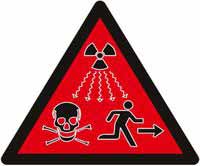 The National Council on Radiation Protection (NCPR) says, “…the Council assumes that, for radiation-protection purposes, the risk of stochastic [random] effects is proportional to dose without threshold…”[17] (Emphasis added) In other words, “… every increment of radiation exposure produces an incremental increase in the risk of cancer.”[18]
Nuclear Power: Dead in the Water it Poisoned, CounterPunch, by JOHN LAFORGE NOVEMBER 5, 2015 “……….Another part of reactor greenwashing is the powerful influence of mis- and disinformation following the Great East Japan Earthquake, the resulting tsunami, and the catastrophic Fukushima radiation gusher that began March 11, 2011.
In reporting on the contamination of soil, tap water, rain water, groundwater, breast milk, vegetables, fish, baby food, animal feed, beef, and incinerator ash, radiation was and is almost always said to pose little or no “immediate” danger. This minimization is designed to and quite successfully does ease public concern and push Fukushima’s ongoing radio-contamination from public consciousness.
Contaminated spinach and milk “do not pose an immediate health threat,” NPR’s Giles Snyder reported April 19, 2011. The Agence France-Presse reported October 6, 2011, “An exposure of 100 millisieverts per year is considered the lowest level at which any increase in cancer risk is evident.” However, as the US Nuclear Regulatory Commission says, “…any increase in dose, no matter how small, results in an incremental increase in risk.”[11]
An April 11, 2011 Forbes report flatly misstated the US EPA’s published public warning about radiation. Noting that a Phoenix, Arizona, drinking water sample contained 3.2 pico-curies per liter of radioactive iodine-131 from Fukushima, and that the EPA’s maximum contaminant level is 3.0, the writer concluded, “EPA does not consider these levels to pose a health threat.” In fact, the EPA officially warns that “there is no level below which we can say an exposure poses no risk.”
This pattern of misstatement and official falsehood went to the very top of the food chain. Japan’s Chief Cabinet Secretary Yukio Edano famously declared March 11, 2011, “Let me repeat that there is no radiation leak, nor will there be a leak.”[12] He later asked the public not to overreact to reports of radioactively contaminated food, saying, according to the BBC, “Even if you eat contaminated vegetables several times, it will not harm your health at all.”
President Obama followed suit. Continue reading
The financial folly of South Africa’s nuclear power plan
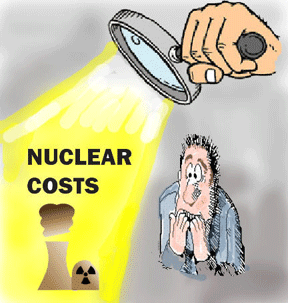
 Why South Africa should not build eight new nuclear power stations, Mail &Guardian, 05 NOV 2015 HARTMUT WINKLER South Africa has plans to build new power stations despite many calling for no nuclear energy in the country. t has been an eventful year in South Africa, characterised by power cuts, parliamentary confrontations about wasteful expenditure and student fee protests. There has, however, been a massive elephant in the room that has impacted all these issues but enjoyed surprisingly scarce attention. The idea, vigorously driven by government, is for the country to build nuclear plants with an expected price tag of one trillion rand.
This equates to 4 000 times the controversial costs to upgrade President Jacob Zuma’s Nkandla residence and 400 times the shortfall the tertiary education sector will experience in 2016 because of the freeze in university fee increases………
In South Africa too the need for the continued inclusion of nuclear power in the energy mix was being reexamined. Continue reading
Eskom says need for nuclear is ‘urgent’ – but could take decades to build!
 “URGENT” NUCLEAR POWER? THIS IS HOW LONG IT TAKES TO BUILD A REACTOR CHARLIE FRIPP 05NOV 2015 Yesterday, Eskom CEO Brian Molefe said that South Africa needs to add nuclear power to its electricity generating capacity “urgently”, but the problem is that a nuclear plant isn’t something that came be planned, constructed and made operational in a short space of time.“We do not think that it is possible to continue with an energy mix that excludes nuclear. It is feasible to fund and operate further nuclear plants in South Africa and, in fact, it is urgent we do so,” Molefe told Parliament’s Public Enterprises Committee yesterday.
How long does it take to build a nuclear power plant, though?
Across the world, there are just over 438 nuclear reactors and around 149 nuclear power plants. Constructing these behemoths is no small feat, and we have crunched the numbers to determine the average time that it takes to construct a nuclear reactor. Not including the 99 stations in the US (because they report stats differently), this is where they’re located. [table and graph]
While various projects across the globe were a stop-start affair, the average time in construction for a nuclear reactor is 8.2 years. South Africa’s own Koeberg power station was close to pushing the ten-year mark for construction, as Unit 1 took 8.1 years to complete, and Unit 2 was just under nine-and-a-half years.
What’s interesting is that average build times are getting longer. In the last decade, for example, only China and South Korea have managed to build a nuclear power station in less than five years.
The other thing to note, of course, is that the while construction delays are almost inevitable for nuclear plants, cost overruns are the norm too (World Nuclear Industry Status Report 2015)………. http://www.htxt.co.za/2015/11/05/urgent-nuclear-power-this-is-how-long-it-takes-to-build-a-reactor/
“Worst accidental radioactive pollution of Pacific Ocean” hasn’t moved US to test seafood
Nuclear Power: Dead in the Water it Poisoned, CounterPunch, by JOHN LAFORGE NOVEMBER 5, 2015 “………..Radiation exposure and contamination should concern everyone because by all accounts the volume of  radioactive materials discharged to the Pacific Ocean by Fukushima is the single greatest radioactive contamination of the sea ever observed. [27] An estimated 27 “peta-becquerels” (27 million billion becquerels) of cesium-137 had already leaked or been deliberately dumped into the Pacific by October 2011. A becquerel represents one atomic disintegration/second.
Last July, Tokyo Electric Power Co., which owns the Fukushima wreckage, acknowledged that an additional 300 tons-a-day of highly contaminated water is leaking into the Pacific from the six-reactor station — and has been since the beginning of the disaster almost three years ago. The American Medical Association — following the revelation of massive ongoing leaks — called on the US government to “monitor and fully report the radioactivity levels of edible species sold in the United States.”[28]
Yet at present, US seafood is not regularly tested for cesium contamination, in spite of the large numbers of fish and other foods that have been found contaminated by Fukushima isotopes — including blue fin[29] and albacore tuna[30] caught off the US West Coast, grapefruit from Florida, and prunes, almonds, pistachios and oranges from California.[31]
In this context, a coalition of public health and environmental groups petitioned the FDA in early summer demanding a drastic reduction in the amount of radioactive cesium allowed in food. The petition by members of the Fukushima Fallout Awareness Network (FFAN) declared that the arbitrarily high 1,200 becquerels-per-kilogram (Bq/kg) US limit is “ridiculous.” The standard is between 120 times to 24 times weaker than Japan’s.
The petition demands that US foods have no more than 5 Bq/kg of cesium-137 and -134, and that all food be tested and labeled with its cesium content. The FFAN reports that the devastated Fukushima reactors continue to leak more than 10 million becquerels of cesium-134 and cesium-137 per hour into the environment, “with no sign of stopping.” The network said it was “alarmed” at the lack of testing currently in place to meet the threat of radioactive contamination in food. Because cesium-134 has a hazardous life of about 10-20 years, and cesium-137 has a hazardous life of about 300-600 years, the FFAN said, the threat of food contamination “is a long-term issue that deserves immediate attention………”http://www.counterpunch.org/2015/11/05/nuclear-power-dead-in-the-water-it-poisoned/
1 This Month

of the week – Shut Down Drone Warfare!


Tell the Ukrainian Government to Drop Prosecution of Peace Activist Yurii Sheliazhenko

Petition to revoke the licensing of the Near Surface Nuclear Disposal Facility (NSDF) at Chalk River. https://www.ourcommons.ca/petitions/en/Petition/Details?Petition=e-7247
To see nuclear-related stories in greater depth and intensity – go to https://nuclearinformation.wordpress.com
-
Archives
- April 2026 (114)
- March 2026 (251)
- February 2026 (268)
- January 2026 (308)
- December 2025 (358)
- November 2025 (359)
- October 2025 (376)
- September 2025 (257)
- August 2025 (319)
- July 2025 (230)
- June 2025 (348)
- May 2025 (261)
-
Categories
- 1
- 1 NUCLEAR ISSUES
- business and costs
- climate change
- culture and arts
- ENERGY
- environment
- health
- history
- indigenous issues
- Legal
- marketing of nuclear
- media
- opposition to nuclear
- PERSONAL STORIES
- politics
- politics international
- Religion and ethics
- safety
- secrets,lies and civil liberties
- spinbuster
- technology
- Uranium
- wastes
- weapons and war
- Women
- 2 WORLD
- ACTION
- AFRICA
- Atrocities
- AUSTRALIA
- Christina's notes
- Christina's themes
- culture and arts
- Events
- Fuk 2022
- Fuk 2023
- Fukushima 2017
- Fukushima 2018
- fukushima 2019
- Fukushima 2020
- Fukushima 2021
- general
- global warming
- Humour (God we need it)
- Nuclear
- RARE EARTHS
- Reference
- resources – print
- Resources -audiovicual
- Weekly Newsletter
- World
- World Nuclear
- YouTube
-
RSS
Entries RSS
Comments RSS
 nuclear-news