The Ongoing Saga 62: News, Updates, Tidbits & Trivia

This Ongoing Saga post is usually updated daily (to the extent possible). Most recent updates are on top, after images, and comment info, so that daily readers will not have to scroll-down far. Time is UTC-GMT. This is a continuation of:


Call-up to Clean-up Nuclear Sites
These images or something similar will probably stay on top until a) pro-nuclear people volunteer to work at nuclear waste sites (WIPP, Fukushima, Hanford, etc.) in droves, and b) the nuclear industry is shut down. Then, after b), there will still be the problem of a) the nuclear waste to be secured. We live on borrowed time. Let’s shut the nuclear industry down now! There’s 3 months left to do it this year.
The deadline for comment on the US NRC 100 mSv per year exposure proposal, also known as cancer for everyone, is November 19th…
View original post 1,028 more words
October 9 Energy News

World:
¶ Electricity sent to the National Grid by wind turbines in Scotland was 82% higher in September than the same month last year, analysis by WWF Scotland and data company WeatherEnergy found. The grid took 563,835 MWh of power from Scotland’s windfarms in September 2015, up from 308,301 MWh in September 2014. [Scotsman]
 September’s unusual weather led to green energy boom. Picture: Ian Rutherford
¶ According to a study by the Organisation for Economic Co-operation and Development, in collaboration with Climate Policy Initiative, public and private finance that was mobilized by developed countries for climate action in developing countries grew from $52 billion in 2013 to an impressive $62 billion in 2014. [CleanTechnica]
¶ Renewables represented only 7% of the energy used in the production and consumption of food across EU member states in 2013, compared to 15% in the overall energy mix, according to a JRC Science and…
View original post 667 more words
The continuing scandal of Russia’s Mayak nuclear contamination – whistleblower seeks asylum in France

 A Russian antinuclear activist asks for asylum in France Mediapart , October 2, 2015, by Amélie Poinssot and Michel de Pracontal, As the head of the NGO Planet of Hope [Planeta Nadezhd], Nadejda Koutepova has fought for fifteen years for the victims of radioactive contamination in the Urals, near the Maiak factory which, in 1957, gave the world its first nuclear catastrophe. In July, she was forced by circumstances to dissolve the NGO and leave Russia. This Friday, October 2nd, as Francois Hollande receives Vladimir Putin in Paris, she is asking for asylum in France.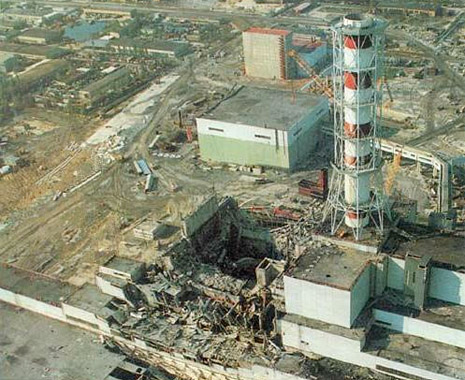
Fukushima children and adolescents have unusually high rates of thyroid cancer
 Thyroid Cancer Detection by Ultrasound Among Residents Ages 18 Years and Younger in Fukushima, Japan: 2011 to 2014. http://journals.lww.com/epidem/Abstract/publishahead/Thyroid_Cancer_Detection_by_Ultrasound_Among.99115.aspx by Tsuda, Toshihide; Tokinobu, Akiko; Yamamoto,
 Eiji; Suzuki, Etsuji Epidemiology: Post Author Corrections: October 5, 2015 Open Access Published Ahead-of-Print
Methods: After the release, Fukushima Prefecture performed ultrasound thyroid screening on all residents ages <=18 years. The first round of screening included 298,577 examinees, and a second round began in April 2014. We analyzed the prefecture results from the first and second round up to December 31, 2014, in comparison with the Japanese annual incidence and the incidence within a reference area in Fukushima Prefecture.
Results: The highest incidence rate ratio, using a latency period of 4 years, was observed in the central middle district of the prefecture compared with the Japanese annual incidence (incidence rate ratio = 50; 95% confidence interval [CI] = 25, 90). The prevalence of thyroid cancer was 605 per million examinees (95% CI = 302, 1,082) and the prevalence odds ratio compared with the reference district in Fukushima Prefecture was 2.6 (95% CI = 0.99, 7.0). In the second screening round, even under the assumption that the rest of examinees were disease free, an incidence rate ratio of 12 has already been observed (95% CI = 5.1, 23).
Conclusions: An excess of thyroid cancer has been detected by ultrasound among children and adolescents in Fukushima Prefecture within 4 years of the release, and is unlikely to be explained by a screening surge.
This is an open-access article distributed under the terms of the Creative Commons Attribution-Non Commercial-No Derivatives License 4.0 (CCBY-NC-ND), where it is permissible to download and share the work provided it is properly cited. The work cannot be changed in any way or used commercially.
Scotland’s Labour MPs join Jeremy Corbyn in supporting nuclear disarmament

 Neil Findlay convinced unilateral nuclear disarmament campaign will win Trident debate, Courier UK,
By PRESS ASSOCIATION, 8 October 2015 Jeremy Corbyn’s closest ally in Scotland has said he is “absolutely convinced” those in favour of unilateral UK nuclear disarmament will win the argument.
Labour MSP Neil Findlay clashed with party colleague Jackie Baillie at Holyrood today over the best tactics to rid the world of nuclear weapons.
Two other Labour MSPs, Malcolm Chisholm and Elaine Smith, signed an SNP motion opposing the renewal of Trident – in a foretaste of the wider debate expected at the Scottish Labour Party conference later this month.
Mr Findlay, Mr Corbyn and Shadow Scottish Secretary Ian Murray favour unilateral UK disarmament in the hope it will convince other countries to follow suit, but they are at odds with Labour’s multilateralist support for Trident renewal.
UK Labour reaffirmed its support for Trident at its conference last month but Mr Corbyn caused confusion by admitting he would never launch a nuclear attack.
Scottish Infrastructure Secretary Keith Brown, a former marine, said it is “deeply immoral” for Labour to advocate spending £100 billion on weapons it would not use……. http://www.thecourier.co.uk/news/politics/neil-findlay-convinced-unilateral-nuclear-disarmament-campaign-will-win-trident-debate-1.904087
Examining Nuclear Regulatory Commission’s deceptive article about ending the cancer research
 Examining the Reasons for Ending the Cancer Risk Study as given in article by USA’s Nuclear Regulatory Commission 6 Oct 15 Garry Morgan, U.S. Army Medical Department, Retired Director Health and Radiation Monitoring BEST/MATRR a local chapter of BREDL
http://www.matrr.org
One word describes this article – FALLACY. The Nuclear Regulatory Commission’s (NRC) mission to protect the public is compromised by politicians supported by Nuclear Special Interest Groups such as the NEI, Nuclear Energy Institute, applying pressure to decrease funding to the NRC. You are supporting the nuclear industry not the public. The NRC is not an agency which has separated itself from undue political and industry influences and pressures.
A report of radiological contamination and its health effects could have been completed with less expense than $8 million dollars, accurately. The nuclear industry and the United States Government has much to hide regarding the failures to protect the public at large and in communities surrounding all nuclear facilities – this includes the uranium mining communities, the fuel facility communities, the nuclear hazardous waste communities, nuclear weapons communities and all nuclear reactor facility communities.
The nuclear industry and the regulator does not report real time ionizing radiation from emission sources from any active nuclear facility; reporting is based on averages reported annually from nuclear facility locations. This type of reporting is skewered, and lacks scientific credibility due to not reporting emissions in a real time monitoring program with accurate radiological assessments from real time monitoring reports along with community resident health evaluations.
Non-profit institutional examination of nuclear emissions and community health is demonstrating an entirely different story from that which the nuclear industry and the NRC reports. When there is contradictory evidence disputing the nuclear industry and the NRC, the NEI hires nuclear industry paid persons to contradict any information assimilated from private non-profit sources, regardless if the information is actually an accurate compilation from government sources with professional data assimilation and analysis. Example – The Browns Ferry Report <http://best-matrr.org/pdfs/AL_BFN_Report_2013-final-dig2.pdf>http://best-matrr.org/pdfs/AL_BFN_Report_2013-final-dig2.pdf
The examination of dispersal of radiological contaminating materials in East Tennessee presents a horror story of cancer, declining health and radionuclide contamination of the environment of East Tennessee communities along the Tennessee River and its’ tributaries. The citizens of East Tennessee have become a sacrificial group since the beginnings of the nuclear age in 1945. Unfortunately, the Department of Energy (DOE) and the NRC are participants in this horror story of the atomic age, placing the money gained from atomic death industry before peoples health and welfare – shame on you. Shame on the NRC, DOE, and the many nuclear and nuclear defense industries for your continued deceit.
This is the million pound weight in the room – the continuous deceit and placing money before human health in civilian nuclear and nuclear contractor programs, besides the continuous building of highly radioactive nuclear waste materials. The deceit demonstrated is a continuous failure to uphold Human Reliability Standards which is a cornerstone of any nuclear program, the failure due to deceit is tantamount to a disaster awaiting an outcome. http://public-blog.nrc-gateway.gov/2015/10/06/examining-the-reasons-for-ending-the-cancer-risk-study/comment-page-1/#comment-1617512>
Reality check on what Isil could actually do with nuclear materials
What could Isil actually do if they got their hands on nuclear material?Dirty bomb? Nuclear missile? After reports of Russian criminals trying to sell to Islamic State, we ask what the jihadists could actually do with nuclear material. By Richard Brown, King’s College London, Telegraph UK, 08 Oct 2015 The confirmation that black market gangs have been offering nuclear materials for sale – and have expressly targeted Islamic State buyers – can hardly be received with equanimity.
There is no reason to believe that an organisation with so hellishly violent a track record as Isil would baulk at using such materials offensively if ever they had ready access to them.
It would, however, be premature to leap from news of (failed) transactions to visions of a nuclear-armed Islamic State of Iraq and the Levant (Isil), without first asking what they could actually do with any nuclear material they bought.
Why ‘bomb-grade’ doesn’t always mean that
The term ‘nuclear material’ can, in fact, cover a range of different substances, including those required for nuclear explosions – namely, uranium and plutonium. Neither is at all easy to produce………
Alternative uses for nuclear material
A nuclear explosion is not the only use to which Isil could put ‘nuclear materials’.
There are other radioactive substances than uranium and plutonium, and a more practical and perhaps more tempting prospect would for Isil to use these to produce a radiological dispersal device – a so-called ‘dirty bomb’. Such a device would scatter potentially lethal doses of radioactive material over a large area.
The explosive component could be fairly crude, and the appropriate radiological materials would be easier to obtain used (a small quantity of Caesium-137 or Cobalt-60 would be ideal).
No nuclear explosion would result, but there would be a significant risk of radiation sickness and contamination of a wide area. The psychological and environmental impact could be severe.
That said, the lethality of the device itself might not be especially high; much would depend on the context in which the device was used, and the swiftness with which authorities could begin decontamination.
At any rate, most of the value to the terrorists would come from the scale of disruption the bomb caused, rather than from the radiological death toll……..http://www.telegraph.co.uk/news/worldnews/islamic-state/11918489/What-could-Isil-actually-do-if-they-got-their-hands-on-nuclear-material.html
Many nuclear facilities insecure, vulnerable to cyber-attack
 Report finds many nuclear power plant systems “insecure by design” http://arstechnica.com/security/2015/10/report-finds-many-nuclear-power-plant-systems-insecure-by-design/ Use of VPNs in some reactors, lack of security measures pose risks. by Sean Gallagher – Oct 8, 2015 A study of the information security measures at civilian nuclear energy facilities around the world found a wide range of problems at many facilities that could leave them vulnerable to attacks on industrial control systems—potentially causing interruptions in electrical power or even damage to the reactors themselves. The study, undertaken by Caroline Baylon, David Livingstone, and Roger Brunt of the UK international affairs think tank Chatham House, found that many nuclear power plants’ systems were “insecure by design” and vulnerable to attacks that could have wide-ranging impacts in the physical world—including the disruption of the electrical power grid and the release of “significant quantities of ionizing radiation.” It would not require an attack with the sophistication of Stuxnet to do significant damage, the researchers suggested, based on the poor security present at many plants and the track record of incidents already caused by software.
The researchers found that many nuclear power plant systems were not “air gapped” from the Internet and that they had virtual private network access that operators were “sometimes unaware of.” And in facilities that did have physical partitioning from the Internet, those measures could be circumvented with a flash drive or other portable media introduced into their onsite network—something that would be entirely too simple given the security posture of many civilian nuclear operators. The use of personal devices on plant networks and other gaps in security could easily introduce malware into nuclear plants’ networks, the researchers warned.
The security strategies of many operators examined in the report were “reactive rather than proactive,” the Chatham House researchers noted, meaning that there was little in the way of monitoring of systems for anomalies that might warn of a cyber-attack on a facility. An attack could be well underway before it was detected. And because of poor training around information security, the people responsible for operating the plants would likely not know what to do.
That problem is heightened by what the researchers characterized as a “communication breakdown” between IT security professionals and the plant operations staff, and a simple lack of awareness among plant operations people about the potential dangers of cyber-attacks. Cultural differences between IT and nuclear engineering culture cause friction at some facilities, in fact—making it difficult for IT and security staff to get across the problem with the poor security practices in the plants.
Unfortunately, there’s no way to tell how bad the problem really is, because the nuclear industry doesn’t talk about breaches. “The infrequency of cyber security incident disclosure at nuclear facilities makes it difficult to assess the true extent of the problem and may lead nuclear industry personnel to believe that there are few incidents,” the researchers wrote in their summary. “Moreover, limited collaboration with other industries or information-sharing means that the nuclear industry tends not to learn from other industries that are more advanced in this field.”
These issues, combined with a lack of regulation, may lead to an underestimation of risk by nuclear operators and result in a lack of budgeting or planning for reducing the risk of attack.
Fiftyfold increase in child thyroid cancers in Fukushima residents
Child cancers up fiftyfold after Fukushima disaster The Times, Richard Lloyd Parry Tokyo, October 8 2015 Cases of thyroid cancer among children living close to the Fukushima nuclear power plant have increased fiftyfold since the meltdown in 2011, according to Japanese scientists.
Residents of Fukushima prefecture in northeast Japan should be monitored in the same way as survivors of the atomic bombings of Hiroshima and Nagasaki, say the researchers, who offer one of the most pessimistic assessments so far of the health implications of the world’s second worst nuclear disaster……..http://www.thetimes.co.uk/tto/news/world/asia/article4579144.ece
Moldova – a “thriving black market in nuclear materials”
 Why Moldova May Be the Scariest Country on Earth A new report details a black market in nuclear materials, The Atlantic, 8 Oct 15 On Wednesday, the Associated Press published a horrifying report about criminal networks in the former Soviet Union trying to sell “radioactive material to Middle Eastern extremists.” At the center of these cases, of which the AP learned of four in the past five years, was a “thriving black market in nuclear materials” in a “tiny and impoverished Eastern European country”: Moldova.
It’s a new iteration of an old problem with a familiar geography. The breakup of the Soviet Union left a superpower’s worth of nuclear weapons scattered across several countries without a superpower’s capacity to keep track of them. When Harvard’s Graham Allison flagged this problem in 1996, he wrote that the collapse of Russia’s “command-and-control society” left nothing secure. To wit:
The Russian nuclear weapons archipelago includes hundreds of sites over one-seventh of the Earth’s land mass, sites at which 1,000 tons of highly enriched uranium, 100 tons of plutonium and some 30,000 nuclear warheads are at risk.
Specifically, as described in Foreign Policy by the journalist Douglas Birch:
Russia inherited [the Soviet Union’s] vast stores of nuclear, chemical, and biological weapons. And they were a mess. Western visitors to weapons depots and labs were shocked to find AWOL guards, broken fences and unlocked doors. Two million nerve gas shells were discovered sitting in rotting barns in a patch of forest in western Siberia.
In the intervening years, the United States has spent billions to help Russia upgrade its nuclear facilities and improve security, helping decommission or destroy thousands of nuclear warheads until that cooperation ended in late 2014. But nuclear materials remain accessible, and certain estimates about their prevalence are classified. While it would be hard to steal a nuclear warhead, radioactive components for a “dirty bomb” are significantly easier to obtain and transport. Radiation sickness isn’t necessarily a deterrent for a suicide bomber……….
Reports such as these surface periodically from the former Soviet Union andPakistan and, perhaps because the implications are too terrible to think about and the solutions are too hard to find, they fade more quickly than their severity warrants. The underlying issues are largely the same as they were 20 years ago: The black market exists because there’s a supply of the material and a demand for it. As one Moldovan investigator told the AP: “As long as the smugglers think they can make big money without getting caught, they will keep doing it.” http://www.theatlantic.com/international/archive/2015/10/moldova-nuclear-weapons-isis/409456/
Increasing public opposition to South Korean govt’s nuclear power policy
 The Repercussions of South Korea’s Pro-Nuclear Energy Policy A long-term policy is running into increasing domestic opposition, The Diplomat, By Se Young Jang, 8 Oct 15 Se Young Jang is an associate at the Belfer Center for Science and International Studies, Harvard Kennedy School, and a non-resident Kelly fellow at Pacific Forum CSIS.
In a local referendum held in October 2014, an overwhelming majority of the residents in Samcheok, a small coastal city in Gangwon province, rejected the South Korean government’s plan to build a nuclear power plant in the city. Since Japan’s 2011 nuclear disaster in Fukushima and South Korea’s 2013 scandals over fake safety certificates for nuclear equipment, South Koreans have begun to take nuclear safety issues more seriously, which in turn has prompted a growing anti-nuclear power sentiment. A series of scandals and accidents in South Korea’s nuclear power plants have focused public attention on the effects of radioactive materials on the health of the residents who live near the country’s four nuclear power plants. Last year, a South Korean courtruled that the Korea Hydro & Nuclear Power Co., a state-run nuclear power plant operator, was responsible for the thyroid cancer suffered by a plaintiff, who has lived 7.7 km away from the Kori nuclear power plant over the past 20 years. Since then, more than 500 thyroid cancer patients living close to the nuclear power plants in South Korea have been preparing a joint legal action against the company.
Notwithstanding the anti-nuclear sentiment, nuclear energy as a share of total electricity generated increased to about 30 percent in 2014, and the South Korean government is currently constructing four new nuclear reactors with eight more being planned. Standing firm on its nuclear power plant projects, the South Korean government regarded the Samcheok referendum as not legally binding, and this position remains unchanged. Under the Second Basic National Energy Plan for 2015-2035, South Korea appear to have few options but to stick to its original plan of building more nuclear power plants, as the 2015-2035 energy plan was based on the assumption that it could not avoid raising its dependence on nuclear power.
Critics say that the government overestimated future electricity demand and underpriced electricity. According to the Sixth Basic Supply-Demand Plan for Electricity (2013-2027), South Korea will use more electricity per capita than the United States in 2024. The high population density in South Korea could translate into lower demand for electricity per capita. Moreover, estimates of electricity demand are based on cheap prices for electricity; the government calculated that the rate of increase in electricity prices in the coming years would be one third of the inflation rate. Some newspapers in South Korea report concerns about rising electricity bills as a result of a decreasing reliance on nuclear power. Still, it is interesting to note that 65.6 percent of respondents in a 2013 poll were willing to pay a higher electricity bill if it meant fewer nuclear power plants……….
Today, South Korea no longer seeks its own nuclear weapons, but Park Geun-hye still sees boosting nuclear energy industry as a great opportunity for the South Korean economy. Now a nuclear exporter, South Korea has concluded agreements with Jordan and the United Arab Emirates to construct one research reactor and four commercial reactors. …….
Korea’s success in the nuclear export market and geopolitical necessities notwithstanding, the current domestic situation is hardly favorable to the South Korean government. The 2013 scandal over hundreds of faulty components used in reactors is still unfolding. A parliamentary audit last year revealed that the temporary suspension of the operations of nuclear power plants after the scandal caused the loss of 10 trillion won (about $9.5 billion), and that some officials fired from the KEPCO E&C (Korea Electric Power Corporation Engineering and Construction) over the scandals were rehired. Worse, the result of the referendum in Samcheok is probably only the beginning of a series of hurdles which the South Korean government will have to overcome. More than half of the respondents in a recent poll conducted in Yeongdeok, in North Gyeongsang Province, which was also designated as a nuclear power plant site by the government in 2012 along with Samcheok, opposed the central government’s construction plan.
The consent of local residents will be even more important in the near future as South Korea faces a crisis over the storage of nuclear spent fuel. South Korea has nearly 9,000 tons of spent fuel stacked in temporary storage pools with about 750 tons added to the pools every year. They could reach maximum capacity by 2021. The government has been deliberating over several ways of storing spent fuel, including pyroprocessing and a medium-term solution using dry casks; but no matter what method South Korea chooses, the government will need to be able to persuade people living next to the facility, no easy task as Samcheok has demonstrated……….http://thediplomat.com/2015/10/the-repercussions-of-south-koreas-pro-nuclear-energy-policy/
News about renewable energy
Thomas L. Friedman: Stuff happens to the environment, like climate change.
With both China and India having just announced major plans to curb their carbon emissions, the sound you hear is a tipping point tipping. Heading into the United Nations climate summit meeting in Paris in December, all the world’s largest industrial economies are now taking climate change more seriously. This includes the United States — except for some of the knuckleheads running to be our next president, which is not a small problem. …
If you have time to read one book on this subject, I highly recommend the new “Big World, Small Planet,” by Johan Rockstrom, director of the Stockholm Resilience Center, and Mattias Klum, whose stunning photographs of ecosystem disruptions reinforce the urgency of the moment.
http://www.nytimes.com/2015/10/07/opinion/thomas-friedman-stuff-happens-to-the-environment-like-climate-change.html &http://www.environmentalhealthnews.org/t/-432955192434563926
Exploring Cost-Effective, Non-Polluting Enhanced Geothermal Systems
A new fracturing fluid has been created that may increase the ability to develop geothermal energy, scientists report. This advance of tapping the natural heat of Earth may improve the cost-effectiveness and cleanliness of the process.
http://www.sciencedaily.com/releases/2015/10/151007084534.htm
Renewables could supply nearly a quarter of Africa’s energy by 2030, says report
International Renewable Energy Agency report says the continent has the potential to quadruple the proportion of its energy supplied by renewables…
http://www.theguardian.com/environment/2015/oct/06/renewables-supply-quarter-africas-energy-2030-report &http://www.dailyclimate.org/t/2524623843131879060
R** Wind and solar keep getting cheaper and cheaper.
A new analysis suggests that we continue to move into a world in which it makes more economic sense to draw electricity from the sun or the winds, rather than from fossil fuels
http://www.dailyclimate.org/t/7719159717658620021
Dirt-cheap catalyst may lower fuel costs for hydrogen-powered cars
‘Green’ process relies on sunlight
http://www.eurekalert.org/pub_releases/2015-10/dnl-dcm100715.php
Nadejda Koutepova speaks out on the hidden scandal of the Mayak radioactive contamination
A Russian antinuclear activist asks for asylum in France Mediapart , October 2, 2015, by Amélie Poinssot and Michel de Pracontal, The revelation, decades later
Pediatric Thyroid Cancer after the Fukushima Accident
Press Conference: Toshihide Tsuda, Professor of Okayama Univeristy, October 08, 2015, “Pediatric Thyroid Cancer after the Fukushima Accident”
Toshihide Tsuda
Professor, Graduate School of
Environmental and Life Science, Okayama University
Language: The speech and Q & A will be in Japanese with English interpretation
Almost five years after the triple meltdown at the Fukushima Daiichi nuclear power plant, attention is turning to the possible long-term health effects radiation exposure has had on local people, particularly children.
A large-scale thyroid ultrasound screening examination is underway in Fukushima Prefecture, covering about 370,000 children who were 18 or younger at the time of the accident.
Despite evidence of much higher rates of juvenile thyroid cancer in the prefecture compared with the pre-accident incidence rate, local medical authorities and the central government claim that the Fukushima disaster is not the cause.
They point to the evacuation of tens of thousands of people in the immediate aftermath, and the ban on the sale of locally produced milk and other produce. The authorities, backed by prominent international experts, claim the increased rate of thyroid cancer is due to the highly sensitive ultrasound equipment being used to test Fukushima children.
But in a significant challenge to that thesis, Toshihide Tsuda, professor of environmental epidemiology at Okayama University, believes the excess occurrence of juvenile thyroid cancer is not due merely to the screening effect, but is the consequence of exposure to radiation. http://www.fccj.or.jp/events-calendar/press-events/icalrepeat.detail/2015/10/08/3459/30/press-conference-toshihide-tsuda-professor-of-okayama-univeristy.html
Duke Energy very doubtful about new nuclear stations
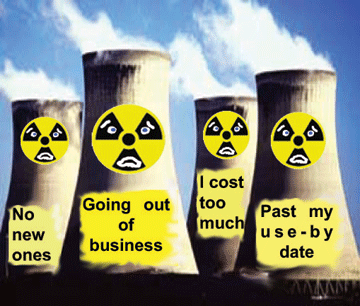
 Will new nuclear plants be ‘part of the picture’ for Duke Energy? CEO raises doubt, Charlotte Business Journal, Oct 8, 2015, Duke Energy CEO Lynn Good sounded a strongly doubtful note about the company proceeding with its proposed Lee Nuclear Station in her speech Wednesday to the Winston-Salem Chamber of Commerce.Talking about what Charlotte-based Duke (NYSE:DUK) would look like in 2025, she said natural gas would be the backbone of its power fleet and that the utility would make greater use of renewable energy and battery storage.“Nuclear will continue to be an important part of energy supplies in the Carolinas,” she said “But whether or not new nuclear is a part of the picture remains to be seen.”
Abandoned plants Duke still includes the proposed 2,334-megawatt Lee plant in its long-range plans. But the utility has never formally committed to construction of the $12 billion project. Good’s comments raised new doubts about whether it ever will. Since 2012, Duke has abandoned plans to build new nuclear units in Raleigh and in Florida. The Lee plant, proposed for Gaffney, S.C., is the last new nuclear plant still included in the company’s plans……..the company will have to “look very hard at whether we can replace current nuclear with new nuclear,” she said.
That is likely to mean a much greater dependence on natural gas plants than there is now.
Good said that no new coal plants will be built in the United States…….http://www.bizjournals.com/charlotte/blog/energy/2015/10/will-new-nuclear-plants-be-part-of-the-picture-for.html
1 This Month

of the week – Shut Down Drone Warfare!


Tell the Ukrainian Government to Drop Prosecution of Peace Activist Yurii Sheliazhenko

Petition to revoke the licensing of the Near Surface Nuclear Disposal Facility (NSDF) at Chalk River. https://www.ourcommons.ca/petitions/en/Petition/Details?Petition=e-7247
To see nuclear-related stories in greater depth and intensity – go to https://nuclearinformation.wordpress.com
-
Archives
- April 2026 (91)
- March 2026 (251)
- February 2026 (268)
- January 2026 (308)
- December 2025 (358)
- November 2025 (359)
- October 2025 (376)
- September 2025 (257)
- August 2025 (319)
- July 2025 (230)
- June 2025 (348)
- May 2025 (261)
-
Categories
- 1
- 1 NUCLEAR ISSUES
- business and costs
- climate change
- culture and arts
- ENERGY
- environment
- health
- history
- indigenous issues
- Legal
- marketing of nuclear
- media
- opposition to nuclear
- PERSONAL STORIES
- politics
- politics international
- Religion and ethics
- safety
- secrets,lies and civil liberties
- spinbuster
- technology
- Uranium
- wastes
- weapons and war
- Women
- 2 WORLD
- ACTION
- AFRICA
- Atrocities
- AUSTRALIA
- Christina's notes
- Christina's themes
- culture and arts
- Events
- Fuk 2022
- Fuk 2023
- Fukushima 2017
- Fukushima 2018
- fukushima 2019
- Fukushima 2020
- Fukushima 2021
- general
- global warming
- Humour (God we need it)
- Nuclear
- RARE EARTHS
- Reference
- resources – print
- Resources -audiovicual
- Weekly Newsletter
- World
- World Nuclear
- YouTube
-
RSS
Entries RSS
Comments RSS
 nuclear-news