Support for Iran nuclear deal from professors in Washington panel

 Professors speak in strong support of Iran nuclear deal, Brown Daily Herald, Four of 5 panelists approve of agreement, cite strict supervision of Iranian nuclear power By JACLYN TORRES STAFF WRITER September 14, 2015 “Iran could have had a bomb in a few weeks or a few months without this agreement,” said Leon Cooper, professor of physics, at a Watson Institute for International and Public Affairs teach-in Monday afternoon. The event focused on the controversial foreign policy agreement and featured five panelists: Cooper; Sue Eckert, senior fellow in international and public affairs at the Watson Institute; Derek Stein, associate professor of physics and engineering; Thomas Nichols, professor of national security affairs at the U.S. Naval War College; and Nicholas Miller, assistant professor of nuclear security and policy, political science and international and public affairs.
Iran’s domestic record with terrorism and human rights warrants caution about the deal, Eckert said. With this agreement, U.N. sanctions previously imposed on Iran will go away, but the U.S. sanctions on terrorism and domestic affairs will continue, she said.
Cooper and Stein, who both have backgrounds in nuclear weapon science and technology, argued the real possibility of a nuclear Iran and the security threat that would entail. Iran has two centrifuge facilities with nuclear capability in the cities Natanz and Fordow, Stein said. The restrictions imposed on Iran by the Obama administration’s deal would decrease the amount of enriched uranium and complicate the process of building nuclear weaponry.
“We should adopt this agreement and force its provisions aggressively,” Stein said.
Cooper, along with 28 other physicists, recently signed a letter congratulating President Obama on his “technically sound, remarkably stringent, innovative deal.”
Miller also expressed support for the deal. “Iran with nuclear weapons is way worse than Iran with $50 billion,” he said. Despite the compromise made with Iran, the deal still stands as one of the most stringent in history, he added……..
If Congress approves the measure, the deal will proceed Sept. 17 and will be officially adopted Oct. 19. Then “implementation day” — the date when the terms of the deal will take effect — will arrive six to nine months from now, Eckert said. Iranians say the implementation will come sooner than forecasted, but regardless of the date, the new regulations will prove complicated for U.S. businesses, she added.
When the deal takes effect, foreign firms will head to Iran for business opportunities. But the U.S. will not become involved in business relations as a result of other sanctions levied under the Obama administration. The deal is still being discussed in Congress, and 42 members of the Senate filibustered the agreement — a number low enough that Democrats blocked Republican opposition. Senate Majority Leader Mitch McConnell then called for another vote…….
Jo-Anne Hart, adjunct professor of international and public affairs at the Watson Institute, attended the lecture and said thedeal is the right step forward for Iran. Iranian President Hassan Rouhani has staked his presidency on the deal to get Iran more involved in the international community, Eckert said. http://www.browndailyherald.com/2015/09/14/professors-speak-in-strong-support-of-iran-nuclear-deal/
No comments yet.
1 This Month
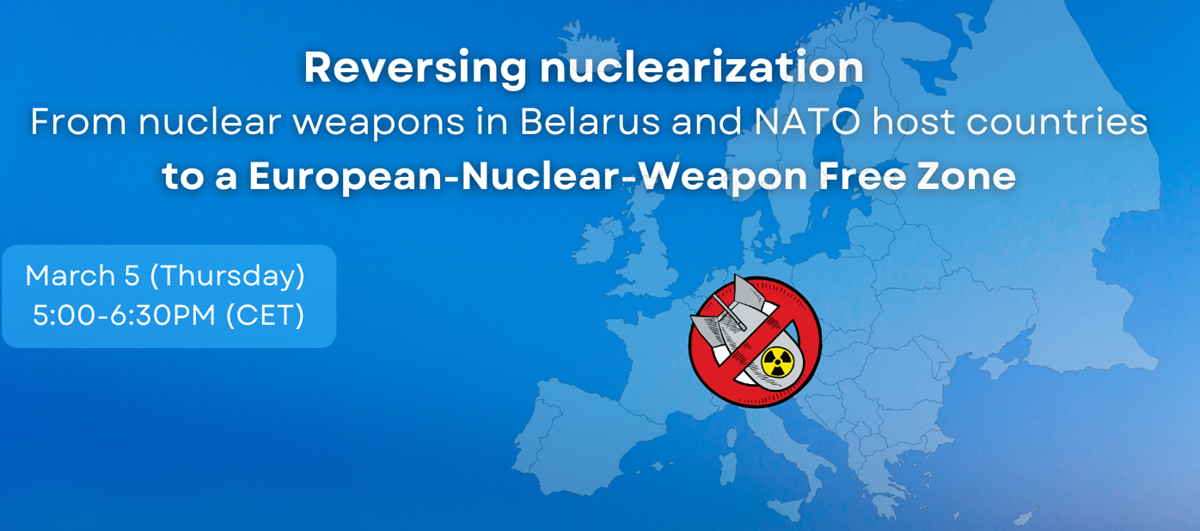
5 March -Online – Reversing nuclearization:
From nuclear weapons in Belarus and NATO host countries to a European-Nuclear-Weapon Free Zone
11am-12:30pm Eastern Time USA / 5pm-6:30pm CET

of the week – Advocating for a
nuclear free beach – https://www.samuellawrencefoundation.org/
The Samuel Lawrence Foundation advocates for a Nuclear Waste Free Beach at San Onofre, join us and take action!
10 March A LIVE WEBINAR THE REAL EFFECTS OF NUCLEAR POWER
What the Industry Isn’t Telling Us
1:00 PM Mountain, 2 pm Central, 3 pm Eastern. Live on the Keepers of the Water Facebook page

18 March Webinar @ 1 PM EST: An Assessment of SMR Projects: The Case of Canada
register for the zoom:
https://us02web.zoom.us/webinar/register/WN_o8BIIOUvQ2ONJR1nta65DQ#/registration

of the week – STOP SMALL MODULAR REACTORS IN CANADA
To see nuclear-related stories in greater depth and intensity – go to https://nuclearinformation.wordpress.com
-
Archives
- March 2026 (37)
- February 2026 (268)
- January 2026 (308)
- December 2025 (358)
- November 2025 (359)
- October 2025 (376)
- September 2025 (258)
- August 2025 (319)
- July 2025 (230)
- June 2025 (348)
- May 2025 (261)
- April 2025 (305)
-
Categories
- 1
- 1 NUCLEAR ISSUES
- business and costs
- climate change
- culture and arts
- ENERGY
- environment
- health
- history
- indigenous issues
- Legal
- marketing of nuclear
- media
- opposition to nuclear
- PERSONAL STORIES
- politics
- politics international
- Religion and ethics
- safety
- secrets,lies and civil liberties
- spinbuster
- technology
- Uranium
- wastes
- weapons and war
- Women
- 2 WORLD
- ACTION
- AFRICA
- Atrocities
- AUSTRALIA
- Christina's notes
- Christina's themes
- culture and arts
- Events
- Fuk 2022
- Fuk 2023
- Fukushima 2017
- Fukushima 2018
- fukushima 2019
- Fukushima 2020
- Fukushima 2021
- general
- global warming
- Humour (God we need it)
- Nuclear
- RARE EARTHS
- Reference
- resources – print
- Resources -audiovicual
- Weekly Newsletter
- World
- World Nuclear
- YouTube
-
RSS
Entries RSS
Comments RSS
 nuclear-news
Leave a comment