Nuclear lobby working hard at education – 5 centres in Nigeria
5 Nigerian universities host nuclear energy centres of excellence —NAEC August 28, 2015 Premium Times Franklin Osaisai, chairman of the Nigerian Atomic Energy Commission, NAEC, has said that five Nigerian universities now host nuclear energy centres of excellence.
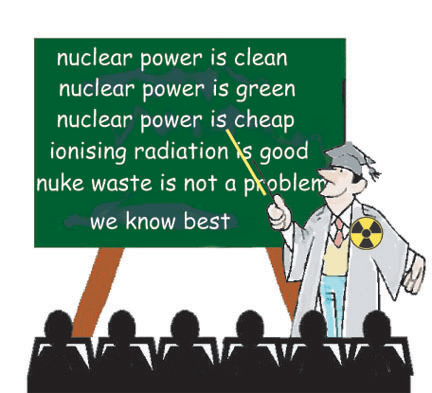
Mr. Osaisai, who disclosed this in an interview with newsmen on Friday in Abuja, said that the Nuclear Technology Centre, Sheda, was also a part of the nuclear centres of excellence.
He said the first two were the Centre for Energy Research and Training (CERT), Ahmadu Bello University (ABU), Zaria and Centre for Energy Research and Development (CERD), Obafemi Awolowo University (OAU), Ile-Ife.
He listed the latest centres as the Centre for Nuclear Energy Research and Training (CNERT), University of Maiduguri, and Centre for Nuclear Energy Studies (CNES), University of Port Harcourt.
The other is the Centre for Nuclear Energy Studies and Training (CNEST), Federal University of Technology, Owerri.
According to him, the establishment of these centres without a corresponding increment in the allocation to NAEC led to the reduction in funding of CERT and CERD.
“It is the mandate of NAEC to develop nuclear technology for the economic development of the country and produce and dispose atomic energy.
“To carry out research into matters connected with the peaceful uses of atomic energy, among others.
“CERT and CERD are arms of NAEC but in order to boost capacity of nuclear research and training, government created a lot of other centres.
“Remuneration, compensation, allowances are part of the public service and everything is paid according to guidelines.
“We have tabled the challenges of funding the centre to before the appropriate authorities; everything is now paid through IPPIS.’’……….http://www.premiumtimesng.com/news/more-news/189141-5-nigerian-universities-host-nuclear-energy-centres-of-excellence-naec.html
Uncertainty over future costs of Vogtle Nuclear Station
 Budget on Georgia nuclear plant level, uncertainty remains, WT, By RAY HENRY – Associated Press – Friday, August 28, 2015 ATLANTA (AP) – Georgia Power reported Friday the cost to build a nuclear plant was holding steady, but there’s significant uncertainty whether those numbers will stick.
The Southern Co. subsidiary owns a 46 percent stake in two new reactors under construction at Plant Vogtle, near Augusta. The utility now expects to spend roughly $7.5 billion to finish the project, or about 22 percent more than originally expected. The budget released Friday declined slightly from the company’s last financial filing in February. If they hold, the level spending figures would be welcome news for investors and customers. By law, Georgia Power’s customers will ultimately pay for construction costs unless state regulators object and force losses onto shareholders. However, project watchdogs say multiple problems could still raise costs.
The nuclear plants under construction in Georgia and South Carolina were approved before natural gas prices plummeted. As it became cheaper to build gas-fired plants, major power companies scrubbed plans to build nuclear reactors nationwide. If it wants to grow, the nuclear industry must prove it can build without the construction delays and cost overruns common years ago.
So far, the proof is lacking. The companies designing and building the plant, Westinghouse Electric Co. and Chicago Bridge and Iron Co., announced a new construction schedule this year that pushed back the completion of the first reactor in Georgia to June 2019, followed by the second reactor a year later. That means the construction effort is now running about three years behind schedule.
Even that latest schedule has slipped by three months……..Utilities in South Carolina building an identical nuclear plant have run into similar delays and cost overruns. South Carolina Electric & Gas Co. reported this month that its share of costs had increased by roughly $1.1 billion. http://www.washingtontimes.com/news/2015/aug/28/budget-on-georgia-nuclear-plant-level-uncertainty-/
Claim that you can buy a nuclear warhead on the black market
You can buy a nuclear warhead on the black market http://www.businessinsider.com/you-can-buy-a-nuclear-warhead-on-the-black-market-2015-8?IR=T
Paul Szoldra, We Are The Mighty You can buy anything on the Bulgarian black market, including drugs, women, guns, and even fully functional nuclear warheads.
Fascinated by a French reporter’s ability to purchase a nuclear warhead on the black market, American journalists from Vice traveled to Bulgaria to meet the man who sold it, according to the video below.
They met with Ivanoff, a former military-intelligence colonel turned entrepreneur, whose business led him into the Saudi Arabian building industry.
Through his business dealings, Ivanoff met with terror mastermind Osama Bin Laden, who was interested in making a “dirty bomb” out of radioactive waste. Ivanoff suggested why not get the real thing, a nuclear warhead.
Koch brothers undermining Renewable Energy in Kansas – emails reveal.
he Koch political network has carefully singled out renewable energy while working to preserve government support for fossil fuels. Groups founded and funded by the Koch political network regard repealing oil and gas subsidies as a “tax hike” while deriding renewable energy subsidies as “a textbook case of corporate welfare.” Moreover, Koch’s lobbying campaign to distort climate science and prevent government action on greenhouse gas emissions transfers costs from the company, a major polluter, to the public.
Emails Show Koch Industries Backed Effort to Undermine Renewable Energy in Kansas Lee Fang https://firstlook.org/theintercept/2015/08/28/emails-show-koch-industries-backed-effort-undermine-renewable-energy-kansas/
Aug. 28 2015 Emails and financial documents released by the University of Kansas on Thursday reveal earmarked funding from Koch Industries to develop research used to lobby against the state renewable energy standard.
On November 12, 2013, Art Hall, the director of the university’s Center for Applied Economics, emailed Koch Industries’ Laura Hands to discuss a grant from a Koch-controlled foundation to fund research on the Renewable Portfolio Standard.
Hall is the former chief economist for Koch Companies Public Sector, the lobbying subsidiary of Koch Industries, the largest privately owned company in America with a significant stake in oil refining, pipelines, gas production and coal. Hands is the current community affairs director at Koch Companies Public Sector.
The Koch money was part of an ongoing project Hall described as an effort to develop “intellectual products” to be used “as a tool in economic policy debates.” Hall’s center also provides special classes to teach about the virtues of capitalism. Koch-controlled foundations approved $40,000 for work that included the renewable energy standard, as well as at least $250,000 to the center in 2008 and $100,000 to the center in 2009.
Following his grant request, Hall testified before the Kansas legislature in 2014 in favor of repealing the state renewable energy portfolio, which calls for major utility companies to use an increasing ratio of renewable energy such as wind and solar.
The emails and financial documents were released in response to a Kansas Open Records Act request filed by KU student Schuyler Kraus, the president of Students for a Sustainable Future.
Hall also helped craft unprecedented tax cuts signed into law by Gov. Sam Brownback, R-Kan., and backed by Koch’s local political network. The tax cuts have been viewed roundly as a historic flop, resulting in a downgrade of the state bond rating and drastic education cuts that forced public schools to close early this year. Critics argue that the tax cut and ensuing budget chaos may have hurt employment as bordering states such as Missouri are quicklyoutpacing Kansas on job growth.
President Barack Obama recently criticized Koch Industries owners Charles and David Koch, scolding the billionaires for “pushing for new laws to roll back renewable energy standards.” In response, Charles Koch said he is opposed to “crony capitalism” in all forms.
Though the Koch Industries chief executive has said that he opposes corporate subsidies or mandates of any kind, the Koch political network has carefully singled out renewable energy while working to preserve government support for fossil fuels. Groups founded and funded by the Koch political network regard repealing oil and gas subsidies as a “tax hike” while deriding renewable energy subsidies as “a textbook case of corporate welfare.” Moreover, Koch’s lobbying campaign to distort climate science and prevent government action on greenhouse gas emissions transfers costs from the company, a major polluter, to the public. CONTACT THE AUTHOR: Lee Fang lee.fang@theintercept.comt@lhfang
Uranium mining’s threat to Grand Canyon’s groundwater
Claims that uranium mining near the Grand Canyon is safe don’t hold water, Guardian, David Kreamer, 25 Aug 15 Science shows we can’t assume that uranium deposits, when disturbed by mining, can’t leak into groundwater. We should be wary of claims to the contrary It only takes a few Grand Canyon hikes to realize the importance of its springs and other water sources. When refilling a water bottle in the cool depths below multi-colored rock walls, listening to a summer frog symphony at sunset or maybe snapping an icicle from a weeping ledge in winter, it’s clear that the living desert depends on its pockets of water.
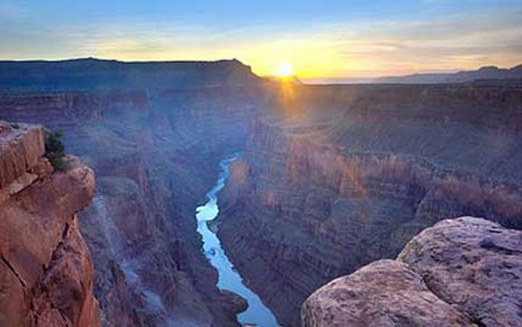
That’s why, as a hydrologist and longtime Grand Canyon hiker, boatman and scientist, I am profoundly concerned about continued uranium mining in or near it. It has great potential to irreparably harm Grand Canyon springs and the plants and animals that depend on them.
I am concerned because industry and agency officials are relying on a justification that isn’t supported by past investigations, research or data to promote uranium mining in the Grand Canyon region. Specifically, they claim that mining will have minimal impact on springs, people and ecosystems there.
Instead, the science shows that it is unreasonable to assume that uranium deposits, when disturbed by mining, can’t leak into groundwater. The deposits in the Grand Canyon are typically found in geologic features known as breccia pipes, formed millennia ago when caves in the main groundwater system collapsed, leaving shattered, rock-filled chimneys that extend upwards thousands of feet to the canyon’s rim. These chimneys act as conduits that have allowed groundwater to move vertically through the rock layers over thousands of years. The vertical movement of groundwater combined with low oxygen levels caused the uranium deposits to form over millennia. Inserting a mine shaft into these features disrupts geologic formations, increases the permeability and oxygenation of these vertical pipes and increases the ability of ore deposits to be suddenly dissolved, mobilized and carried with groundwater.
It is unreasonable to assume that elevated concentrations of dissolved uranium cannot be mobilized and will not reach the Grand Canyon’s springs. It is also risky for industry to assume that mining activities, such as the sinking of mining shafts and pumping of groundwater, have no potential to redirect groundwater movement and negatively impact spring flow and associated wildlife habitats……..
Some mining representatives have implied that the cosmetic fix of cleaning up the surface of old mining sites is evidence of zero subsurface pollution. But because groundwater flow can be very slow, the effects of groundwater contamination may take years, decades or even centuries to fully manifest. The lack of clear and consistent groundwater monitoring undercuts industry claims that mining near the Grand Canyon has caused and will cause no harm……….http://www.theguardian.com/commentisfree/2015/aug/25/uranium-mining-grand-canyon-groundwater-contamination
Oil Drilling Waste “Brine” (Includes Radioactive Materials) Disposal Well Operator Indicted on Multiple Felony Charges in North Dakota

The Felony charges are against a “brine” injection well operator in North Dakota. But, meanwhile, in Louisiana, the Texas Brine-Bayou Corne Sinkhole Disaster is still going, three years on,
and still showing the dangerous stupidity of putting waste water, petroleum, and especially radioactive waste in salt. Salt “caverns” are imploding. The US and Germany refuse to look the facts in the face and still pretend salt storage of radioactive waste is ok. There is also a higher risk with anything underground, inaccessible. One day WIPP nuclear waste facility may look like Bayou Corne. WIPP is more arid but there’s still water and still problems of internal collapse since the beginning. Three Year update on Bayou Corne at 17 min: http://video.lpb.org/video/2365538299/ (7.31.15) Updates as news arrives: https://lasinkhole.wordpress.com
Radioactive materials are constantly brought up by the oil and gas industry, and to an even greater degree by ISL uranium mining, and something…
View original post 953 more words
August 28 Energy News

World:
¶ What would a car-free Paris look like? We will soon find out, as this French city hosts its “Day Without Car,” or “Une Journée Sans Voiture” event. On September 27th, five major areas of Paris will be closed to nearly all motorized traffic from 11 am to 6 pm, allowing pedestrians and cyclists to go about freely without air pollution. [CleanTechnica]
 Une Journée Sans Voiture
¶ The UK’s Department of Energy and Climate Change has proposed to make calamitous cuts to the country’s renewable energy Feed-in Tariff scheme. The plan’s details have emerged, with proposals that domestic solar support could be cut by 87%, commercial rooftops by 82%, in addition to devastating cuts to onshore wind. [CleanTechnica]
¶ One of Britain’s most controversial energy projects for decades, the £24.5 billion nuclear power development at Hinkley Point in Somerset, is poised to get the green…
View original post 624 more words
Brief notes on this week’s nuclear, climate news

Christina Macpherson’s websites & blogs
CLIMATE. Mass climate action is needed as world readies for December Paris conference. Forest fires out of control around Lake Baikal in Siberia. Drought-Fueled Wildfires Burn 7 Million Acres in U.S.
UK‘s Hinkley Point C nuclear station is now officially mothballed. Protest by 3 middle aged women costs nuclear firm €1million.
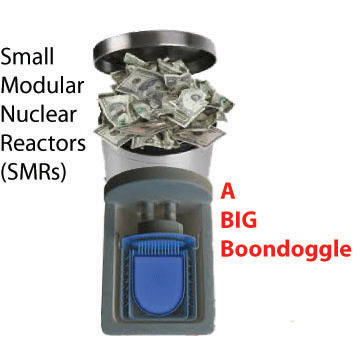
USA. Leaked review tells of ‘Significant Design Vulnerabilities’ at Hanford radioactive trash site. Disposal of nuclear waste turning out to be half the cost of reprocessing with MOX fuel. Escalating costs, expanding timelines, cast doubt on the future of modular nuclear construction. Lockheed Martin used government nuclear money to lobby for more government nuclear money. St Louis suburb contaminated by radioactive thorium. New measures to promote rooftop solar, by President Obama.
JAPAN. The Japanese Scientists’ Association joins strong public opinion against nuclear power. Sendai nuclear plant operator set to plug leaks in 5 cooling system pipes. Tepco bid to restart Kashiwazaki-Kariwa nuclear plant stymied by governor.
Fukushima:
- Oshidori Mako Interviews Experts Regarding Excess Occurrence of Pediatric Thyroid Cancer in Fukushima. (very long, but very thorough)
- Persistence of radioactive caesium in ocean floor near Fukushima Daiichi.
- Fukushima operator’s mounting legal woes to fuel nuclear opposition.
- Nuclear disaster evacuees promised 2017 return but ‘ineffective’ clear-up may take 200 years.
TAIWAN. Taipei prosecutors lose legal case against anti nuclear protestors.
Mass climate action is needed as world readies for December Paris conference
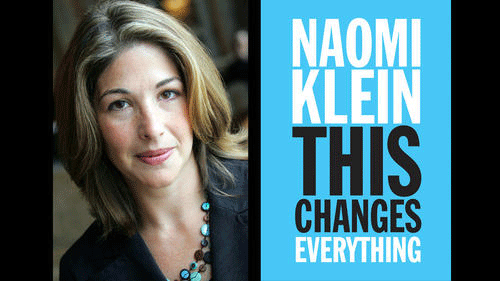 Tutu, Klein and Chomsky call for mass climate action ahead of Paris conference, Guardian, Emma Howard, 26 Aug 15 Artists, journalists, scientists and academics among 100 signatories calling for mobilisation on scale of slavery abolition and anti-apartheid movements Desmond Tutu, Vivienne Westwood, Naomi Klein and Noam Chomsky are among a group of high-profile figures who will issue a mass call to action on Thursday ahead of the UN’s crunch climate change conference in Paris in December.
They call for mass mobilisation on the scale of the slavery abolition and anti-apartheid movements to trigger “a great historical shift”.
Their statement, published in the book Stop Climate Crimes, reads: “We are at a crossroads. We do not want to be compelled to survive in a world that has been made barely liveable for us … slavery and apartheid did not end because states decided to abolish them. Mass mobilisations left political leaders no other choice.”…..
There are now less than 100 days until the UN’s Conference of the Parties (COP21) in Paris, where leaders from more than 190 countries will gather to discuss a potential new agreement on climate change. Last week the EU’s climate commissioner Miguel Arias Cañete warned that negotiations ahead of the conference must accelerate if any agreement is to be meaningful.
Artists, journalists, scientists and academics are among the 100 signatories to the statement alongside activists Vandana Shiva, Nnimmo Bassey and Yeb Sano, the Filipino diplomat who lead a fast of hundreds at the 2013 UN climate change summit in Poland after typhoon Haiyan devastated his country.
They target corporations and international trade, calling for an end to government subsidies for fossil fuels and a freeze on extraction.
“Decades of liberalisation of trade and investments have undermined the capacity of states to confront the climate crisis. At every stage powerful forces – fossil fuel corporations, agro-business companies, financial institutions, dogmatic economists, sceptics and deniers, and governments in the thrall of these interests – stand in the way or promote false solutions. Ninety companies are responsible for two-thirds of recorded greenhouse gas emissions worldwide. Genuine responses to climate change threatens their power and wealth, threatens free market ideology, and threatens the structures and subsidies that support and underwrite them,” they state……..http://www.theguardian.com/environment/2015/aug/26/campaigners-mass-climate-action-paris-conference-noam-chomsky
Leaked review tells of ‘Significant Design Vulnerabilities’ at Hanford radioactive trash site
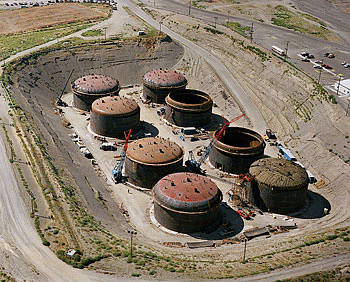 ‘Significant Design Vulnerabilities’ Plague Massive Nuclear Waste Site, Leaked Internal Review Reveals, Common Dreams,
‘The fact that the Department of Energy has not released this report, prepared last year, is alarming and indicative of a safety-last culture.’
A leaked internal review of the nation’s largest nuclear clean-up site found hundreds of “significant design vulnerabilities” and begs questions about the Energy Department’s transparency, a watchdog group says.
The Hanford Nuclear Reservation near Richland, Washington houses radioactive waste from the production of plutonium for nuclear weapons, and the decades-long clean-up effort has been costly and plagued by leaking underground nuclear waste storage tanks.
Seattle-based Hanford Challenge, which advocates for safe clean-up of the site, says it received the Department of Energy document from a whistleblower who has worked at the site for many years as an engineer.
“The fact that the Department of Energy has not released this report, prepared last year, is alarming and indicative of a safety-last culture,” said Tom Carpenter, Executive Director of the group.
The document is a 2014 draft review called “Low-Activity Waste Facility Design and Operability Review and Recommendations.” That LAW facility, Hanford Challenge explains in a statement, “is designed to treat waste from Hanford’s high-level nuclear waste tanks that will be pre-treated to remove the highly-radioactive materials before being mixed with glass formers in a facility designed to vitrify the low level waste.”
From the executive summary of the leaked report: ……
The leaked review comes the same month as whistleblower Walter Tamosaitis, who raised safety concerns regarding operations at the site, reached a $4.1 settlement with Hanford subcontractor AECOM.
And last year, documents obtained by the Associated Press showed there were “significant construction flaws” in some of the double-shell storage tanks at the facility. U.S. Sen. Ron Wyden (D-Ore.) urged the Energy Department to provide an action plan of how it would deal with the risks the flaws pose, writing in a letter (pdf) to Energy Secretary Ernest Moniz: “It is time for the Department to stop hiding the ball and pretending that the situation at Hanford is being effectively managed.”
The Washington site has proven itself an “intractable problem” that “costs taxpayers a billion dollars a year,” author and history professor Kate Brown wrote earlier this year. “Corporate contractors hired to clean up Hanford have made hundreds of millions of dollars in fees and surcharges, and, since little has been accomplished, the tab promises to mount for decades.”http://www.commondreams.org/news/2015/08/26/significant-design-vulnerabilities-plague-massive-nuclear-waste-site-leaked-internal
Radiation exposure to Fukushima workers and the community
 Fukushima today: A first-person account from the field and the conference table, Bulletin of the Atomic Scientists, 26 Aug 15 Subrata Ghoshroy “……….the building containing the failed reactors has radiation levels as high as 4,000 to 5,000 milliSieverts per hour (400,000 to 500,000 millirems per hour), making even the operation of robots difficult. In fact, two power company robots had to be abandoned while inside the depths of the plant. And some spots, such as inside the primary containment vessel, went as high as 9.7 Sieverts per hour (970,000 millirems per hour). In addition, it has not been possible to precisely locate the melted core. (Another conference speaker, Jun Tateno, who was a former research scientist with the Japanese Atomic Energy Research Institute, accused the government of suppressing voices from the scientific community that were critical of the safety of power plants. He said that we have reached a situation in which we do not even know how much plutonium is in the core.) In the meantime, huge amounts of water must be pumped in to keep the reactors cool; this liquid then mixes with ground water, contaminating it as a result.
The picture is not much better when it comes to the land. In an effort to decontaminate residential areas, radioactive soil is being dug up from approximately 1,000 sites. The government wants to consolidate this contaminated material in semi-permanent storage sites in the “difficult-to-return zones” in Futaba and Okuma towns. Local residents, meanwhile, fear that these could turn into permanent repositories of radioactive material……….
We were told that most workers did not wear dosimeters to record their cumulative radiation dose. There was good money to be made in decontamination work. They did not want to know.
But if one does the math, what the workers and their supervisors were ignoring—or were being told to ignore—could be significant. If a person spent one week working at this part of a supposedly safe parking area for 8 hours per day, then he or she would have been exposed to 40 microSieverts per day. And if that person was there for a 5-day workweek, then over the course of a single week that person would have been exposed to 200 microSieverts. In a year, that person could receive 10 milliSieverts, a significant dose. Of course, scientists are rightly cautious of such “anecdotal” evidence; our Geiger counter readings could have been off, or the machine calibrated incorrectly, or some other source of error introduced—though I doubt it because it had earlier read the background correctly. But the result of such quick and dirty, back-of-the-envelope calculations for what is supposedly a low-risk parking area, well away from the restricted hot zones, do give one pause—especially as the ongoing lack of dosimeters means that no one really knows a given individual’s cumulative dose. The amount of exposure to a thing that you cannot see, hear, smell, taste, or feel sneaks up on you. Even when you think you are safe, you are not.
If nothing else, the fact that a simple, random spot-check registered so highly is an eye-opener, and counter to what has been officially portrayed. ……..An important item seemed to lie further down in the article, which noted: “However, the health ministry said the number of workers surveyed is different from the total number of cleanup personnel reported by the Environment Ministry, which could mean the association failed to record radiation doses of all individuals working around the Fukushima plant.”
No wonder there has been public distrust and charges of a lack of clarity about the radiation clean-up operation, as can be seen in the title of a 2013 Guardian newspaper article: “Life as a Fukushima clean-up worker—radiation, exhaustion, public criticism.”Even when the approximately 7,000 workers involved in the clean-up do wear dosimeters, that is no guarantee of accuracy; there have been reports of a Tokyo Electric Power Company executive who tried to force clean-up workers to manipulate dosimeter readings to artificially low levels by covering their devices with lead shields………http://thebulletin.org/fukushima-today-first-person-account-field-and-conference-table8683#.Vd6Rj7YbwEs.twitter
No proper assessment of radioactive iodine in Fukushima food and water
 no iodine would be detectable at all, it was announced that a whole body counter study will begin to measure the internal exposure dose of Fukushima residents. Now, however, dose assessment is said to be impossible due to “the lack of direct measurements in residents immediately after the accident.” Government experts should have been well aware of the half-life of iodine 131. Why did they not conduct a thorough survey at the time while iodine 131 was still detectable?
 Oshidori Mako Interviews Experts Regarding Excess Occurrence of Pediatric Thyroid Cancer in Fukushima, Fukushima Voice, English Version 6 Aug 15,”…….Issue to be considered #3:
 Boeing wanted to quietly dispose of radioactive trash, without accountability
 Judge rejects Boeing’s bid to demolish and dispose of radioactive waste without accountability Eturbo News, SANTA MONICA, CA, Jan 2015 – Sacramento Superior Court has denied Boeing’s motion for summary judgment in a California Environmental Quality Act (CEQA) lawsuit over the demolition and disposal of radioactively contaminated structures from the site of a partial nuclear meltdown near Los Angeles, Consumer Watchdog said today.
“This is an important step on the way to ensuring that state regulators must consider the demolition and disposal of any radioactively contaminated structures at the Santa Susana Field Lab in their environmental assessment of the cleanup of this site,” said Consumer Watchdog Litigation Director Pam Pressley.
 Boeing had claimed that the Department of Toxic Substances Control (DTSC) has no regulatory
authority over the demolition and disposal of radioactively contaminated structures in the nuclear portion of the Santa Susana Field Lab (SSFL) in Simi Hills. The lab had tested small-scale nuclear reactors, rocket engines, and fuels and suffered a partial nuclear meltdown in 1959 that has never been fully cleaned up……http://www.eturbonews.com/54422/judge-rejects-boeings-bid-demolish-and-dispose-radioactive-waste
Can Japan make the switch to renewables?- Japan Scientists’ Association
Fukushima today: A first-person account from the field and the conference table, Bulletin of the Atomic Scientists, 26 Aug 15 Subrata Ghoshroy
“……… A key goal of the conference was the public announcement that the Japan Scientists’ Association formally opposed nuclear power in Japan, and that its opposition was based upon scientific analysis of the accident in Fukushima and its impact. This about-face was a major step; it meant that some of the same Japanese scientists who had been the most forceful and outspoken proponents of nuclear energy now opposed it. To bolster the impact of this statement, the association had to show both the economic and technical feasibility of alternative sources of energy. Consequently, much of the meeting focused on the lessons learned from the experiences of other countries, and the keynote speaker of the conference, professor Juergen Scheffran of Hamburg University, Germany, gave the European perspective on the implications of the transition from fossil and nuclear to renewable energy. The focus was especially on Germany, which is in the middle of its own planned transition to a non-nuclear future.
With that in mind, Reiner Braun, co-president of the International Peace Bureau in Geneva, Switzerland, spoke about the status of the German exit from nuclear power and entrance into renewables. Known as Energiewende in German (literally “energy turn”), it would entail shutting down all nuclear plants by 2022, with seven plants shut down immediately. The renewable energy sector would be expanded at the same time that there was a step-by-step reduction in fossil fuel use; modern natural gas plants are to be used as a transition technology. Structural changes would also be made to the distribution network to account for the decentralized nature of the new energy supply.
Braun, a veteran of the protest movements against nuclear weapons and nuclear power, said it was important to understand why a politically conservative government had made this U-turn. A vast majority of the German people had rejected nuclear energy and there were decades of organized resistance, starting with massive protests against the stationing of NATO’s tactical weapons on German soil. While progress was promising so far, Braun reminded his audience that Energiewende was the “largest technological challenge” faced by the country since the post-WW II reconstruction efforts. The political challenges, meanwhile, were comparable to those encountered after the reunification of the two Germanys after the end of the Cold War.
But there was no doubt it had to be done, or that Japan could learn from observing the German experience. The feeling from the meeting was best summed up by the conference chair, Tsuyoshi Kawasaki, an expert on climate science and an emeritus professor at Tohoku University. Kawasaki ended his brief remarks with the words: “The Japanese Scientists’ Association believes that human beings and nuclear power cannot coexist.”
…………Editor’s note: The conference was organized in collaboration with the International Network of Engineers and Scientists; other conference organizers included Keiiji Ujikawa, (an economics professor at Yokohama National University, Shinjiro Hagiwara (an emeritus professor of economics at the same institution), and Fujio Yamamoto, (an emeritus professor of mechanical engineering at Fukui University.)
The author had made a video presentation earlier about his visit to Fukushima at a meeting in Boston. http://thebulletin.org/fukushima-today-first-person-account-field-and-conference-table8683#.Vd6Rj7YbwEs.twitter
AUDIO: Nuclear Power: Insurance and Health
 http://www.kcet.org/shows/earth_focus/maritime-pollution-exposed.html More Airdates: Thu Aug 27 at 1:30AM on KCETLINK “Going naked” is a term the insurance industry uses to describe not having insurance. And when it comes to the worst hazards of nuclear power, America is going naked.
Correspondent Miles Benson investigates why the U.S. nuclear power industry is underinsured by hundreds of billions of dollars. He also speaks with Australian physician, author, and nuclear industry critic Dr. Helen Caldicott on the health effects of nuclear radiation, which include cancer, fetal damage, and genetic mutation.
1 This Month
Chernobyl: The Lost Tapes – A good documentary on Chernobyl on SBS available On Demand for the next 3 weeks– https://www.sbs.com.au/ondemand/tv-program/chernobyl-the-lost-tapes/2352741955560

of the week–London Campaign for Nuclear Disarmament

Tell the Ukrainian Government to Drop Prosecution of Peace Activist Yurii Sheliazhenko
To see nuclear-related stories in greater depth and intensity – go to https://nuclearinformation.wordpress.com
-
Archives
- April 2026 (114)
- March 2026 (251)
- February 2026 (268)
- January 2026 (308)
- December 2025 (358)
- November 2025 (359)
- October 2025 (376)
- September 2025 (257)
- August 2025 (319)
- July 2025 (230)
- June 2025 (348)
- May 2025 (261)
-
Categories
- 1
- 1 NUCLEAR ISSUES
- business and costs
- climate change
- culture and arts
- ENERGY
- environment
- health
- history
- indigenous issues
- Legal
- marketing of nuclear
- media
- opposition to nuclear
- PERSONAL STORIES
- politics
- politics international
- Religion and ethics
- safety
- secrets,lies and civil liberties
- spinbuster
- technology
- Uranium
- wastes
- weapons and war
- Women
- 2 WORLD
- ACTION
- AFRICA
- Atrocities
- AUSTRALIA
- Christina's notes
- Christina's themes
- culture and arts
- Events
- Fuk 2022
- Fuk 2023
- Fukushima 2017
- Fukushima 2018
- fukushima 2019
- Fukushima 2020
- Fukushima 2021
- general
- global warming
- Humour (God we need it)
- Nuclear
- RARE EARTHS
- Reference
- resources – print
- Resources -audiovicual
- Weekly Newsletter
- World
- World Nuclear
- YouTube
-
RSS
Entries RSS
Comments RSS
 nuclear-news