Claim that you can buy a nuclear warhead on the black market
You can buy a nuclear warhead on the black market http://www.businessinsider.com/you-can-buy-a-nuclear-warhead-on-the-black-market-2015-8?IR=T
Paul Szoldra, We Are The Mighty You can buy anything on the Bulgarian black market, including drugs, women, guns, and even fully functional nuclear warheads.
Fascinated by a French reporter’s ability to purchase a nuclear warhead on the black market, American journalists from Vice traveled to Bulgaria to meet the man who sold it, according to the video below.
They met with Ivanoff, a former military-intelligence colonel turned entrepreneur, whose business led him into the Saudi Arabian building industry.
Through his business dealings, Ivanoff met with terror mastermind Osama Bin Laden, who was interested in making a “dirty bomb” out of radioactive waste. Ivanoff suggested why not get the real thing, a nuclear warhead.
Koch brothers undermining Renewable Energy in Kansas – emails reveal.
he Koch political network has carefully singled out renewable energy while working to preserve government support for fossil fuels. Groups founded and funded by the Koch political network regard repealing oil and gas subsidies as a “tax hike” while deriding renewable energy subsidies as “a textbook case of corporate welfare.” Moreover, Koch’s lobbying campaign to distort climate science and prevent government action on greenhouse gas emissions transfers costs from the company, a major polluter, to the public.
Emails Show Koch Industries Backed Effort to Undermine Renewable Energy in Kansas Lee Fang https://firstlook.org/theintercept/2015/08/28/emails-show-koch-industries-backed-effort-undermine-renewable-energy-kansas/
Aug. 28 2015 Emails and financial documents released by the University of Kansas on Thursday reveal earmarked funding from Koch Industries to develop research used to lobby against the state renewable energy standard.
On November 12, 2013, Art Hall, the director of the university’s Center for Applied Economics, emailed Koch Industries’ Laura Hands to discuss a grant from a Koch-controlled foundation to fund research on the Renewable Portfolio Standard.
Hall is the former chief economist for Koch Companies Public Sector, the lobbying subsidiary of Koch Industries, the largest privately owned company in America with a significant stake in oil refining, pipelines, gas production and coal. Hands is the current community affairs director at Koch Companies Public Sector.
The Koch money was part of an ongoing project Hall described as an effort to develop “intellectual products” to be used “as a tool in economic policy debates.” Hall’s center also provides special classes to teach about the virtues of capitalism. Koch-controlled foundations approved $40,000 for work that included the renewable energy standard, as well as at least $250,000 to the center in 2008 and $100,000 to the center in 2009.
Following his grant request, Hall testified before the Kansas legislature in 2014 in favor of repealing the state renewable energy portfolio, which calls for major utility companies to use an increasing ratio of renewable energy such as wind and solar.
The emails and financial documents were released in response to a Kansas Open Records Act request filed by KU student Schuyler Kraus, the president of Students for a Sustainable Future.
Hall also helped craft unprecedented tax cuts signed into law by Gov. Sam Brownback, R-Kan., and backed by Koch’s local political network. The tax cuts have been viewed roundly as a historic flop, resulting in a downgrade of the state bond rating and drastic education cuts that forced public schools to close early this year. Critics argue that the tax cut and ensuing budget chaos may have hurt employment as bordering states such as Missouri are quicklyoutpacing Kansas on job growth.
President Barack Obama recently criticized Koch Industries owners Charles and David Koch, scolding the billionaires for “pushing for new laws to roll back renewable energy standards.” In response, Charles Koch said he is opposed to “crony capitalism” in all forms.
Though the Koch Industries chief executive has said that he opposes corporate subsidies or mandates of any kind, the Koch political network has carefully singled out renewable energy while working to preserve government support for fossil fuels. Groups founded and funded by the Koch political network regard repealing oil and gas subsidies as a “tax hike” while deriding renewable energy subsidies as “a textbook case of corporate welfare.” Moreover, Koch’s lobbying campaign to distort climate science and prevent government action on greenhouse gas emissions transfers costs from the company, a major polluter, to the public. CONTACT THE AUTHOR: Lee Fang lee.fang@theintercept.comt@lhfang
Uranium mining’s threat to Grand Canyon’s groundwater
Claims that uranium mining near the Grand Canyon is safe don’t hold water, Guardian, David Kreamer, 25 Aug 15 Science shows we can’t assume that uranium deposits, when disturbed by mining, can’t leak into groundwater. We should be wary of claims to the contrary It only takes a few Grand Canyon hikes to realize the importance of its springs and other water sources. When refilling a water bottle in the cool depths below multi-colored rock walls, listening to a summer frog symphony at sunset or maybe snapping an icicle from a weeping ledge in winter, it’s clear that the living desert depends on its pockets of water.
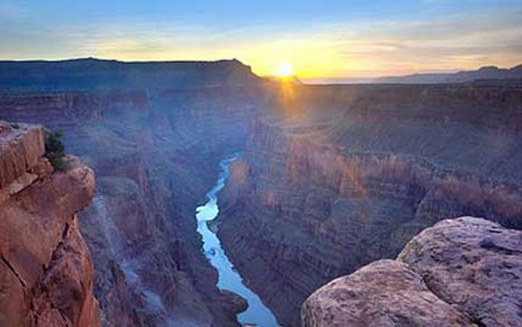
That’s why, as a hydrologist and longtime Grand Canyon hiker, boatman and scientist, I am profoundly concerned about continued uranium mining in or near it. It has great potential to irreparably harm Grand Canyon springs and the plants and animals that depend on them.
I am concerned because industry and agency officials are relying on a justification that isn’t supported by past investigations, research or data to promote uranium mining in the Grand Canyon region. Specifically, they claim that mining will have minimal impact on springs, people and ecosystems there.
Instead, the science shows that it is unreasonable to assume that uranium deposits, when disturbed by mining, can’t leak into groundwater. The deposits in the Grand Canyon are typically found in geologic features known as breccia pipes, formed millennia ago when caves in the main groundwater system collapsed, leaving shattered, rock-filled chimneys that extend upwards thousands of feet to the canyon’s rim. These chimneys act as conduits that have allowed groundwater to move vertically through the rock layers over thousands of years. The vertical movement of groundwater combined with low oxygen levels caused the uranium deposits to form over millennia. Inserting a mine shaft into these features disrupts geologic formations, increases the permeability and oxygenation of these vertical pipes and increases the ability of ore deposits to be suddenly dissolved, mobilized and carried with groundwater.
It is unreasonable to assume that elevated concentrations of dissolved uranium cannot be mobilized and will not reach the Grand Canyon’s springs. It is also risky for industry to assume that mining activities, such as the sinking of mining shafts and pumping of groundwater, have no potential to redirect groundwater movement and negatively impact spring flow and associated wildlife habitats……..
Some mining representatives have implied that the cosmetic fix of cleaning up the surface of old mining sites is evidence of zero subsurface pollution. But because groundwater flow can be very slow, the effects of groundwater contamination may take years, decades or even centuries to fully manifest. The lack of clear and consistent groundwater monitoring undercuts industry claims that mining near the Grand Canyon has caused and will cause no harm……….http://www.theguardian.com/commentisfree/2015/aug/25/uranium-mining-grand-canyon-groundwater-contamination
Oil Drilling Waste “Brine” (Includes Radioactive Materials) Disposal Well Operator Indicted on Multiple Felony Charges in North Dakota

The Felony charges are against a “brine” injection well operator in North Dakota. But, meanwhile, in Louisiana, the Texas Brine-Bayou Corne Sinkhole Disaster is still going, three years on,
and still showing the dangerous stupidity of putting waste water, petroleum, and especially radioactive waste in salt. Salt “caverns” are imploding. The US and Germany refuse to look the facts in the face and still pretend salt storage of radioactive waste is ok. There is also a higher risk with anything underground, inaccessible. One day WIPP nuclear waste facility may look like Bayou Corne. WIPP is more arid but there’s still water and still problems of internal collapse since the beginning. Three Year update on Bayou Corne at 17 min: http://video.lpb.org/video/2365538299/ (7.31.15) Updates as news arrives: https://lasinkhole.wordpress.com
Radioactive materials are constantly brought up by the oil and gas industry, and to an even greater degree by ISL uranium mining, and something…
View original post 953 more words
August 28 Energy News

World:
¶ What would a car-free Paris look like? We will soon find out, as this French city hosts its “Day Without Car,” or “Une Journée Sans Voiture” event. On September 27th, five major areas of Paris will be closed to nearly all motorized traffic from 11 am to 6 pm, allowing pedestrians and cyclists to go about freely without air pollution. [CleanTechnica]
 Une Journée Sans Voiture
¶ The UK’s Department of Energy and Climate Change has proposed to make calamitous cuts to the country’s renewable energy Feed-in Tariff scheme. The plan’s details have emerged, with proposals that domestic solar support could be cut by 87%, commercial rooftops by 82%, in addition to devastating cuts to onshore wind. [CleanTechnica]
¶ One of Britain’s most controversial energy projects for decades, the £24.5 billion nuclear power development at Hinkley Point in Somerset, is poised to get the green…
View original post 624 more words
-
Archives
- February 2026 (228)
- January 2026 (308)
- December 2025 (358)
- November 2025 (359)
- October 2025 (376)
- September 2025 (258)
- August 2025 (319)
- July 2025 (230)
- June 2025 (348)
- May 2025 (261)
- April 2025 (305)
- March 2025 (319)
-
Categories
- 1
- 1 NUCLEAR ISSUES
- business and costs
- climate change
- culture and arts
- ENERGY
- environment
- health
- history
- indigenous issues
- Legal
- marketing of nuclear
- media
- opposition to nuclear
- PERSONAL STORIES
- politics
- politics international
- Religion and ethics
- safety
- secrets,lies and civil liberties
- spinbuster
- technology
- Uranium
- wastes
- weapons and war
- Women
- 2 WORLD
- ACTION
- AFRICA
- Atrocities
- AUSTRALIA
- Christina's notes
- Christina's themes
- culture and arts
- Events
- Fuk 2022
- Fuk 2023
- Fukushima 2017
- Fukushima 2018
- fukushima 2019
- Fukushima 2020
- Fukushima 2021
- general
- global warming
- Humour (God we need it)
- Nuclear
- RARE EARTHS
- Reference
- resources – print
- Resources -audiovicual
- Weekly Newsletter
- World
- World Nuclear
- YouTube
-
RSS
Entries RSS
Comments RSS
 nuclear-news