Press freedom very much compromised in Japan
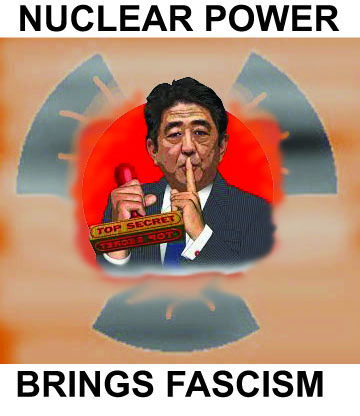 The Threat to Press Freedom in Japan, NYT By SHIGEAKI KOGAMAY 20, 2015 TOKYO — During a press conference in March, Chief Cabinet Secretary Yoshihide Suga expressed concern over comments I had made during a program on TV Asahi, a major private broadcasting network: I had announced that I would no longer be appearing on the show after being subjected to “fierce bashing” from the prime minister’s office. According to the daily Asahi Shimbun, Mr. Suga said, “We will closely watch how the TV station handles the issue in line with the Broadcast Law” — a veiled threat to revoke the station’s license.
On April 17, a special panel of the ruling Liberal Democratic Party (L.D.P.) held a special meeting at party headquarters and summoned executives of both TV Asahi and NHK, a public broadcaster, to discuss two TV programs the party thought had been critical of the administration of Prime MinisterShinzo Abe.
After I appeared on Tokyo MX TV, a local station, on April 25, an executive member of the L.D.P. reportedly told some journalists, “I heard that there was a TV station which allowed Mr. Koga to appear on a program. What a courageous TV station, I should say!”
And so it is that the Japanese government tampers with the media’s independence. This is happening partly because of longstanding structural characteristics that govern the relationship between the media and the state in Japan. But the Abe government has been especially aggressive in using those to its advantage, and major segments of the industry are quickly internalizing its preferences.
Instead of pushing back against Mr. Suga’s intimidation, for example, TV Asahi reprimanded the employees who had produced the TV program during which I criticized the government. And instead of invoking the anti-interference provisions of the broadcasting laws to resist questioning by the L.D.P., those TV executives complied with the party’s summons.
In Japan, relations between the state and journalists are formally maintained through a network of reporters’ clubs, or kisha kurabu. There is a reporters’ club for each ministry, each local government, each political party, each industry association. Membership in the clubs is generally limited to reporters at major media companies. Typically, only members are allowed to attend the press conferences, and only members have access to the organizations’ officials. In return for endowing reporters with this privileged status, the officials take it for granted that their organizations will get favorable coverage. And very often they do.
Another problem is that the media in Japan is not regulated by an independent agency. For example, it is the government itself — specifically the Ministry of Internal Affairs and Communications — that grants licenses to TV stations, and these are up for renewal regularly. Consequently, TV stations are under constant supervision and fear losing their right to operate if they challenge the government. Given Japan’s parliamentary system, this means that the ruling political parties themselves have a large influence over broadcasting.
What’s more, there is virtually no separation of management and the newsroom at major media companies…..http://www.nytimes.com/2015/05/21/opinion/the-threat-to-press-freedom-in-japan.html?referrer=&_r=1
No comments yet.
1 This Month
Chernobyl: The Lost Tapes – A good documentary on Chernobyl on SBS available On Demand for the next 3 weeks– https://www.sbs.com.au/ondemand/tv-program/chernobyl-the-lost-tapes/2352741955560

of the week–London Campaign for Nuclear Disarmament

Tell the Ukrainian Government to Drop Prosecution of Peace Activist Yurii Sheliazhenko
To see nuclear-related stories in greater depth and intensity – go to https://nuclearinformation.wordpress.com
-
Archives
- April 2026 (126)
- March 2026 (251)
- February 2026 (268)
- January 2026 (308)
- December 2025 (358)
- November 2025 (359)
- October 2025 (376)
- September 2025 (257)
- August 2025 (319)
- July 2025 (230)
- June 2025 (348)
- May 2025 (261)
-
Categories
- 1
- 1 NUCLEAR ISSUES
- business and costs
- climate change
- culture and arts
- ENERGY
- environment
- health
- history
- indigenous issues
- Legal
- marketing of nuclear
- media
- opposition to nuclear
- PERSONAL STORIES
- politics
- politics international
- Religion and ethics
- safety
- secrets,lies and civil liberties
- spinbuster
- technology
- Uranium
- wastes
- weapons and war
- Women
- 2 WORLD
- ACTION
- AFRICA
- Atrocities
- AUSTRALIA
- Christina's notes
- Christina's themes
- culture and arts
- Events
- Fuk 2022
- Fuk 2023
- Fukushima 2017
- Fukushima 2018
- fukushima 2019
- Fukushima 2020
- Fukushima 2021
- general
- global warming
- Humour (God we need it)
- Nuclear
- RARE EARTHS
- Reference
- resources – print
- Resources -audiovicual
- Weekly Newsletter
- World
- World Nuclear
- YouTube
-
RSS
Entries RSS
Comments RSS
 nuclear-news
Leave a comment