Revolutionary solar rotating system tested in South Africa’s Kalahari desert.
Could this be the world’s most efficient solar electricity system?, Guardian, Jeffrey Barbee, 14 May 15
Using military technology and a zero-emission engine invented by a 19th-century Scot, Swedish firm seeks to revolutionise solar energy production. A new solar electricity generation system that developers claim is the most efficient in the world, is being tested in South Africa’s Kalahari desert.
The Swedish company behind the project – which combines military technology with an idea developed by a 19th-century Scottish engineer and clergyman – says it is on the verge of building its first commercial installation.
In the remote Northern Cape province, huge mirrors reflect the sun across the brown Kalahari sand. This is the test site for Swedish company Ripasso, which is using the intense South African sun and local manufacturing know-how to develop their cutting-edge kit.
“Our whole team in South Africa has been hired locally, and our new systems have all been built with local South African labour. It works great,” says CEO Gunnar Larsson.
This is the only working small-scale concentrated solar energy system of its kind in the world. 34% of the sun’s energy hitting the mirrors is converted directly to grid-available electric power, compared to roughly half that for standard solar panels. Traditional photovoltaic panels are able to turn about 23% of the solar energy that strikes them into electricity, but this is cut to around 15% before it is usable by the grid.
Jean-Pierre Fourie is Ripasso’s South African site manager. His crew has been testing the system in the Kalahari under harsh desert conditions for four years. “What we hope is to become one of the biggest competitors for renewable energy in the world.”
The massive 100 square metre dishes slowly rotate, following the sun. Light clicks and taps fill the still desert air as they constantly adjust to capture the maximum solar energy.
Independent tests by IT Power in the UK confirm that a single Ripasso dish can generate 75 to 85 megawatt hours of electricity a year – enough to power 24 typical UK homes. To make the same amount of electricity by burning coal would mean releasing roughly 81 metric tonnes of CO2 into the atmosphere………
The project has not been without its troubles. “Our major challenge over the last couple of years has been to get the technology accepted by the financing community, especially from the banks,” says Larsson.
Although banks have been unwilling to finance such novel technology, Ripasso has now secured private funding to begin their first large-scale installation. “We are very ready to head into the commercial phase,” says Larsson. http://www.theguardian.com/environment/2015/may/13/could-this-be-the-worlds-most-efficient-solar-electricity-system
No comments yet.
1 This Month
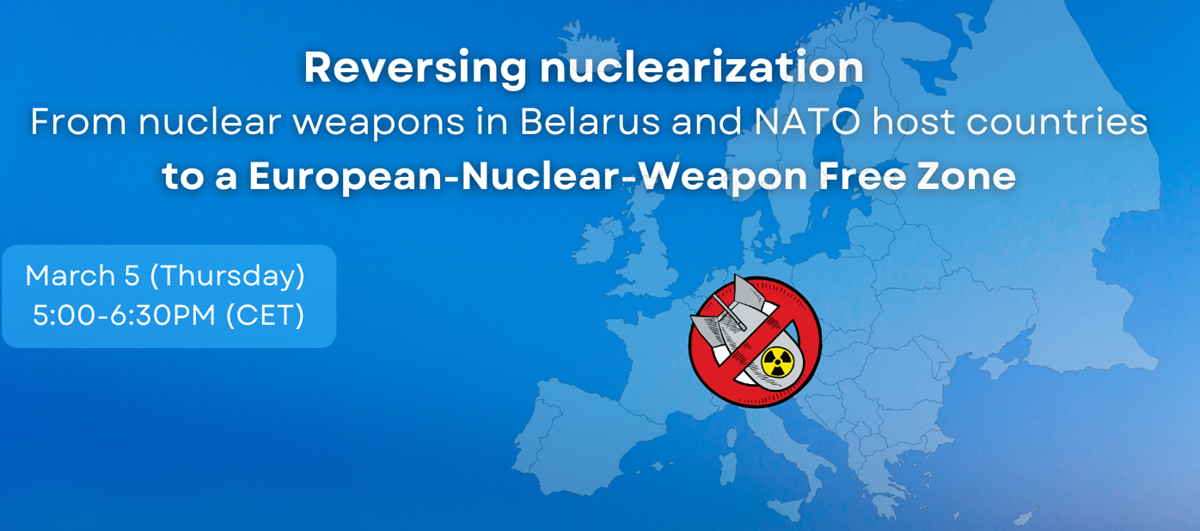
5 March -Online – Reversing nuclearization:
From nuclear weapons in Belarus and NATO host countries to a European-Nuclear-Weapon Free Zone
11am-12:30pm Eastern Time USA / 5pm-6:30pm CET

of the week – Advocating for a
nuclear free beach – https://www.samuellawrencefoundation.org/
The Samuel Lawrence Foundation advocates for a Nuclear Waste Free Beach at San Onofre, join us and take action!

10 March A LIVE WEBINAR THE REAL EFFECTS OF NUCLEAR POWER
What the Industry Isn’t Telling Us
1:00 PM Mountain, 2 pm Central, 3 pm Eastern. Live on the Keepers of the Water Facebook page

18 March Webinar @ 1 PM EST: An Assessment of SMR Projects: The Case of Canada
register for the zoom:
https://us02web.zoom.us/webinar/register/WN_o8BIIOUvQ2ONJR1nta65DQ#/registration

of the week – STOP SMALL MODULAR REACTORS IN CANADA
To see nuclear-related stories in greater depth and intensity – go to https://nuclearinformation.wordpress.com
-
Archives
- March 2026 (43)
- February 2026 (268)
- January 2026 (308)
- December 2025 (358)
- November 2025 (359)
- October 2025 (376)
- September 2025 (258)
- August 2025 (319)
- July 2025 (230)
- June 2025 (348)
- May 2025 (261)
- April 2025 (305)
-
Categories
- 1
- 1 NUCLEAR ISSUES
- business and costs
- climate change
- culture and arts
- ENERGY
- environment
- health
- history
- indigenous issues
- Legal
- marketing of nuclear
- media
- opposition to nuclear
- PERSONAL STORIES
- politics
- politics international
- Religion and ethics
- safety
- secrets,lies and civil liberties
- spinbuster
- technology
- Uranium
- wastes
- weapons and war
- Women
- 2 WORLD
- ACTION
- AFRICA
- Atrocities
- AUSTRALIA
- Christina's notes
- Christina's themes
- culture and arts
- Events
- Fuk 2022
- Fuk 2023
- Fukushima 2017
- Fukushima 2018
- fukushima 2019
- Fukushima 2020
- Fukushima 2021
- general
- global warming
- Humour (God we need it)
- Nuclear
- RARE EARTHS
- Reference
- resources – print
- Resources -audiovicual
- Weekly Newsletter
- World
- World Nuclear
- YouTube
-
RSS
Entries RSS
Comments RSS
 nuclear-news
Leave a comment