America’s nuclear non-proliferation policy is a disaster
 America’s disastrous nuclear non-proliferation policy: By Ira Helfand http://www.masslive.com/opinion/index.ssf/2015/05/americas_disastrous_nuclear_no.html
Starting this week, the states who are party to the Nuclear Non-Proliferation Treaty, NPT, will gather at the United Nations for their five year review conference to assess whether the treaty is meeting its goals. The US has long viewed this treaty as a key bulwark against the spread of nuclear weapons to other countries. Since it was adopted 45 years ago, three nations which never signed the Treaty have developed nuclear weapons and one country that did sign has withdrawn and built a small nuclear arsenal, but we have not seen the wholesale spread of nuclear weapons that many feared when the NPT was negotiated in the late 1960’s.
Now the US government is worried that the NPT regime could fall apart. While the NPT sought to keep states which did not have nuclear weapons from acquiring them, it also required, under Article VI of the Treaty, that the states which did have nuclear weapons conduct good faith negotiations to eliminate them. There is a growing consensus around the world that the nuclear weapons states have not met their obligations under Article VI and do not have any plans to do so.
Indeed, all of the nuclear weapons states have ambitious plans to upgrade and modernize their nuclear forces. Here in the US, the administration has put forth a modernization plan that will cost over $1 trillion over the next 30 years.
This “Austrian Pledge”, as it has come to be known, offers a way out of the dangerous impasse over nuclear weapons.
Faced with the failure of the nuclear weapons states to meet their obligations under the NPT, the rest of the world can abandon the Treaty and begin to develop nuclear weapons. Or, they can join in a new effort to enforce the NPT. They can begin the good faith negotiations to ban and eliminate nuclear weapons that the Treaty demands.
The US should embrace this effort. Instead it is working actively to undermine these negotiations before they even start.Reports in the Japanese and Norwegian press have clearly documented the efforts of the State Department to keep other countries from joining this movement.
The US needs to change course.
It should recognize that the world will not indefinitely tolerate a system of nuclear apartheid where some countries get to have nuclear weapons and others don’t. Possessing nuclear weapons may make us feel secure in the short run, but it fundamentally undermines our security and will lead to a world with many nuclear powers. The data on limited nuclear war show that even the “successful” use of our own nuclear weapons against an adversary abroad will cause catastrophic climate disruption that will devastate our own country. We need to understand that these weapons are suicide bombs and we who possess them have become a nation of suicide bombers.
Rather than spending a trillion dollars on modernizing these weapons, we urgently need to join the growing global effort to eliminate them throughout the world.
Ira Helfand is an urgent care physician, at Family Care Medical Center in Springfield. He is Past-President and currently on the Board of Directors, Physicians for Social Responsibility, and Co-President of International Physicians for the Prevention of Nuclear War, recipient of the 1985 Nobel Peace Prize.
Why nuclear power will have no effect in combatting climate chnage
The arguments that nuclear power offers the solution to climate change are dead wrong for several reasons: [outlined further down in this article]
Even if we decided to replace all fossil-fuel plants with nuclear reactors – leaving cost issues aside – it would not be technically possible to build them quickly enough to meet even the modest targets of the Kyoto Protocol. In the U.S., up to 1,000 new reactors (nearly 10 times the current base) would be required at a cost of about $1.5 trillion to $2.0 trillion, based on industry estimates of $1,500-$2,000/KW for new nuclear plant construction. In fact, Alvin M. Weinberg, former director of Oak Ridge National Laboratory argues that, in order to make a serious dent in carbon emissions, it would take perhaps four times as many reactors as suggested by the MIT study, or up to 4,000 reactors .
 Nuclear Power: Totally Unqualified to Combat Climate Change BY RINALDO S. BRUTOCO , WORDL BUSINESS ACADEMY SEPTEMBER 14, 2014
An Open Letter from the World Business Academy to leading climatologist Dr. James Hansen regarding his advocacy of nuclear power as a solution to global warming.
My colleagues and I at the World Business Academy have followed climate activism for many years and its on-going campaign to restrain the coal and oil industries. Research, congressional testimony, and activism by numerous climatologists to address climate change has brought this very real global threat into the public consciousness and set the stage to develop a strategy for preserving human civilization as we know it. …….
With regard to nuclear energy, the IPCC made the following finding: “Nuclear energy is a mature low-GHG emission source of baseload power, but its share of global electricity generation has been declining (since 1993). Nuclear energy could make an increasing contribution to low carbon energy supply, but a variety of barriers and risks exist (robust evidence, high agreement). Those include: operational risks, and the associated concerns, uranium mining risks, financial and regulatory risks, unresolved waste management issues, nuclear weapon proliferation concerns, and adverse public opinion (robust evidence, high agreement).”[4]……..
The World Business Academy agrees with the substantive findings from these reports and is firmly committed to implementing the most expeditious path towards (i) eliminating or mitigating all sources of carbon and methane emissions and (ii) remediating ambient CO2 levels back to pre-industrial levels……….
Given the urgency of climate-related issues, we were nonetheless deeply vexed with the proposal by Dr. James E. Hansen and other climatologists to embrace nuclear power as a viable component in mitigatiing climate change. As delineated in a joint letter published on November 3rd by Dr. Hansen, Kenneth Caldeira, Kerry Emanuel, and Tom Wigley,[6] it appears that these climate experts may not be as fully informed about nuclear fission as they are about climate change.
A letter dated January 6, 2014 has already been sent to this group by The Civil Society Institute and Nuclear Information and Resource Service which was co-signed by over 300 organizations world-wide, rebutting the assumptions set forth in the November 3rd letter and presenting arguments against the use of nuclear power to mitigate climate change.[7] The World Business Academy was a contributing signatory to the CSI/NIRS letter and proposes in this communication to expand on those arguments and provide additional reference materials in support of our assertions………
the Academy has maintained a permanent research effort on virtually every aspect of nuclear power, has published very frequently on the subject, and has continuously sought solutions for society to mitigate the most harmful side effects of nuclear fission. We are hopeful that further elaboration of the challenges associated with nuclear power will persuade misguided climate activists to embrace more economic, more readily available, and more certain renewable energy technologies which will surpass the nuclear industry’s alleged ability to assist in mitigating climate change without any harmful side effects. Continue reading
Japan, despite its pacifist constitution, agrees to USA military expansion
Japan Agrees to New Military Cooperation Plan with United States Despite Its Pacifist Constitution, Democracy Now, 1 May 15 As peace activists gather in The Hague, Japan is moving toward taking a more active military role internationally despite having a pacifist constitution. On Tuesday, President Obama hosted Japanese Prime Minister Shinzo Abe for a White House state dinner. The two nations have just unveiled new guidelines for military cooperation. We examine Japan’s growing military role with Kozue Akibayashi, the newly elected president of the Women’s International League for Peace and Freedom. She also discusses opposition to the presence of some 25,000 U.S. military personnel stationed in Okinawa. “The U.S. military has been granted almost diplomatic immunity to whatever they do. Crimes are committed, but they are not punished. They get away.”
Cheap, efficient deep bore waste disposal would abort nuclear reprocessing
successfully developing deep-hole disposal techniques would be a great development for society
it could be devastating for next-generation nuclear developers attempting to utilize existing used nuclear fuel stockpiles
 Why Sending Nuclear Waste to the Center of the Earth is Bad News for General Electric,Motley Fool By Maxx Chatsko April 30, 2015 “………the U.S. Department of Energy is set to experiment with a technique to dispose of nuclear wastes by drilling 3-mile boreholes into the Earth’s crust and then, well, dropping radioactive materials into their geological tombs. For good
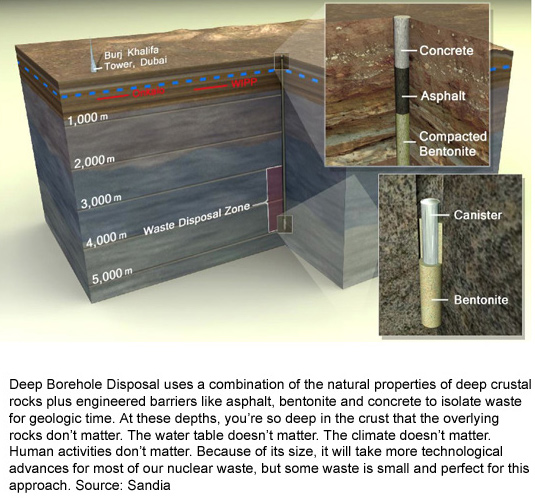
………Fergus Gibb, the technique’s pioneer, told The Engineer that each bore hole, measuring roughly 3 miles deep and 2 feet wide, would cost just a few tens of millions of dollars to drill. …
USA Republican Senators out to wreck Iran nuclear deal
Congressional review of Iran nuclear deal is threatened by GOP amendments LA Times, By PAUL RICHTER AND LISA MASCARO contact the reporters A bipartisan bill for Congress to review any nuclear agreement with Iran faced new danger Thursday as Republican senators sought to force votes on controversial amendments that leaders had hoped to avoid.
Senate Republican and Democratic leaders have worked all week to shield the bill from politically sensitive changes that are likely to drive away some Democratic supporters and sink its chances for passage.
Presidential campaign politics have complicated the process. One such amendment, from Sen. Marco Rubio (R-Fla.), a presidential candidate, would require Iran to recognize Israel’s right to exist, something all senators would like to see, but that Iran is unlikely to do. The issue was not on the table during more than 10 years of negotiations over Iran’s nuclear program.
But Republican senators pressed hard for their proposals……http://www.latimes.com/nation/la-na-iran-congress-20150501-story.html
Business Academy condems nuclear power as economically not viable
Before rushing to endorse nuclear expansion, regulatory agencies and individual researchers should critically examine past performance and demand experimental proof for claims that the next generation of nuclear plants (should any ever be considered for construction) will be economically viable, climate-friendly, and accident-proof.
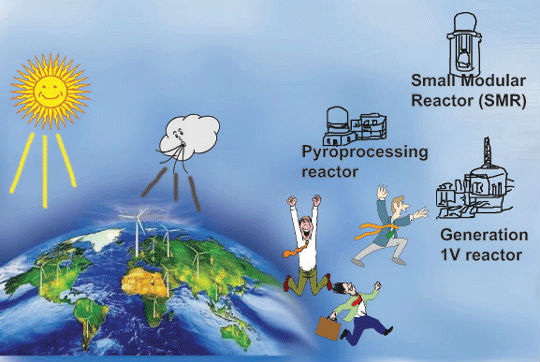
It is believed that next generation reactors will differ dramatically from current reactors in that they will replace active water cooling and multiple backup safety systems with “passive safety” designs. In fact, many nuclear advocates and news reports inaccurately describe the proposed new reactor designs, such as the pebble bed modular reactors, as “accident-proof” or “fail-safe.”
 Nuclear Power: Totally Unqualified to Combat Climate Change BY RINALDO S. BRUTOCO , WORDL BUSINESS ACADEMY SEPTEMBER 14, 2014 “………From a business perspective, private investors should be seen as the ultimate ”referees” on competing energy choices, using informed diligence and prudent criteria to determine which energy technologies can compete in the market with the best chance of generating revenues and profits. As Amory Lovins points out, the capital markets have already spoken. Private investors and project finance lenders have flatly rejected large base-load nuclear power plants and have enthusiastically embraced supply-side competitors, decentralized cogeneration, and renewables……… We believe the reason all sophisticated investors avoid nuclear investments isbecause no one has figured out how to build a reactor that doesn’t routinely emit toxic levels of radioactivity while still producing power economically, and because there is no safe disposal system known to humanity.
The commercial nuclear industry has been around for over half a century, so the prudent approach would be to look at the industry’s track record. Continue reading
Astronauts at risk from brain damage due to ionising radiation
 Study: Deep-Space Radiation Could Damage Astronauts’ Brains Cosmic rays could leave travelers to Mars confused, forgetful and slow to react. WSJ, By ROBERT LEE HOTZ May 1, 2015
As NASA develops plans for a manned mission to Mars, scientists said Friday that cosmic rays during an interplanetary voyage could cause subtle brain damage, leaving astronauts confused, forgetful and slow to react to the unexpected.
In a NASA-funded study of radiation-exposed mice published Friday in Science Advances, researchers at the University of California, Irvine and the University of Nevada warned that prolonged bombardment by charged particles in deep space could affect the brain cells involved in decision-making and memory, with implications for possible manned forays into deep space.
“These sorts of cognitive changes could manifest during the mission and could be a real problem,” said Cary Zeitlin at the Southwest Research Institute in San Antonio, who wasn’t involved in the study. In 2013, Dr. Zeitlin reported radiation levels between Earth and Mars detected by the Mars Science Laboratory craft during its cruise to the red planet, and found that the exposure was the equivalent of getting “a whole-body CT scan once every 5 or 6 days.”
Deep-space radiation is a unique mix of gamma rays, high-energy protons and cosmic rays from newborn black holes, and radiation from exploding stars. Earth’s bulk, atmosphere and magnetic field blocks or deflects most deep-space cosmic rays. Shielding on spacecraft also helps.
In 54 years of human spaceflight, astronauts have rarely experienced a full dose. Apollo crews, who ventured furthest from Earth’s protective shield on their journeys to the Moon, reported seeing flashes of light when they closed their eyes, caused by galactic cosmic rays speeding through their retinas………
The researchers found the mice had damaged neurons and synapses in areas associated with memory and decision-making, such as the hippocampus and prefrontal cortex………http://www.wsj.com/articles/study-deep-space-radiation-could-damage-astronauts-brains-1430503356
Tesla may well have killed nuclear power
 Did Tesla Just Kill Nuclear Power? Forbes, 1 May 15 It would be almost
  three hours until Tesla’s big announcement, but inside a Northwestern Universityclassroom near Chicago Thursday night, the famed nuclear critic Arnie Gundersen had the inside scoop:
Tesla Motors TSLA -0.04% CEO Elon Musk was about to announce an industrial-scale battery, Gundersen said, that would cost about 2¢ per kilowatt hour to use, putting the final nail in the coffin of nuclear power……
Arnie Gundersen -“We all know that the wind doesn’t blow consistently and the sun doesn’t shine every day,” he said, “but the nuclear industry would have you believe that humankind is smart enough to develop techniques to store nuclear waste for a quarter of a million years, but at the same time human kind is so dumb we can’t figure out a way to store solar electricity overnight. To me that doesn’t make sense.”…….
Gundersen dismissed the nuclear contribution as too expensive and too slow—even if the U.S. could license and afford new reactors, they could not come online before 2023—and he replaced the nuclear contribution with batteries and conservation.
“The operative word in this discussion tonight is now. What are we going to do now to reduce the amount of carbon dioxide going into the atmosphere?” he said. “These things can be implemented immediately. We know how to insulate a building. We know how to put double and triple-pane windows in them. We know how to build windmills and put solar cells up. These are immediate things. We don’t have to invest $50 trillion and wait 15 years for that to come to fruition.
“Producing our way out of the problem with renewables is half the solution. Conserving our way out is the other half.”
Tesla Powerwall batteries for home and business renewable energy storage
Tesla Motors, maker of the Model S supercar and soon to be launched Model X, announced its Powerwall home electricity storage solution under the Tesla Energy brand this week. There will be two available units of 7 kilowatt-hour and 10kwh capacity offered at $3,000 and $3,500 respectively. They can also be stacked for homeowners who wish to store more energy.
So as not to leave commercial customers out in the dark, Tesla Energy will also offer the Powerpack.
Tesla Moves to Make Renewable Energy More Viable http://www.huffingtonpost.com/patrick-roth/tesla-moves-to-make-renew_b_7190196.html 05/01/2015 Imagine a world in which all our energy needs comes from clean, renewable sources. Every building could be covered and powered by solar panels. Transportation could be provided by electric vehicles. Clean and free electricity provided by sun and wind could be used in real time and stored in batteries for later use. Fossil fuels could be regulated to the fuel of last resort. It may not be the stuff of science fiction any longer. If Tesla CEO Elon Musk has his way, this is the future we are headed towards.
Solar and wind energy have long been attractive renewable energy sources. Once the photovoltaic panels and wind turbines are manufactured, they can create many years of electricity with zero harmful emissions and little if any maintenance. In recent years the cost of solar has plummeted, leaving it on par with fossil fuels. The problem however has been in the less than constant ability of renewables to create electricity. Solar cannot produce as much electricity in inclement weather or any at night. Wind is intermittent. Also, unlike more conventional fossil fuel burning power plants, capacity cannot always be increased during peak periods of need.
In order for solar and wind-generated power to be more than energy grid add-ons, they need to have a way to store their energy for use during off-peak or low production periods. Batteries are the best way to store energy during periods of peak production to be used later. However, no major company has offered an easily-scalable battery storage solution to meet these needs – until now. Continue reading
The future of nuclear energy in doubt
Experts debate the future of nuclear energy at Fossil Free NU event http://dailynorthwestern.com/2015/05/01/campus/experts-debate-the-future-of-nuclear-energy-at-fossil-free-nu-event/ Elena Sucharetza, Reporter Experts discussed whether nuclear power could be a viable source of alternative energy at an event hosted by Fossil Free NU on Thursday night.
The speakers told more than 50 students in Harris Hall that the United States and the rest of the world need to move from carbon emitting energy sources as quickly as possible.
“The operative word in this discussion tonight is ‘now,’” said Arnie Gundersen, chief engineer at Fairewinds Energy Education. “What are we going to do right now to reduce the amount of carbon in the atmosphere, what is NU going to do, what is America going to do, what is the globe going to do? We need ‘now’ solutions, not 20- to 30-year solutions down the road.” Continue reading
IAEA and UN erred by ignoring Eastern European reports on the effects of Chernobyl nuclear disaster
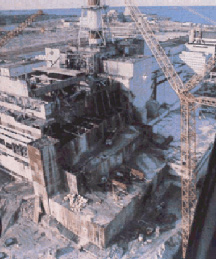 Chernobyl All Over Again http://www.thepeoplesvoice.org/TPV3/Voices.php/2015/05/01/title-172 May 1st, 2015 by Stephen Lendman Forest fires rage in Ukraine dangerously close to Chernobyl. Ukrainian interior minister Arsen Avakov said conditions “worsened.” “The forest fire is heading in the direction of Chernobyl’s installations,” he said. Treetop flames and strong gusts of wind have created a real danger of the fire spreading to an area within 20 kilometers of the power plant.”
“There are about (1,000 acres) of forests in the endangered area,” he claimed. “National Guard and interior ministry forces have been put on combat alert.”
The April 26, 1986 Chernobyl incident was the worst nuclear power plant disaster up to that time – exceeded only by Japan’s Fukushima (March 11, 2011).
Nuclear expert Helen Caldicott called it “by orders of magnitude many times worse than Chernobyl.”
The effects of both catastrophes are still being felt. A 2009 New York Academy of Sciences (NYAS) study said Chernobyl killed around one million people and counting. The official IAEA figure claiming around 4,000 was fabricated to downplay the disaster.
NYAS said:
“This is a collection of papers translated from the Russian with some revised and updated contributions.”
“Written by leading authorities from Eastern Europe, the volume outlines the history of the health and environmental consequences of the Chernobyl disaster.”
“According to the authors, official discussions from the (IAEA) and associated (UN) agencies (e.g. the Chernobyl reports) have largely downplayed or ignored many of the findings reported in the
scientific literature and consequently have erred by not including these assessments.” Continue reading
St Louis city’s atomic poisoning, but authorities have carefully not tested for radiation
 What many did not know was that they were living downstream from a 22-acre field acquired in 1946 by the long-gone Atomic Energy Commission. Hundreds of thousands of tons of waste — much of it radioactive — were dumped there, including some 60 tons of uranium-laced sand from Nazi Germany’s nuclear program that was captured by the United States en route to Japan near the end of WWII.
Soil samples taken by the Army Corps of Engineers in the late 1990s show that soils contaminated with forms of uranium, thorium and radium were found as deep as 20 feet in some places. The creek is near the westernmost boundary of the site and then flows nearly 20 miles through St. Louis County municipalities such as Florissant, Hazelwood and Black Jack .
Regarding contaminated sites in St. Louis, long-term, low-level exposure to radiation is what poses the greatest threat to human health, said St. Louis County Department of Health Director Faisal Khan. Khan, who is new to the position, has been vocal about this issue, becoming one of the few government officials at any level to call for residents’ concerns about radiation exposure to be addressed.
St. Louis burning: America’s atomic legacy haunts city, Aljazeera America by Ryan Schuessler @RyanSchuessler1 April 29, 2015
County parks, homes, businesses remain open and untested after decades of exposure to potentially contaminated creek This is part one of a three-part series examining the effects of radioactive waste from the Manhattan Project on St. Louis and its suburbs.
HAZELWOOD, Mo. — Karen Nickel had never even heard of lupus before she was diagnosed with the autoimmune disease six years ago.
Today she says she takes as many as 18 pills a day — “and that’s just to make me feel OK.”
“Sometimes I can’t even get out of bed,” Nickel said. “Sometimes I can’t even let someone hug or touch me because it hurts so bad.”
Lupus causes a patient’s immune system to turn on its own body, attacking healthy joint and organ tissues. It is most common in middle-aged women such as Nickel, but has recently been linked to exposure to uranium. Continue reading
$73m compensation deal from USA govt to New Mexico, over radiation leak
New Mexico radiation accident: $73m compensation deal struck over leak
Federal government pays for infrastructure as alternative to fine after mishandled radioactive waste including plutonium leaked from burst drum The US energy department is to fund $73m in road and other infrastructure projects in New Mexico as compensation for radiation leaks at a nuclear laboratory and underground dump.
The deal struck between the department and New Mexico forgoes fines and instead applies funds to upgrade federal nuclear facilities and surrounding communities in the state, according to settlement documents.
Projects include construction of a $5m emergency operations centre in Carlsbad, near where the nuclear waste dump leaked radiation in February 2014……http://www.theguardian.com/environment/2015/may/01/new-mexico-radiation-accident-73m-compensation-deal-struck-over-leak
Nuclear weapons and the USA’s militarisation of Asia-Pacific
Obama Threatens China with Nuclear Weapons. Militarization of Asia-Pacific By Stephen Lendman Global Research, May 01, 2015 Last Friday, National Security Council senior Asian affairs director Evan Medeiros said John Kerry and Defense Secretary Ashton Carter would meet their Japanese counterparts in New York on Monday.
They’d “announce some historic changes to the way US-Japan alliance operates” ahead of Prime Minister Shinzo Abe’s Washington visit this week. Continue reading
Russian nuclear bombers in US airspace near Alaska, claims Pentagon
However, no US interceptor jets scrambled to shadow the bombers, according to defense officials familiar with the situation.
A Russian embassy spokesman did not return an email seeking comment on the matter, the Free Beacon said.
For his part, Navy Captain Jeff Davis, a spokesman for the U.S. Northern Command and North American Aerospace Defense Command (NORAD), declined to confirm the incursion, also saying that no attempts were made to intercept the Tu-95s.
According to the Free Beacon, last week’s incident was the first alleged Russian bomber incursion of a US or Canadian air defense zone this year. http://sputniknews.com/world/20150501/1021607454.html#ixzz3YvlT8L4R
1 This Month



Tell the Ukrainian Government to Drop Prosecution of Peace Activist Yurii Sheliazhenko

Petition to revoke the licensing of the Near Surface Nuclear Disposal Facility (NSDF) at Chalk River. https://www.ourcommons.ca/petitions/en/Petition/Details?Petition=e-7247


of the week – STOP SMALL MODULAR REACTORS IN CANADA
To see nuclear-related stories in greater depth and intensity – go to https://nuclearinformation.wordpress.com
-
Archives
- March 2026 (222)
- February 2026 (268)
- January 2026 (308)
- December 2025 (358)
- November 2025 (359)
- October 2025 (376)
- September 2025 (258)
- August 2025 (319)
- July 2025 (230)
- June 2025 (348)
- May 2025 (261)
- April 2025 (305)
-
Categories
- 1
- 1 NUCLEAR ISSUES
- business and costs
- climate change
- culture and arts
- ENERGY
- environment
- health
- history
- indigenous issues
- Legal
- marketing of nuclear
- media
- opposition to nuclear
- PERSONAL STORIES
- politics
- politics international
- Religion and ethics
- safety
- secrets,lies and civil liberties
- spinbuster
- technology
- Uranium
- wastes
- weapons and war
- Women
- 2 WORLD
- ACTION
- AFRICA
- Atrocities
- AUSTRALIA
- Christina's notes
- Christina's themes
- culture and arts
- Events
- Fuk 2022
- Fuk 2023
- Fukushima 2017
- Fukushima 2018
- fukushima 2019
- Fukushima 2020
- Fukushima 2021
- general
- global warming
- Humour (God we need it)
- Nuclear
- RARE EARTHS
- Reference
- resources – print
- Resources -audiovicual
- Weekly Newsletter
- World
- World Nuclear
- YouTube
-
RSS
Entries RSS
Comments RSS
 nuclear-news