Chernobyl nuclear plant remains a high danger, with instability in Ukraine
Ukraine instability threatens efforts to keep Chernobyl plant safe http://www.newstalk.com/Ukraine-instability-threatens-attempt-to-keep-Chernobyl-plant-safe, 26 Apr 15
Today marks the 29th anniversary of the disaster
Aid agencies in Ukraine say instability in the region is threatening efforts to make the Chernobyl power plant safe for the next 100 years.
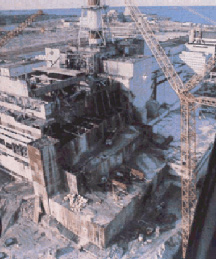
Today is the 29th anniversary of the world’s worst ever nuclear accident, which affected the lives of more than seven million people.
Adi Roche, voluntary chief executive of Chernobyl Children International, visited the site in recent weeks.
She said people don’t realise that the radioactive material released in 1986 represents just a fraction of the toxic material still inside the crumbling complex:
Nuclear industry embarks on a public advertising campaign
 Nuclear power industry hopes for a new era, Standard Times James Osborne, Apr 25, 2015“…….With high-profile advocates like former Environmental Protection Agency administrator Christie Whitman on board, the industry is embarking on a very public campaign arguing nuclear must be part of any national energy plan. To accomplish that, it wants to examine amending power and licensing regulations to encourage nuclear and speed up construction.
the industry will face opposition. Nuclear remains a divisive issue among environmentalists. Some support it as a proven means to cut carbon emissions out of the nation’s power supply.
But there are many see its potential contamination risks as just too great to make it sensible……..http://www.gosanangelo.com/news/state/nuclearpowerda_54975979
Money running out for safety cover, as dangerous Chernobyl nuclear wreck reaches 29th anniversary
The reactor itself is still too contaminated for workers to approach. Removal of radioactive materials there will only begin once the new confinement structure has been finished.
Chernobyl arch faces €265m funding gap ahead of disaster’s 29th anniversary, Arthur Neslen, Guardian 24 Apr 15 World must plug funding gap for massive 100-metre steel arch being built to contain remaining radioactive waste at the site. A massive engineering project to make the Chernobyl nuclear power plant safe is facing a €265m (£190m) funding shortfall.
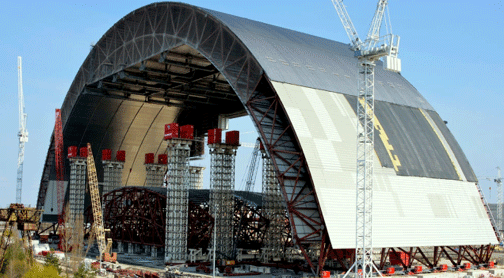
Next week a conference held by Germany in London will call on countries to make up the gap, but the European Bank for Reconstruction and Development (EBRD) has said it may have to ask its shareholders to make up the shortfall if donations dry up.
This Sunday marks the 29th anniversary of the world’s worst nuclear disaster, when a power surge blew the roof off a reactor, spewing radioactive clouds across Russia, and eastern Europe.
A makeshift sarcophagus built in the explosion’s aftermath was supposed to protect the environment from radiation for at least 30 years. But it has since developed cracks.
The project to build a new radiation container had been due for completion this year but the deadline slipped to November 2017, as costs mushroomed from an initial estimate of €800m (£572m) to more than €2.15bn today.
Over 40 governments and the European commission have committed to help a Chernobyl Shelter Fund tasked with sealing off the 100 tonnes of uranium and one tonne of plutonium that remain within the site.
“If countries recognise the nature of the problem in Chernobyl and its importance for human security in Ukraine and ecological security in Europe, there is a hope that the gap could be closed at the donor conference on April 29,” Anton Usov, an EBRD spokesman told the Guardian. “Verbally the donors are committed to contribute more funds.”
The bank believes there is a broad understanding among nations of the threat that radioactive dust on the site still poses to Kiev, around 70km away……..
The reactor itself is still too contaminated for workers to approach. Removal of radioactive materials there will only begin once the new confinement structure has been finished. http://www.theguardian.com/environment/2015/apr/24/chernobyl-arch-faces-265m-funding-gap-ahead-of-disasters-29th-anniversary
First shale oil, now solar is transforming Japan’s and the global energy market
 Like Shale Oil, Solar Power Is Shaking Up Global Energy http://climate-change-news.blogspot.com.au/2015/04/like-shale-oil-solar-power-is-shaking.html 25 Apr 15 One by one, Japan is turning off the lights at the giant oil-fired power plants that propelled it to the ranks of the world’s top industrialized nations. With nuclear power in the doldrums after the Fukushima disaster, it’s solar energy that is becoming the alternative.
Solar power is set to become profitable in Japan as early as this quarter, according to the Japan Renewable Energy Foundation (JREF), freeing it from the need for government subsidies and making it the last of the G7 economies where the technology has become economically viable.
Japan is now one of the world’s four largest markets for solar panels and a large number of power plants are coming onstream, including two giant arrays over water in Kato City and a $1.1 billion solar farm being built on a salt field in Okayama, both west of Osaka.
“Solar has come of age in Japan and from now on will be replacing imported imported uranium and fossil fuels,” said Tomas Kåberger, executive board chairman of JREF.
Once Japan reaches cost-revenue parity in solar energy, it will mean the technology is commercially viable in all G7 countries and 14 of the G20 economies, according to data from governments, industry and consumer groups.
…
“Just as shale extraction reconfigured oil and gas, no other technology is closer to transforming power markets than distributed and utility scale solar,” said consultancy Wood Mackenzie, which has a focus on the oil and gas industry.
Oil major Exxon Mobil says that “solar capacity is expected to grow by more than 20 times from 2010 to 2040.”
In Turkey, anti nuclear protestors mark anniversary of Chernobyl disaster
 Anti-nuclear demonstration marks anniversary of Chernobyl disaster http://www.todayszaman.com/national_anti-nuclear-demonstration-marks-anniversary-of-chernobyl-disaster_379011.html The Sinop Anti-Nuclear Platform (Sinop NKP) held a demonstration on Saturday in Sinop province in order to mark the 29th anniversary of the Chernobyl nuclear power plant disaster in Ukraine and to raise their voices against the Turkish government’s plans to construct nuclear power plants in Sinop and the Akkuyu district of Mersin province.
Several nongovernmental organizations, local residents of Sinop and members of left-wing parties from all over Turkey were among the demonstration participants. According to the Sözcü newspaper, there was a total about 10,000 protesters.
The protesters said the Chernobyl disaster was a lesson that the ruling Justice and Development Party (AK Party) should keep in mind before resorting to nuclear power plants to address the country’s energy shortage.
On April 26, 1986 an explosion and fire at the Chernobyl plant released a large quantity of highly radioactive fallout into the atmosphere that spread over an extensive area, including large parts of the western Soviet Union and Europe, in one of the worst accidents in history in terms of cost and casualties.
“Developed countries including Germany, Austria and Sweden decided to close down their nuclear plants after this disaster and Germany‘s energy requirements are two-and-a-half times larger than Turkey’s. The US, the country that has the most nuclear power plants, is not building any new ones. When the aforementioned countries are using more and more alternative energy sources like solar and wind power, there is no point for Turkey to venture into contracting to build a nuclear power plant,” said Chamber of Electrical Engineers (EMO) Secretary General Hüseyin Önder.
Following this demonstration, the Anti-Nuclear Platform (NKP) issued a written statement noting that Sinop is known for being the happiest city in Turkey and that a nuclear power plant would damage the city’s landscape and its image of being a peaceful city.
The platform also stressed that the AK party is trying to convince the people of Sinop to support the project by promising that the power plant would provide thousands of job opportunities for residents, but the statement contended that only around 300 people will able to work there and that they will mostly be workers from the outside of the city.
One of world’s largest floating solar plants opened in Japan
JAPAN OPENS MEGA FLOATING SOLAR POWER PLANT, CLIMATE GROUP, 26 APR 15 LONDON: JAPAN HAS JUST OPENED ONE OF THE WORLD’S LARGEST FLOATING SOLAR POWER PLANTS, SIGNALLING INCREASING ADOPTION OF THE EFFICIENT AND INNOVATIVE TECHNOLOGY IN THE COUNTRY, WHICH IS DUE PARTLY TO LACK OF SPACE ON LAND.
As highlighted in a report released this week by The Climate Group, regions with more land space, specifically the UAE with its huge solar resources, are primed to benefit from the fast-growing low carbon economy.

The giant plant in Japan was inaugurated last March but has only just opened, as announced by Kyocera and Ciel et Terre International, two manufacturers that are heavily investing in this technology. The system is made up of two solar parks, at Nishihira Pond and Higashihira Pond in Kato City in Japan’s Hyogo Prefecture, with a capacity of 1.7 megawatts (MW) and 1.2 MW respectively.
CLEAN TECHNOLOGY
Solar photovoltaic (PV) technology is becoming more wide-spread in Japan, driven in part by the closure of the country’s fleet of nuclear plants following the Fukushima disaster – even if there are some concerns about the possibility the country could soon reopen them.
… total solar PV capacity has moved from just 19 MW in 1992 to 13,532 MW in 2013 –more than double the previous year.
FLOATING SOLAR
However, with a landmass slightly smaller than California and a population density closer to India, this expansion in PV collides with the lack of space. Thankfully, Japan is surrounded by sea and has many water reservoirs to cater for its seasonal variation in rainfall levels, so is experimenting more frequently with floating PV systems.
Not only is floating solar more convenient, it is also more energy efficient. A study by Korea Water Resources Corporation (K-water) claims the technology is more efficient because it has a lower temperature during the day when compared to overland PV modules. This should be achieved due to the reflection of light from the water surface, which keeps the PV modules cooler………http://www.theclimategroup.org/what-we-do/news-and-blogs/japan-opens-mega-floating-solar-power-plant/
Maine’s Governor wants to remove voters’ rights on decisions on small nuclear reactors
 LePage’s plan to negate rule on nuclear power plants could be radioactive. Observers wonder why his attention to the issue begins with an attempt to disempower Maine voters. 26 Apr. BY BILL NEMITZ COLUMNIST bnemitz@pressherald.com | @BillNemitz Consider yourselves warned, fellow citizens. Gov. Paul LePage is fiddling around with Maine’s nuclear hot button.
“We anticipated this might provoke a conversation,” noted Patrick Woodcock, director of the Governor’s Energy Office, in an interview on Friday.
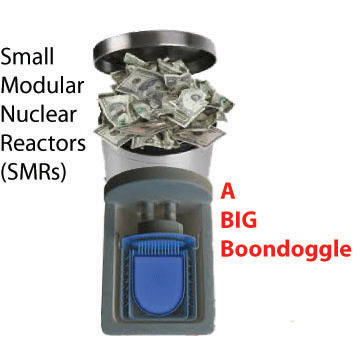 Under LePage’s new plan, scheduled for a hearing Wednesday at 1 p.m. before the Legislature’s Energy, Utilities and Technology Committee, voters would no longer have a say on the creation of nuclear power plants with generating capacities of 500 megawatts or less.
(Just so you know, the Fukushima Daiichi Nuclear Power Plant’s Unit 1 reactor – one of three destroyed by Japan’s apocalyptic tsunami in 2011 – had a generating capacity of 460 megawatts.)
Let’s back up a little.
Considering the complexity and controversy bound to greet any talk of dusting off nuclear generation in Maine, why start with a bill that effectively tells voters they’re being cut out of the process?
Or, as longtime anti-nuclear activist Ray Shadis of Edgecomb put it on Friday, “You don’t start a conversation by throwing a hand grenade in the room.”
Shadis, who currently represents the lone remaining intervenor in the proposed relicensing of New Hampshire’s Seabrook nuclear plant, sees this week’s hearing as “the kind of rudeness we’ve come to expect from Gov. LePage.”
He also thinks the governor is dreaming if he thinks small modular reactors – the brainchildren of a new generation of nuclear engineers working mostly out of the Massachusetts Institute of Technology – can attract the investment capital needed to put them on the energy radar here in Maine or anywhere else, for that matter.
“The most rabid anti-nuclear crowd are the investors in the market,” Shadis noted. “It takes a long time to realize any return at all. And the entirety of what you invest can turn from an asset to a liability overnight. Why bother risking your money? So they don’t.”
Thus, he said, LePage’s bill at best “is impractical, it’s silly. Out there in the energy world, where people are really trading on this stuff, it will make Maine the laughingstock. It will make us look like patsies.”
Arrest of anti nuclear protestor who landed drone on Shinzo Abe’s office
 Man arrested for landing drone on Shinzo Abe’s office in nuclear protest, Guardian, 25 Apr 15
Yasuo Yamamoto charged over landing of drone with tiny amount of radiation in apparent protest against use of nuclear power after Fukushima disaster. A Japanese man has been arrested for landing a drone on the prime minister’s office with a minuscule amount of radiation in an apparent protest against the use of nuclear power, four years after the Fukushima disaster.
Unemployed Yasuo Yamamoto, 40, who lives in Fukui Prefecture in western Japan, was arrested on Friday and charged with obstruction of official business, police said.
The maximum penalty is three years in prison or a 500,000 yen (£2,770) fine.
Media reported that Yamamoto turned himself in at a police station in Fukui and said he landed the drone as a protest against nuclear power…..A drone marked with a radioactive sign was found on the roof of Japanese prime minister Shinzo Abe’s office on Wednesday. The radiation was so low it was not harmful to humans.
Yamamoto said he put radioactive sand that he got from Fukushima in a container on the drone, media reported…….http://www.theguardian.com/world/2015/apr/25/man-arrested-for-landing-drone-on-shinzo-abes-office-in-nuclear-protest
Christian crusade for action on climate change
 Believer among the skeptics: A Canadian’s crusade to convert Christians to climate change belief, National Post William Marsden | April 24, 2015 WASHINGTON — Climate scientist Katharine Hayhoe, a cheerful, Toronto-born evangelical Christian, has become the hottest ticket in the highly polarized U.S. debate over climate change.
Named in 2014 by Time magazine as one of the 100 most influential people in America, she is sought out by Hollywood stars, applauded by environmentalists and fellow scientists, and a huge draw on the Christian speaking circuit because she has opened the door, if only a crack, to the largest and single most stubborn community of climate skeptics in America — evangelicals.
She has essentially become a missionary among her own people. And in doing so she has single-handedly raised hopes of a potential breakthrough in U.S. climate politics. The reasoning is simple. If you can convince evangelicals of the reality of man-made climate change, the rest of the country will follow………
“So I realize that, sure, most of these people, if you polled them, they would say climate change isn’t real. But if you actually take the time and talk to them, only about 10 per cent of people are hardcore”……..
Climate science was not the issue, she said. The debate was over faith. She faced a wall of Christians who believed that God’s absolute power eclipsed anything that mankind could do to the planet.
Hayhoe countered with scripture stating that while God created the Earth, he gave mankind dominion over it and Christians have to play an active role as its protector and not just its exploiter. Add a pinch of basic climate science and that’s essentially her message.
“I had to be a whole person not just a scientist and I had to share with them why I cared about climate change,” she said. “And for me my faith was a big part of that and for people here their faith is a big part of that.”
The word got out and before long Hayhoe had to meet increasing demands to talk to evangelical and other Christian communities…….
“I see my responsibility not as changing people’s minds but as offering them the information they need to change their minds.”http://news.nationalpost.com/news/a-believer-among-the-skeptics-a-canadians-crusade-to-convert-christians-to-climate-change-belief
1 This Month

of the week – Shut Down Drone Warfare!


Tell the Ukrainian Government to Drop Prosecution of Peace Activist Yurii Sheliazhenko

Petition to revoke the licensing of the Near Surface Nuclear Disposal Facility (NSDF) at Chalk River. https://www.ourcommons.ca/petitions/en/Petition/Details?Petition=e-7247
To see nuclear-related stories in greater depth and intensity – go to https://nuclearinformation.wordpress.com
-
Archives
- April 2026 (34)
- March 2026 (251)
- February 2026 (268)
- January 2026 (308)
- December 2025 (358)
- November 2025 (359)
- October 2025 (376)
- September 2025 (257)
- August 2025 (319)
- July 2025 (230)
- June 2025 (348)
- May 2025 (261)
-
Categories
- 1
- 1 NUCLEAR ISSUES
- business and costs
- climate change
- culture and arts
- ENERGY
- environment
- health
- history
- indigenous issues
- Legal
- marketing of nuclear
- media
- opposition to nuclear
- PERSONAL STORIES
- politics
- politics international
- Religion and ethics
- safety
- secrets,lies and civil liberties
- spinbuster
- technology
- Uranium
- wastes
- weapons and war
- Women
- 2 WORLD
- ACTION
- AFRICA
- Atrocities
- AUSTRALIA
- Christina's notes
- Christina's themes
- culture and arts
- Events
- Fuk 2022
- Fuk 2023
- Fukushima 2017
- Fukushima 2018
- fukushima 2019
- Fukushima 2020
- Fukushima 2021
- general
- global warming
- Humour (God we need it)
- Nuclear
- RARE EARTHS
- Reference
- resources – print
- Resources -audiovicual
- Weekly Newsletter
- World
- World Nuclear
- YouTube
-
RSS
Entries RSS
Comments RSS
 nuclear-news