Mako Oshidori on the status of Fukushima Daiichi nuclear power plant
 Mako Oshidori in Düsseldorf “The Hidden Truth about Fukushima”, Fukushima Voice version 2E 28 May 2014 “……….I would like to talk about the current status of Fukushima Daiichi nuclear power plant. This is a chimney called a “stack” behind Units 1 and 2. There are various issues all over Fukushima Daiichi NPP, but this is one of the places that I consider the most dangerous. It is 120 m tall.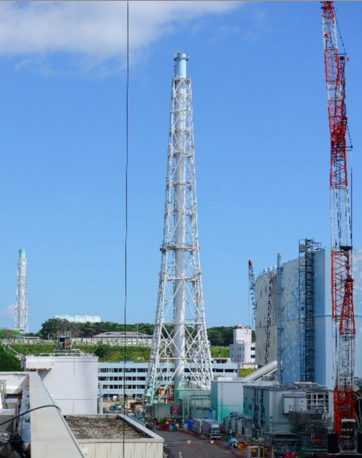

 Ordinarily, this should be immediately repaired, but the bottom of the stack is 25 Sv/h, and there is one spot that is 15 Sv/h. So, they can’t do anything about it. What TEPCO is doing about this is they have appointed workers to constantly watch it. This is very close to Units 1 and 2. We still get occasional earthquakes in Fukushima and eastern Japan. Workers on site are very worried about whether it would fall onto the reactor buildings. If it ever fell on Unit 1 or 2, all the workers would have to evacuate. There is no guarantee they would have enough time to evacuate, and it could lead to a severe accident necessitating evacuation of nearby residents once again.
One of the things not well known is the fact that in reality radioactive materials continue to be released into air and groundwater from the reactors at Fukushima Daiichi nuclear power plant.
Groundwater is of course contaminated. This [diagram] is the area where PM Abe declared the contaminated water being completely blocked when trying to bring the Olympics to Tokyo.
As described so far, radioactive materials continues to leak into air and water, and there are several places which need immediate attention even though they are not approachable by humans. However, very few Japanese people know about this type of information, as it’s not publicized on TV or in newspaper widely available. Also, the plan is underway to return evacuees to contaminated areas as the government and researchers say it’s safe. This is the reality of a “wealthy” country, Japan, which is considered a free, democratic and wonderful country……Transcription by Takashi Mizuno
Translation by @YuriHiranuma http://fukushimavoice-eng2.blogspot.com.au/2014/05/mako-oshidori-in-dusseldorf-hidden.html
No comments yet.
1 This Month
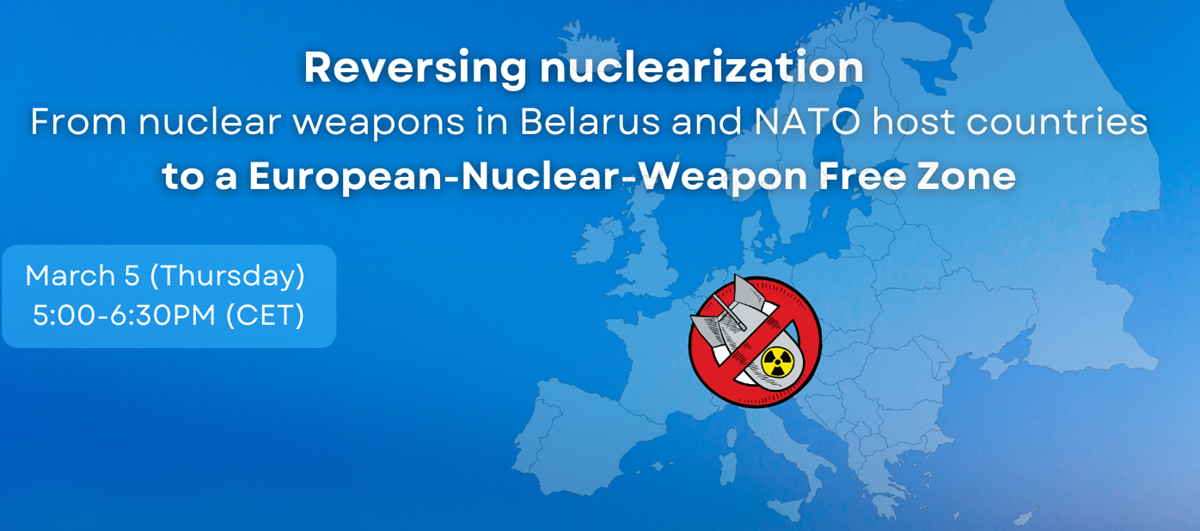
5 March -Online – Reversing nuclearization:
From nuclear weapons in Belarus and NATO host countries to a European-Nuclear-Weapon Free Zone
11am-12:30pm Eastern Time USA / 5pm-6:30pm CET

of the week – Advocating for a
nuclear free beach – https://www.samuellawrencefoundation.org/
The Samuel Lawrence Foundation advocates for a Nuclear Waste Free Beach at San Onofre, join us and take action!

10 March A LIVE WEBINAR THE REAL EFFECTS OF NUCLEAR POWER
What the Industry Isn’t Telling Us
1:00 PM Mountain, 2 pm Central, 3 pm Eastern. Live on the Keepers of the Water Facebook page

18 March Webinar @ 1 PM EST: An Assessment of SMR Projects: The Case of Canada
register for the zoom:
https://us02web.zoom.us/webinar/register/WN_o8BIIOUvQ2ONJR1nta65DQ#/registration

of the week – STOP SMALL MODULAR REACTORS IN CANADA
To see nuclear-related stories in greater depth and intensity – go to https://nuclearinformation.wordpress.com
-
Archives
- March 2026 (51)
- February 2026 (268)
- January 2026 (308)
- December 2025 (358)
- November 2025 (359)
- October 2025 (376)
- September 2025 (258)
- August 2025 (319)
- July 2025 (230)
- June 2025 (348)
- May 2025 (261)
- April 2025 (305)
-
Categories
- 1
- 1 NUCLEAR ISSUES
- business and costs
- climate change
- culture and arts
- ENERGY
- environment
- health
- history
- indigenous issues
- Legal
- marketing of nuclear
- media
- opposition to nuclear
- PERSONAL STORIES
- politics
- politics international
- Religion and ethics
- safety
- secrets,lies and civil liberties
- spinbuster
- technology
- Uranium
- wastes
- weapons and war
- Women
- 2 WORLD
- ACTION
- AFRICA
- Atrocities
- AUSTRALIA
- Christina's notes
- Christina's themes
- culture and arts
- Events
- Fuk 2022
- Fuk 2023
- Fukushima 2017
- Fukushima 2018
- fukushima 2019
- Fukushima 2020
- Fukushima 2021
- general
- global warming
- Humour (God we need it)
- Nuclear
- RARE EARTHS
- Reference
- resources – print
- Resources -audiovicual
- Weekly Newsletter
- World
- World Nuclear
- YouTube
-
RSS
Entries RSS
Comments RSS
 nuclear-news
Leave a comment