Japan’s nuclear waste pools, the nuclear restart, and the terrorism risks in Northeast Asia
 Japan’s choices have global significance for the threat of nuclear terrorism, and therefore demands serious consideration as part of a national and international risk-benefit assessment of the future evolution of nuclear power
 and spent fuel Nautilus Peace and Security NAPS Net Special Report by Peter Hayes 23 March 2015
 SUMMARY
In this report Peter Hayes examines the risk of nuclear terrorism in Northeast Asia with particular reference to Japan. He states that Japan is no more immune to nuclear terrorism than it was to a catastrophic reactor accident. In this context, the combination of safety and security concerns represented by spent fuel pools at reactors is a critical variable in the risk profile arising from the threat of nuclear terrorism. Japan’s choices have global significance for the threat of nuclear terrorism, and therefore demands serious consideration as part of a national and international risk-benefit assessment of the future evolution of nuclear power.
Peter Hayes is Co-founder and Executive Director of Nautilus Institute for Security and Sustainability; Honorary Professor at the Center for International Security Studies, Sydney University, Australia.
II. REPORT BY PETER HAYES
Introduction
In the post-Fukushima era, spent fuel management is recognized as a significant contributor to increased risk of nuclear terrorism. In the immediate weeks after the tsunami-earthquake, the situation at the spent fuel pools at Fukushima unit 1 was dire. The pools were damaged by debris from the hydrogen explosion, inaccessible due to intense local radiation from the melted reactor core, and losing coolant, underscored the argument that spent fuel pools are potential sources of radiological risk in themselves. The orthodox definition of nuclear terrorism based on the diversion of fissile material for use in a nuclear or radiological weapon, with similar potential scales of damage to entire cities as releases from a spent fuel pool, is only part of the nuclear risk story. The Fukushima incident conjoined the issue of nuclear terrorism conceived of as diversion and use of fissile material and nuclear weapons/nuclear energy dual-use technology with possible radiological attack via a dirty bomb or attack on nuclear facilities or on radiological materials in transport.
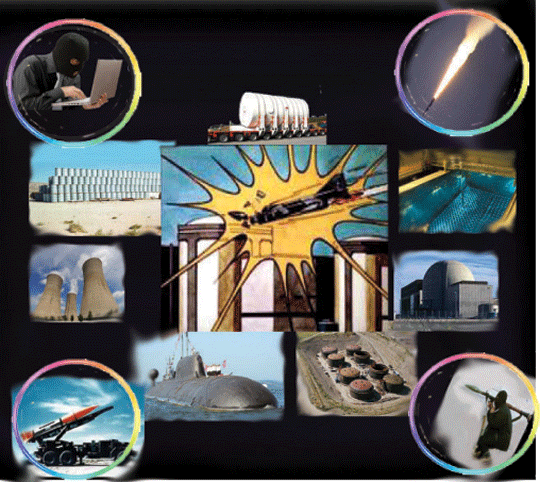
The Japanese authorities themselves recognized this linkage: “The accident revealed the possibility that terrorism at a nuclear facility may have the same serious effects on society [as a natural disaster].”[1] Indeed, Japanese nuclear security authorities now recognize not only that nuclear reactors and other nuclear facilities in which nuclear fuel or nuclear fuel materials are stored may be attacked, but that attacks also may target ancillary support systems such as power supply, and reactor core and spent fuel coolant supply, and that terrorists, including insiders, may attack at these points— with potentially the same devastating effect—or worse—than the earthquake and tsunami of March 11, 2011 had on the Fukushima plants.[2]
Post-Fukushima Response Continue reading
US Congress move to limit nuclear weapons spending is opposed by military officials
 DoD leaders push back against move to limit nuclear spending, Air Force Times, 24 Mar 15 Military officials are pushing back against a move on Capitol Hill to reduce funding for the nuclear mission, including provisions to delay the Air Force’s next-generation bomber and cancel the nuclear capability of the F-35.
Sen. Ed Markey, D-Mass., and Rep. Earl Blumenauer, D-Ore., on Monday introduced the Sane Approach to Nuclear Expenditures Act, which aims to cut $100 billion from the nation’s nuclear weapons budget. The measure would cut the B-61 gravity bomb development and cancel the development of an air-launched cruise missile, delay the long-range strike bomber development, cancel the F-35’s ability to carry a nuclear weapon and defer development of new intercontinental ballistic missiles for the Air Force. The bill would also cut the number of nuclear submarines and cancel the construction of nuclear weapons processing facilities.
“We are robbing America’s future to pay for unneeded weapons of the past,” Markey said in a statement. “As we debate the budget and Republicans rally around devastating cuts to Medicare, Head Start and investments in research and science, it makes no sense to fund a bloated nuclear arsenal that does nothing to keep our nation safe in the 21st century.”
Congress instead should work to find savings in existing programs and the Pentagon needs to aim for a one-third reduction in its deployed weapons, Blumenauer said…….
A major part of this [air force] plan is the long-range strike bomber, which is expected to enter service in the mid-2020s. The service expects to award a contract for engineering, manufacturing and development within the next several months, James said. The bomber is expected to replace the B-52, which will fly until 2040 when it hits about 80 years of service, and the B-2 Spirit. The goal is a fleet of 80 to 100 new bombers. http://www.airforcetimes.com/story/military/capitol-hill/2015/03/24/dod-leaders-oppose-nuclear-funding-restrictions/70387158/
Depleted uranium weapons used by Israel on Gaza Strip
 ISRAELI NUCLEAR WAR ON GAZA using Depleted Uranium weapons from USA NUCLEAR WAR ON THE WORLD, Beautiful Bloodless Revolution, by aRLeon, 25 Mar 15 Israel over the last 6 years during the 3 Gaza invasions of 2008-2009, 2012, and 2014 has dumped a huge amount of Depleted Uranium (DU) on the Palestinian territory of Gaza Strip. The 50 day 2014 operation dispersed the largest amount of DU by way of bunker buster bombs and other undisclosed DU armaments, such as DIME mini bomb-lets etc.
this surely is a nuclear war being used to genocide people worldwide by way of death by genetic alteration that is premeditated, deliberate and traceable to very many politicians, Generals , Bankers, and Philosophers.
The war is against all humanity as it destroys the Earths natural system that creates, supports, and sustains all biological life here on our only home , Earth……http://beautifulbloodlessrevolution.blogspot.com.au/
Tepco’s nuclear clean-up wasted $1.6 billion of tax-payers’ money
Japanese audit finds $1.6 billion wasted in Fukushima nuclear plant cleanup Fox News, 24 mar 15 TOKYO – Japanese government auditors say the operator of the Fukushima Dai-ichi nuclear plant has wasted more than a third of the 190 billion yen ($1.6 billion) in taxpayer money allocated for cleaning up the plant after it was destroyed by a March 2011 earthquake and tsunami.
A Board of Audit report describes various expensive machines and untested measures that ended in failure. It also says the cleanup work has been dominated by one group of Japanese utility, construction and electronics giants despite repeated calls for more transparency and greater access for international bidders……
 Some of the failures cited in the report:
FRENCH IMPORT: Among the costliest failures was a 32 billion yen ($270 million) machine made by French nuclear giant Areva SA to remove radioactive cesium from water leaking from the three wrecked reactors. The trouble-plagued machine lasted just three months and treated only 77,000 tons of water, a tiny fraction of the volume leaking every day. It has since been replaced with Japanese and American machines.
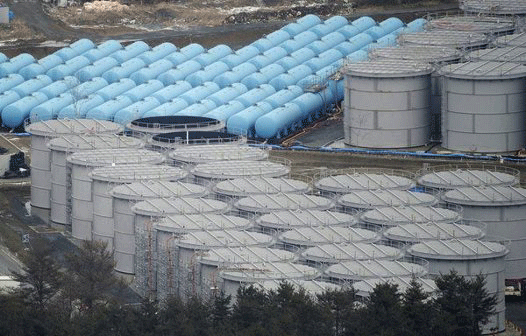 SHODDY TANKS: TEPCO hurriedly built dozens of storage tanks for the contaminated water at a cost of 16 billion yen ($134 million). The shoddy tanks, using rubber seals and assembled by unskilled workers, began leaking and some water seeped into the ground and then into the ocean. The tanks are now being replaced with more durable welded ones.
GIANT UNDERGROUND POOLS: A total of 2.1 billion yen ($18 million) was spent on seven huge underground pools built by Maeda Corp. to store the contaminated water. They leaked within weeks, and the water had to be transferred to steel tanks.
 UNFROZEN TRENCH: A 100 million yen ($840,000) project to contain highly contaminated water in a maintenance tunnel by freezing it failed because the water never completely froze. TEPCO subsidiary Tokyo Power Technology even threw in chunks of ice, but eventually had to pour in cement to seal the trench. http://www.foxnews.com/world/2015/03/24/japanese-audit-finds-millions-dollars-wasted-in-fukushima-nuclear-plant-cleanup/
USA wants new nuclear waste storage (doesn’t occur to them to stop making this trash)
 Under current law, the DOE is responsible for nuclear waste generated by electric utilities. The department has already paid out US$4 billion for failing to meet its obligation to remove waste that is now building up at nuclear power plants. It could be forced to shell out up to $23 billion more over the next 50 years if the issue isn’t resolved, Moniz said
US government seeks new sites for nuclear-waste storage Department of Energy pursues interim plan for commercial fuel and permanent location for defence waste. Nature Jeff Tollefson 24 March 2015 The US Energy Department will seek interim storage facilities for commercial nuclear waste and a permanent geologic repository for radioactive material from the country’s nuclear weapons programme, energy secretary Ernest Moniz said on 24 March. Continue reading
Copper Consultancy PR firm helps UK govt to undemocratic management of nuclear wastes
Whose idea was it to scrap democracy in order to dump nuclear wastes? https://mariannewildart.wordpress.com/2015/03/23/whose-idea-was-it-to-scrap-democracy-in-order-to-dump-nuclear-wastes/ Radiation Free Lakeland and others are asking: Just whose idea was it to plan to scrap democracy in order to dump nuclear wastes? Was the bright idea given to Government by the PR firm Copper Consulting?
Copper Consultancy a PR firm with offices in London, Bristol, Suffolk and most recently Cumbria, told the Department of Energy and Climate Change that: “allowing local authorities to determine the outcome of a process which is designed to deliver a national Government policy may not be the most appropriate route.” This piece of work is a response to Cumbria County Council and the majority of Parish Councils’ saying no to geological disposal of nuclear wastes.
In their blog Copper Consulting go on to say that: “local authorities are consultees rather than decision makers. The final 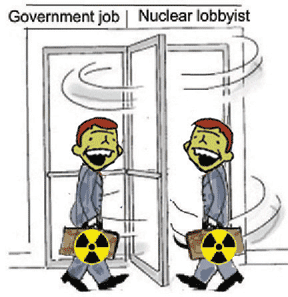 decision rests with the Planning Inspectorate and the Secretary of State. A logical conclusion might therefore be to classify the GDF as an NSIP”
There has always been a suspicion that nuclear is a PR strategy rather than an energy strategy, now we have proof. There is a revolving door between the NDA and Copper Consultancy a PR firm. Ivan Stone who was Executive Director of Copper Consultancy is now the Stakeholder Engagement and Communications Director – of the NDA/RWM (Radioactive Waste Management – a new arm of NDA) Copper Consultancy have also just been awarded the PR job of selling newnuclear build and new nuclear wastes at Moorside to the public. Continue reading
Russia’s economic woes delaying the build of nuclear reactors in Turkey
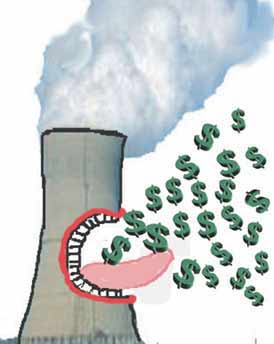 Russian Nuclear Plants in Turkey ‘Not Ready Before 2022’, Moscow Times Reuters Mar. 23 2015 Turkey’s first nuclear power plant is unlikely to be ready before 2022, energy officials said on Monday of the $20-billion project that has been beset by regulatory hurdles and complicated by Russia’s financial woes…..Rosatom initially pledged to have the first of the four reactors in the southern Turkish town of Akkuyu ready by 2019.
A senior Turkish energy official said the project would not be online before at least 2022, given that ground-breaking has yet to happen. “The first reactor can be online at least seven years after the ground-breaking so the 2019-2020 date is impossible,” the official said…..
-
 Economic Worries
Analysts say Russia’s economic troubles because of collapsing oil prices and Western sanctions over Ukraine may also have weighed on Rosatom’s finances.
“The Akkuyu timeline was — and remains — completely unrealistic,” Aaron Stein, associate fellow at British defense and security think-tank the Royal United Services Institute (RUSI), said. “The issue has, in recent months, become far more complicated because of Russia’s economic deterioration.”……http://www.themoscowtimes.com/opinion/business/article/russian-nuclear-plants-in-turkey-not-ready-before-2022/517868.html
Perilous risks to Ukraine’s nuclear power plants in escalating war
Note that the Zaporizhia nuclear power plant is just to the west of the present combat zone in the eastern region of the Ukraine, and not far north of the Crimea, which is now part of the Russian Federation. It is the largest nuclear power plant in Europe and the fifth largest in the world. It is also right on the banks of the Dnieper River, which empties into the Black Sea, which in turn empties into the Mediterranean Sea. Failure of the Zaporizhia nuclear power plant will massively radioactively contaminate the Dnieper River, which will then flow into the Black Sea and radioactively contaminate the Black Sea, which then flows into the Mediterranean Sea, etc. You see the problem.

Just northeast of Odessa is another, the South Ukraine nuclear power plant.
Many armchair analysts, including commentators such as Paul Craig Roberts, have publicly advocated, or come very close to doing so, that Vladimir Putin send his military racing across the eastern and southern regions of Ukraine, in a blitzkrieg from the Russian border all the way toTransnistria, on the border between Moldova and the Ukraine, in order to incorporate that swath of territory into the Russian Federation, and present NATO and the regime in Kiev with a military fait accompli.
In my view, Putin has not done that because no military operation is ever as simple as it appears on paper; what can go wrong frequently does go wrong. And there are always unexpected complications.
Financially in trouble AREVA is nevertheless advising on marketing Small Modular Nuclear Reactors
NuScale hires an energy giant to help get its nuclear plant certified Feb 17, 2015, Wendy CulverwellStaff Reporter-Portland Business Journal Portland-based NuScale Power has entered an agreement with AREVA to support testing and design of its nuclear power system as it prepares to submit a Design Certification Application to the U.S. Nuclear Regulatory Agency….The agreement gives NuScale access to AREVA’s fuel technology as well as its nuclear testing capabilities…..
NuScale Power is developing a small, modular nuclear power system that is built under factory conditions and deployed to a client’s site….
It expects to submit the document by late 2016 and to secure approval in time for a 2020 commercial launch…..

Fluor Corp. (NYSE: FLR) is its majority investor.http://www.bizjournals.com/portland/blog/sbo/2015/02/nuscale-hires-an-energy-giant-to-help-get-its.htm
NusCale company pushing for NRC approval to commercialise Small Modular Nuclear Recators
 Oregon’s nuclear startup adds execs to prepare for regulatory push Portland Business Journal
NuScale, which is looking to make a small-scale nuclear power plant, wants the NRC to allow for full commercialization of its nuclear power technology…….
NuScale is backed by Fluor Corp. (NYSE: FLR) and U.S. Department of Energy grants. It has more than 600 employees and is working to develop its factory-built nuclear power system, which will be submitted to government regulators for approval in 2016. Its system consists of modules each producing 50 megawatts of electricity.
It expects to deploy the first working model to a coalition of Western states that will station a power plant in Idaho, possibly near the Idaho National Energy Laboratory.http://www.bizjournals.com/portland/blog/sbo/2015/03/oregons-nuclear-startup-adds-execs-to-prepare-for.html
Jordan commits to buying nuclear fuel from Russia for 10 years, in $10 Billion Deal on Nuclear Power Plant
 Jordan, Russia Sign $10 Billion Deal on Nuclear Power Plant, abc news AMMAN, Jordan — Mar 24, 2015, By SAM McNEIL Associated Press Jordan signed a $10 billion deal with Russia on Tuesday to build the kingdom’s first nuclear power plant, with two 1,000-megawatt reactors in the country’s north.
The deal, signed in the Jordanian capital, Amman, with Russia’s state-owned Rosatom company caps efforts of the energy-poor kingdom to increase energy sufficiency and reduce imports……
Under the deal, Jordan must buy fuel from Rosatom for the reactors for 10 years, after which it may seek other suppliers. The Jordanian government will have a slight majority ownership, with Rosatom owning 49 pecent of the plant, according to the Jordan Times.
Earlier this year, Rosatom signed an agreement, the details of which are secret, to build two reactors in Hungary. And last month, during Russian President Vladimir Putin’s visit to Egypt, the two countries signed a memorandum of understanding to build Egypt’s first nuclear power plant at an existing nuclear site in Dabaa, on the Mediterranean coast where a research reactor has stood for years. http://abcnews.go.com/International/wireStory/jordan-russia-sign-10-billion-deal-nuclear-reactors-29874766
Global nuclear power industry caught in a web of uncertainties
Nuclear terrorism risks in Northeast Asia: Japan’s reactor restart and spent fuel Nautilus Peace and Security NAPS Net Special Report by Peter Hayes 23 March 2015 “…….the nuclear power industry itself is snared in a web of interdependent uncertainties. These include:
- a) How many light water reactors will be restarted and when, and relatedly, will authorities allow reactor operating life to be extended beyond forty years, and will new reactor construction be allowed?
- b) Will reprocessing continue to separate plutonium?
- c) When will the Japanese Mixed Oxide (MOx) fuel fabrication plant be complete?
- d) What level of excess separated plutonium is acceptable domestically and internationally?
- e) Will the breeder reactor be reactivated and if so, for what purpose?
- f) Will uranium-235 recovered from spent fuel be recycled (affecting the already dismal economics of Japan’s enrichment program); and
- g) Will another massive unanticipated nuclear accident in Japan or elsewhere occur? Even ardent pro-nuclear advocates admit that such an event likely would end the use of nuclear power in Japan.[12]
With such massive uncertainty affecting each of these linked variables, any one of which can serve as a binding constraint on the others, the key actors in the Japanese nuclear power sector are unable to make strategic decisions and as a consequence are in a holding pattern until political waters clarify.
Consequently, to the outsider, the safety and security of spent fuel pools in Japan remains unsatisfactory. It is even unclear whether the leadership of the Japanese nuclear power sector recognizes that the risk of loss of coolant arising from malevolent attack exists for spent fuel pools.[13] However, the choices that Japan makes with regard to light water reactor (LWR) restart, reprocessing, the recycling of plutonium (Pu) through the production and use in LWRs of MOx fuel, the eventual use of fast reactors for actinide disposal, the future development of a plutonium-breeding fast reactor, and Japan’s enrichment activities, are all linked directly to the issue of nuclear terrorism and the risk of diversion of spent fuel and separated plutonium. In turn, choices made in each of these fuel cycle activities will determine how spent fuel is managed in Japan, starting with the management of spent fuel pools. Continue reading
France’s law on green or solar roofs for new commercial buildings
FRENCH LAW TO REQUIRE GREEN ROOFS OR SOLAR PANELS ON NEW COMMERCIAL BUILDINGS, ecosalon, by Sara Novak on March 24, 2015 France just passed a new law that will require all new buildings in commercial zones to be covered with green roofs or solar panels.
Environmental groups hope to reduce the energy costs of commercial buildings while creating an urban jungle in the world’s most beloved city of progress…..The law will change the face of the urban landscape in France by promoting more urban greenery.

While solar panels have an obvious purpose, the benefits of green roofsare less well known. Not only do they beautify buildings and create space for community gardens, they have a number of other environmental benefits.
In the summer, green roofs retain 70 to 90 percent of precipitation and in the winter they retain 25 to 40 percent of precipitation. This reduces runoff and decreases the stress on sewer systems. The daily dew and evaporation cycle along with the light absorbed by vegetation, help to cool buildings down. Green roofs also reduce smog by slowing the distribution of dust and particulate matter……..
The combination of solar panels and green roofs create dual environmental tools. Both help reduce the power demands on the national grid, especially when temperatures peak in the summer time.
Green roofs are popular in Germany, Australia, and parts of Canada. Since 2009, Toronto has had a similar mandatory law for green roofs on commercial buildings. But they’re also gaining traction in the U.S. New York City leads the pack in green roofs and it’s home to the largest roof top garden in the country. James Farley Post Office is topped with a greening system that saves the massive post office $30,000 per year in energy costs. Chicago, Washington, D.C., and Portland are all home to a number of green roofs.http://ecosalon.com/french-law-to-require-green-roofs-or-solar-panels-on-new-commercial-buildings/
Significant actions by President Obama to address climate change
 The Emergence and Importance of President Obama’s Climate Policy, Huffington Post
…federal agencies over the next decade to cut their emissions by an average of 40 percent compared with their levels when he won office in 2008, and to increase their use of electricity from renewable sources by 30 percent.
This move is wholly within the president’s power as the nation’s chief executive and will have a significant impact on the market for energy efficiency and renewable energy goods and services. The federal government is the nation’s largest organization. It employs more people and buys more goods and services than anyone else. It is also a powerful role model for the private sector. As Ms. Davis observes:
…because the federal government is the largest user of energy in the United States economy — encompassing 360,000 buildings, 650,000 fleet vehicles and $445 billion in annual spending on goods and services — it has the potential to influence private companies to step up their emissions-cutting targets.
When coupled with EPA’s slow and steady progress to regulate greenhouse gas emissions under the Clean Air Act, this change in government’s own operations begins to resemble a meaningful federal climate policy………http://www.huffingtonpost.com/steven-cohen/the-emergence-and-importa_b_6922614.html?utm_hp_ref=green
New book on hydrogen bombs – author defies USA govt attempts to censor
Feds Attempt To Censor Parts of a New Book About the Hydrogen Bomb HughPickens.com writes:http://slashdot.org/ 24 Mar 15, The atom bomb — leveler of Hiroshima and instant killer of some 80,000 people — is just a pale cousin compared to the hydrogen bomb, which easily packs the punch of a thousand Hiroshimas. That is why Washington has for decades done everything in its power to keep the details of its design out of the public domain. Now William J. Broad reports in the NY Times that Kenneth W. Ford has defied a federal order to cut material from his new book that the government says teems with thermonuclear secrets. Ford says he included the disputed material because it had already been disclosed elsewhere and helped him paint a fuller picture of an important chapter of American history. But after he volunteered the manuscript for a security review, federal officials told him to remove about 10 percent of the text, or roughly 5,000 words. “They wanted to eviscerate the book,” says Ford. “My first thought was, ‘This is so ridiculous I won’t even respond.'” For instance, the federal agency wanted him to strike a reference to the size of the first hydrogen test device — its base was seven feet wide and 20 feet high. Dr. Ford responded that public photographs of the device, with men, jeeps and a forklift nearby, gave a scale of comparison that clearly revealed its overall dimensions.
1 This Month



Tell the Ukrainian Government to Drop Prosecution of Peace Activist Yurii Sheliazhenko

Petition to revoke the licensing of the Near Surface Nuclear Disposal Facility (NSDF) at Chalk River. https://www.ourcommons.ca/petitions/en/Petition/Details?Petition=e-7247


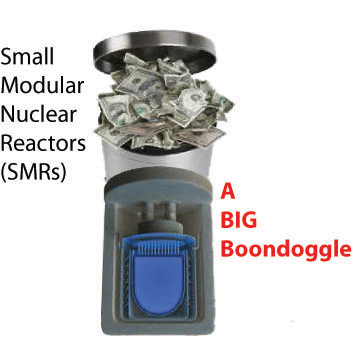
of the week – STOP SMALL MODULAR REACTORS IN CANADA
To see nuclear-related stories in greater depth and intensity – go to https://nuclearinformation.wordpress.com
-
Archives
- March 2026 (222)
- February 2026 (268)
- January 2026 (308)
- December 2025 (358)
- November 2025 (359)
- October 2025 (376)
- September 2025 (258)
- August 2025 (319)
- July 2025 (230)
- June 2025 (348)
- May 2025 (261)
- April 2025 (305)
-
Categories
- 1
- 1 NUCLEAR ISSUES
- business and costs
- climate change
- culture and arts
- ENERGY
- environment
- health
- history
- indigenous issues
- Legal
- marketing of nuclear
- media
- opposition to nuclear
- PERSONAL STORIES
- politics
- politics international
- Religion and ethics
- safety
- secrets,lies and civil liberties
- spinbuster
- technology
- Uranium
- wastes
- weapons and war
- Women
- 2 WORLD
- ACTION
- AFRICA
- Atrocities
- AUSTRALIA
- Christina's notes
- Christina's themes
- culture and arts
- Events
- Fuk 2022
- Fuk 2023
- Fukushima 2017
- Fukushima 2018
- fukushima 2019
- Fukushima 2020
- Fukushima 2021
- general
- global warming
- Humour (God we need it)
- Nuclear
- RARE EARTHS
- Reference
- resources – print
- Resources -audiovicual
- Weekly Newsletter
- World
- World Nuclear
- YouTube
-
RSS
Entries RSS
Comments RSS
 nuclear-news