North Korea claims to be nuclear missile ready
North Korea says can fire nuclear missile at ‘any time’ (Reuters) 19 Mar 15 – North Korea has the ability to fire a nuclear weapon and would use a nuclear missile in retaliation if it is attacked, the country’s ambassador to Britain told Sky News on Friday.
“It is not the United States that has a monopoly on nuclear weapons strikes,” Ambassador Hyun Hak-bong told Sky at the isolated Asian country’s London embassy.
Asked if that meant North Korea, which quit the nuclear Non-Proliferation Treaty in 1993, had the capability to fire a nuclear missile now, he replied: “Any time, any time, yes.”
“If the United States strike us, we should strike back. We are ready for conventional war with conventional war, we are ready for nuclear war with nuclear war. We do not want war but we are not afraid of war,” he added.
In a speech on March 3, North Korean Foreign Minister Ri Su Yong said his country had the power to deter an “ever-increasing nuclear threat” by the United States with a pre-emptive strike if necessary.
He also denounced military exercises staged by South Korea and the United States as provocative. The United States has said it is seriously concerned about North Korea’s nuclear work, which it says breaches international agreements.
North Korea has conducted three nuclear detonations, the most recent in February 2013, and the commander of U.S. forces in South Korea said in October he believed Pyongyang had the capability to build a nuclear warhead that can be mounted on a ballistic missile, although there had been no tests or other evidence to show it had taken that step. http://www.reuters.com/article/2015/03/20/us-northkorea-crisis-idUSKBN0MG26Q20150320
Over 70 experts produce report showing Canada can have100% renewable energy
Complete shift to renewable energy within Canada’s reach, academics say IVAN SEMENIUK AND SHAWN MCCARTHY TORONTO and OTTAWA — The Globe and Mail, Mar. 18 2015, Canada could shift entirely to renewable sources of electricity by 2035 and eliminate 80 per cent of its greenhouse gas emissions by mid-century, says a group of Canadian academics that is aiming to spur government action on climate change.
To get there, they recommend a national carbon-pricing plan, and greater effort to move electricity produced from low-carbon sources such as hydro dams across provincial borders.
In a 56-page policy document scheduled for release on Wednesday, more than 70 scientists, engineers and economists say Canada is in a more favourable position than most countries for a switch to renewable power, including large-scale hydroelectric. The most significant barrier is not technical or economic, but a lack of political will, they said.
The report says 77 per cent of Canada’s electricity is already produced without burning fossil fuels, and it has many sources of renewable energy.
“This is within reach. We could be the world leader … that’s a very important message for Canadians to understand,” said Catherine Potvin, an ecologist and Canada Research Chair in climate change mitigation at McGill University, who led the writing of the document.
The plan includes improvements to the east-west electrical grid so that energy that is produced where hydroelectric sources are abundant, such as Quebec, Labrador, British Columbia and northern Manitoba, to supply the rest of the country more efficiently.
Topping the list of policy recommendations is a move that would be anathema to Prime Minister Stephen Harper: a national program that would put a price on emitting carbon, either through a tax or a cap-and-trade system……..http://www.theglobeandmail.com/news/politics/complete-shift-to-renewable-energy-within-canadas-reach-academics-say/article23513579/
Safety is unaffordable to the nuclear industry
Nuclear Industry CAN’T AFFORD SAFETY [good illustrations) https://tekknorg.wordpress.com/2015/03/19/nuclear-industry-cant-afford-safety/March 19, 2015 by Mikkai
Japan – March 12th 2015: Four utilities to decommission five aging nuclear reactors:http://ajw.asahi.com/article/0311disaster/fukushima/AJ201503120041
2012: Japan shuts down last working nuclear reactor:http://www.theguardian.com/world/2012/may/05/japan-shuts-down-last-nuclear-reactor
It is still the biggest success against the Nuke Industry in human history:
ALL Japanese reactors are down or exploded:
WHAT IS SAFETY in Nuclear Terms?
All ratepayers are helped by solar rooftops
Rooftop solar benefits all ratepayers http://safeenergy.org/2015/03/18/rooftop-solar-benefits-all-ratepayers/ Michael Mariotte The utility and fossil-fuel industries continue to spread a crude canard against the growing popularity of rooftop solar across America.
The lie goes something like this: Households and business that install photovoltaic panels are doing so at the expense of other electricity ratepayers because they are “subsidized” by those that don’t have solar panels.
The truth is this: Rooftop solar provides substantial benefits for everyone, regardless of who installs it. It helps power the homes and shops that adopt it, to be sure, but it has far-reaching benefits for other customers as well. If Jane Doe in Anywhere, USA, puts a solar panel on her roof, every other electricity ratepayer within the footprint of whatever regional grid Jane Doe is tied into will benefit as well.
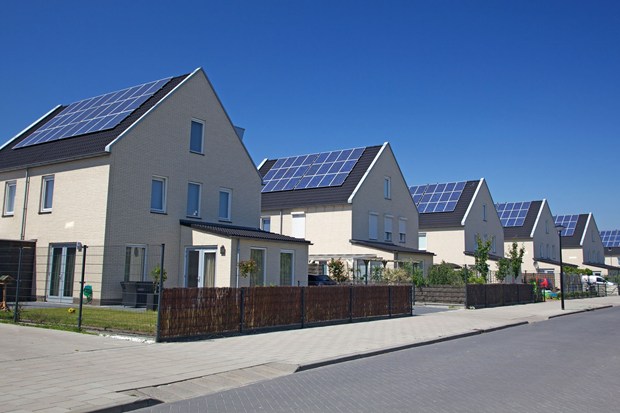
Honest purveyors of utility-industry fact know this, of course, and say it quite often. So, more and more, does Wall Street.No less a titan than Sanford Burstein & Co., one of the perennially best-rated firms in Institutional Investor’s annual rankings of investment researchers, has studied the issue deeply over the past couple of years and comes away with an unequivocal take on the issue: Rooftop solar, aka photovoltaic solar, means lower peak-hour energy prices for all.
Bernstein lays out the supporting research in a reported published last month that found that the rapid increase in the amount of solar PV available on the electricity grid in California—a seven-fold expansion in only four years, from 0.7 gigawatts in 2010 to 4.8 GW in 2014— had helped reduce system loads so much that peak prices were put off until later in the day, when demand was lower. Lower demand means lower prices.
That report went on to predict that the effect will be amplified inevitably across the state as growth in solar capacity continues. This will probably reduce the value of incremental additions of solar capacity on the California grid, but that’s not the point. The overarching conclusion is that all power consumers in California benefit from lower afternoon power prices, not just those that have rooftop solar PV panels.
The February report builds on earlier important work by Burstein & Co, notably a report the firm distributed to clients in November 2013. Titled “Tilting at Windmills: How Conventional Generators are Losing the Battle with Renewables,” that research found that the rapid growth of solar and wind resources (rooftop solar included) in four of the nation’s major electricity regions had suppressed the output of conventional coal and natural-gas fired generators. That’s good news because the trend also eroded the price at which the output of those conventional generators could be sold. Solar- and wind- powered electricity, in other words, drove market prices down.
This happened—and continues to happen—because renewable resources, which have zero variable costs, have displaced higher-cost conventional generation, lowering the marginal cost of supplying power competitively in wholesale markets or in states that do not regulate the retail price of electricity.
That particular Bernstein & Co. research also noted that by suppressing the output of conventional power plants, solar and wind generation had reduced demand for coal and natural gas. The firm estimated that some 52 million megawatt-hours of coal-fired generation and 42 million megawatt-hours of gas-fired generation was displaced in 2012 alone by wind and solar resources in the four regions it studied. This translates into a reduction of “coal burn” by approximately 30 million tons and “gas burn” by approximately .07 billion cubic feet/day. Bernstein & Co. also said this trend will continue too.
But back to rooftop solar for a second. In addition to driving energy market prices down, it brings environmental benefits by reducing dependence on fossil fuels, and it acts as a hedge against fossil-fuel price spikes.
It’s in every ratepayer’s best interest. And that’s the truth.
Karl Cates is IEEFA’s director of media relations; David Schlissel is IEEFA’s director of resource planning analysis.
The original post on IEEFA’s website is here. http://ieefa.org/truth-rooftop-solar-capacity-benefits-all-ratepayers/
Security risks in Pakistan’s Tactical Nuclear Weapons programme
Pakistan’s Nuclear programme prone to security risks: US Report By Manu Pubby, ET Bureau | 21 Mar, 2015 NEW DELHI: A report on Pakistan’s tactical nuclear programme by a prominent Washington-based think tank raises questions on the country’s ability to secure warheads even in peacetime, concluding that the introduction of mini nuclear weapons in the subcontinent has substantially increased the risk of a confrontation with India getting out of hand.
100% renewable energy powered Costa Rica for first 75 days of 2015
Costa Rica powered 100% by renewables for first 75 days of 2015 http://reneweconomy.com.au/2015/costa-rica-powered-100-by-renewables-for-first-75-days-of-2015 By Sophie Vorrath on 19 March 2015 The Latin American country of Costa Rica has achieved the milestone of generating 100 per cent of its energy from renewable resources, with a combination of hydropower and geothermal for 75 days in a row, the the state-owned Costa Rican Electricity Institute (ICE) said.
Boosted by good rains at four of he country’s main hydroelectric plants, ICE said that, according to National Electric System figures, it had not been necessary to use hydrocarbons to supply the country’s grid at all in 2015, for the months of January, February and so far in March.
“With these (rain) conditions and the reserves accumulated to date, the ICE estimates that the downward trend in rates for all consumers will continue in the second quarter,” the power agency was quoted as saying in the Latin American Herald Tribune.
Of course, Costa Rica already has an outstanding record on efficient, clean and cheap electricity generation, ranking No. 2 in Latin America for providing a household coverage rate of 99.4 per cent at some of the region’s lowest prices.
According to the transnational institute, 250kWh would be enough satisfy the monthly needs of low- and middle-income Costa Rican households, at a cost of around 7 per cent of the minimum salary.
And their record on renewables is very good too. The country generated as much as 80 per cent of its electricity from hydro power as recently as last year – although recent droughts had led to the back-up use of diesel fuel.
And in 2010 it was reported that about 13 per cent of the Latin American nation’s energy came from geothermal.
Now, Costa Rica is in the process of adding several big new geothermal plants, after a $US958 million proposal was approved by the government in mid-2014.
The project, which is being co-funded by the Japanese International Cooperation Agency and the European Investment Bank, is expected to be located in Guanacaste near Rincón de la Vieja.
The first plants are expected to generate about 55MW and cost around $333 million to build. Two other 50MW plants will be built as well, about 40km from the Pailas II plants.
Once operational, it is expected the plants could generate electricity at about five cents per kilowatt-hour.
Utilities in USA finding it uneconomic to extend life of nuclear reactors beyond 60 years
Senator: Utilities see little value in extending nukes beyond 60 years SNL, By Matthew Bandyk 5 Mar 15 High-level energy company executives have told Sen. Lamar Alexander, R-Tenn., that they will not ask federal regulators for permission to extend the operation of many of their nuclear power reactors beyond 60 years of operation, the senator said at a March 4 hearing that scrutinized the U.S. Nuclear Regulatory Commission’s $1.03 billion budget request for fiscal year 2016.
While he did not name names, Alexander said that in private conversations, company executives have indicated that in many cases it might not make economic sense to pay for all the upgrades that the NRC would require if a nuclear plant wanted a 20-year license extension to run for 80 years. While about 75 of the 99 operating reactors in the U.S. have received license extensions to stay online for up to 60 years, no plant has yet asked to be licensed beyond that period, creating fears among the industry and outspoken nuclear proponents such as Alexander that after the next decade the amount of nuclear capacity will fall off a cliff as plants start to hit their 60-year lifespans and retire…….
“Big utility operators tell me they are not even thinking about asking for extensions of time that their reactors will stay online … because it’s not economic to operate them,” he also said…..
The NRC’s fiscal-year 2016 budget request is down $27.3 million compared to the proposal in fiscal year 2015, reflecting a decrease of about 140 full-time employees due to decreased workload in the offices of New Reactors and Fuel Facilities, according to a statement from the NRC…….https://www.snl.com/InteractiveX/Article.aspx?cdid=A-31556548-11565
1 This Month


10 March A LIVE WEBINAR THE REAL EFFECTS OF NUCLEAR POWER
What the Industry Isn’t Telling Us
1:00 PM Mountain, 2 pm Central, 3 pm Eastern. Live on the Keepers of the Water Facebook page

18 March Webinar @ 1 PM EST: An Assessment of SMR Projects: The Case of Canada
register for the zoom:
https://us02web.zoom.us/webinar/register/WN_o8BIIOUvQ2ONJR1nta65DQ#/registration


of the week – STOP SMALL MODULAR REACTORS IN CANADA
To see nuclear-related stories in greater depth and intensity – go to https://nuclearinformation.wordpress.com
-
Archives
- March 2026 (62)
- February 2026 (268)
- January 2026 (308)
- December 2025 (358)
- November 2025 (359)
- October 2025 (376)
- September 2025 (258)
- August 2025 (319)
- July 2025 (230)
- June 2025 (348)
- May 2025 (261)
- April 2025 (305)
-
Categories
- 1
- 1 NUCLEAR ISSUES
- business and costs
- climate change
- culture and arts
- ENERGY
- environment
- health
- history
- indigenous issues
- Legal
- marketing of nuclear
- media
- opposition to nuclear
- PERSONAL STORIES
- politics
- politics international
- Religion and ethics
- safety
- secrets,lies and civil liberties
- spinbuster
- technology
- Uranium
- wastes
- weapons and war
- Women
- 2 WORLD
- ACTION
- AFRICA
- Atrocities
- AUSTRALIA
- Christina's notes
- Christina's themes
- culture and arts
- Events
- Fuk 2022
- Fuk 2023
- Fukushima 2017
- Fukushima 2018
- fukushima 2019
- Fukushima 2020
- Fukushima 2021
- general
- global warming
- Humour (God we need it)
- Nuclear
- RARE EARTHS
- Reference
- resources – print
- Resources -audiovicual
- Weekly Newsletter
- World
- World Nuclear
- YouTube
-
RSS
Entries RSS
Comments RSS
 nuclear-news