In Japan, the “nuclear village” , like USA’s “military industrial complex” allows TEPCO to go unscathed
How does Tepco get away with it? It’s protected from on high by the “nuclear village,” Tokyo’s answer to the military-industrial complex that is said to hold sway in Washington.
This alliance of pro-nuclear politicians, bureaucrats and power companies promotes reactors over safer forms of energy like solar, wind or geothermal, and works to shield utilities from competition and global standards.

It’s Time for Japan to Punish Tepco, Bloomberg 18 MAR 10, 2015 By William Pesek Fishermen trawling the waters off Japan’s eastern coast have been alleging for a while that radioactive water was again spilling into the Pacific from the Fukushima power plant that melted down after a massive earthquake in 2011. On Feb. 24, Tokyo Electric Power Co., which is responsible for the site, admitted those suspicions were justified. And it turns out that Tepco knew about this latest radioactive leak since last May — and the giant utility said nothing for almost a year.
In the 15 days since Tepco finally confessed, have investigators raided its Tokyo headquarters? Have regulators demanded that heads roll? Has Prime Minister Shinzo Abe used his bully pulpit to demand accountability from the company that gave the world its worst nuclear crisis since Chernobyl? In any other major democracy, those steps would have been obvious. But none have occurred in Japan. And that raises troubling questions not just about Tepco’s corporate governance, but the rampant cronyism enabling it. Continue reading
Anti nuclear protest: 45,000 people march in Taiwan
45,000 people join anti-nuclear rallies in Taiwan, Straits Times, MAR 14, 2015 TAIPEI (AFP) – Thousands of people took to the streets in Taiwan on Saturday to call for the island to scrap its use of nuclear energy and to voice opposition to controversial plans to ship nuclear waste abroad, organisers said.
Protesters in central Taipei waved placards and dressed in T-shirts emblazoned with slogans including “Goodbye to nuclear energy” and “We don’t need nuclear power”, just days after Japan marked the fourth anniversary of an undersea earthquake which triggered a massive tsunami and nuclear disaster.
Taiwan’s government has faced growing public pressure over its unpopular nuclear energy facilities……….
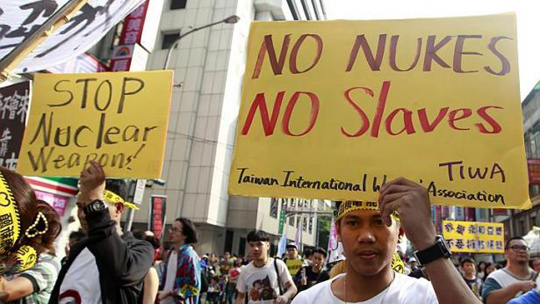
We urge the government to reform its energy policy and focus on green energy and saving energy,” said one of the rally’s organisers Tsui Shu-hsin.
“Politicians should listen to the voices of the people… so Taiwan can become nuclear-free.” The government says that Taiwan will run out of energy if it ditches nuclear power, which currently supplies about 20 per cent of the island’s electricity.
The Taipei rally drew around 30,000 people, while two other rallies held simultaneously across the island had a combined turnout of 15,000, according to estimates by organisers. Police estimates were not immediately available.
Organisers were also collecting signatures in a bid to stop a plan by the state-run Taiwan Power Co to process its nuclear waste abroad, which they said was aimed at extending the operations of two plants which are approaching capacity.
The plants, which currently store the spent fuel rods, were launched in 1978 and 1981 and will each be decommissioned once they have been operational for 40 years.
“Taiwan is earthquake-prone like Japan and it is smaller so nuclear facilities are much closer to our homes,” said Wu Bor-chyun, a banker who was living in Japan at the time of the 2011 nuclear accident.
“Nuclear power is not safe and it is very costly. Taiwan should heed the lessons in Japan.”http://www.straitstimes.com/news/asia/east-asia/story/45000-people-join-anti-nuclear-rallies-taiwan-20150314#sthash.Y0GCWbnB.dpuf
US Congress is urged not to sabotage Iran nuclear negotiations

 Iran nuclear talks: White House urges Congress to stand down, Guardian, Paul Lewis in Washington and Julian Borger in Lausanne, 16 Mar 15 Obama administration warns Republicans could ‘potentially prevent’ deal that has been years in the making and damage relations with allies across the world. The White House has warned that Republicans in Congress could “potentially prevent” a groundbreaking deal to stop Iran from obtaining a nuclear weapon, scuppering an agreement that has been years in the making and damaging relations with allies across the world.
Hours before talks were due to resume in Switzerland on Sunday, White House chief of staff Denis McDonough sent a letter to a senior Republican critic, urging him to shelve legislation that would clip the administration’s wings.
Bob Corker, chairman of the Senate foreign relations committee, is bringing a bill that would require Congress to vote on any deal with Iran and remove the waiver authority that allows President Barack Obama to suspend sanctions imposed by the legislature.
“The legislation would potentially prevent any deal from succeeding by suggesting that Congress must vote to ‘approve’ any deal, and by removing any existing sanctions waver authorities that have already been granted to the president,” McDonough said.
“We believe the legislation would likely have a profoundly negative impact on the ongoing negotiations – emboldening Iranian hardliners.”
Calling on Corker to hold off the bill until a deal is reached, McDonough also warned that if the US was blamed for negotiations falling apart, Washington would be unable to muster the international support needed to ratchet-up sanctions on Tehran.
“Put simply, it would potentially make it impossible to secure international cooperation for additional sanctions, while putting at risk the existing multilateral sanctions regime,” he said…….
A framework agreement between the international powers and Iran is supposed to set out the key element of a deal in which Iran accepts limits of its nuclear activities for a number of years (expected to be at least 10) in return for sanctions relief. The negotiators would then have until the end of June to complete detailed annexes on how the deal would be implemented and verified.
With days to go until the deadline for a framework deal, there are still said to be gaps remaining on the central issues of Iran’s future uranium enrichment capacity and the question of which sanctions will be lifted and when. Diplomats from all sides have voiced readiness to stay in Lausanne through the Persian New Year holiday, Nowruz, which begins next weekend, but western negotiators are reluctant to push the first deadline beyond the end of the month.
“We believe very much that there’s not anything that’s going to change in April or May or June that suggests that at that time a decision you can’t make now will be made then,” Kerry told CBS News before arriving in Lausanne.
“If it’s peaceful, let’s get it done. And my hope is that in the next days that will be possible.” http://www.theguardian.com/world/2015/mar/15/iran-nuclear-talks-white-house-warns-congress-stand-down
Fish and wild foods still showing radioactivity in Fukushima area
The decline in contamination has been very slow among bottom fish, including karei flat fish and ainame greenling caught off Fukushima. The same is true of freshwater fish, including iwana, caught from rivers, lakes and ponds in Fukushima, Miyagi, Tochigi, Gunma and Chiba prefectures.
As for mushrooms and wild vegetables, samples from 11 prefectures, including Fukushima, Yamanashi, Nagano and Shizuoka, exceeded the threshold between April 1 last year and March 1, according to the data.
Produce worries easing but some fish, wild foods still a problem in wake of Fukushima meltdowns, Japan Times BY MIZUHO AOKI STAFF WRITER MAR 12, 2015 The public panic over the threat of radioactive food has subsided in the four years since the Fukushima No. 1 nuclear power plant experienced three reactor core meltdowns and spewed massive amounts of fallout, but worries persist.
Seikatsu Club, a mail-order food delivery co-op, maintains an online database that includes more than 700,000 results of radiation tests on food items. Page views have fallen to about one-tenth of their peak in 2012, said Hiroshi Tsuchida, a quality management division chief with the co-op, but there are people who still visit the site almost daily.
“For such members, we are continuing testing and disclosing all the data on our website,” Tsuchida told The Japan Times. “In Ukraine, there are screening devices at markets where people check food even today, nearly 30 years since the (start of the Chernobyl) nuclear disaster. I believe we should do the same.”
Despite the lingering fears, however, overall contamination levels of farm produce and seafood from Fukushima and neighboring prefectures have declined significantly……..
But concern remains over fish, wild vegetables and wild game. Between April 1 last year and March 1, around 292,000 such samples were tested for radioactive cesium and 502, or 0.17 percent, exceeded the safe threshold, the health ministry said. In fiscal 2012, that ratio stood at 0.85 percent. Continue reading
In just one year, Sellafield nuclear clean-up bill jumps an extra £5bn
Cost of nuclear clean up at Sellafield increased an extra £5bn in the past year Chronicle Live UK By Will Metcalfe 15 Mar 15 The Nuclear Decommissioning Authority has been slammed by MPs for the ever-increasing costs at the site in Cumbria Constantly increasing costs for the clean up of Sellafield are Britain’s bill for the Cold War, an MP has claimed.
This week MPs launched a fresh attack against the rising cost and delays of decommissioning and cleaning up the Sellafield nuclear site.
Leading figures from the nuclear industry were questioned by the Public Accounts Committee following the revelation that the expected costs have increased by £5 billion in a year, to £53 billion.
In a recent progress report on the work, the National Audit Office (NAO) criticised the Nuclear Decommissioning Authority (NDA), which oversees the plant, for delays in cancelling a clean-up contract with the consortium Nuclear Management Partners (NMP) after demands from MPs a year ago to do so.
The report said the contract was terminated only last month, at a cost to the taxpayer of £430,000 in cancellation fees.
- The site is used to store nuclear material from across the UK and was the host of a facility which secretly produced nuclear materials for the UK’s defence programme during the Cold War which was finally demolished in 2014……..
Labour MP Margaret Hodge, who chairs the committee, described the rise as “astonishing” and repeated her criticism during a hearing on Wednesday.
Delays had increased by 86 months since September 2013, while costs were going up by billions of pounds, she said…..
She said she was struck by the “unpredictable massive burden on future generations”, telling the nuclear industry officials it was a good idea to have strong targets and ambitions……..http://www.chroniclelive.co.uk/news/north-east-news/cost-nuclear-clean-up-sellafield-8838478
IAE finds that renewable energy and efficiency are significantly reducing greenhouse gas emissions
Renewable energy sources really making a difference! http://www.enn.com/business/article/48343 Global emissions of carbon dioxide from the energy sector stalled in 2014, marking the first time in 40 years in which there was a halt or reduction in emissions of the greenhouse gas that was not tied to an economic downturn, according to new data from the International Energy Agency (IEA).
“This gives me even more hope that humankind will be able to work together to combat climatechange, the most important threat facing us today,” said IEA Chief Economist Fatih Birol, recently named to take over from Maria van der Hoeven as the next IEA Executive Director.
Global emissions of carbon dioxide stood at 32.3 billion tonnes in 2014, unchanged from the preceding year. The preliminary IEA data suggest that efforts to mitigate climate change may be having a more pronounced effect on emissions than had previously been thought.
“This is both a very welcome surprise and a significant one,” added Birol. “It provides much-needed momentum to negotiators preparing to forge a global climate deal in Paris in December: for the first time, greenhouse gas emissions are decoupling from economic growth.”
Sea stars should be tested for plutonium, not just for radioactive cesium
Given this research by Nicholas Fisher on Americium and Ken Buessler’s Ph.D. on plutonium testing, one would think that they would test for this at Fukushima. They apparently decided to test for Caesium, instead. The following was an important, taxpayer funded (seemingly DOD) research grant, which is apparently NOT being put to good use
 Sea Stars: Sentinels for Radionuclides-Nuclear Waste, Mining Awareness 14 Mar 15 Over 20 years ago, the US government gave money to researchers to study the impact of long-lived radionuclides, which might leak from Russian nuclear waste in the Arctic. It was determined that sea stars could be bioindicators of 241 Americium.

Nuclear reactors are not needed for medical isotopes
 For a long time, the nuclear lobby has been touting nuclear medicine a big the reason for having nuclear reactors .
It is not simple nor cheap to set up non nuclear methods of producing medical isotopes . However, it can be done, and in the long run, is less expensive than managing the radioactive waste debt to be passed on to future generations.
The “nuclear medicine” rationale is just a fig leaf tacked on to this dangerous industry
 AUDIO: Reactors avoided in production of medical isotopes http://www.abc.net.au/radionational/programs/scienceshow/reactors-avoided-in-production-of-medical-isotopes/6315814 14 March 2015
Nuclear lobby looking for tax-payer funded guinea pigs to test their new gimmicks
Scientists Outline Research Wish List for Nuclear Energy, abc news, ALBUQUERQUE, N.M. — Mar 5, 2015 By SUSAN MONTOYA BRYAN Associated Press Engineers and researchers from national laboratories and universities around the country said Thursday that the United States needs to develop a proving ground where the latest innovations in nuclear energy can be put to the test…….
Finland’s coming election: majority of candidates oppose further nuclear reactors

 Majority of election candidates oppose further nuclear reactors YLE UUTISET 15 Mar 15 An Yle survey of 1,800 parliamentary hopefuls ahead of next month’s election found that 57 percent say they would not grant any more licences to construct nuclear plants. The conservative National Coalition Party was by far the most in favour of nuclear power, with the Greens and Left Alliance the most strongly opposed.
The majority of candidates in Finland’s upcoming parliamentary election have said they would oppose granting licences to build any new nuclear reactors.
Responding to questions on their attitudes to nuclear power during Yle’s interviews with 1,800 election hopefuls, 57 percent of candidates said they would not agree to any more building licences being granted.
The majority of candidates expressed clear views on the divisive issue of nuclear power, with only five percent of respondents saying they were neither in favour or against……http://yle.fi/uutiset/majority_of_election_candidates_oppose_further_nuclear_reactors/7869059
Manitoba First Nation leader criticised – accepted money from the Nuclear Waste Management Organization
 FN leader asked to step down for accepting money from nuclear waste organization http://www.cbc.ca/news/canada/manitoba/fn-leader-asked-to-step-down-for-accepting-money-from-nuclear-waste-organization-1.2994960 Grand Chief David Harper says nuclear waste will never be stored in northern Manitoba By Tim Fontaine, CBC News Mar 13, 2015 A northern Manitoba First Nation leader is being criticized for accepting money from the Nuclear Waste Management Organization (NWMO) and some are even calling on Grand Chief David Harper to step down.
Harper, who is head of the Manitoba Keewatinowi Okimakanak (MKO), recently signed a $312,689 agreement with the NWMO. Harper told CBC the money is going toward educating his citizens about the risks involved with nuclear waste, and was not accepted in an agreement to store it.
“As a matter of fact there is legislation that was put in place in 1987 that there will be no nuclear waste in Manitoba,” Harper said.
But a group of chiefs from the Swampy Cree Tribal Council (SCTC) — which is politically aligned with MKO — said just signing the agreement contravenes a 2014 moratorium against the storing of nuclear waste in Manitoba.
In a March 11, 2015 press release, the Swampy Cree chiefs said they’ve “lost all faith in MKO Grand Chief David Harper. His signing of this deal with NWMO without our knowledge or consent is a major breach of trust.”
Those chiefs say they’re pulling out of MKO until the grand chief has been removed from office — something Harper refuses to do.
“I’m doing my job to protect First Nations,” said Harper.
Since 2000, the NWMO has been trying to find sites to store radioactive waste produced by nuclear electricity plants in Ontario, Quebec and New Brunswick. They want to store the nuclear waste deep under the ground, in the rock of the Canadian Shield.
The NWMO recently ruled out Creighton, Sask. as a potential host site.
UK Labour thinking about having fewer nuclear submarines
LABOUR ‘PONDERS FEWER NUCLEAR SUBS‘, Herald Scotland, 15 March 2015 A Labour government would consider if one submarine fewer could be used to provide Britain’s nuclear deterrent, Ed Balls has said……..
The SNP is committed to scrapping the nuclear weapons system, with the issue proving a major election issue north of the border.
Labour’s support for maintaining the nuclear deterrent could be a stumbling block to any post-election deal with the SNP.
Speaking on BBC Radio 5 Live’s Pienaar’s Politics, Mr Balls reiterated Labour’s commitment to providing Trident while offering the greatest value for money…..
In a statement, SNP MSP Bill Kidd said: “One submarine armed with Trident nuclear weapons of mass destruction is one too many – and a recent New Statesman survey showed three quarters of Labour’s Westminster candidates agree as they don’t support Trident renewal.
“An absolute priority for a strong team of SNP MPs at Westminster will be to use their clout to make sure that we don’t waste £100 billion on putting a new generation of nuclear weapons on the River Clyde – with the money saved invested in health, education and childcare.” http://www.heraldscotland.com/politics/scottish-politics/labour-ponders-fewer-nuclear-subs.120693836
Unsafety for workers decommissioning Dounreay nuclear power station.
Nuclear waste workers at Dounreay power station fear for their safety Decommissioning staff, hit by injuries and concerned about equipment, express ‘no confidence’ in management Independent UK, MARK LEFTLY  SUNDAY 15 MARCH 2015 THE DECOMMISSIONING OF ONE OF THE UK’S MOST SIGNIFICANT NUCLEAR POWER STATIONS HAS RUN INTO SERIOUS PROBLEMS AFTER WORKERS RESPONSIBLE FOR DISPOSING OF RADIOACTIVE WASTE ACCUSED THEIR MANAGERS OF FAILING TO KEEP THEM SAFE.
Staff at Dounreay, on Scotland’s northern coast, have written to the site’s managing director, Mark Rouse, to raise concerns about decommissioning process.
The letter, seen by The Independent on Sunday, says workers have reported an “increasing number of injuries” and have “serious concerns” about the quality of new protective suits and other safety equipment. And they have “no confidence in senior management”.
The letter was sent to Mr Rouse last November, six weeks after a fire at the plant resulted in a serious radioactive leak. Staff warn that the situation at Dounreay is now similar to that of the mid-1990s, when a major safety audit had to be carried out.
Later this week Mr Rouse and a senior executive from the Nuclear Decommissioning Authority (NDA) will address the Dounreay Stakeholder Group, but the problems will add to growing concerns around the UK’s multi-billion pound nuclear clean-up industry. Earlier this month, the National Audit Office reported that the cost of decommissioning and cleaning up the Sellafield nuclear site in Cumbria has increased by £5bn to £53bn. The private sector consortium responsible for Sellafield was sacked in January.
In September, it emerged that the overall cost of cleaning up Britain’s toxic nuclear sites has risen by £6bn, from an estimated £63bn over the next century to £69bn. The Government and regulators have been accused of “incompetence”…..
The workers’ letter claims that the focus on delivery has been “at the expense of safe processes and practices on health, safety and welfare”…….http://www.independent.co.uk/news/uk/home-news/nuclear-waste-workers-at-dounreay-power-station-fear-for-their-safety-10108715.html
South Africa’s stockpile of nuclear fuel – a target for terrorists
Technicians extracted the highly enriched uranium from the apartheid regime’s nuclear weapons in 1990, then melted the fuel down and cast it into ingots. Over the years, some of the cache has been used to make medical isotopes, but roughly 220kg remains, and South Africa is keeping a tight grip on it.
That gives this country – which has insisted that the US and other world powers destroy their nuclear arsenals – a theoretical ability to regain its former status as a nuclear-weapons state. But the US is worried that the nuclear explosives here could be stolen and used by militants to commit the worst terror attack in history.
Senior current and former US officials say they have reason to be concerned given that in November 2007, raiders breached the fences at the Pelindaba research centre and some fear they were after the bomb-grade uranium.
Washington has waged a discreet diplomatic campaign to persuade South Africa to get rid of its stock of nuclear-weapons fuel.
But President Jacob Zuma, like his predecessors, has resisted the White House……..http://www.iol.co.za/news/politics/terrorists-could-steal-sa-nuclear-fuel-us-1.1832093#.VQX8RNKUcnk
South Carolina – problem of nuclear wastes at coal plant
Nuclear waste, arsenic at SC coal plant raise concern BY SAMMY FRETWELL sfretwell@thestate.com March 7, 2015 HARTSVILLE, SC — Just a few hundred yards from Lake Robinson lies an old waste pond that, until this year, was among the least of Duke Energy’s worries in the Carolinas……..documents that have surfaced recently show the unlined 55-acre basin has leaked arsenic – and it has the unusual legacy of being a dump site for low-level nuclear waste. Both findings are producing new questions about how to cleanse the mess at Duke Energy’s H.B. Robinson power station……..
in the 1980s, at least 69,000 cubic meters of radiation-tinged sediment wound up in the coal ash pond from the nuclear plant, a rare occurrence because most power plants don’t include both coal-and nuclear-fired units.
State regulators in South Carolina said they knew of no other power plant site where atomic waste wound up in a coal ash pond. A spokesman for the Nuclear Regulatory Commission in Atlanta said the practice is rare…….http://www.thestate.com/2015/03/07/4031773_nuclear-waste-arsenic-at-sc-coal.html?rh=1
1 This Month
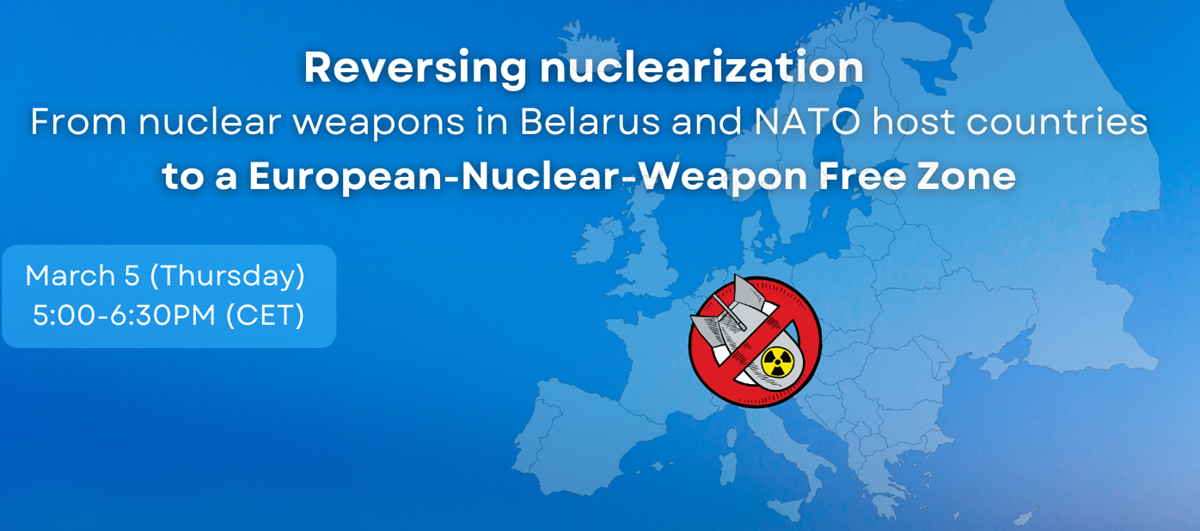
5 March -Online – Reversing nuclearization:
From nuclear weapons in Belarus and NATO host countries to a European-Nuclear-Weapon Free Zone
11am-12:30pm Eastern Time USA / 5pm-6:30pm CET

of the week – Advocating for a
nuclear free beach – https://www.samuellawrencefoundation.org/
The Samuel Lawrence Foundation advocates for a Nuclear Waste Free Beach at San Onofre, join us and take action!

10 March A LIVE WEBINAR THE REAL EFFECTS OF NUCLEAR POWER
What the Industry Isn’t Telling Us
1:00 PM Mountain, 2 pm Central, 3 pm Eastern. Live on the Keepers of the Water Facebook page

18 March Webinar @ 1 PM EST: An Assessment of SMR Projects: The Case of Canada
register for the zoom:
https://us02web.zoom.us/webinar/register/WN_o8BIIOUvQ2ONJR1nta65DQ#/registration

of the week – STOP SMALL MODULAR REACTORS IN CANADA
To see nuclear-related stories in greater depth and intensity – go to https://nuclearinformation.wordpress.com
-
Archives
- March 2026 (51)
- February 2026 (268)
- January 2026 (308)
- December 2025 (358)
- November 2025 (359)
- October 2025 (376)
- September 2025 (258)
- August 2025 (319)
- July 2025 (230)
- June 2025 (348)
- May 2025 (261)
- April 2025 (305)
-
Categories
- 1
- 1 NUCLEAR ISSUES
- business and costs
- climate change
- culture and arts
- ENERGY
- environment
- health
- history
- indigenous issues
- Legal
- marketing of nuclear
- media
- opposition to nuclear
- PERSONAL STORIES
- politics
- politics international
- Religion and ethics
- safety
- secrets,lies and civil liberties
- spinbuster
- technology
- Uranium
- wastes
- weapons and war
- Women
- 2 WORLD
- ACTION
- AFRICA
- Atrocities
- AUSTRALIA
- Christina's notes
- Christina's themes
- culture and arts
- Events
- Fuk 2022
- Fuk 2023
- Fukushima 2017
- Fukushima 2018
- fukushima 2019
- Fukushima 2020
- Fukushima 2021
- general
- global warming
- Humour (God we need it)
- Nuclear
- RARE EARTHS
- Reference
- resources – print
- Resources -audiovicual
- Weekly Newsletter
- World
- World Nuclear
- YouTube
-
RSS
Entries RSS
Comments RSS
 nuclear-news